Caleb Wright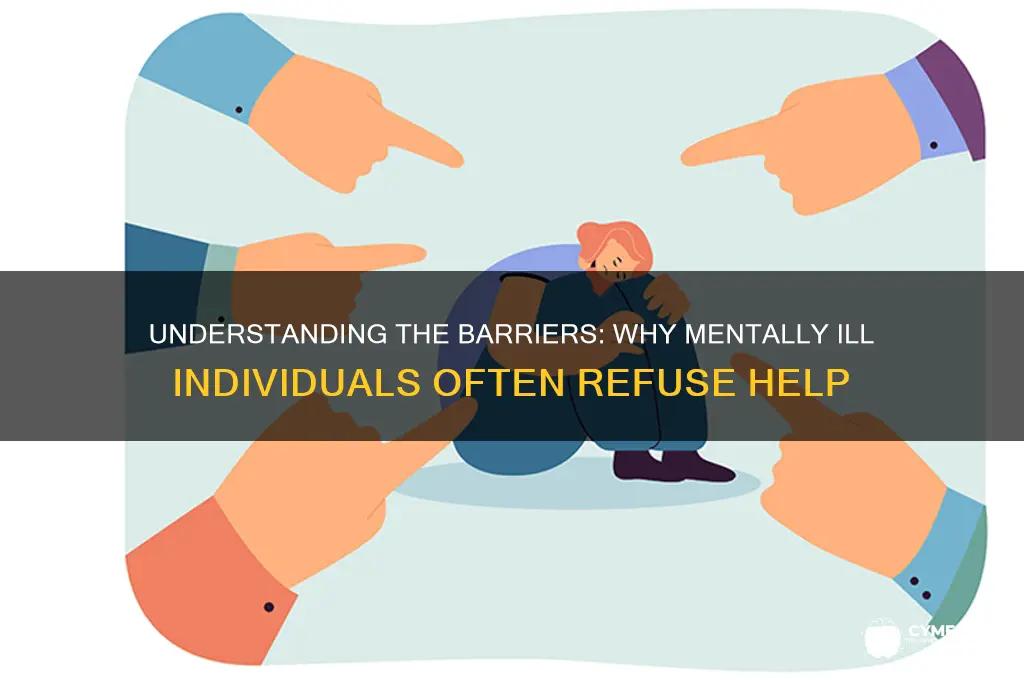
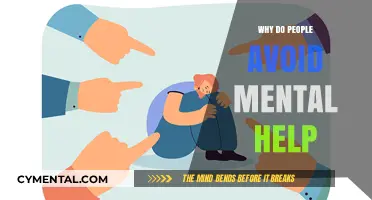
Many individuals with mental illness may refuse help due to a complex interplay of factors, including stigma, fear of judgment, and a lack of awareness about their condition. The societal stigma surrounding mental health often leads to feelings of shame and embarrassment, causing people to avoid seeking support. Additionally, symptoms such as paranoia, distrust, or a distorted sense of reality can make it challenging for them to recognize their need for assistance. Furthermore, past negative experiences with healthcare systems, concerns about losing autonomy, or the belief that they can manage their struggles alone may also contribute to their reluctance to accept help, highlighting the importance of compassionate, informed approaches to encourage treatment and support.
Explore related products


What You'll Learn
- Stigma and shame associated with mental illness prevent individuals from seeking help
- Lack of awareness about available resources and treatment options for mental health
- Fear of judgment, discrimination, or negative consequences from others discourages help-seeking
- Anosognosia, a condition where individuals cannot recognize their own mental illness
- Past negative experiences with mental health services or providers reduce trust in help

Stigma and shame associated with mental illness prevent individuals from seeking help
Stigma acts as an invisible barrier, trapping individuals with mental illness in a cycle of silence and suffering. Consider this: a 2017 study published in the *Journal of Affective Disorders* found that 60% of participants delayed seeking help for depression due to fear of being labeled "weak" or "crazy." This fear isn’t unfounded. Societal stereotypes often equate mental illness with personal failure, dangerousness, or lack of self-control, creating an environment where admitting to struggles feels like admitting defeat. The result? People internalize these judgments, viewing their illness as a character flaw rather than a treatable condition, and isolate themselves to avoid perceived shame.
Now, imagine being told repeatedly that your experiences aren’t valid, that you’re "overreacting," or that you should "just snap out of it." This invalidation, often rooted in stigma, erodes self-worth and fosters a deep sense of shame. For instance, a young adult with anxiety might avoid therapy because they’ve been told anxiety is "just stress" and seeking help means they can’t handle life. Over time, this narrative becomes internalized, making the idea of reaching out feel like a public admission of inadequacy. The shame becomes a shield—a flawed, self-destructive one—against further judgment.
Here’s a practical tip: challenge stigmatizing language in everyday conversations. Phrases like "commit suicide" (use "died by suicide") or "schizophrenic person" (say "person with schizophrenia") perpetuate harmful stereotypes. By reframing how we talk about mental health, we dismantle the stigma that keeps people silent. Additionally, workplaces and schools can implement policies like mandatory mental health training to normalize discussions and reduce shame. For example, a company that offers anonymous counseling services and openly shares employee success stories of seeking help can create a culture of acceptance.
Compare this to physical illnesses: no one shames a cancer patient for seeking treatment. Yet, someone with bipolar disorder might hesitate to fill a prescription for fear of being labeled "unreliable." This double standard highlights the unique burden of mental health stigma. Unlike physical ailments, mental illnesses are often invisible, making them easier to dismiss or misunderstand. The takeaway? Until we treat mental health with the same urgency and compassion as physical health, stigma will continue to silence those who need help the most.
Finally, consider the role of media in perpetuating stigma. Sensationalized portrayals of mental illness in films or news often link conditions like schizophrenia to violence, despite evidence showing individuals with mental illness are more likely to be victims than perpetrators. To counteract this, seek out and amplify accurate representations. Share stories of recovery, resilience, and everyday struggles to humanize mental health experiences. By doing so, we chip away at the stigma that convinces people their pain isn’t worthy of care.
Boost Your Mental Health: The Power of More Sleep
You may want to see also
Explore related products


Lack of awareness about available resources and treatment options for mental health
A staggering number of individuals struggling with mental health issues remain untreated, not due to stubbornness or indifference, but because they simply don't know where to turn. This lack of awareness about available resources and treatment options acts as a silent barrier, preventing people from accessing the support they desperately need. Imagine navigating a labyrinth blindfolded – that's the reality for many facing mental health challenges without knowledge of the pathways to recovery.
Public awareness campaigns often focus on destigmatizing mental illness, which is crucial, but they frequently fall short in providing concrete information about accessible resources. A person might recognize their anxiety as problematic, but without knowing about local support groups, affordable therapy options, or crisis hotlines, they remain trapped in a cycle of suffering.
Consider this: a young adult experiencing their first episode of depression might not realize that their university offers free counseling services, or that their health insurance covers a certain number of therapy sessions annually. This information gap can lead to feelings of hopelessness and isolation, further exacerbating their condition. It's not just about knowing that help exists, but understanding the specific steps to take. Where do they call? What paperwork is needed? Are there sliding scale fees for those with limited income?
Supporting Your Partner: How to Encourage Mental Health Treatment
You may want to see also
Explore related products


Fear of judgment, discrimination, or negative consequences from others discourages help-seeking
Stigma casts a long shadow over mental health, and its tendrils reach deep into the reluctance many feel about seeking help. Fear of judgment, discrimination, or negative consequences from others isn’t just a vague worry—it’s a tangible barrier. Imagine a young professional, let’s call her Sarah, who struggles with anxiety. She knows therapy could help, but the thought of a colleague overhearing her mention a therapist’s appointment fills her with dread. Will they label her as "unstable"? Will it jeopardize her promotion? This internal conflict isn’t unique to Sarah; it’s a shared experience for countless individuals who weigh the potential benefits of treatment against the perceived risks of exposure.
Consider the mechanics of this fear. It’s rooted in societal attitudes that equate mental illness with weakness or unreliability. A 2019 study published in *Psychiatry Research* found that 60% of respondents avoided seeking mental health care due to concerns about being treated differently by friends, family, or coworkers. This fear isn’t unfounded. Discrimination in the workplace, strained relationships, and even loss of custody battles are real consequences some have faced after disclosing their struggles. For instance, a 35-year-old teacher might hesitate to take medication for depression, fearing that parents or administrators will question their ability to manage a classroom. The irony is stark: the very act of seeking help can sometimes feel like stepping into a minefield.
To dismantle this barrier, we must reframe the narrative. Start by normalizing conversations about mental health in everyday settings. Employers can lead by example, offering anonymous support programs and explicitly stating that seeking help is a sign of strength, not a liability. For individuals, small steps like using neutral language ("I’m seeing a counselor for stress management") can reduce the stigma attached to treatment. Practical tools, such as apps that connect users to therapists without leaving a digital footprint, can also provide a sense of security. Remember, confidentiality is a right, not a privilege—ensure any professional you work with adheres to strict privacy standards.
Finally, let’s challenge the assumption that disclosure always leads to negative outcomes. While risks exist, the alternative—suffering in silence—often carries a heavier toll. A 42-year-old engineer who finally sought treatment for PTSD reported not only improved mental health but also increased productivity and deeper connections with colleagues who admired his courage. The takeaway? Fear of judgment is a powerful deterrent, but it’s not insurmountable. By addressing stigma at both individual and systemic levels, we can create an environment where seeking help is not just safe, but encouraged.
Boost Your Mind: The Surprising Alertness Benefits of Helping Others
You may want to see also
Explore related products
![Denial [Blu-ray]](https://m.media-amazon.com/images/I/91utvUPEG-L._AC_UY218_.jpg)
![Denial [DVD]](https://m.media-amazon.com/images/I/814T677Cs0L._AC_UY218_.jpg)



Anosognosia, a condition where individuals cannot recognize their own mental illness
Anosognosia, a neurological phenomenon often associated with severe mental illnesses like schizophrenia and bipolar disorder, presents a unique challenge in treatment: individuals affected by it are unable to recognize their own illness. This isn’t denial or stubbornness; it’s a cognitive impairment rooted in brain function. Studies show that up to 50% of individuals with schizophrenia and 40% with bipolar disorder experience anosognosia, making it a critical factor in understanding why some refuse help. Unlike simple lack of insight, anosognosia is a structural issue, often linked to damage or dysfunction in the frontal and parietal lobes, which are responsible for self-awareness and reality testing.
Consider a 32-year-old man diagnosed with schizophrenia who insists he doesn’t need medication because he believes his delusions are real. His family pleads with him to seek treatment, but he remains convinced there’s nothing wrong. This isn’t a choice; it’s a symptom of anosognosia. Clinicians often use the LEAP scale (a 4-item assessment) to measure insight, but even then, addressing anosognosia requires a nuanced approach. For instance, directly confronting the individual’s lack of awareness can lead to increased resistance, as it triggers defensiveness rather than acceptance. Instead, strategies like motivational interviewing, which focuses on exploring ambivalence and building trust, can be more effective.
One practical tip for caregivers is to avoid phrases like “You need help” or “You’re sick,” which can alienate the individual. Instead, frame conversations around shared goals, such as improving relationships or achieving personal milestones. For example, a caregiver might say, “I’ve noticed you’ve been having trouble sleeping. How can we work together to help you feel more rested?” This approach bypasses the need for the individual to acknowledge their illness while still addressing symptoms. Additionally, involving a trusted peer or mentor who has experienced similar challenges can provide a relatable perspective, reducing feelings of isolation and resistance.
Comparing anosognosia to other barriers to treatment, such as stigma or lack of access, highlights its complexity. While stigma can be addressed through education and advocacy, and access issues through policy changes, anosognosia demands a deeper understanding of neurobiology and psychology. Research suggests that certain medications, like clozapine for schizophrenia, can improve insight in some cases, but this is not a universal solution. Behavioral interventions, such as cognitive-behavioral therapy tailored for psychosis, have shown promise in gradually enhancing self-awareness. However, progress is often slow, requiring patience and persistence from both the individual and their support system.
In conclusion, anosognosia is not a refusal of help but a symptom of the illness itself, rooted in neurological impairment. Addressing it requires a combination of empathy, strategic communication, and evidence-based interventions. Caregivers and clinicians must approach the situation with sensitivity, avoiding confrontation and focusing on collaborative problem-solving. By understanding anosognosia as a barrier rather than a choice, we can develop more effective strategies to engage individuals in treatment, ultimately improving outcomes for those affected by severe mental illnesses.
Supporting Mentally Disabled Adults: Accessing Essential Resources and Assistance
You may want to see also
Explore related products


Past negative experiences with mental health services or providers reduce trust in help
Past negative experiences with mental health services can create a deep-seated reluctance to seek help again. Imagine being prescribed a medication that worsened your symptoms or sharing vulnerabilities with a therapist who dismissed your concerns. Such experiences, though not universal, leave lasting scars, eroding trust in the very systems designed to provide relief. For instance, a study published in the *Journal of Mental Health* found that 40% of individuals who reported negative encounters with mental health providers were significantly less likely to pursue treatment in the future. This isn’t merely about dissatisfaction—it’s about trauma that reshapes one’s perception of care.
Consider the case of a 28-year-old diagnosed with anxiety who was prescribed a high dose of an SSRI without proper monitoring. The side effects—increased agitation and insomnia—were misinterpreted as "treatment resistance," leading to a cycle of medication changes that left them feeling like a guinea pig. This experience, though specific, illustrates a broader issue: when providers prioritize protocols over personalized care, patients internalize the failure as their own. Over time, this fosters a belief that the system is inherently flawed, making the idea of re-engagement feel like revisiting a battlefield.
To rebuild trust, providers must acknowledge past harms and adopt a trauma-informed approach. This means starting with small, concrete steps: offering transparent explanations of treatment plans, involving patients in decision-making, and validating their experiences rather than dismissing them. For example, a therapist might say, "I understand your last experience made you hesitant to try therapy again. How can we ensure this feels different for you?" Such language shifts the dynamic from authority-driven to collaborative, signaling respect for the patient’s autonomy and history.
Comparatively, systems that integrate peer support—where individuals with lived experience guide others—have shown promise in rebuilding trust. Peer specialists, having navigated similar struggles, offer a unique blend of empathy and practical advice. A program in Oregon, for instance, reduced hospital readmissions by 40% by pairing patients with peer mentors. This model underscores the power of shared experience in counteracting the alienation often felt in traditional care settings.
Ultimately, addressing this barrier requires systemic change, not just individual effort. Providers must confront biases, prioritize patient-centered care, and create safe spaces for feedback. For those hesitant to seek help, starting with low-stakes options—like support groups or online resources—can be a less intimidating first step. The takeaway is clear: past harm doesn’t have to dictate future choices, but healing begins when the system acknowledges its role in that harm.
Spirituality's Role in Supporting Teen Mental Health and Well-Being
You may want to see also
Frequently asked questions
Some individuals may refuse help due to stigma, fear of judgment, lack of awareness about their condition, or previous negative experiences with mental health services. Additionally, symptoms like paranoia, denial, or hopelessness can make it difficult for them to accept assistance.
Yes, a condition known as anosognosia, or lack of insight, is common in certain mental illnesses like schizophrenia or bipolar disorder. This can make individuals unaware of their symptoms or the need for treatment, leading them to refuse help.
Many individuals fear that seeking help will result in losing autonomy, being forced into treatment, or being labeled as "crazy." This fear, combined with mistrust of the mental health system, can lead them to avoid or refuse assistance altogether.