Madison Cole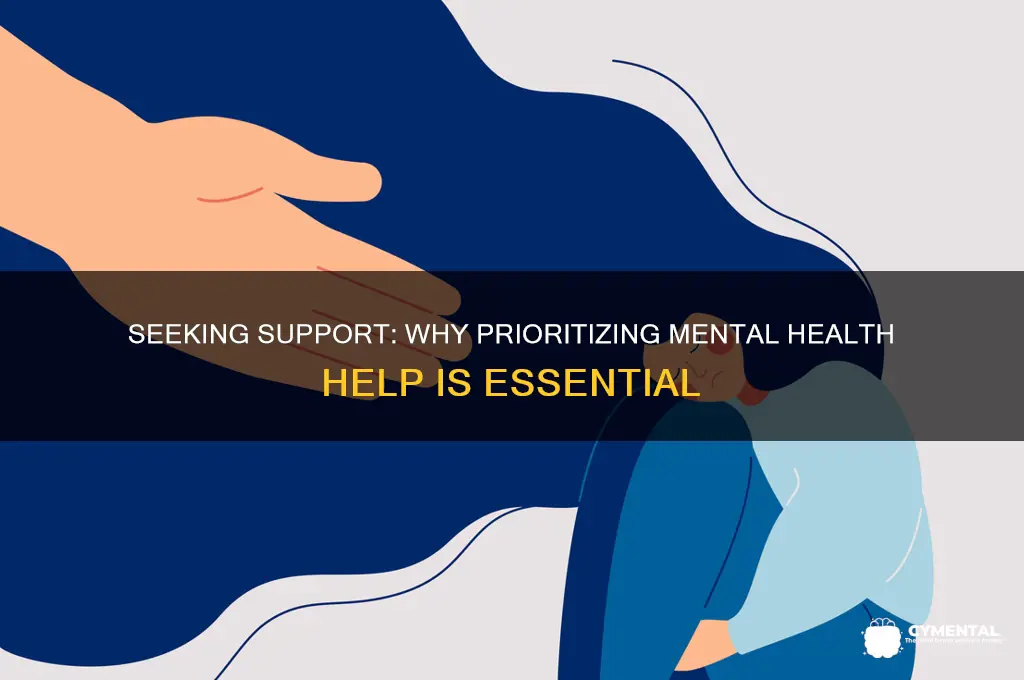
Seeking help for mental health is a crucial step toward overall well-being, as it allows individuals to address emotional, psychological, and behavioral challenges before they escalate. Mental health struggles, such as anxiety, depression, or stress, can significantly impact daily life, relationships, and physical health if left untreated. Professional support provides access to evidence-based therapies, coping strategies, and personalized guidance tailored to individual needs. It also helps reduce stigma by normalizing conversations around mental health and fostering a sense of community. Early intervention can prevent long-term complications, improve quality of life, and empower individuals to build resilience and thrive. Recognizing the importance of mental health care is not a sign of weakness but a courageous act of self-care and self-preservation.
Why Get Help for Mental Health
| Characteristics | Values |
|---|---|
| Improved Quality of Life | Research shows therapy can lead to significant improvements in overall well-being, relationships, and daily functioning. (Source: American Psychological Association, 2023) |
| Early Intervention is Key | Seeking help early can prevent symptoms from worsening and lead to better long-term outcomes. (Source: National Alliance on Mental Illness, 2024) |
| Effective Treatment Options | Various evidence-based therapies (CBT, DBT, etc.) and medications are available, offering effective solutions for many mental health conditions. (Source: National Institute of Mental Health, 2023) |
| Reduced Risk of Physical Health Problems | Mental health is linked to physical health. Untreated mental illness can increase risk of chronic conditions like heart disease and diabetes. (Source: World Health Organization, 2022) |
| Enhanced Coping Mechanisms | Therapy equips individuals with tools to manage stress, anxiety, and difficult emotions more effectively. (Source: American Psychiatric Association, 2023) |
| Improved Relationships | Addressing mental health concerns can lead to healthier communication, stronger connections, and more fulfilling relationships. (Source: Mental Health America, 2024) |
| Increased Productivity | Managing mental health can improve focus, motivation, and overall productivity at work and in daily life. (Source: World Economic Forum, 2023) |
| Breaking the Stigma | Seeking help normalizes mental health care and encourages others to do the same, reducing stigma and promoting a culture of support. (Source: National Alliance on Mental Illness, 2024) |
| Access to Support | Connecting with therapists, support groups, and online resources provides a valuable network of support and understanding. (Source: Substance Abuse and Mental Health Services Administration, 2023) |
| Hope and Recovery | Recovery from mental illness is possible. Seeking help offers hope for a brighter future and a life worth living. (Source: National Institute of Mental Health, 2023) |
Explore related products


What You'll Learn
- Breaking Stigma: Overcoming societal misconceptions to seek support without shame or fear
- Early Intervention: Addressing issues promptly prevents worsening symptoms and long-term complications
- Personalized Care: Tailored treatment plans ensure effective and sustainable mental health recovery
- Building Resilience: Therapy equips individuals with tools to cope with life’s challenges
- Improved Relationships: Mental health support fosters healthier connections with others and oneself

Breaking Stigma: Overcoming societal misconceptions to seek support without shame or fear
Stigma silences. It whispers lies, convincing us that seeking help for mental health is a sign of weakness, a character flaw, or something to be ashamed of. This societal misconception, rooted in fear and misunderstanding, erects a formidable barrier between individuals and the support they desperately need. It's time to dismantle this wall, brick by brick, and expose the truth: seeking help is not a surrender, but a courageous act of self-preservation.
Imagine a world where broken bones were met with judgment and ridicule instead of casts and crutches. This is the reality for many facing mental health struggles. The stigma surrounding mental illness often leads to isolation, delayed treatment, and worsening symptoms. Research shows that untreated mental health conditions can have devastating consequences, impacting not only personal well-being but also relationships, work performance, and even physical health.
Breaking free from this stigma requires a multi-pronged approach. Firstly, education is key. We need to openly discuss mental health, challenging stereotypes and replacing them with facts. Schools, workplaces, and community centers should become platforms for honest conversations, normalizing the experience of mental health challenges and promoting the benefits of seeking help. Secondly, language matters. Avoid terms like "crazy" or "nuts" that perpetuate negative stereotypes. Instead, use accurate and respectful language that emphasizes the medical nature of mental illness.
Think of it as a shift from "suffering from depression" to "living with depression," acknowledging the condition without defining the individual by it.
Finally, role models are powerful. When public figures, celebrities, or even everyday individuals share their own experiences with seeking help, they shatter the illusion of isolation. They demonstrate that vulnerability is not weakness, but a strength that fosters connection and healing. Remember, seeking help is not a sign of defeat; it's a testament to your resilience and desire for a better life. Just as you wouldn't hesitate to seek medical attention for a physical ailment, prioritize your mental well-being with the same urgency and compassion.
Mental Illness in Court: A Defense or Prosecution Tool?
You may want to see also
Explore related products


Early Intervention: Addressing issues promptly prevents worsening symptoms and long-term complications
Mental health issues, when left unaddressed, can spiral into chronic conditions that are far more difficult to treat. Early intervention acts as a critical firewall, halting the progression of symptoms before they become deeply entrenched. For instance, a teenager experiencing mild anxiety might develop coping mechanisms through therapy that prevent the condition from evolving into debilitating panic disorder. Research shows that untreated anxiety disorders can lead to a 50% higher risk of major depressive episodes within five years, underscoring the urgency of timely action.
Consider the analogy of a small crack in a windshield. Ignored, it spreads until the entire structure is compromised. Similarly, early signs of mental distress—such as persistent sadness, sleep disturbances, or social withdrawal—are warning signals that demand attention. A study published in *JAMA Psychiatry* found that individuals who received treatment for depression within the first six months of symptom onset had a 70% recovery rate, compared to just 35% for those who delayed care for over a year. This data highlights the exponential benefits of acting swiftly.
Practical steps for early intervention include monitoring changes in behavior, mood, or functioning and seeking professional help at the first sign of concern. For children and adolescents, parents and educators should watch for sudden academic decline, irritability, or loss of interest in favorite activities. Adults might track persistent fatigue, unexplained physical symptoms, or increased substance use. Telehealth platforms and online screenings have made accessing resources easier, removing barriers like stigma or logistical constraints.
However, early intervention isn’t just about reacting to symptoms—it’s also about proactive prevention. Regular mental health check-ins, akin to annual physicals, can identify risk factors before they manifest as full-blown disorders. Schools and workplaces are increasingly adopting programs like cognitive-behavioral therapy (CBT) workshops or mindfulness training to build resilience in at-risk populations. For example, a pilot program in a Midwestern high school reduced student anxiety levels by 40% through weekly CBT sessions, demonstrating the power of preemptive measures.
The takeaway is clear: early intervention is not merely beneficial—it’s transformative. By addressing mental health issues promptly, individuals can avoid the cascade of complications that often accompany delayed treatment, from strained relationships to diminished work performance. Think of it as investing in mental wellness today to safeguard a healthier, more stable tomorrow. The cost of inaction is far greater than the effort required to act now.
Social Media's Surprising Role in Boosting Mental Health
You may want to see also
Explore related products





Personalized Care: Tailored treatment plans ensure effective and sustainable mental health recovery
Mental health challenges are as unique as fingerprints, yet traditional treatment often relies on one-size-fits-all approaches. This mismatch can lead to frustration, delayed recovery, and a sense of hopelessness. Personalized care, however, flips this script by tailoring treatment plans to the individual’s specific needs, biology, and circumstances. For instance, a 28-year-old with anxiety may respond better to cognitive-behavioral therapy (CBT) combined with mindfulness practices, while a 45-year-old with depression might benefit from a regimen of selective serotonin reuptake inhibitors (SSRIs) at a starting dose of 20mg daily, adjusted based on response and side effects. This precision not only accelerates progress but also fosters a sense of agency and hope in the recovery process.
Consider the role of genetics in personalized care. Pharmacogenomic testing, for example, can predict how an individual metabolizes medications, reducing trial-and-error prescribing. A study published in *The Journal of Clinical Psychiatry* found that patients who underwent such testing experienced a 70% reduction in adverse drug reactions. Similarly, wearable technology can track physiological markers like heart rate variability and sleep patterns, providing real-time data to fine-tune interventions. For a teenager struggling with insomnia and anxiety, a tailored plan might include a bedtime routine adjusted based on sleep tracker data, paired with low-dose melatonin (0.5–1mg) and progressive muscle relaxation techniques.
The benefits of personalized care extend beyond symptom management to long-term sustainability. A 35-year-old professional with burnout, for instance, might receive a treatment plan that integrates work-life balance coaching, stress-reduction techniques like biofeedback, and a gradual return-to-work strategy. This holistic approach addresses the root causes of mental health issues rather than merely treating symptoms. In contrast, a generalized approach might overlook these nuances, leading to temporary relief but no lasting change. By focusing on the individual, personalized care builds resilience and equips people with tools to navigate future challenges.
Critics might argue that personalized care is resource-intensive, but its cost-effectiveness becomes evident over time. A meta-analysis in *The Lancet* highlighted that tailored treatment plans reduce hospital readmissions by 30% and improve overall quality of life. Moreover, the emotional and financial toll of ineffective treatments—lost productivity, strained relationships, and repeated therapy sessions—far outweighs the investment in personalized care. For a 50-year-old with treatment-resistant depression, for example, transcranial magnetic stimulation (TMS) might be recommended after other options have failed, offering a targeted, non-invasive solution with minimal side effects.
In practice, implementing personalized care requires collaboration between patients, clinicians, and technology. Start by advocating for a comprehensive assessment that considers your medical history, lifestyle, and preferences. Keep a symptom journal to track patterns and responses to interventions, and don’t hesitate to ask your provider about emerging tools like digital therapy apps or genetic testing. Remember, recovery is not linear, and a tailored plan evolves with you. Whether you’re a college student managing ADHD or a retiree coping with grief, personalized care ensures that your journey to mental wellness is as unique as you are.
Exploring Psilocybin's Potential: Can Shrooms Improve Mental Health?
You may want to see also
Explore related products

$12.99

$14.15 $20

$12.14 $19.99


Building Resilience: Therapy equips individuals with tools to cope with life’s challenges
Life throws curveballs. Job losses, relationship struggles, health scares – these are inevitable. While we can't control these events, we *can* control how we respond. This is where resilience comes in, and therapy acts as a forge, shaping our ability to bend without breaking.
Imagine a toolbox. Therapy doesn't just hand you a hammer; it teaches you how to build an entire workshop. Cognitive Behavioral Therapy (CBT), for instance, equips you with tools like identifying negative thought patterns ("I'll never get through this") and replacing them with realistic, empowering ones ("This is hard, but I can handle it"). Dialectical Behavior Therapy (DBT) adds emotional regulation skills, helping you weather intense emotions without being overwhelmed.
Think of resilience as a muscle. Just like biceps need consistent training, resilience requires practice. Therapy provides the gym, the trainer, and the personalized workout plan. Through role-playing difficult conversations, exploring past experiences that shaped your coping mechanisms, and gradually facing fears in a safe environment, you strengthen your ability to adapt and recover.
A study published in the *Journal of Consulting and Clinical Psychology* found that individuals who underwent CBT for anxiety showed significant increases in resilience scores, demonstrating the tangible impact of therapy on our ability to bounce back.
Building resilience isn't about becoming invulnerable. It's about learning to navigate life's storms with greater agility and grace. Therapy doesn't erase challenges; it gives you the compass and the map to find your way through them. It's an investment in yourself, a commitment to living a life not defined by adversity, but by your ability to rise above it.
Empowering Mental Health: Essential Nursing Strategies for Patient Support and Recovery
You may want to see also
Explore related products


Improved Relationships: Mental health support fosters healthier connections with others and oneself
Mental health struggles often manifest as strained relationships, whether it’s withdrawing from loved ones, lashing out in frustration, or struggling to set boundaries. Seeking support can break this cycle by addressing the root causes of these behaviors. Therapy, for instance, provides tools to manage emotions, communicate effectively, and rebuild trust. A study published in *Psychotherapy Research* found that couples who engaged in emotionally focused therapy reported significant improvements in relationship satisfaction within 12 sessions. This isn’t just about repairing damage—it’s about creating a foundation for deeper, more authentic connections.
Consider the ripple effect of untreated mental health issues on relationships. Anxiety might lead to constant reassurance-seeking, while depression can make one emotionally unavailable. Over time, these patterns erode intimacy and foster resentment. Mental health support acts as a corrective lens, helping individuals recognize and modify harmful behaviors. For example, cognitive-behavioral therapy (CBT) teaches individuals to challenge negative thought patterns that contribute to conflict. A practical tip: Start small by identifying one recurring issue in your relationships and discuss it with a therapist to uncover underlying triggers.
The benefits of mental health support extend beyond interpersonal relationships—they also strengthen the connection with oneself. Self-compassion, often cultivated through mindfulness-based therapies, reduces self-criticism and fosters a kinder inner dialogue. This internal shift is transformative. When you treat yourself with empathy, you’re better equipped to extend that empathy to others. A 2019 study in *Clinical Psychology Review* highlighted that individuals who practiced self-compassion reported higher levels of relationship satisfaction and lower levels of conflict. Think of it as emotional maintenance: just as you’d invest time in nurturing a friendship, investing in your mental health nurtures your relationship with yourself.
Finally, mental health support creates a feedback loop of positivity in relationships. When one person seeks help, it often inspires others to do the same, fostering a culture of openness and growth. For families, this might mean attending group therapy sessions to improve communication. For friends, it could involve sharing coping strategies learned in therapy. The key is consistency—regular engagement with mental health resources, whether it’s weekly therapy sessions or daily mindfulness practices, yields the most significant long-term benefits. Remember, healthier relationships aren’t just a byproduct of mental health support—they’re an active, intentional outcome of the process.
Supporting Through Crisis: Effective Ways to Aid Mental Breakdown Recovery
You may want to see also
Frequently asked questions
Seeking help for mental health is crucial because it allows you to address underlying issues, improve your overall well-being, and develop coping strategies to manage life’s challenges more effectively.
No, asking for help is a sign of strength and self-awareness. It demonstrates your willingness to take care of yourself and prioritize your mental well-being.
If you’re experiencing persistent feelings of sadness, anxiety, or stress that interfere with your daily life, it’s a good indicator that you could benefit from professional support.
While self-care is important, professional help provides expert guidance, evidence-based treatments, and a supportive environment to address complex mental health challenges.
Many people share this fear, but mental health professionals are trained to provide nonjudgmental, compassionate care. Seeking help is a brave and important step toward healing.