Madison Cole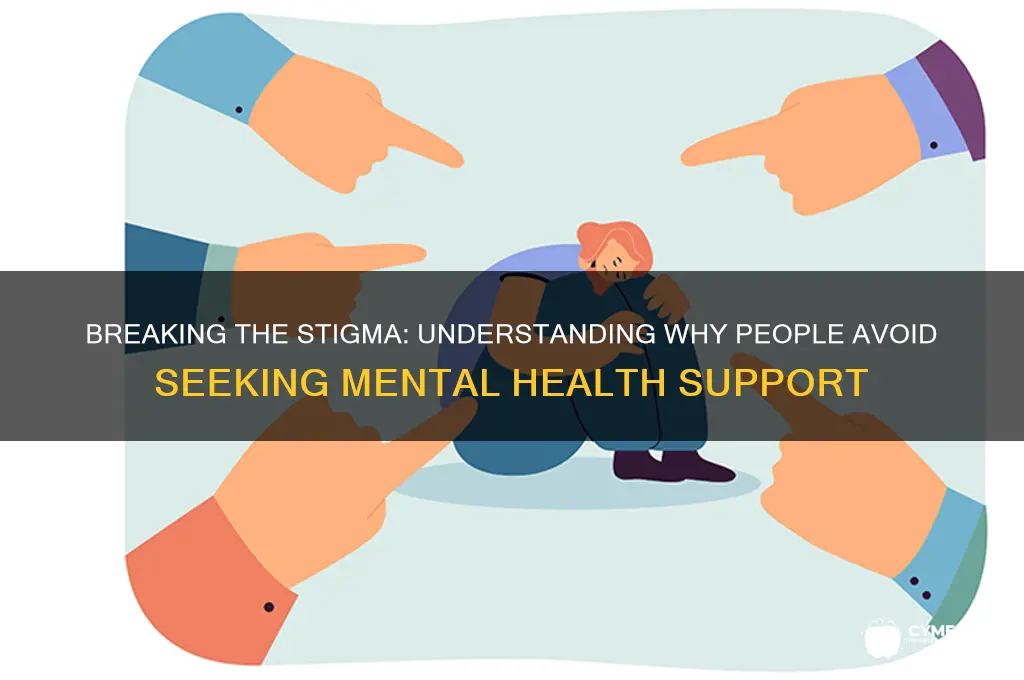
Many people avoid seeking mental health help due to a complex interplay of stigma, fear, and systemic barriers. Societal misconceptions often label mental health issues as a sign of weakness or personal failure, leading individuals to internalize shame and hesitate to reach out. Fear of judgment from others, concerns about confidentiality, and the perceived cost or inaccessibility of services further deter people from seeking support. Additionally, a lack of awareness about available resources and the normalization of struggling in silence contribute to this avoidance. Cultural factors, such as prioritizing self-reliance or viewing mental health as a taboo, also play a significant role. Addressing these challenges requires destigmatizing conversations, improving access to affordable care, and fostering a compassionate understanding of mental health as an essential part of overall well-being.
Explore related products


What You'll Learn

Stigma and shame surrounding mental health issues
Stigma and shame act as silent barriers, preventing countless individuals from seeking mental health support. Consider this: a 2023 study revealed that 40% of people experiencing symptoms of depression or anxiety avoid professional help due to fear of being labeled "weak" or "crazy." This statistic underscores a harsh reality—societal attitudes can be as debilitating as the conditions themselves. The pervasive belief that mental illness equates to personal failure or moral deficiency creates an environment where silence feels safer than seeking help.
To dismantle this barrier, start by challenging your own language. Avoid phrases like "commit suicide" (use "died by suicide" instead) and refrain from casual diagnoses like "she’s so OCD." These small shifts normalize accurate, respectful dialogue. Next, educate yourself and others about the biological and environmental roots of mental health issues. For instance, depression often involves imbalances in neurotransmitters like serotonin, not a lack of willpower. Sharing such facts can reframe perceptions and reduce judgment.
Compare this to physical health: no one hesitates to seek treatment for a broken leg, yet disclosing anxiety feels like admitting defeat. This double standard stems from centuries of misinformation and fear-mongering. Historically, mental illness was attributed to demonic possession or moral failing, and remnants of these beliefs persist today. For example, in some cultures, seeking therapy is seen as a betrayal of family honor, while in others, it’s dismissed as a "first-world luxury." These ingrained biases highlight the need for culturally sensitive approaches to mental health advocacy.
Finally, take actionable steps to combat stigma in your community. If you’re a manager, implement policies that treat mental health days as valid as sick days. If you’re a parent, model vulnerability by discussing your own emotions openly. For educators, incorporate mental health literacy into curricula—studies show that early education reduces stigma by 30%. Remember, stigma thrives in silence. By speaking up, sharing stories, and demanding systemic change, you contribute to a world where seeking help is a sign of strength, not shame.
Empowering Lives: The Transformative Impact of Supporting Mental Health
You may want to see also
Explore related products


Fear of being judged or misunderstood by others
Stigma silences. The fear of judgment and misunderstanding is a powerful deterrent, keeping many from seeking the mental health support they need. This fear isn't just about whispered rumors or raised eyebrows; it's about the internalized belief that vulnerability equals weakness, that seeking help is an admission of failure.
Imagine confessing your deepest struggles only to be met with dismissive smiles or, worse, accusations of "overreacting." This fear is particularly potent in cultures that prioritize stoicism and self-reliance, where emotional expression is often seen as a luxury, not a necessity.
Consider the case of Sarah, a 28-year-old marketing professional. She battled anxiety for years, but the thought of being labeled "unstable" by her colleagues kept her from seeking therapy. "I didn't want to be seen as the 'anxious one,'" she admits. "I was afraid it would affect my career, my relationships, everything." Sarah's story isn't unique. A 2019 study by the American Psychological Association found that 57% of adults with mental illness reported experiencing stigma, with fear of judgment being a leading barrier to treatment.
This fear is further exacerbated by media portrayals of mental illness, often depicting individuals as dangerous or unpredictable, reinforcing negative stereotypes.
Combating this fear requires a multi-pronged approach. Firstly, education is key. Public awareness campaigns that humanize mental health struggles and highlight the prevalence of conditions like anxiety and depression can help normalize seeking help. Secondly, creating safe spaces is crucial. Support groups, online forums, and anonymous helplines provide individuals with a judgment-free zone to express themselves and connect with others facing similar challenges. Finally, challenging internalized stigma is essential. This involves recognizing that seeking help is a sign of strength, not weakness, and that mental health is just as important as physical health.
Just as we wouldn't hesitate to see a doctor for a broken leg, we shouldn't hesitate to seek help for a struggling mind.
Remember, the fear of judgment is often based on misconceptions and societal pressures. By acknowledging this fear, educating ourselves and others, and creating supportive environments, we can break down the barriers that prevent people from accessing the help they deserve.
SSI Mental Health Work Restrictions: What You Need to Know
You may want to see also
Explore related products


Lack of awareness about available mental health resources
A startling number of individuals struggling with mental health issues remain unaware of the resources available to them. This lack of awareness acts as a significant barrier, preventing people from accessing the support they desperately need. Imagine navigating a dense forest without a map; that's how overwhelming and isolating seeking mental health help can feel for those unaware of the pathways to support.
Many community centers, for instance, offer free or low-cost counseling services, yet these resources often go unnoticed. Similarly, online platforms provide anonymous support groups and therapy sessions, but without proper promotion, they remain hidden gems. This invisibility of resources exacerbates the stigma surrounding mental health, creating a vicious cycle where people avoid seeking help because they don't know where to turn.
Consider the following scenario: A young adult experiencing anxiety might assume therapy is unaffordable and therefore never explores options like sliding-scale fees or insurance coverage. This misconception stems from a lack of information about the diverse range of mental health services available. Schools, workplaces, and healthcare providers play a crucial role in disseminating this information, yet they often fall short. For instance, a study revealed that only 40% of high schools in the United States provide comprehensive mental health education, leaving a significant portion of students uninformed about available resources.
To bridge this awareness gap, a multi-faceted approach is necessary. Firstly, public awareness campaigns should be designed to educate individuals about the various mental health resources, including hotlines, support groups, and online therapy platforms. These campaigns should target specific demographics, such as teenagers, seniors, or cultural communities, tailoring the message to their unique needs and preferences. Secondly, healthcare professionals must be trained to actively discuss mental health resources during routine check-ups, normalizing the conversation and providing personalized recommendations.
Furthermore, digital platforms can be leveraged to create easily accessible directories of mental health services. A user-friendly app or website could allow individuals to search for resources based on their location, age, and specific concerns, providing detailed information about each service, including contact details, costs, and availability. By making this information readily available, we can empower individuals to take the first step towards seeking help.
In conclusion, addressing the lack of awareness about mental health resources requires a collective effort from various stakeholders. By implementing targeted awareness campaigns, training healthcare professionals, and utilizing digital tools, we can ensure that individuals in need are equipped with the knowledge to access the support they deserve. This, in turn, can help break down the barriers to mental health care, fostering a society where seeking help is not only accepted but actively encouraged.
Family Support: A Powerful Ally for Mental Health and Well-Being
You may want to see also
Explore related products


$34.4 $36.99

$18.55 $19.95


Financial barriers and high costs of treatment
The financial burden of mental health treatment is a significant deterrent for many individuals seeking professional help. A 2020 survey by the American Psychological Association revealed that 42% of Americans reported anxiety about affording mental health care, with 25% citing cost as the primary reason for not seeking treatment. These statistics underscore a harsh reality: the high costs of therapy, medication, and specialized care create an inaccessible system, particularly for low-income individuals and families.
Consider the average cost of a single therapy session in the United States, which ranges from $100 to $200 per hour. For individuals without insurance, this expense quickly becomes unsustainable, especially when multiple sessions per week are recommended. Even with insurance, high deductibles and copayments can make treatment financially infeasible. For instance, a person with a $3,000 deductible would need to pay out-of-pocket for several sessions before insurance coverage kicks in, a barrier that often leads to discontinuation of care.
Medication costs further exacerbate this issue. Antidepressants, mood stabilizers, and antipsychotics can cost hundreds of dollars monthly, even with insurance. For example, a 30-day supply of brand-name antidepressants like Lexapro can cost upwards of $250 without coverage. Generic alternatives may reduce costs, but not all medications have affordable generics available. Additionally, the trial-and-error process of finding the right medication often requires multiple prescriptions, adding to the financial strain.
To navigate these financial barriers, individuals can explore practical strategies. First, research sliding-scale clinics or community mental health centers, which offer services based on income. Second, inquire about telehealth options, which are often more affordable than in-person sessions. Third, utilize employee assistance programs (EAPs) if available through work, as these typically provide free or low-cost counseling sessions. Finally, consider peer support groups, which offer free emotional support and coping strategies.
While these solutions can help mitigate costs, systemic change is essential. Policymakers must address the affordability crisis by expanding Medicaid coverage, capping out-of-pocket expenses, and increasing funding for mental health services. Until then, individuals must advocate for themselves, leveraging available resources to access the care they need without financial ruin. The cost of mental health treatment should not be a barrier to healing, but for many, it remains an insurmountable obstacle.
Finding Mental Health Support: A Guide to Seeking Professional Help
You may want to see also
Explore related products


Cultural beliefs minimizing the importance of mental well-being
Cultural stigma often silences conversations about mental health, particularly in communities where emotional struggles are dismissed as a sign of weakness or moral failing. In many Asian cultures, for example, mental illness is frequently attributed to a lack of self-discipline or familial dishonor, leading individuals to suffer in silence rather than seek help. This deeply ingrained belief not only minimizes the importance of mental well-being but also creates a barrier to accessing professional support. The result? A cycle of untreated conditions that can escalate into more severe issues, such as chronic depression or anxiety disorders.
Consider the role of religion in shaping attitudes toward mental health. In some Christian communities, mental health challenges are viewed as a test of faith or a consequence of sin, with prayer and spiritual guidance often prioritized over therapy or medication. While faith can provide comfort, this approach overlooks the biological and psychological roots of mental illness, leaving individuals without the comprehensive care they need. For instance, a study found that 40% of individuals in religious communities delay seeking mental health treatment, believing divine intervention alone will suffice. This delay can worsen symptoms, making recovery more challenging.
Language itself can perpetuate cultural minimization of mental well-being. In many Spanish-speaking cultures, terms like *"estar triste"* (to be sad) are often used interchangeably with clinical depression, trivializing the condition. This linguistic blurring reduces the urgency to seek professional help, as individuals may believe their experiences are merely transient emotions rather than treatable disorders. To combat this, mental health advocates are pushing for more precise language and education to differentiate between everyday feelings and diagnosable conditions.
Practical steps can help bridge the gap between cultural beliefs and mental health care. For instance, integrating mental health education into community programs can normalize conversations and reduce stigma. In Indigenous communities, incorporating traditional healing practices alongside Western therapy has shown promise in increasing acceptance of mental health services. Additionally, training culturally competent mental health professionals can make services more accessible and relatable. For families, starting small—like encouraging open dialogue about emotions at home—can lay the foundation for seeking help when needed.
Ultimately, dismantling cultural beliefs that minimize mental well-being requires a multi-faceted approach. It involves challenging long-held narratives, fostering education, and creating inclusive systems that respect diverse perspectives. By addressing these cultural barriers, we can ensure that mental health is recognized as a vital component of overall well-being, deserving of the same attention and care as physical health.
Ice Baths and Mental Health: Uncovering the Mind-Body Connection
You may want to see also
Frequently asked questions
People often avoid mental health help due to stigma, fear of judgment, lack of awareness about available resources, concerns about cost, or the belief that they should handle their issues on their own.
Stigma creates a societal perception that seeking mental health help is a sign of weakness or failure, leading individuals to fear being labeled or discriminated against, which discourages them from reaching out.
Yes, financial barriers, such as high therapy costs, lack of insurance coverage, or limited access to affordable services, often prevent people from seeking the mental health support they need.
Some individuals minimize their struggles, thinking their issues aren’t "serious enough" to warrant help, or they may rely on self-coping mechanisms, unaware of the benefits of professional support.
Yes, fear of side effects from medication, discomfort with opening up in therapy, or misconceptions about treatment processes can deter people from seeking mental health assistance.

![Fear [Blu-ray]](https://m.media-amazon.com/images/I/71tGFLZLfEL._AC_UY218_.jpg)
![Fear [DVD]](https://m.media-amazon.com/images/I/61LzOQIFXmL._AC_UY218_.jpg)