Lucas Bennett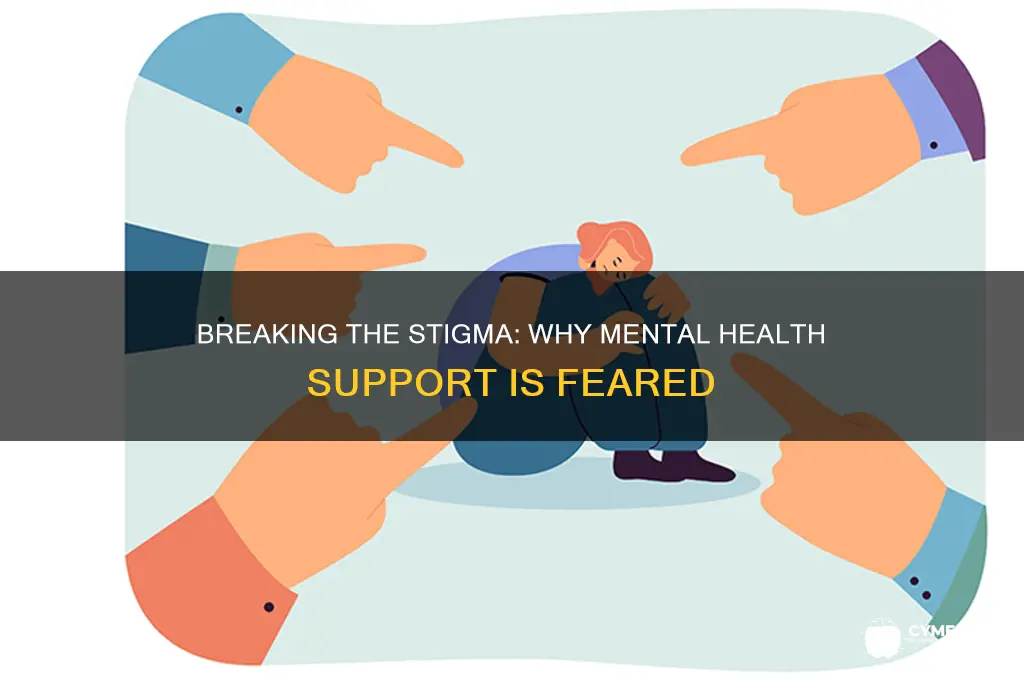
Mental health help is often feared due to a combination of stigma, misinformation, and societal pressures. Many individuals worry about being judged, labeled, or perceived as weak if they seek support, while others fear the potential consequences on their personal or professional lives. Misconceptions about therapy, medication, or treatment processes can also deter people from reaching out. Additionally, cultural norms that prioritize self-reliance or dismiss emotional struggles as trivial contribute to this fear. The lack of awareness about the effectiveness of mental health interventions further exacerbates hesitancy. Ultimately, these barriers create a cycle where fear prevents individuals from accessing the very help they need to improve their well-being.
| Characteristics | Values |
|---|---|
| Stigma | Fear of being labeled as "weak" or "crazy" persists in society. |
| Privacy Concerns | Worry about confidentiality and personal information being shared. |
| Cost of Treatment | High expenses associated with therapy, medication, or counseling. |
| Fear of Judgment | Anxiety about being judged by friends, family, or colleagues. |
| Lack of Awareness | Limited understanding of mental health resources and their effectiveness. |
| Cultural Barriers | Cultural norms that discourage seeking help for mental health issues. |
| Fear of Medication | Concerns about side effects or dependency on psychiatric medications. |
| Previous Negative Experiences | Past unsatisfactory experiences with mental health professionals. |
| Fear of Diagnosis | Anxiety about receiving a formal mental health diagnosis. |
| Time Commitment | Perceived lack of time to commit to therapy or treatment. |
| Mistrust of Professionals | Skepticism about the competence or intentions of mental health providers. |
| Self-Reliance | Belief in handling mental health issues independently without help. |
| Fear of Hospitalization | Concern about being institutionalized or forced into inpatient treatment. |
| Lack of Accessibility | Limited availability of mental health services in certain areas. |
| Misinformation | False beliefs about mental health treatment perpetuated by media or myths. |
| Fear of Change | Resistance to the idea of altering one's mindset or lifestyle. |
Explore related products


What You'll Learn

Stigma and shame associated with seeking mental health treatment
Stigma and shame cast long shadows over the decision to seek mental health treatment, often silencing those in need. Consider this: a 2021 study by the American Psychological Association found that 40% of individuals experiencing mental health challenges avoided seeking help due to fear of judgment. This statistic isn’t just a number—it’s a reflection of deeply ingrained societal attitudes that equate mental illness with weakness or failure. The stigma doesn’t just exist in the abstract; it’s perpetuated through casual remarks like “Just toughen up” or “It’s all in your head,” which trivialize struggles and discourage openness.
To dismantle this stigma, start by normalizing conversations about mental health. Share personal experiences or highlight public figures who’ve spoken openly about their journeys. For instance, athletes like Simone Biles and Michael Phelps have publicly addressed their mental health battles, challenging stereotypes of invincibility. Practical steps include using neutral language—say “a person with depression” instead of “a depressed person”—to avoid labeling individuals by their condition. Employers can contribute by offering mental health days without requiring detailed explanations, reducing the pressure to hide struggles.
Compare this to physical health: no one hesitates to seek treatment for a broken bone, yet a diagnosis of anxiety or depression often invites whispers and avoidance. This double standard stems from the invisibility of mental illness, making it easier to dismiss or misunderstand. Education is key here. Schools and workplaces should incorporate mental health literacy programs, teaching signs of common disorders and the importance of early intervention. For example, a 12-week curriculum in UK schools reduced stigma by 25% among participants, proving that knowledge fosters empathy.
Finally, challenge the shame associated with seeking help by reframing therapy or medication as acts of strength, not surrender. A therapist isn’t a last resort but a resource, much like a personal trainer for emotional fitness. For those hesitant to start, begin with low-stakes steps: download a mental health app like Calm or Headspace, join an online support group, or schedule a single consultation. Remember, seeking help isn’t an admission of defeat—it’s a step toward reclaiming control. The real failure lies in letting stigma dictate your well-being.
Innovative Approaches and Global Efforts to Cure Mental Illness
You may want to see also
Explore related products


Fear of being judged or misunderstood by others
The fear of judgment or misunderstanding when seeking mental health support is a powerful deterrent, often rooted in societal stigma and personal vulnerability. Imagine sharing your deepest struggles only to be met with skepticism, pity, or worse, dismissal. This fear is not irrational; it’s a response to a culture that has historically treated mental health as a taboo, labeling those who seek help as "weak" or "overly dramatic." For instance, a 2021 study found that 40% of individuals avoided therapy due to concerns about being perceived as unstable or incapable. This statistic underscores a harsh reality: the act of seeking help can feel like inviting judgment into one’s most private battles.
To navigate this fear, consider reframing the narrative. Start by acknowledging that seeking help is a sign of strength, not weakness. Practical steps include choosing a therapist or support system that aligns with your values and communication style. For example, if you fear being misunderstood, look for professionals who specialize in culturally sensitive or trauma-informed care. Additionally, set boundaries early in the relationship. Communicate your concerns about judgment openly, and observe how the therapist responds. If they validate your fears and create a safe space, you’re on the right track. If not, it’s okay to seek someone else.
Comparatively, the fear of judgment in mental health is akin to avoiding a doctor for a physical ailment due to embarrassment. Just as untreated physical conditions worsen, untreated mental health issues can escalate. Yet, while physical symptoms are often visible and socially accepted, mental health struggles are frequently invisible, making them easier to dismiss or misinterpret. This disparity highlights the need for societal education and individual advocacy. Sharing personal stories, even anonymously, can normalize seeking help and reduce the stigma that fuels judgment.
Descriptively, the experience of fearing judgment often manifests as a silent internal battle. You might rehearse conversations in your head, weighing every word to avoid sounding "crazy" or "attention-seeking." This mental exhaustion can deter you from reaching out altogether. To counteract this, start small. Join online support groups where anonymity provides a safety net, or confide in a trusted friend who has demonstrated empathy in the past. Gradually, these micro-steps build confidence, making it easier to engage with professional help.
In conclusion, the fear of being judged or misunderstood is a significant barrier to mental health support, but it’s not insurmountable. By reframing the narrative, taking practical steps, and drawing parallels to physical health, individuals can begin to dismantle this fear. Remember, the right support system will meet you with empathy, not judgment. Your struggles are valid, and seeking help is a courageous act—one that deserves respect, not scrutiny.
Supporting Immigrant Youth: Social Work Strategies for Mental Disability Care
You may want to see also
Explore related products


Concerns about confidentiality and privacy in therapy
Confidentiality breaches in therapy can have devastating consequences, from damaged reputations to lost employment opportunities. Consider the case of a teacher seeking help for anxiety, only to have their sessions inadvertently disclosed to their school’s administration. Such scenarios, though rare, fuel widespread fear of therapy. Despite legal and ethical safeguards, like HIPAA in the U.S., patients often overestimate the risk of unauthorized information sharing. This fear is amplified by high-profile cases of data leaks in healthcare systems, creating a perception that even protected conversations are vulnerable.
To mitigate these concerns, therapists must proactively educate clients about confidentiality limits and exceptions. For instance, therapists are mandated reporters for situations involving self-harm, harm to others, or child/elder abuse. Explaining these exceptions upfront can reduce paranoia. Additionally, clients should inquire about their therapist’s data storage practices—is session information stored digitally, and if so, what encryption methods are used? Practical steps like requesting written confidentiality agreements or opting for therapists who use secure, HIPAA-compliant platforms can empower individuals to take control of their privacy.
Comparatively, fears around therapy confidentiality often mirror broader societal anxieties about data privacy in the digital age. Just as users hesitate to share personal details online due to concerns about tech companies, therapy seekers worry about their vulnerabilities being exploited. However, unlike social media platforms, therapy operates under strict regulatory frameworks. For example, unauthorized disclosure of therapy sessions can result in license revocation for practitioners, a deterrent far stronger than fines imposed on tech giants for data breaches. Understanding this distinction can help reframe therapy as a safer space than many assume.
Finally, cultural and occupational factors play a significant role in shaping confidentiality fears. Professionals in high-visibility roles, such as executives or public figures, may avoid therapy due to the perceived risk of leaks tarnishing their image. Similarly, individuals from collectivist cultures may fear that seeking help could reflect poorly on their family or community. Tailoring therapy approaches to address these specific concerns—such as offering anonymous counseling services or emphasizing the therapist’s cultural competence—can make mental health support more accessible. By acknowledging and addressing these nuanced fears, the therapeutic relationship can begin on a foundation of trust rather than apprehension.
IQ Tests and Mental Health: Diagnostic Tool or Misleading Measure?
You may want to see also
Explore related products




Misconceptions about mental health professionals and their methods
Fear of seeking mental health help often stems from misconceptions about the professionals and their methods. One pervasive myth is that therapists will judge or criticize personal thoughts and behaviors. In reality, mental health professionals are trained to provide a nonjudgmental, empathetic space. For example, cognitive-behavioral therapy (CBT) focuses on identifying and changing harmful thought patterns, not on assigning blame. Understanding this can alleviate anxiety about being "evaluated" and encourage open communication, which is crucial for effective treatment.
Another common misconception is that therapy requires years of commitment, making it seem overwhelming. While long-term therapy is beneficial for some, many evidence-based approaches are short-term and goal-oriented. For instance, solution-focused brief therapy (SFBT) typically spans 6–12 sessions, concentrating on practical solutions rather than deep-rooted issues. Knowing that therapy can be tailored to individual needs—whether short or long-term—may reduce the fear of an indefinite commitment.
Some individuals fear that mental health professionals will force medication as a first resort. However, medication is just one tool in a diverse toolkit. Therapists often prioritize talk therapy, lifestyle changes, or mindfulness techniques before suggesting medication. Even when medication is recommended, it’s usually a collaborative decision, with options like selective serotonin reuptake inhibitors (SSRIs) starting at low doses (e.g., 10–20 mg for fluoxetine) and adjusted based on response. This clarity can dispel fears of being "over-medicated" without consent.
Lastly, there’s a misconception that therapy involves lying on a couch while a silent therapist takes notes, à la Freud. Modern therapy is interactive and collaborative, with approaches like dialectical behavior therapy (DBT) incorporating skills training and homework. Therapists actively engage, ask questions, and provide feedback, making sessions dynamic rather than passive. Recognizing this shift from outdated stereotypes can make the process feel more accessible and less intimidating.
Practical tip: Before starting therapy, research different modalities (e.g., CBT, DBT, mindfulness-based therapy) and ask potential therapists about their approach. This ensures alignment with personal preferences and reduces uncertainty. Additionally, many therapists offer free consultations, providing an opportunity to gauge their style and build initial trust. Armed with accurate information, the fear of the unknown can transform into a willingness to seek help.
Finding Mental Health Support: Where to Go for Help and Healing
You may want to see also
Explore related products

$11.42 $18.95


Anxiety about the potential cost or inaccessibility of care
The fear of seeking mental health help often stems from the looming uncertainty of cost. For many, the question isn’t just about affordability but about the hidden expenses—copays, uncovered therapies, or long-term treatment plans. A single therapy session in the U.S. can range from $65 to $250, and medication costs add another layer of financial stress. For someone without insurance or with high-deductible plans, this can feel like a gamble with their financial stability. The anxiety isn’t just about the immediate outlay; it’s about the long-term commitment and the fear of being trapped in a cycle of debt for the sake of mental well-being.
Consider the case of a 28-year-old professional earning $45,000 annually. With a high-deductible insurance plan, they might pay $100 per therapy session after meeting a $2,000 deductible. If they need weekly sessions, that’s $5,200 annually before insurance kicks in. Add in medication—say, a monthly prescription of sertraline costing $50—and the financial burden becomes overwhelming. This isn’t just a numbers game; it’s a decision between mental health and financial security. For many, the latter wins, perpetuating a cycle of untreated anxiety or depression.
To navigate this, start by researching sliding-scale clinics or community health centers, which adjust fees based on income. Platforms like Open Path Collective offer therapy sessions for $30–$60, making care more accessible. If medication is necessary, ask your doctor about generic options or use prescription discount apps like GoodRx, which can reduce costs by up to 80%. For example, a 30-day supply of generic sertraline can drop from $50 to $10 with a coupon. Additionally, check if your employer offers an Employee Assistance Program (EAP), which often includes free counseling sessions.
However, caution is necessary. While low-cost options exist, they may come with trade-offs—longer wait times, limited session availability, or less specialized care. For instance, a sliding-scale therapist might have a three-month waitlist, delaying critical treatment. Similarly, free resources like support groups or online therapy platforms (e.g., BetterHelp) may lack the depth of in-person care. Balancing cost and quality requires research and honesty about your needs.
Ultimately, the anxiety around cost reflects a broader systemic issue: mental health care remains a luxury for many. Yet, small steps can make a difference. By exploring affordable options, advocating for insurance coverage, and prioritizing preventive care, individuals can mitigate financial fears. Remember, untreated mental health issues often lead to higher costs down the line—lost productivity, emergency care, or chronic conditions. Investing in mental health, even incrementally, is not just a personal choice but a practical one.
Supporting Reluctant Loved Ones: Accessing Mental Health Care in Ontario
You may want to see also
Frequently asked questions
Some people fear seeking mental health help due to stigma, concerns about being judged, or the belief that asking for help is a sign of weakness.
Stigma perpetuates misconceptions that mental health issues are a personal failing or something to be ashamed of, leading individuals to avoid seeking support to protect their reputation or self-image.
Yes, in some cultures, mental health struggles are seen as taboo or a private matter, discouraging individuals from reaching out for fear of disappointing family or community expectations.
Many fear that a diagnosis will define them or limit their opportunities, leading to discrimination in personal or professional life, which deters them from seeking assistance.
Opening up about personal struggles requires vulnerability, and some people fear losing control or appearing "weak," which can prevent them from reaching out for help.