Noah Parker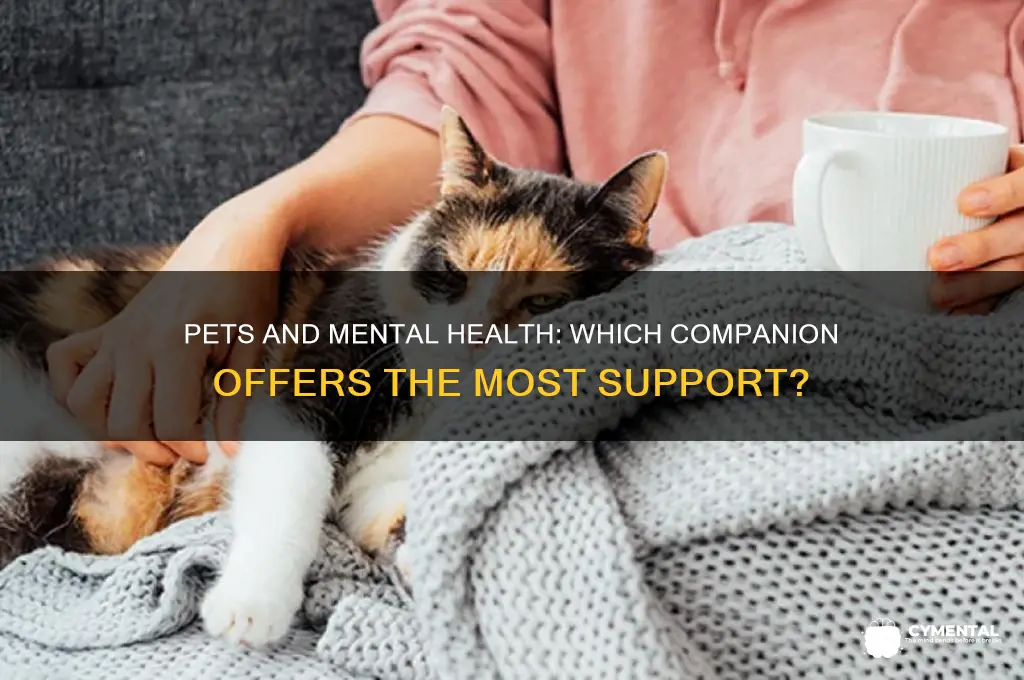
When considering which pet better supports mental health, it’s essential to recognize that both dogs and cats, as well as other animals, offer unique benefits. Dogs, often referred to as man's best friend, provide companionship, encourage physical activity through walks, and foster social interactions, which can alleviate symptoms of depression and anxiety. Cats, on the other hand, offer a calming presence with their gentle purring and low-maintenance nature, making them ideal for individuals seeking quiet, consistent emotional support. Other pets, such as birds, fish, or small mammals, can also contribute to mental well-being by reducing stress and providing a sense of purpose. Ultimately, the best pet for mental health depends on an individual’s lifestyle, preferences, and specific needs, as each animal brings its own therapeutic qualities to the table.
Explore related products





What You'll Learn
- Dogs vs. Cats: Comparing emotional support and companionship benefits of dogs and cats for mental well-being
- Small Pets: How rabbits, guinea pigs, or hamsters provide comfort and reduce stress levels
- Fish Therapy: The calming effects of aquariums and fish-keeping on anxiety and focus
- Exotic Pets: Unique mental health benefits of reptiles, birds, or sugar gliders as companions
- Pet Interaction: Physical touch, routine, and bonding with pets to combat loneliness and depression

Dogs vs. Cats: Comparing emotional support and companionship benefits of dogs and cats for mental well-being
Pets have long been recognized as valuable companions for improving mental health, but the debate between dogs and cats as superior emotional support animals persists. Dogs, often hailed as “man’s best friend,” offer structured routines through their need for walks, feeding schedules, and playtime, which can ground individuals struggling with anxiety or depression. This predictability fosters a sense of purpose and responsibility, acting as a natural mood stabilizer. For instance, a 2020 study published in the *Journal of Psychiatric Research* found that dog owners reported lower levels of loneliness and higher levels of social interaction compared to non-dog owners, highlighting the social catalyst role dogs play.
Cats, on the other hand, provide a different kind of companionship—one rooted in calmness and independence. Their low-maintenance nature makes them ideal for individuals with limited energy or those who prefer quieter environments. A 2019 study in *Animals* journal noted that cat owners experienced reduced stress levels, attributed to the soothing effect of a cat’s purring, which vibrates at a frequency of 25-150 Hz, known to lower blood pressure and promote relaxation. Unlike dogs, cats offer emotional support through presence rather than activity, making them particularly beneficial for those with social anxiety or sensory sensitivities.
When comparing the two, dogs excel in active emotional support, particularly for individuals seeking structure and external motivation. For example, therapy dogs are frequently used in PTSD treatment programs, where their responsiveness and trainability allow them to interrupt panic attacks or provide grounding during flashbacks. Cats, however, shine in passive emotional support, offering comfort without demanding constant engagement. This makes them a better fit for individuals with conditions like agoraphobia or chronic fatigue syndrome, where overexertion can exacerbate symptoms.
Practical considerations also play a role in this choice. Dogs require more time, financial investment, and physical space, which can be overwhelming for someone already managing mental health challenges. Cats, with their self-sufficient nature, are more accessible for those with limited resources or mobility. For instance, a small apartment dweller might find a cat’s adaptability more suitable than a large dog’s space and exercise needs.
Ultimately, the choice between dogs and cats for mental well-being depends on individual needs and lifestyle. Dogs provide active companionship and routine, ideal for those seeking structure and social interaction. Cats offer quiet, low-maintenance support, perfect for individuals needing calm and independence. Both pets have unique ways of fostering emotional health, and the decision should align with the specific challenges and preferences of the individual.
Supporting Your Friend: Encouraging Mental Health Treatment with Compassion
You may want to see also
Explore related products




Small Pets: How rabbits, guinea pigs, or hamsters provide comfort and reduce stress levels
Rabbits, guinea pigs, and hamsters are often overlooked in discussions about emotional support animals, yet their small size and gentle nature make them uniquely effective for reducing stress and providing comfort. Unlike larger pets, these small animals require minimal space, making them ideal for apartments or homes with limited room. Their quiet presence can create a calming atmosphere without the demands of constant attention, allowing individuals to benefit from companionship without feeling overwhelmed. For those with anxiety or sensory sensitivities, the soft fur of a guinea pig or the rhythmic movements of a hamster can serve as grounding tactile experiences, helping to anchor the mind in the present moment.
Consider the routine care these pets require—feeding, cleaning cages, and handling—as a form of structured activity that can benefit mental health. Studies suggest that engaging in repetitive, low-stress tasks can reduce cortisol levels, the hormone associated with stress. For example, spending 10–15 minutes daily interacting with a rabbit or hamster can provide a sense of purpose and routine, particularly for individuals struggling with depression or ADHD. The predictability of these interactions can foster a sense of control and stability, which are often lacking in periods of mental distress. Additionally, the act of caring for another living being can shift focus away from personal worries, promoting mindfulness and emotional regulation.
From a comparative perspective, small pets like guinea pigs and rabbits offer distinct advantages over more traditional emotional support animals like dogs or cats. While dogs may require vigorous exercise and cats can be independent to a fault, small pets strike a balance between interaction and independence. For instance, rabbits are known for their social nature and can form strong bonds with their owners, often enjoying gentle petting or lap time. Guinea pigs, with their vocalizations and playful behaviors, provide a sense of liveliness without the high-energy demands of larger pets. Hamsters, though more solitary, can be fascinating to observe and handle, offering a quiet form of companionship that suits introverted or easily overstimulated individuals.
Practical tips for maximizing the mental health benefits of these small pets include creating a designated "pet corner" in your living space, where their cage and supplies are organized and accessible. This not only ensures their well-being but also integrates their presence into your daily environment, fostering a sense of connection. For those with anxiety, establishing a consistent interaction routine—such as morning and evening handling sessions—can provide structure and predictability. Additionally, incorporating sensory elements like soft bedding or gentle toys can enhance the calming effect of these pets. For example, the sound of a hamster running on a silent wheel or the purring of a content guinea pig can serve as soothing background noise, particularly during stressful moments.
In conclusion, rabbits, guinea pigs, and hamsters offer a unique blend of comfort, routine, and companionship that can significantly reduce stress and improve mental well-being. Their small size and low-maintenance needs make them accessible options for a wide range of individuals, from students in dorms to seniors in retirement homes. By understanding and leveraging their specific traits—whether it’s a rabbit’s sociability, a guinea pig’s vocalizations, or a hamster’s quiet presence—owners can create a supportive environment that promotes emotional stability and resilience. These small pets may not be the first choice for everyone, but their ability to provide comfort and reduce stress levels should not be underestimated.
Breaking Barriers: Why Mental Illness Often Goes Untreated
You may want to see also
Explore related products



Fish Therapy: The calming effects of aquariums and fish-keeping on anxiety and focus
The gentle glide of a betta fish, the synchronized sway of a school of tetras—aquariums are living works of art. Beyond their aesthetic appeal, research suggests that watching fish swim can reduce stress and anxiety. A study published in the journal *Environment and Behavior* found that viewing an aquarium for just 10 minutes significantly lowered participants’ heart rates and improved mood. This effect is attributed to the calming, repetitive motion of fish and the soothing blue hues of water, which mimic the tranquility of natural environments.
To harness these benefits, consider setting up a small aquarium in a high-stress area, such as your workspace or living room. Aim for a tank size of at least 10 gallons to ensure a stable environment for the fish and a visually engaging display for you. Opt for hardy, low-maintenance species like guppies, platies, or cherry barbs, which thrive in community setups. Incorporate live plants like java fern or anubias to enhance the natural aesthetic and improve water quality. Spend 5–10 minutes daily observing the tank, focusing on your breath and the rhythmic movements of the fish to maximize the calming effect.
While fish-keeping is often touted as a low-stress hobby, it’s not entirely hands-off. Beginners should start with a simple setup and gradually expand their knowledge. Overfeeding is a common mistake—feed fish only what they can consume in 2–3 minutes, once or twice daily. Regular water testing and partial water changes (20–30% weekly) are essential to maintain a healthy environment. Neglecting these tasks can lead to stress for both the fish and the keeper, undermining the therapeutic benefits.
Compared to other pets, fish offer unique advantages for mental health. Unlike dogs or cats, they require no walks, litter boxes, or vocal interactions, making them ideal for individuals with anxiety or sensory sensitivities. Their silent, self-contained world provides a meditative focal point without overwhelming stimuli. For those with ADHD, the structured routine of tank maintenance can improve focus and time management skills. However, fish-keeping lacks the tactile interaction and emotional reciprocity of furry pets, so it may not suit everyone’s needs.
Incorporating fish therapy into your mental health toolkit is accessible and adaptable. For children, a small desktop aquarium can teach responsibility and provide a calming distraction during homework. For seniors, larger tanks with colorful fish can stimulate visual interest and reduce feelings of isolation. Pair aquarium observation with mindfulness techniques, such as deep breathing or guided meditation, to amplify its stress-relieving effects. Whether as a standalone practice or part of a broader wellness routine, fish therapy offers a unique, understated way to nurture mental well-being.
Nurturing Mental and Emotional Well-Being: Strategies for Inner Peace and Resilience
You may want to see also
Explore related products


Exotic Pets: Unique mental health benefits of reptiles, birds, or sugar gliders as companions
Reptiles, birds, and sugar gliders offer unique mental health benefits that traditional pets like dogs or cats cannot. For instance, reptiles such as bearded dragons or leopard geckos provide a calming presence through their slow, deliberate movements, which can reduce anxiety in individuals who find fast-paced interactions overwhelming. Unlike mammals, reptiles require minimal vocal interaction, making them ideal for those who seek quiet companionship. Their low-maintenance care routine—feeding every 1-2 days and weekly tank cleaning—also reduces stress for owners with busy schedules or sensory sensitivities. This structured care can create a sense of purpose and routine, which is therapeutic for individuals with depression or ADHD.
Birds, particularly parrots or cockatiels, offer cognitive and emotional engagement through their ability to mimic speech and form deep bonds. Studies show that interacting with birds can lower cortisol levels, the stress hormone, by up to 24%. For individuals with loneliness or social anxiety, a bird’s vocalizations and playful behavior can simulate social interaction without the pressure of human conversation. However, birds require daily mental stimulation—such as puzzle toys or training sessions—to prevent boredom-induced behaviors like feather plucking. Owners should allocate 1-2 hours daily for interaction to maximize the mental health benefits while ensuring the bird’s well-being.
Sugar gliders, small marsupials known for their bonding capabilities, thrive on physical closeness, often cuddling in a pouch worn by their owner. This tactile interaction releases oxytocin, the "love hormone," which reduces stress and promotes feelings of security. For individuals with PTSD or attachment disorders, sugar gliders can provide a safe, non-judgmental form of physical connection. However, their nocturnal nature requires owners to adjust their schedules for nighttime interaction. A consistent routine—such as feeding a diet of insects, fruits, and specialized pellets twice daily—is essential for their health and reinforces a sense of responsibility in the owner.
Comparatively, these exotic pets offer benefits that align with specific mental health needs. Reptiles suit those seeking calm, low-interaction companionship; birds cater to individuals needing cognitive stimulation and social mimicry; and sugar gliders provide tactile comfort for those craving physical connection. Each pet’s care demands foster mindfulness and routine, which are foundational to mental health management. Before choosing an exotic pet, research their specific needs and consult a veterinarian to ensure compatibility with your lifestyle and mental health goals. This tailored approach maximizes the therapeutic benefits while ensuring the animal’s welfare.
Supporting Mr. Robot: How Friends Can Aid Dissociative Identity Disorder
You may want to see also
Explore related products


Pet Interaction: Physical touch, routine, and bonding with pets to combat loneliness and depression
Physical touch is a powerful antidote to loneliness and depression, and pets provide it unconditionally. A study published in the *Journal of Personality and Social Psychology* found that even brief interactions with pets, such as stroking a cat or dog, can significantly reduce cortisol levels, the body’s primary stress hormone. For individuals struggling with mental health, this tactile connection can serve as a grounding force, offering immediate comfort and a sense of presence. Unlike human interactions, which may carry expectations or judgments, pets offer touch without strings attached, making it a reliable source of solace. To maximize this benefit, aim for 15–30 minutes of intentional petting or cuddling daily, especially during moments of heightened anxiety or sadness.
Routine is another critical aspect of pet interaction that combats mental health challenges. Pets thrive on consistency, and caring for them—feeding, walking, or grooming—creates a structured daily rhythm. This routine can be particularly beneficial for those with depression, who often struggle with motivation and purpose. For example, walking a dog twice a day not only ensures physical activity but also provides a reason to leave the house and engage with the outside world. Even small tasks, like refilling a bird’s water dish or cleaning a hamster cage, can instill a sense of accomplishment and responsibility. For maximum impact, align pet care tasks with your most challenging times of day; if mornings are difficult, let your pet’s breakfast routine be your anchor.
Bonding with a pet goes beyond physical touch and routine—it fosters emotional connection and reduces feelings of isolation. Pets are attuned to human emotions, often responding to their owner’s mood with empathy. A dog might nudge a crying person, or a cat may curl up on the lap of someone feeling low. This nonverbal communication builds trust and companionship, filling the void that loneliness creates. To deepen this bond, incorporate playtime or training sessions into your daily routine. For instance, teaching a dog a new trick or playing with a cat using a laser pointer not only strengthens your relationship but also releases endorphins, boosting your mood. Aim for 10–15 minutes of interactive play daily, adjusting for your pet’s energy level and your emotional capacity.
While pets offer immense mental health benefits, it’s essential to choose the right companion for your lifestyle and needs. Dogs, for instance, require more time and energy but provide constant companionship and opportunities for social interaction during walks. Cats, on the other hand, are lower-maintenance and excel at offering quiet, calming presence. Smaller pets like fish or hamsters can still provide routine and responsibility without the demands of larger animals. Consider your living situation, activity level, and emotional capacity when selecting a pet. For those with severe depression or anxiety, starting with a low-maintenance pet may be more manageable, gradually building up to more interactive companions as mental health improves. Regardless of the pet, the key is consistency—regular interaction and care will yield the most significant mental health benefits.
Nurturing Your Mind: Practical Strategies for Mental Self-Care and Resilience
You may want to see also
Frequently asked questions
Dogs are often considered better for reducing stress and anxiety due to their social nature, unconditional love, and ability to encourage physical activity like walking, which releases endorphins.
Cats can be more suitable for individuals with depression as they require less maintenance and provide calming companionship without the demand for constant interaction, which can be overwhelming for some.
Dogs are better for improving social interaction as they often lead to conversations with other dog owners during walks or at parks, helping to build connections and reduce feelings of isolation.
Small animals like hamsters, guinea pigs, or fish are easier to care for and still offer mental health benefits through their calming presence and the routine of caring for another living being.