Noah Parker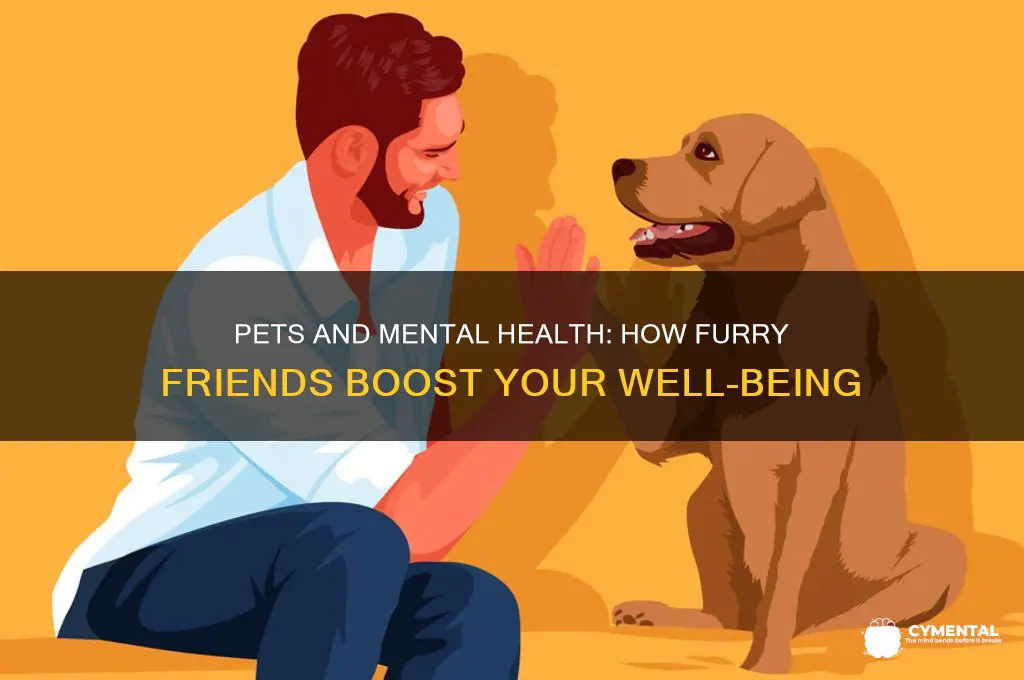
Pets play a significant role in enhancing mental health by providing companionship, reducing stress, and fostering emotional well-being. Their unconditional love and presence create a sense of security and routine, which can alleviate feelings of loneliness and anxiety. Interacting with pets, such as petting a dog or cat, triggers the release of oxytocin, a hormone associated with bonding and relaxation, while lowering cortisol levels, the stress hormone. Additionally, pets encourage physical activity, such as walking a dog, which boosts mood and reduces symptoms of depression. Their non-judgmental nature allows individuals to feel accepted and understood, promoting self-esteem and emotional resilience. Overall, pets offer a consistent source of comfort and support, making them invaluable allies in maintaining and improving mental health.
Explore related products


What You'll Learn

Companionship reduces loneliness
Loneliness is a silent epidemic, affecting millions across all age groups, from teenagers grappling with social anxiety to seniors facing isolation after retirement. Pets, particularly dogs and cats, offer a unique antidote by providing consistent, non-judgmental companionship. Unlike human relationships, which can be complicated by expectations or conflicts, pets demand only presence and care. Studies show that pet owners report significantly lower levels of loneliness, with 85% of respondents in a 2021 survey citing their pets as a primary source of emotional support. This companionship is especially critical for individuals living alone, who often lack daily social interaction.
Consider the routine a pet establishes: morning walks, feeding times, and evening cuddles. These structured activities create a sense of purpose and predictability, anchoring the owner in the present moment. For someone struggling with loneliness, this routine can be a lifeline, breaking the cycle of rumination and isolation. Dogs, for instance, require daily exercise, which not only benefits the pet but also forces the owner to engage with the outside world, whether through a walk in the park or a visit to a dog-friendly café. Even small interactions, like a neighbor stopping to pet the dog, can foster a sense of connection.
The science behind this phenomenon lies in the release of oxytocin, often called the "love hormone," during petting or bonding activities. A 15-minute session of stroking a cat or dog can increase oxytocin levels by up to 30%, reducing stress and promoting feelings of calm and contentment. This biochemical response mimics the effects of human companionship, effectively alleviating loneliness at a neurological level. For older adults, who are at higher risk of social isolation, pets can serve as a buffer against the negative health impacts of loneliness, including depression and cognitive decline.
However, integrating a pet into one’s life requires careful consideration. Prospective owners should assess their lifestyle, living situation, and financial capacity to ensure they can meet the pet’s needs. For those unable to commit to full-time pet ownership, alternatives like fostering, pet-sitting, or volunteering at a local shelter can still provide meaningful interaction. Even brief encounters with animals, such as therapy dog visits in hospitals or schools, have been shown to reduce feelings of loneliness and improve mood.
In conclusion, pets are more than just animals; they are companions who fill the void left by loneliness with unwavering presence and unconditional love. By establishing routines, fostering social interactions, and triggering positive biochemical responses, pets offer a holistic solution to one of the most pervasive mental health challenges of our time. Whether through ownership or occasional engagement, incorporating animals into one’s life can be a powerful step toward combating loneliness and enhancing overall well-being.
Breaking Mental Health Stigma: Practical Steps for Support and Awareness
You may want to see also
Explore related products


Routine boosts stability and purpose
Pets introduce a natural rhythm to daily life, and this routine can be a cornerstone for mental stability. Consider the act of feeding a dog twice a day or cleaning a fish tank weekly. These tasks, though simple, create a predictable structure that anchors your day. For individuals with anxiety or depression, this predictability reduces uncertainty, a common trigger for stress. A study published in the *Journal of Psychiatric Research* found that pet owners with structured pet care routines reported lower levels of cortisol, the stress hormone, compared to non-pet owners. The key lies in consistency: even small, repeated actions like refilling a water bowl or brushing fur can serve as mental checkpoints, signaling progress and control in an otherwise chaotic day.
To harness this benefit, start by mapping out a pet care schedule that aligns with your natural rhythm. For example, if you’re a morning person, incorporate a 15-minute walk with your dog before breakfast. If evenings are calmer, use that time for grooming or play. The goal is to integrate these tasks into your existing routine rather than adding them as burdens. For children or older adults, involving them in age-appropriate tasks—like measuring pet food or watering plants near a terrarium—can foster a sense of responsibility and accomplishment. Remember, the routine isn’t just for the pet; it’s a tool for your mental health, so tailor it to your energy levels and needs.
A cautionary note: routine can become rigid if not balanced with flexibility. Pets, like humans, have unpredictable moments—a cat might refuse to eat a new food, or a dog might get sick. When disruptions occur, view them as opportunities to practice adaptability rather than stressors. Keep a backup plan, such as an extra bag of familiar food or a list of emergency vet contacts, to minimize anxiety. Over time, this balance between structure and flexibility mirrors healthy coping mechanisms, teaching resilience in the face of life’s unpredictability.
The takeaway is clear: pets don’t just benefit from routine—they create it, and in doing so, they offer us a framework for stability and purpose. For those struggling with mental health, this routine can be a lifeline, a daily reminder that small, consistent actions lead to meaningful progress. Whether you’re a student, a parent, or a retiree, the act of caring for another living being shifts the focus outward, breaking cycles of rumination and self-doubt. It’s not just about feeding a pet; it’s about feeding your own sense of purpose, one task at a time.
Mental Illness as a Catalyst: How Struggles Fuel Entrepreneurial Success
You may want to see also
Explore related products


Physical activity improves mood
Pets, by their very nature, encourage physical activity, and this simple fact can be a game-changer for your mental health. Whether it's a dog tugging at its leash or a cat batting at a toy, pets demand engagement, often in ways that get you moving. This increased physical activity triggers the release of endorphins, the body's natural mood lifters, which can reduce stress, anxiety, and symptoms of depression. Even a 30-minute walk with your dog daily can significantly improve your mood, providing a sense of accomplishment and a break from the mental noise of daily life.
Consider the routine of pet ownership as a built-in exercise program. For dog owners, the American Heart Association recommends at least 150 minutes of moderate-intensity aerobic activity per week, which aligns perfectly with the needs of an active dog. This isn’t just about physical health; it’s about mental resilience. Studies show that regular physical activity can reduce the risk of depression by 26%, and the structured nature of pet care ensures consistency, a key factor in reaping these benefits. Even smaller pets, like cats or rabbits, can inspire movement through play, though the intensity may vary.
The mental health benefits of pet-induced physical activity are particularly pronounced in older adults and children. For seniors, gentle activities like walking a dog or playing with a cat can improve mobility and reduce feelings of isolation, while for children, active play with pets fosters emotional regulation and reduces anxiety. A study published in the *Journal of Pediatric Psychology* found that children who engaged in physical play with pets showed lower cortisol levels, a marker of stress. The key is to match the activity to the individual’s ability, ensuring it’s enjoyable and sustainable.
However, it’s important to approach this with caution. Over-exertion or unrealistic expectations can backfire, leading to frustration or injury. Start small—a 10-minute play session or a short walk—and gradually increase duration and intensity. For those with physical limitations, even light activities like grooming or training exercises can provide mental health benefits. The goal isn’t to achieve peak fitness but to create a consistent routine that enhances mood and well-being.
Incorporating pets into your physical activity routine isn’t just about exercise; it’s about building a bond that enriches both your life and theirs. The mutual benefit is undeniable—pets thrive on interaction, and you reap the mental health rewards. So, lace up your sneakers, grab the leash, or pick up that feather toy. Your mood—and your pet—will thank you.
Seeking At-Home Mental Health Support: A Guide to Accessible Care
You may want to see also
Explore related products


Unconditional love lowers stress
Pets offer a unique form of emotional support that humans often struggle to replicate: unconditional love. Unlike human relationships, which can be complicated by expectations, judgments, or conflicts, the bond between a pet and their owner is built on simplicity and acceptance. This dynamic plays a crucial role in reducing stress by providing a consistent source of comfort and security. Studies show that interacting with pets, whether through petting, playing, or simply being in their presence, triggers the release of oxytocin—a hormone associated with bonding and stress reduction. This biochemical response helps lower cortisol levels, the body’s primary stress hormone, creating a physiological buffer against anxiety and tension.
Consider the daily routine of a pet owner. A dog’s enthusiastic greeting after a long day or a cat’s gentle purring on your lap are small yet powerful acts of unconditional love. These moments serve as emotional anchors, grounding individuals in the present and diverting attention from stressors. For example, a 2019 study published in the *Journal of Behavioral Medicine* found that pet owners exhibited lower blood pressure and heart rate during stressful tasks when their pets were present compared to human friends or spouses. The takeaway? Pets provide a non-judgmental, immediate form of support that can be particularly beneficial for individuals facing chronic stress or mental health challenges.
To maximize the stress-reducing benefits of unconditional love from pets, incorporate intentional interactions into your daily routine. Spend at least 15–20 minutes engaging with your pet through activities like grooming, training, or play. For those without pets, consider volunteering at a local shelter or fostering an animal temporarily. Even brief, consistent exposure to pets can yield measurable stress relief. Additionally, create a designated "pet time" in your schedule, treating it as a non-negotiable self-care practice. This structured approach ensures you reap the emotional and physiological benefits of their unconditional love regularly.
While the stress-reducing effects of pets are well-documented, it’s important to acknowledge that not everyone can own a pet due to allergies, living situations, or financial constraints. In such cases, alternative solutions like therapy animals or virtual pet interactions (e.g., watching calming pet videos) can still provide some benefits. However, nothing quite compares to the tangible presence of a pet. For those able to commit, choosing a pet that aligns with your lifestyle—whether a low-maintenance fish or an active dog—ensures a mutually beneficial relationship. The key is consistency; regular interaction amplifies the stress-lowering effects of their unconditional love.
In conclusion, the unconditional love of pets serves as a powerful antidote to stress, offering both emotional solace and physiological relief. By integrating pets into our lives mindfully, we can harness their unique ability to provide unwavering support. Whether through daily interactions or structured routines, pets remind us that love, in its simplest form, can be one of the most effective tools for mental well-being.
When Therapy Fails: Exploring Alternatives for Mental Health Recovery
You may want to see also
Explore related products


Caring for pets fosters responsibility
Pets demand consistency, and their care routines become non-negotiable pillars in our daily lives. Feeding, grooming, and exercise aren’t optional—they’re commitments that structure our days. For instance, a dog requires 30 minutes of vigorous exercise daily, according to the American Kennel Club, while cats need interactive play sessions of 10–15 minutes twice a day to prevent behavioral issues. These tasks force us to prioritize someone else’s needs over our own, even when we’re feeling low, fostering a sense of duty that spills into other areas of life.
Consider the act of maintaining a pet’s health. Administering medication, scheduling vet visits, and monitoring dietary restrictions (like grain-free diets for dogs with allergies) demand attention to detail. A missed dose of flea treatment or an overlooked dental checkup can have tangible consequences, teaching us the weight of accountability. This micro-management of another being’s well-being translates into heightened reliability in personal and professional spheres, as studies from the *Journal of Personality and Social Psychology* suggest that pet ownership correlates with increased conscientiousness.
Children, in particular, benefit from pet care responsibilities. Assigning age-appropriate tasks—such as a 6-year-old refilling water bowls or a 10-year-old brushing fur—instills discipline and empathy. Research from the *American Academy of Pediatrics* highlights that children who grow up with pets are more likely to exhibit prosocial behaviors, partly due to the structured caregiving roles they adopt. Even teenagers, often stereotyped as unreliable, can thrive when entrusted with tasks like walking the dog daily or managing a pet’s feeding schedule via apps like *PetDesk*.
However, this responsibility isn’t without challenges. Overcommitment can lead to burnout, especially if pet care feels like a burden rather than a bond. To mitigate this, set realistic boundaries—automate repetitive tasks (e.g., using timed feeders for cats) and delegate when possible. For those with mental health conditions like anxiety or depression, start small: commit to one consistent task (like nightly brushing) before expanding responsibilities. The goal is to build competence gradually, not overwhelm.
Ultimately, caring for a pet is a masterclass in accountability, where every action (or inaction) has immediate feedback. Unlike human relationships, pets offer unconditional acceptance while still demanding our best efforts. This dynamic teaches us that responsibility isn’t about perfection but about showing up, day after day, even when it’s hard. In nurturing another life, we inadvertently nurture our own capacity for reliability, resilience, and care.
Overcoming Mental Blocks: Practical Strategies to Support and Empower Others
You may want to see also
Frequently asked questions
Pets provide companionship, reduce feelings of loneliness, and offer unconditional love, which can boost mood and emotional well-being.
Yes, interacting with pets, such as petting a dog or cat, can lower cortisol levels and increase oxytocin, promoting relaxation and reducing anxiety.
Pets, especially dogs, require regular exercise like walks, which encourages physical activity. This can reduce symptoms of depression and improve overall mental health.
Pets offer a sense of routine, purpose, and non-judgmental support, which can be particularly comforting during periods of grief, stress, or mental health challenges.
Pets have been shown to assist with conditions like depression, anxiety, PTSD, and ADHD by providing emotional stability, reducing hyperactivity, and improving focus.