Harper Lewis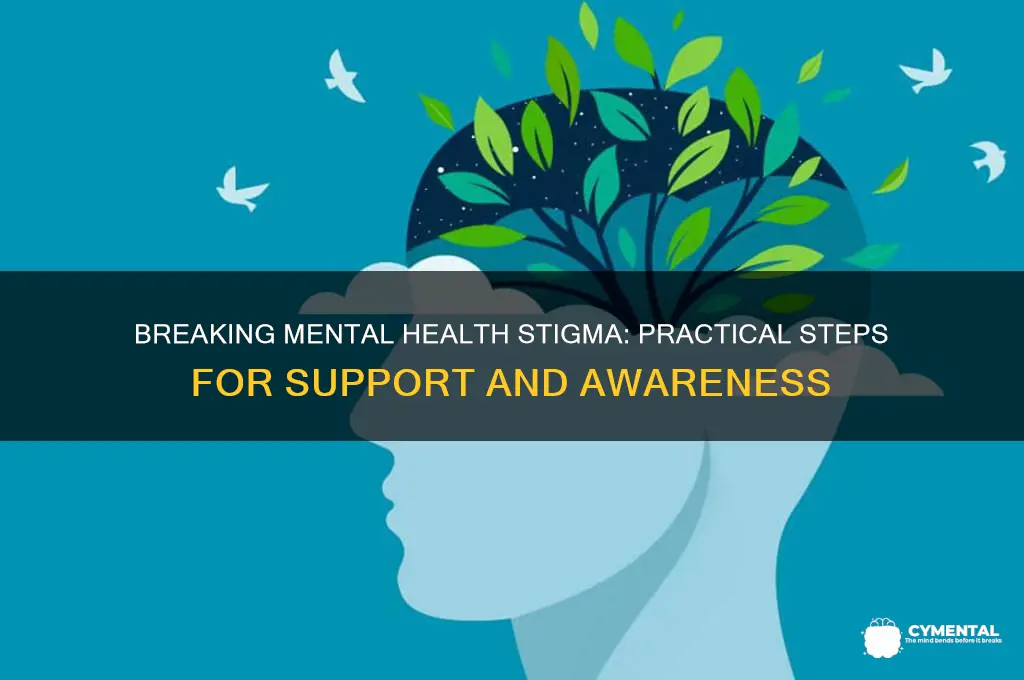
Mental health stigma remains a pervasive barrier to seeking help and accessing support, often rooted in misconceptions, fear, and societal judgment. Addressing this stigma requires a multifaceted approach, starting with education to dispel myths and foster understanding about mental health conditions. Encouraging open conversations and sharing personal stories can humanize the issue, reducing the shame and isolation many individuals feel. Policy changes and workplace initiatives that prioritize mental well-being can also create safer, more inclusive environments. By promoting empathy, advocating for equitable access to care, and challenging discriminatory attitudes, we can collectively work toward dismantling stigma and ensuring that everyone feels empowered to seek the help they need.
| Characteristics | Values |
|---|---|
| Education and Awareness | Promote accurate information about mental health through campaigns, workshops, and media. |
| Language and Communication | Use non-stigmatizing language and avoid derogatory terms like "crazy" or "psycho." |
| Personal Stories and Testimonies | Share personal experiences to humanize mental health struggles and reduce stereotypes. |
| Media Representation | Encourage positive and accurate portrayals of mental health in movies, TV, and news. |
| Workplace Support | Implement mental health policies, provide resources, and foster a supportive work environment. |
| Access to Care | Advocate for affordable and accessible mental health services. |
| Community Engagement | Organize events and initiatives to foster understanding and support within communities. |
| Policy and Advocacy | Support legislation that promotes mental health awareness and reduces discrimination. |
| Empathy and Compassion | Encourage active listening and understanding toward individuals with mental health issues. |
| Challenging Stereotypes | Address and correct misconceptions about mental illness through dialogue and education. |
| Professional Training | Provide mental health training for professionals in healthcare, education, and workplaces. |
| Early Intervention | Promote early detection and intervention to reduce stigma and improve outcomes. |
| Cultural Sensitivity | Acknowledge and respect cultural differences in perceptions of mental health. |
| Peer Support Programs | Establish peer-led groups to provide mutual support and reduce feelings of isolation. |
| Research and Data | Use evidence-based research to inform stigma-reduction strategies. |
Explore related products

$16.98 $30


What You'll Learn
- Educate Yourself and Others: Learn facts, share accurate information, and challenge myths about mental health
- Use Inclusive Language: Avoid stigmatizing terms; speak respectfully and empathetically about mental health issues
- Share Personal Stories: Normalize conversations by sharing experiences to reduce shame and isolation
- Support Policy Changes: Advocate for mental health resources, funding, and anti-stigma initiatives in communities
- Promote Empathy and Compassion: Encourage understanding and kindness toward those with mental health challenges

Educate Yourself and Others: Learn facts, share accurate information, and challenge myths about mental health
Misinformation fuels stigma. Every time someone repeats a myth about mental illness being a sign of weakness or something to "just get over," they reinforce harmful stereotypes. This kind of ignorance creates barriers to seeking help, fosters isolation, and perpetuates suffering.
Start with reliable sources. Organizations like the National Alliance on Mental Illness (NAMI), the World Health Organization (WHO), and the American Psychiatric Association (APA) offer fact-based resources. Dive into statistics: 1 in 5 adults in the U.S. experiences mental illness annually. Understand the biological, psychological, and social factors contributing to conditions like depression, anxiety, and schizophrenia. For instance, research shows that genetics account for 40-60% of the risk for developing major depression.
Don’t just consume information—actively challenge misconceptions. When someone says, "People with schizophrenia are violent," counter with data: individuals with schizophrenia are more likely to be victims of violence than perpetrators. Use analogies: Would you tell someone with diabetes to "just think positively" to manage their blood sugar? Treat mental health with the same seriousness. Share personal stories (with consent) or amplify voices of those with lived experience to humanize the issue.
Education isn’t a one-time event; it’s an ongoing process. Attend workshops, follow reputable mental health advocates on social media, and engage in conversations that promote understanding. Encourage schools and workplaces to incorporate mental health literacy into their curricula. Remember, knowledge shared responsibly becomes a tool for dismantling stigma, one conversation at a time.
Boost Your Mental Health: Self-Care Strategies for Everyday Wellness
You may want to see also
Explore related products



Use Inclusive Language: Avoid stigmatizing terms; speak respectfully and empathetically about mental health issues
Language is a powerful tool that can either perpetuate stigma or foster understanding and empathy. The words we choose when discussing mental health can significantly impact how individuals perceive themselves and others facing these challenges. For instance, using terms like "crazy," "psycho," or "schizo" as casual insults not only trivializes serious conditions but also reinforces harmful stereotypes. Instead, adopting inclusive language that respects the dignity of individuals is a crucial step in combating mental health stigma.
Consider the difference between saying, "He’s bipolar," versus "He lives with bipolar disorder." The former reduces the person to their diagnosis, while the latter acknowledges the condition as one aspect of their life. This small shift in phrasing emphasizes the individual’s humanity and separates them from their illness. Similarly, avoid using phrases like "committed suicide" and opt for "died by suicide" to reduce blame and sensationalism. These changes may seem minor, but they reflect a deeper commitment to treating mental health with the same care and sensitivity as physical health.
In professional settings, such as healthcare or education, the use of person-first language is particularly important. For example, saying "a person with depression" instead of "a depressed person" places the individual before their condition. This approach encourages a more holistic view of the person, recognizing that their identity extends beyond their mental health struggles. Training programs for professionals should emphasize these linguistic nuances to ensure that their communication is both accurate and compassionate.
For everyday conversations, it’s helpful to practice active listening and mindful speaking. If someone discloses their mental health struggles, respond with phrases like, "Thank you for sharing that with me," or "How can I support you?" rather than jumping to advice or judgment. Avoid saying, "You don’t look like you have anxiety," as it invalidates their experience. Instead, validate their feelings with statements like, "That sounds really difficult. I’m here for you." These responses create a safe space for open dialogue and reduce the fear of judgment.
Ultimately, using inclusive language is not just about political correctness; it’s about fostering a culture of empathy and respect. By consciously choosing words that uplift rather than demean, we contribute to a society where mental health is discussed openly and without shame. This shift begins with individual awareness and effort but has the potential to create widespread change, one conversation at a time.
Podcasts and Mental Health: A Powerful Tool for Healing and Growth
You may want to see also
Explore related products

$13.93 $14.95


Share Personal Stories: Normalize conversations by sharing experiences to reduce shame and isolation
Personal narratives have an unparalleled power to humanize abstract struggles, making them tangible and relatable. When individuals share their mental health journeys, they dismantle the invisible walls of stigma by showing that these experiences are not anomalies but shared human conditions. For instance, a study published in the *Journal of Health Communication* found that stories of recovery from mental illness significantly increased empathy and reduced stigmatizing attitudes among listeners. This isn’t about oversharing; it’s about strategic vulnerability. Start with small, controlled disclosures in trusted environments—a close friend, a support group, or even an anonymous online forum. The goal is to normalize the conversation, one story at a time, proving that mental health challenges are as valid as physical ailments.
Sharing personal stories isn’t just about speaking; it’s about creating a blueprint for others to follow. When public figures like Simone Biles or Prince Harry openly discuss their mental health, they model courage and authenticity, encouraging others to do the same. But you don’t need a global platform to make an impact. Start locally: share your experience in a workplace meeting, a family gathering, or a community event. Be specific about what helped you—therapy, medication, mindfulness—and what didn’t. This not only reduces isolation but also provides actionable insights for those who may be struggling silently. Remember, the story doesn’t need a happy ending to be impactful; honesty about setbacks is just as powerful as tales of triumph.
One common fear is that sharing will lead to judgment or rejection. While this risk exists, the alternative—silence—often perpetuates stigma more profoundly. A practical tip is to gauge your audience before sharing. Begin with a trusted confidant or a small group, then gradually expand your circle. If you’re sharing in a professional setting, frame your story as a call to action: advocate for mental health days, flexible work policies, or employee assistance programs. For younger audiences, like teens or college students, use platforms like Instagram or TikTok to share bite-sized, relatable anecdotes. The key is to tailor your message to the context, ensuring it resonates without overwhelming.
Finally, sharing personal stories isn’t a one-time act but a continuous process of advocacy. Each time you speak up, you contribute to a cultural shift, making mental health discussions as commonplace as conversations about physical health. For maximum impact, pair your story with education: share statistics, resources, or helpline numbers. Encourage dialogue by asking open-ended questions like, “What’s your experience with mental health?” or “How do you take care of your emotional well-being?” This transforms a monologue into a movement, fostering a community where shame has no place. After all, stigma thrives in silence, but stories set us free.
Nourish Your Mind: The Surprising Link Between Eating and Mental Health
You may want to see also
Explore related products

$10.21 $18.95


$6.79 $14.99



Support Policy Changes: Advocate for mental health resources, funding, and anti-stigma initiatives in communities
Mental health stigma persists in part because systemic barriers limit access to care and perpetuate misconceptions. Policy changes can dismantle these barriers by allocating resources, funding evidence-based programs, and embedding anti-stigma initiatives into community frameworks. For instance, legislation mandating mental health education in schools can normalize conversations about emotional well-being from a young age, while funding for community-based crisis intervention teams can reduce reliance on law enforcement in mental health emergencies. These structural shifts not only improve access but also reframe mental health as a public priority, challenging societal taboos.
Advocating for policy changes requires a multi-pronged approach. Start by identifying local, state, or national representatives who oversee healthcare, education, or social services budgets. Craft concise, data-driven messages highlighting the economic and social costs of untreated mental illness—for example, lost productivity, increased incarceration rates, and strained healthcare systems. Use personal stories judiciously to humanize the issue, but anchor your arguments in research, such as studies showing that every dollar invested in mental health yields a $4 return in improved health and productivity. Attend town halls, write op-eds, or join advocacy groups like the National Alliance on Mental Illness (NAMI) to amplify your voice collectively.
While advocating, beware of common pitfalls. Avoid framing mental health as a partisan issue; instead, emphasize its universality across demographics. Be cautious of vague policy proposals—specificity matters. For example, instead of calling for "more funding," propose allocating $X million to expand telehealth services in rural areas or to train 500 peer support specialists annually. Additionally, recognize that policy change is slow; sustain momentum by celebrating incremental wins, such as a new school-based counseling program or a stigma-reduction campaign in public transit systems.
The impact of policy advocacy extends beyond legislation. It fosters a cultural shift by signaling that mental health is a collective responsibility, not an individual failing. For instance, a city ordinance requiring employers to offer mental health days normalizes self-care and reduces workplace stigma. Similarly, funding for public awareness campaigns, like the UK’s "Time to Change," can reduce discriminatory attitudes by 4.1% annually, according to longitudinal studies. These initiatives create a feedback loop: as stigma decreases, more people seek help, and as more people seek help, stigma further diminishes.
To maximize your advocacy efforts, leverage existing frameworks like the Mental Health Parity and Addiction Equity Act, which requires insurers to cover mental health equally to physical health. Push for enforcement of such laws by reporting violations to regulatory bodies. Collaborate with diverse stakeholders—faith leaders, educators, business owners—to broaden support. Finally, track progress using metrics like increased funding allocations, reduced wait times for mental health services, or improved public attitudes in surveys. Policy advocacy is not just about passing laws; it’s about reshaping the environment in which mental health is discussed, funded, and prioritized.
Supporting Adults with Mental Illness: Practical Strategies for Compassionate Care
You may want to see also
Explore related products


Promote Empathy and Compassion: Encourage understanding and kindness toward those with mental health challenges
Empathy begins with education. To foster genuine understanding of mental health challenges, we must dismantle the misinformation that fuels stigma. This requires moving beyond vague awareness campaigns and into specific, actionable knowledge. For instance, teaching the biological underpinnings of depression—such as neurotransmitter imbalances or brain structure changes—can reframe it as a medical condition rather than a personal failing. Schools, workplaces, and community centers should integrate mental health literacy into their curricula, using age-appropriate language for children (e.g., "Sometimes our brains need extra help, just like our bodies do") and detailed scientific insights for adults. Pairing facts with personal narratives from individuals who’ve experienced mental health struggles creates a dual impact: it humanizes the issue while grounding it in reality.
Kindness thrives in environments where it’s actively modeled and rewarded. One practical strategy is to train "compassion ambassadors" within communities—individuals who commit to publicly demonstrating empathy toward those with mental health challenges. For example, a workplace ambassador might intervene if a colleague’s anxiety is dismissed with comments like, "Just relax," instead offering, "That sounds really tough. How can I support you?" Similarly, schools could implement peer-to-peer programs where students are taught to recognize signs of distress and respond with phrases like, "I’m here for you" or "Let’s talk to someone who can help." These small acts, when consistently reinforced, create a cultural shift where compassion becomes the default response rather than an exception.
Storytelling is a powerful tool for bridging the empathy gap. Sharing first-person accounts of mental health struggles—whether through videos, podcasts, or written essays—allows audiences to step into someone else’s experience. However, the format matters. Research shows that narratives focusing on recovery and resilience are more effective at reducing stigma than those ending in tragedy. For maximum impact, pair stories with a call to action: after hearing a speaker discuss their journey with bipolar disorder, for instance, audiences could be prompted to commit to one empathetic act, such as checking in on a friend or correcting a stigmatizing comment. This transforms passive listening into active compassion.
Finally, fostering empathy requires addressing our own biases. A reflective practice like journaling can help individuals identify stigmatizing thoughts they may hold unconsciously. For example, someone might write, "I feel uncomfortable around people with schizophrenia because I fear unpredictability," then challenge that belief by researching the reality of the condition (e.g., people with schizophrenia are more likely to be victims of violence than perpetrators). Institutions can facilitate this process through workshops that combine education with self-reflection exercises. One effective technique is the "perspective-taking exercise," where participants imagine a day in the life of someone with a mental health challenge, then discuss how their assumptions shifted. Over time, such practices rewire our instincts toward compassion rather than judgment.
Nutrition's Impact: How a Healthy Diet Boosts Mental Well-being
You may want to see also
Frequently asked questions
Mental health stigma refers to negative attitudes, beliefs, or stereotypes about mental health conditions. It is harmful because it can prevent individuals from seeking help, lead to isolation, and perpetuate discrimination, worsening mental health outcomes.
You can reduce stigma by educating yourself and others about mental health, using respectful language, sharing personal stories (if comfortable), and supporting policies that promote mental health awareness and access to care.
Use neutral, factual language, avoid labels like "crazy" or "weak," and focus on the person rather than their condition. Emphasize that mental health struggles are common and treatable.
Listen without judgment, validate their experiences, and offer encouragement to seek professional help. Be a safe space for them and advocate for their inclusion in social and professional settings.
Social media can amplify awareness by sharing accurate information, personal stories, and resources. It can also challenge stereotypes and create communities of support, but it’s important to avoid sensationalism or misinformation.