Noah Parker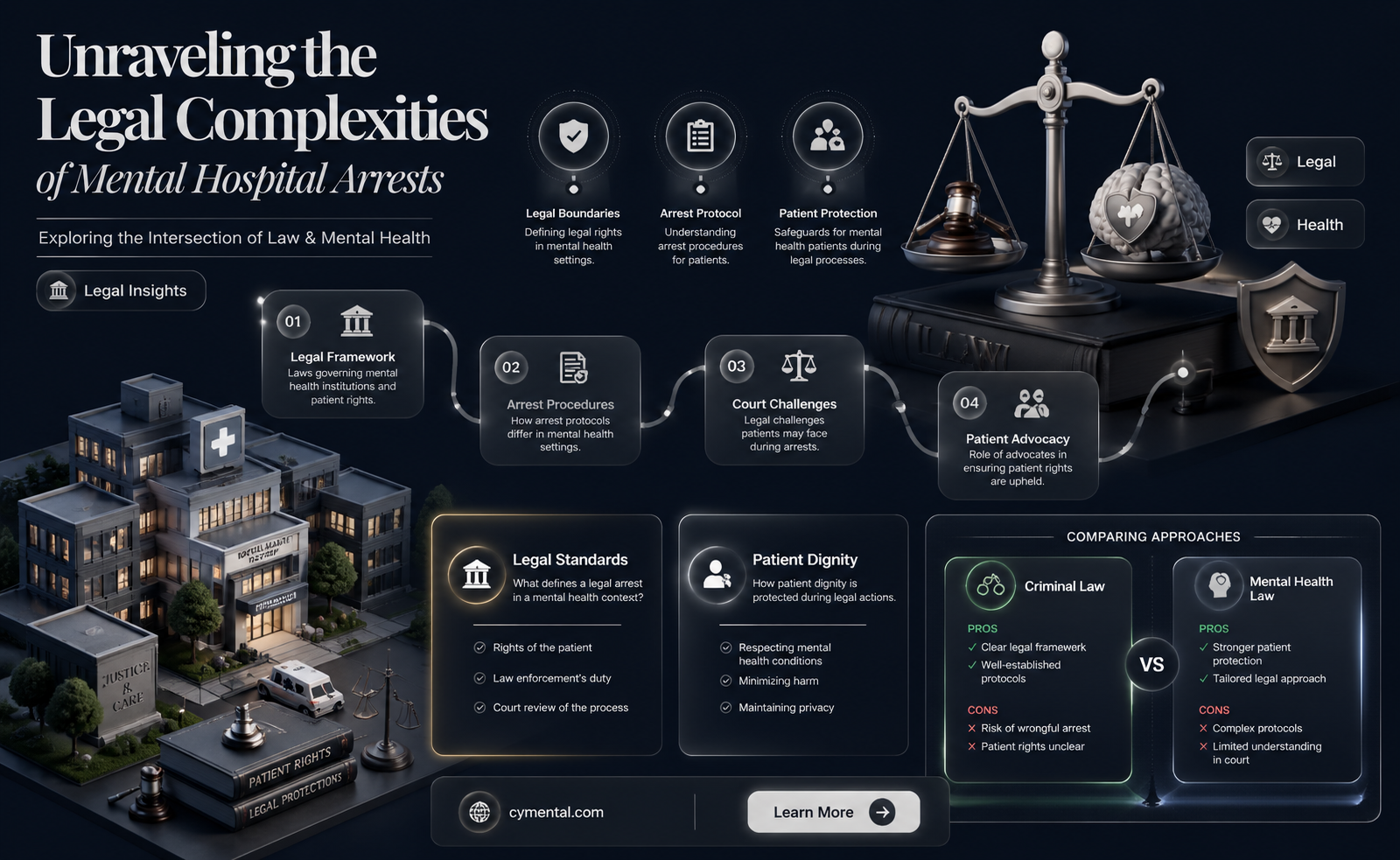
Mental hospital arrests can be a complex and sensitive issue, often involving individuals who may be experiencing mental health crises. In many jurisdictions, law enforcement officers may be called to mental health facilities to assist with situations that could potentially escalate into criminal incidents. However, the question of whether these arrests are considered criminal in nature depends on various factors, including the specific circumstances of the incident, the laws of the jurisdiction, and the individual's mental state at the time of the arrest. It is important to approach this topic with a nuanced understanding of both the legal and mental health perspectives involved.
Explore related products

$7.02 $7.02


What You'll Learn

Legal procedures for mental health detentions
In the context of mental health detentions, legal procedures play a crucial role in ensuring that individuals are treated fairly and within the bounds of the law. These procedures vary significantly depending on the jurisdiction, but they generally involve a series of steps designed to protect the rights of the individual while also addressing their mental health needs.
One of the key aspects of legal procedures for mental health detentions is the requirement for a court order. In most cases, a mental health professional must petition the court to detain an individual, providing evidence that the person poses a risk to themselves or others due to their mental state. The court will then hold a hearing to determine whether the detention is justified. This process is designed to prevent arbitrary detentions and to ensure that individuals are only held when it is absolutely necessary for their safety or the safety of others.
Another important aspect of these procedures is the right to legal representation. Individuals who are facing mental health detentions are typically entitled to have an attorney represent them in court. This attorney can help to ensure that the individual's rights are protected and can argue against the detention if it is deemed unjustified. In some cases, the court may also appoint a guardian ad litem to represent the individual's best interests, particularly if they are deemed incapable of making decisions for themselves.
The duration of mental health detentions is also subject to legal procedures. In many jurisdictions, there are strict time limits on how long an individual can be detained without a court review. This helps to prevent long-term detentions without proper oversight and ensures that individuals are regularly assessed to determine if they still meet the criteria for detention. Additionally, individuals are often entitled to appeal their detention to a higher court if they believe it is unjustified.
Finally, legal procedures for mental health detentions also address the conditions under which individuals are held. These procedures typically require that individuals be held in the least restrictive environment possible and that they receive appropriate mental health treatment. This is designed to ensure that individuals are not subjected to unnecessary stress or harm while they are detained and that they receive the help they need to recover.
In conclusion, legal procedures for mental health detentions are essential for protecting the rights of individuals while also addressing their mental health needs. These procedures involve a series of steps designed to ensure that detentions are only used when necessary and that individuals are treated fairly and humanely throughout the process.
Understanding Mental Health Inpatient Care Duration
You may want to see also
Explore related products


Criminal charges vs. mental health evaluations
In the realm of mental health and criminal justice, a critical distinction exists between criminal charges and mental health evaluations. While both processes can lead to significant consequences for an individual, they serve fundamentally different purposes and operate under distinct legal frameworks. Criminal charges are formal accusations made by the state against an individual for violating a criminal law, typically resulting in a trial and potential punishment if found guilty. In contrast, mental health evaluations are assessments conducted by qualified professionals to determine an individual's mental state and capacity, often used to inform decisions about treatment, hospitalization, or legal competency.
One key difference between these two processes lies in their underlying goals. Criminal charges aim to hold individuals accountable for their actions and to protect society from future harm, whereas mental health evaluations focus on understanding and addressing the individual's mental health needs. This distinction is crucial in cases where an individual's mental state may have played a role in their alleged criminal behavior. In such situations, a mental health evaluation can help determine whether the individual is fit to stand trial, understand the charges against them, and assist in their own defense.
Another important aspect to consider is the legal standards and procedures governing each process. Criminal charges are subject to the rules of criminal procedure, which include protections such as the presumption of innocence, the right to a fair trial, and the requirement of proof beyond a reasonable doubt. Mental health evaluations, on the other hand, are typically conducted under civil law and are subject to different standards and safeguards. For example, mental health professionals may use a lower standard of proof, such as a preponderance of the evidence, to determine whether an individual meets the criteria for involuntary hospitalization or other mental health interventions.
In practice, the intersection of criminal charges and mental health evaluations can lead to complex and nuanced situations. For instance, an individual may be charged with a crime but deemed unfit to stand trial due to their mental state. In such cases, the court may order the individual to undergo treatment or hospitalization until they are deemed competent to proceed. Alternatively, an individual may be found not guilty by reason of insanity, in which case they may be committed to a mental health facility for treatment and evaluation.
Ultimately, the distinction between criminal charges and mental health evaluations highlights the need for a multifaceted approach to addressing the intersection of mental health and criminal justice. By recognizing the unique goals, legal standards, and procedures of each process, we can better ensure that individuals receive appropriate care and support while also upholding the principles of justice and public safety.
Unraveling the Complex Reasons Behind the Closure of Mental Hospitals in the 1980s
You may want to see also
Explore related products


Rights of individuals during mental health arrests
Individuals experiencing a mental health crisis may encounter law enforcement, leading to arrests that raise complex legal and ethical questions. During such arrests, it is crucial to recognize and protect the rights of the individuals involved. One key right is the protection against unreasonable searches and seizures, as outlined in the Fourth Amendment of the U.S. Constitution. This means that law enforcement must have probable cause or a warrant before conducting a search or making an arrest.
Moreover, individuals in mental health crises are entitled to due process, which includes the right to a fair hearing and the opportunity to challenge the basis of their detention. This is particularly important in cases where involuntary commitment to a mental health facility is considered. The individual must be informed of the reasons for their detention and given the chance to present evidence and testimony in their defense.
Another critical right is the protection against cruel and unusual punishment, as guaranteed by the Eighth Amendment. This prohibition extends to the conditions of confinement and the treatment received while in custody. Individuals in mental health arrests must be provided with appropriate medical care and housed in facilities that meet humane standards.
Additionally, the Americans with Disabilities Act (ADA) protects individuals with mental health conditions from discrimination. This includes ensuring that law enforcement and mental health facilities provide reasonable accommodations to meet the needs of individuals with disabilities. For example, providing access to mental health professionals who can assess and address the individual's condition in a timely manner.
In practice, ensuring these rights requires training law enforcement officers to recognize and respond appropriately to mental health crises. This includes de-escalation techniques, crisis intervention training, and collaboration with mental health professionals. By prioritizing the rights and well-being of individuals during mental health arrests, we can work towards more compassionate and effective responses to mental health crises.
Exploring the Myths and Realities of Psychiatric Facilities
You may want to see also
Explore related products


Law enforcement training on mental health crises
Law enforcement officers are often the first responders to mental health crises, making their training in this area critical. This training equips officers with the necessary skills to de-escalate situations, recognize signs of mental illness, and provide appropriate assistance. It also helps to reduce the likelihood of arrests in situations where a mental health intervention is more appropriate.
One key component of this training is the Crisis Intervention Team (CIT) model, which was developed in the 1980s. CIT training involves 40 hours of instruction on mental illness, de-escalation techniques, and community resources. Officers who complete CIT training are better equipped to handle mental health crises and are less likely to use force or make arrests.
Another important aspect of law enforcement training on mental health crises is the use of scenario-based training. This type of training involves officers practicing their response to various mental health scenarios, such as a person experiencing a psychotic episode or a suicidal individual. Scenario-based training helps officers to develop their decision-making skills and to apply their knowledge in realistic situations.
In addition to CIT and scenario-based training, law enforcement agencies are increasingly incorporating mental health first aid training into their programs. Mental health first aid training teaches officers how to identify and respond to signs of mental illness and substance abuse. This training is designed to help officers provide initial support and connect individuals with appropriate mental health services.
Overall, law enforcement training on mental health crises is essential for ensuring that officers are prepared to respond appropriately to these situations. By providing officers with the necessary skills and knowledge, this training helps to reduce the likelihood of arrests and improve outcomes for individuals experiencing mental health crises.
Exploring the Landscape of Mental Health Facilities in the United States
You may want to see also
Explore related products



Impact of mental illness on criminal responsibility
The impact of mental illness on criminal responsibility is a complex and multifaceted issue. In many jurisdictions, the law recognizes that individuals with mental illnesses may not be fully responsible for their actions due to diminished capacity or insanity defenses. This can lead to a range of outcomes, from acquittals to sentences that include mandatory mental health treatment.
One unique angle to consider is the role of mental health professionals in assessing criminal responsibility. Psychiatrists and psychologists are often called upon to evaluate defendants' mental states and provide expert testimony in court. This raises questions about the reliability and objectivity of such assessments, as well as the potential for bias or conflicts of interest.
Another important aspect is the intersection of mental illness and criminal justice system outcomes. Research has shown that individuals with mental illnesses are more likely to be arrested, charged, and incarcerated than those without mental health issues. This disparity highlights the need for better training and resources for law enforcement and judicial personnel to address the specific needs of individuals with mental illnesses.
Furthermore, the impact of mental illness on criminal responsibility extends beyond the courtroom. It also affects the families and communities of individuals with mental illnesses, who may struggle with the stigma and consequences of their loved ones' actions. Addressing these broader societal implications is crucial for developing a more comprehensive and compassionate approach to mental health and criminal justice.
In conclusion, the impact of mental illness on criminal responsibility is a nuanced and challenging issue that requires careful consideration of legal, psychological, and social factors. By exploring these complexities, we can work towards a more just and humane system that takes into account the unique circumstances of individuals with mental illnesses.
Taking the First Step: Self-Admission to a Mental Health Hospital
You may want to see also
Frequently asked questions
Arrests made in mental hospitals are not typically considered criminal arrests in the traditional sense. They are often part of a civil commitment process or a response to a crisis situation where the individual may be a danger to themselves or others.
Common reasons for arrests in mental hospitals include involuntary commitment proceedings, where a person is detained for evaluation or treatment against their will, and situations where a patient may have violated hospital rules or posed a threat to staff or other patients.
Mental hospital arrests generally do not result in criminal charges or records. They are usually handled within the civil court system or through administrative processes within the hospital. However, if a patient commits a crime while in the hospital, such as assault or theft, they may face criminal charges for those actions.