Madison Cole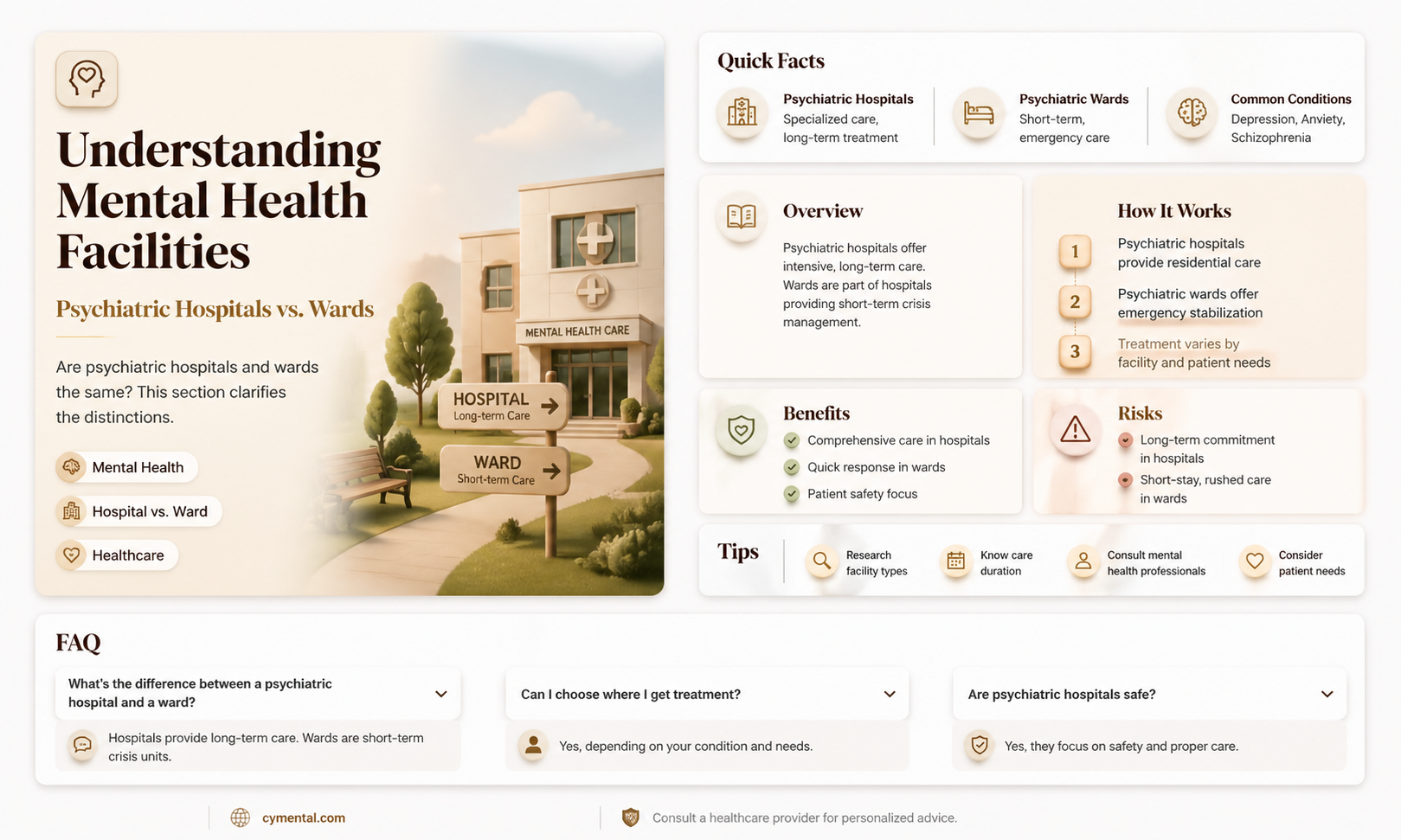
Mental hospitals and psychiatric wards are often used interchangeably, but they have distinct differences. A mental hospital, also known as a psychiatric hospital, is a specialized facility dedicated to the treatment of mental health disorders. These hospitals provide a range of services, including inpatient care, outpatient programs, and emergency services. They are equipped to handle various mental health conditions, from severe psychiatric disorders to milder issues. On the other hand, a psychiatric ward is a specific unit within a general hospital that focuses on the treatment of mental health patients. These wards are typically smaller and provide more intensive care for individuals experiencing acute psychiatric episodes. While both mental hospitals and psychiatric wards aim to provide comprehensive care for mental health patients, their settings, services, and patient populations differ significantly.
| Characteristics | Values |
|---|---|
| Purpose | Both mental hospitals and psychiatric wards are designed to provide care and treatment for individuals with mental health disorders. |
| Type of Care | Mental hospitals typically offer long-term care and treatment, while psychiatric wards are often short-term, acute care facilities within general hospitals. |
| Admission Criteria | Admission to both types of facilities is usually based on a psychiatric evaluation, but criteria can vary by institution and jurisdiction. |
| Treatment Options | Both offer a range of treatments including medication, psychotherapy, and behavioral therapies. Mental hospitals may provide more specialized and intensive treatments. |
| Staffing | Psychiatric wards are generally staffed by psychiatrists, psychologists, nurses, and other mental health professionals. Mental hospitals have a similar staffing structure but may also include social workers and recreational therapists. |
| Patient Population | Mental hospitals often serve a broader range of patients, including those with chronic mental illnesses, while psychiatric wards may focus on acute cases. |
| Length of Stay | The length of stay in a psychiatric ward is usually shorter (days to weeks) compared to mental hospitals (weeks to months or longer). |
| Security Measures | Both types of facilities have security measures in place to ensure patient and staff safety, but mental hospitals may have more stringent security due to the longer-term nature of care. |
| Cost | The cost of care can vary widely depending on the facility, location, and type of insurance coverage. Mental hospitals may be more expensive due to the longer duration of treatment. |
| Stigma | Historically, mental hospitals have carried more stigma than psychiatric wards, but efforts have been made to reduce stigma associated with both types of facilities. |
| Community Integration | Psychiatric wards are often seen as a step towards community integration, while mental hospitals may be viewed as more isolated from the community. |
| Research and Education | Both types of facilities may be involved in research and education, but mental hospitals often have a stronger focus on these areas due to their larger size and longer-term patient population. |
| Legal and Ethical Considerations | Both are subject to legal and ethical guidelines regarding patient rights, informed consent, and confidentiality. Mental hospitals may have additional considerations due to the longer-term nature of care. |
| Family Involvement | Family involvement is encouraged in both settings, but the extent and nature of involvement may differ based on the facility's policies and the patient's condition. |
| Discharge Planning | Discharge planning is a critical component of care in both settings, with a focus on ensuring a smooth transition back to the community or to another level of care. |
Explore related products


What You'll Learn
- Definitions: Mental hospitals provide long-term care, while psych wards are short-term stabilization units
- Services Offered: Mental hospitals offer comprehensive treatment programs; psych wards focus on crisis intervention and medication management
- Length of Stay: Patients stay longer in mental hospitals for ongoing treatment, whereas psych wards are for brief stays
- Admission Criteria: Mental hospitals admit patients with chronic conditions, while psych wards are for acute psychiatric episodes
- Staffing and Facilities: Mental hospitals have a wider range of specialists and facilities, while psych wards are typically smaller with focused staffing

Definitions: Mental hospitals provide long-term care, while psych wards are short-term stabilization units
Mental hospitals and psychiatric wards, often confused as synonymous terms, serve distinct purposes in the realm of mental health care. While both facilities are dedicated to the treatment and management of mental health conditions, their roles, durations of care, and approaches differ significantly.
Mental hospitals, also known as psychiatric hospitals or inpatient psychiatric facilities, are designed to provide long-term care for individuals with severe or chronic mental health conditions. These facilities offer a stable environment where patients can reside for extended periods, sometimes months or even years, depending on their specific needs. The primary goal of mental hospitals is to manage symptoms, provide therapy, and help patients achieve a level of stability that allows them to function in society. They often employ a multidisciplinary team of psychiatrists, psychologists, social workers, and nurses to deliver comprehensive care.
In contrast, psychiatric wards, commonly referred to as psych wards, are short-term stabilization units typically found within general hospitals. These wards are intended for acute care, usually lasting from a few days to a couple of weeks. Patients are often admitted to psych wards during a mental health crisis, such as a suicide attempt, severe depression, or a psychotic episode. The focus in these units is on immediate stabilization, medication management, and crisis intervention. Once the acute crisis is resolved, patients are usually discharged to outpatient care or transferred to a mental hospital for longer-term treatment.
The distinction between mental hospitals and psych wards lies not only in the duration of care but also in their treatment approaches and patient populations. Mental hospitals cater to individuals requiring intensive, long-term treatment and rehabilitation, often involving complex mental health conditions. Psych wards, on the other hand, are geared towards managing acute symptoms and crises, serving as a critical first step in the mental health care continuum. Understanding these differences is essential for ensuring that individuals receive the appropriate level and type of care for their specific mental health needs.
Understanding Involuntary Psychiatric Holds: When Can Police Detain You?
You may want to see also
Explore related products


Services Offered: Mental hospitals offer comprehensive treatment programs; psych wards focus on crisis intervention and medication management
Mental hospitals and psychiatric wards, while both integral parts of the mental healthcare system, offer distinct services tailored to different needs. Mental hospitals provide comprehensive treatment programs designed for longer-term care. These programs often include a combination of psychotherapy, group therapy, medication management, and recreational activities aimed at promoting overall mental wellness. Patients in mental hospitals may stay for several weeks or even months, allowing for a more in-depth exploration of their mental health issues and the development of coping strategies.
In contrast, psychiatric wards, often found within general hospitals, focus on crisis intervention and short-term stabilization. These wards are typically designed to handle acute psychiatric episodes, where patients may be experiencing severe symptoms that require immediate attention. The primary goal of a psychiatric ward is to stabilize the patient through medication management and intensive monitoring, often within a timeframe of a few days to a couple of weeks. Once stabilized, patients may be transferred to a mental hospital for longer-term care or discharged with a plan for outpatient treatment.
One key difference between mental hospitals and psychiatric wards lies in the level of care and the duration of treatment. Mental hospitals are equipped to provide a more holistic approach to mental health treatment, addressing not only the immediate symptoms but also the underlying causes and providing patients with the tools they need for long-term recovery. Psychiatric wards, on the other hand, are focused on addressing the immediate crisis and stabilizing the patient, with less emphasis on long-term treatment planning.
Another important distinction is the environment and the level of security. Mental hospitals often have a more relaxed and therapeutic environment, with patients having more freedom to participate in various activities and interact with others. Psychiatric wards, due to the acute nature of the patients' conditions, tend to have a higher level of security and a more structured environment to ensure patient safety and prevent potential harm to themselves or others.
In summary, while both mental hospitals and psychiatric wards play crucial roles in the treatment of mental health disorders, they offer different types of care suited to different stages of a patient's recovery journey. Mental hospitals provide comprehensive, long-term treatment programs, while psychiatric wards focus on crisis intervention and short-term stabilization. Understanding these differences is essential for ensuring that patients receive the appropriate level of care for their specific needs.
Taking the First Step: Self-Admission to a Mental Health Facility
You may want to see also
Explore related products


Length of Stay: Patients stay longer in mental hospitals for ongoing treatment, whereas psych wards are for brief stays
The length of stay in mental health facilities is a critical factor that distinguishes between mental hospitals and psychiatric wards. Mental hospitals are designed for longer-term care, providing ongoing treatment and support for patients with severe or chronic mental health conditions. These facilities often offer a range of therapeutic programs, including individual and group therapy, medication management, and recreational activities, aimed at helping patients achieve stability and improve their quality of life. The duration of stay in a mental hospital can vary significantly, depending on the patient's specific needs and treatment goals, but it typically lasts several weeks to months.
In contrast, psychiatric wards are intended for brief, acute care, usually lasting only a few days to a week. These units are often located within general hospitals and are equipped to handle psychiatric emergencies, such as suicidal ideation, acute psychosis, or severe depression. The primary goal of a psychiatric ward is to stabilize patients and provide immediate relief from their symptoms, rather than offering long-term treatment. The shorter length of stay in psychiatric wards reflects this focus on crisis intervention and acute care.
One of the key differences between mental hospitals and psychiatric wards lies in their admission criteria and discharge planning. Mental hospitals typically admit patients who require extended treatment and support, often following a referral from a mental health professional or a court order. Discharge from a mental hospital is usually planned and gradual, involving coordination with community mental health services to ensure ongoing care and support. Psychiatric wards, on the other hand, admit patients in crisis who require immediate stabilization. Discharge from a psychiatric ward is often more abrupt, with patients being released once their acute symptoms have subsided, and follow-up care is arranged through outpatient services or community providers.
The distinction in length of stay between mental hospitals and psychiatric wards has important implications for patient care and resource allocation. Mental hospitals require more resources to provide long-term treatment and support, while psychiatric wards need to be equipped to handle a high volume of acute admissions and provide rapid stabilization. Understanding these differences is crucial for healthcare providers, policymakers, and patients to ensure that individuals receive the appropriate level of care for their mental health needs.
Reagan's Impact on Mental Health Care: The Closure of Hospitals
You may want to see also
Explore related products


Admission Criteria: Mental hospitals admit patients with chronic conditions, while psych wards are for acute psychiatric episodes
Mental hospitals and psychiatric wards, often referred to interchangeably, have distinct admission criteria that cater to different types of mental health needs. Mental hospitals typically admit patients with chronic mental health conditions that require long-term care and treatment. These conditions may include severe depression, anxiety disorders, bipolar disorder, schizophrenia, and other persistent psychiatric illnesses. The primary goal of mental hospitals is to provide a stable environment where patients can receive ongoing therapy, medication management, and support to help them manage their symptoms and improve their quality of life.
In contrast, psychiatric wards are designed to treat patients experiencing acute psychiatric episodes. These episodes are characterized by sudden and severe symptoms that may include suicidal thoughts, hallucinations, delusions, or extreme mood swings. Psychiatric wards provide intensive, short-term care aimed at stabilizing patients and addressing the immediate crisis. Treatment in these wards often involves a combination of medication, therapy, and close monitoring by mental health professionals.
The admission process for mental hospitals and psychiatric wards also differs. Admission to a mental hospital usually requires a thorough evaluation by a psychiatrist or other qualified mental health professional, who assesses the patient's condition and determines the need for long-term care. In some cases, patients may be admitted voluntarily, while in others, they may be committed involuntarily if they are deemed a danger to themselves or others.
Admission to a psychiatric ward is typically more urgent and may occur through an emergency department or a crisis hotline. Patients are often admitted involuntarily due to the acute nature of their symptoms and the potential risk they pose to themselves or others. Once admitted, patients undergo a comprehensive assessment to identify the underlying causes of their crisis and develop an appropriate treatment plan.
In summary, while both mental hospitals and psychiatric wards provide essential mental health services, they serve different purposes and cater to different types of patients. Mental hospitals focus on long-term care for chronic conditions, while psychiatric wards provide intensive, short-term treatment for acute psychiatric episodes. Understanding these distinctions is crucial for ensuring that patients receive the appropriate level of care for their specific needs.
Exploring the Inner World: Life Inside a Mental Hospital
You may want to see also
Explore related products


Staffing and Facilities: Mental hospitals have a wider range of specialists and facilities, while psych wards are typically smaller with focused staffing
Mental hospitals and psychiatric wards, while both dedicated to mental health care, exhibit significant differences in their staffing and facilities. Mental hospitals, being larger and more specialized institutions, boast a diverse team of professionals. This typically includes psychiatrists, psychologists, social workers, occupational therapists, and various other mental health specialists. Such a comprehensive staff allows for a multidisciplinary approach to patient care, addressing a wide array of mental health issues and providing a broad spectrum of treatments.
In contrast, psychiatric wards within general hospitals are usually smaller and have a more focused staffing structure. These wards are often staffed by a core team of psychiatrists and nurses, with limited access to other mental health professionals. This setup is designed to provide acute care and stabilization for patients experiencing severe psychiatric episodes, rather than long-term, comprehensive mental health services.
The facilities in mental hospitals are also more extensive and varied. They often include specialized units for different conditions, such as schizophrenia, bipolar disorder, or eating disorders. Additionally, mental hospitals may offer a range of therapeutic facilities, including art and music therapy rooms, gymnasiums for physical activities, and outdoor spaces for recreation and relaxation. These amenities are crucial for providing a holistic approach to mental health treatment, allowing patients to engage in various activities that promote overall well-being.
Psychiatric wards, on the other hand, tend to have more limited facilities. They are primarily designed for short-term stays and may not have the same level of specialized equipment or recreational spaces as mental hospitals. The focus in psychiatric wards is on providing a safe and controlled environment for patients in crisis, with an emphasis on medication management and intensive therapy sessions.
In summary, while both mental hospitals and psychiatric wards play vital roles in mental health care, they differ significantly in terms of staffing and facilities. Mental hospitals offer a wider range of specialists and amenities, catering to long-term and diverse mental health needs, whereas psychiatric wards are geared towards acute care and stabilization with a more focused staff and limited facilities.
Understanding Mental Health Care Costs: Insurance Coverage and Beyond
You may want to see also
Frequently asked questions
While both mental hospitals and psychiatric wards are facilities designed to provide care for individuals with mental health issues, they are not exactly the same. Mental hospitals are typically larger institutions that offer a range of services, including inpatient care, outpatient services, and sometimes even research and education. Psychiatric wards, on the other hand, are usually smaller units within a general hospital that provide inpatient care for individuals experiencing acute mental health crises.
Both mental hospitals and psychiatric wards offer a variety of treatments for mental health conditions. These may include medication management, individual and group therapy, cognitive-behavioral therapy, electroconvulsive therapy, and other evidence-based interventions. The specific treatments available may vary depending on the facility and the individual's needs.
Admission to a mental hospital or psychiatric ward is typically recommended for individuals who are experiencing severe mental health symptoms that are interfering with their daily functioning or posing a risk to their safety or the safety of others. Some signs that may indicate the need for inpatient care include suicidal thoughts or behaviors, homicidal thoughts or behaviors, severe depression or anxiety, psychosis, or substance abuse. If you or someone you know is experiencing any of these symptoms, it is important to seek help from a mental health professional or call a crisis hotline for guidance.