Madison Cole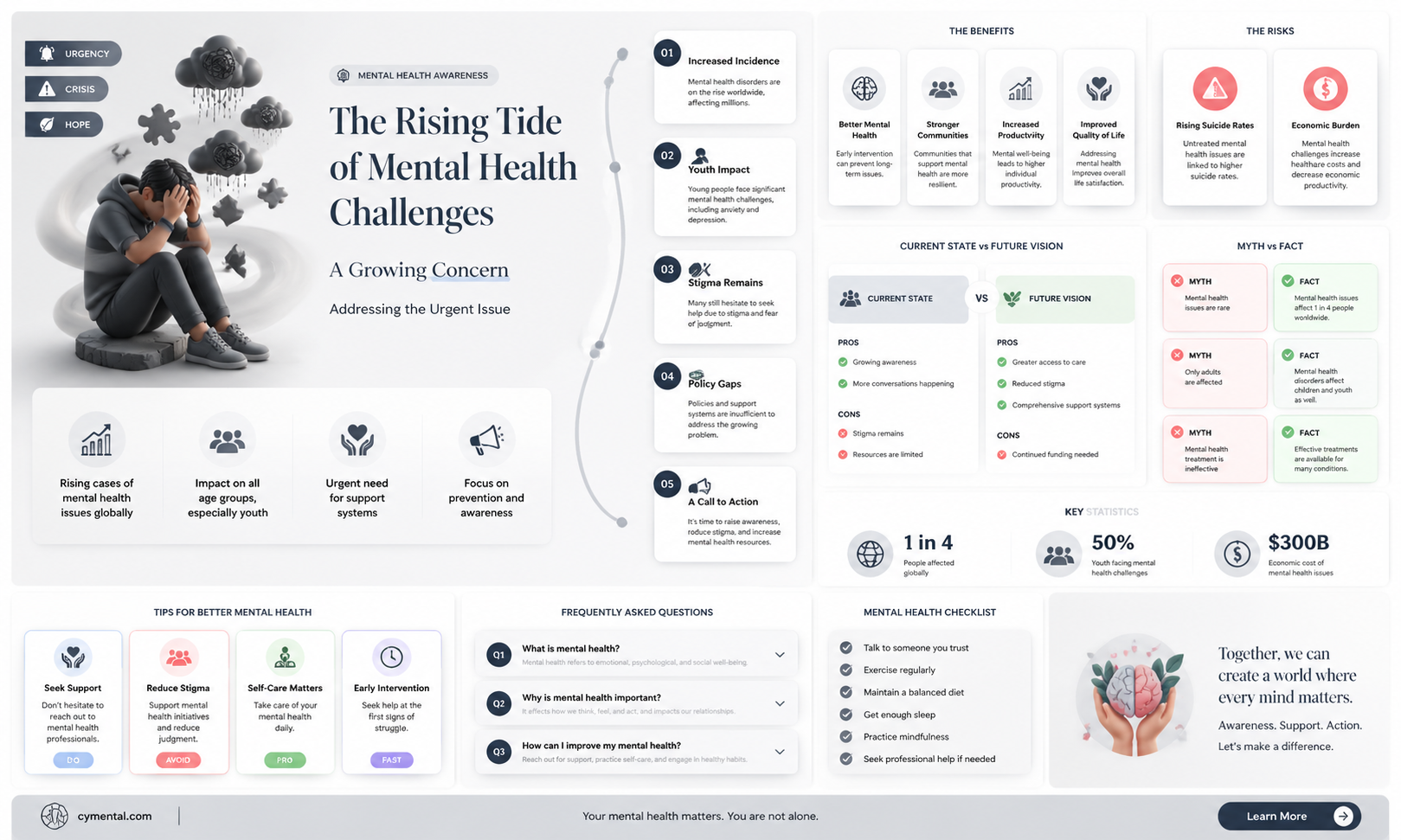
The question of whether more people are getting mental disorders is a complex and multifaceted issue that has garnered significant attention in recent years. While it's challenging to pinpoint a definitive answer, several factors contribute to the perception that mental health concerns are on the rise. Increased awareness and reduced stigma surrounding mental health have led to more individuals seeking diagnosis and treatment, which may contribute to higher reported rates of mental disorders. Additionally, societal changes, such as the rise of social media, economic pressures, and political instability, can exacerbate stress and anxiety levels, potentially leading to an increase in mental health issues. Furthermore, advancements in diagnostic criteria and tools may also play a role in identifying more cases. However, it's crucial to consider that the apparent increase in mental disorders could also be attributed to better detection and reporting rather than a genuine rise in prevalence.
| Characteristics | Values |
|---|---|
| Definition | Mental disorders are health conditions that affect a person's thinking, feeling, mood, and behavior. They can impact daily functioning and overall well-being. |
| Prevalence | According to the World Health Organization (WHO), approximately 1 in 4 people experience a mental disorder at some point in their lives. |
| Types | Common mental disorders include anxiety disorders, mood disorders (such as depression), schizophrenia, bipolar disorder, and personality disorders. |
| Causes | Mental disorders can be caused by a combination of genetic, environmental, and psychological factors. Stress, trauma, and substance abuse can also contribute to their development. |
| Symptoms | Symptoms vary depending on the specific disorder but may include changes in mood, behavior, energy levels, appetite, sleep patterns, and cognitive functioning. |
| Diagnosis | Mental disorders are typically diagnosed by mental health professionals through clinical interviews, psychological assessments, and sometimes medical tests. |
| Treatment | Treatment options include psychotherapy (talk therapy), medication, lifestyle changes, and support groups. The specific treatment plan depends on the individual and the type of disorder. |
| Prognosis | With appropriate treatment, many people with mental disorders can recover or manage their symptoms effectively. Early intervention is key to a better prognosis. |
| Societal Impact | Mental disorders can have significant impacts on society, including reduced productivity, increased healthcare costs, and strained relationships. Stigma and discrimination can also affect individuals with mental disorders. |
| Prevention | While not all mental disorders can be prevented, promoting mental health through education, reducing stress, and fostering supportive environments can help mitigate risk factors. |
| Research | Ongoing research is crucial for understanding the causes, developing effective treatments, and improving the lives of those affected by mental disorders. |
| Resources | Resources for individuals seeking help include mental health hotlines, online support forums, and local mental health clinics. |
Explore related products


What You'll Learn
- Increased Reporting: More people may be seeking help and reporting mental health issues, leading to higher recorded rates
- Social Media Impact: The rise of social media could contribute to increased anxiety, depression, and other mental health concerns
- Economic Stress: Financial instability and economic pressures might exacerbate mental disorders in individuals
- Aging Population: As populations age, the incidence of mental disorders such as dementia and depression may increase
- Environmental Factors: Exposure to pollution, climate change, and other environmental stressors could negatively impact mental health

Increased Reporting: More people may be seeking help and reporting mental health issues, leading to higher recorded rates
Recent data suggests that the prevalence of mental health issues is on the rise, but it's crucial to consider whether this increase is due to a growing number of cases or improved reporting mechanisms. One possible explanation for the uptick in recorded mental health issues is that more individuals are seeking help and reporting their struggles, rather than suffering in silence. This shift could be attributed to a variety of factors, including increased awareness and education about mental health, reduced stigma surrounding mental illness, and expanded access to mental health services.
A closer examination of the data reveals that the increase in reported mental health issues is not uniform across all demographics. For instance, some age groups, such as young adults, have seen a more significant rise in reported cases than others. This could be due to the fact that younger generations are more open to discussing their mental health and seeking help, or it may reflect a genuine increase in the prevalence of mental health issues among this age group. Additionally, certain communities, such as those with lower socioeconomic status, may have historically had limited access to mental health services, leading to underreporting of mental health issues. As access to these services improves, we may see an increase in reported cases among these communities.
It's also important to consider the role of social media and technology in the increased reporting of mental health issues. Online platforms can provide a safe space for individuals to share their experiences and connect with others who are going through similar struggles. This sense of community and validation can encourage more people to seek help and report their mental health issues. Furthermore, telemedicine and online therapy services have made mental health care more accessible and convenient, potentially leading to an increase in reported cases.
While increased reporting is a positive development, as it allows for more accurate tracking and addressing of mental health issues, it's essential to ensure that the mental health system is equipped to handle the growing demand for services. This includes investing in mental health infrastructure, training more mental health professionals, and developing innovative solutions to provide care to those in need. By doing so, we can ensure that the increase in reported mental health issues translates into better outcomes for those affected.
Finding Hope: Where to Seek Help for Depression
You may want to see also
Explore related products


Social Media Impact: The rise of social media could contribute to increased anxiety, depression, and other mental health concerns
The proliferation of social media platforms has been linked to a rise in mental health issues, particularly among younger demographics. Research indicates that excessive social media use can contribute to increased symptoms of anxiety and depression. This correlation is attributed to several factors, including the constant comparison to others' curated online lives, the pressure to maintain a perfect digital persona, and the fear of missing out (FOMO) on social events and interactions.
One study published in the Journal of Social and Clinical Psychology found that limiting social media use to 30 minutes per day resulted in significant reductions in levels of depression and loneliness among young adults. This suggests that the amount of time spent on social media is a critical factor in its impact on mental health. Furthermore, the quality of interactions on social media also plays a role. Superficial interactions, such as scrolling through feeds without engaging in meaningful conversations, can exacerbate feelings of isolation and disconnection.
The rise of social media has also led to a phenomenon known as "social media addiction," characterized by compulsive checking and use of social media platforms, often at the expense of other activities and responsibilities. This addiction can further contribute to mental health issues, as individuals may feel unable to control their usage despite recognizing its negative impact on their well-being.
To mitigate these effects, it is essential to promote healthy social media habits. This includes setting boundaries on usage time, engaging in more meaningful and less superficial interactions, and encouraging offline activities and hobbies. Additionally, social media platforms themselves can play a role by implementing features that discourage excessive use and promote positive interactions.
In conclusion, while social media has revolutionized the way we connect and communicate, its impact on mental health cannot be ignored. By understanding the factors that contribute to its negative effects and promoting healthier usage habits, we can work towards a more balanced and positive relationship with social media.
Empowering Yourself: A Guide to Overcoming Victim Mentality
You may want to see also
Explore related products


Economic Stress: Financial instability and economic pressures might exacerbate mental disorders in individuals
Financial instability and economic pressures can significantly exacerbate mental disorders in individuals. This is evident from the increasing number of people experiencing anxiety, depression, and other mental health issues during times of economic downturn. The stress of financial insecurity can lead to a range of negative outcomes, including increased substance abuse, relationship problems, and even suicide.
One of the key ways in which economic stress impacts mental health is through the creation of a sense of uncertainty and lack of control. When individuals are worried about their financial future, they may feel overwhelmed and helpless, which can contribute to feelings of anxiety and depression. Additionally, economic stress can lead to social isolation, as individuals may withdraw from friends and family due to feelings of shame or embarrassment about their financial situation.
Research has shown that economic stress can have a particularly significant impact on vulnerable populations, such as low-income individuals and those with pre-existing mental health conditions. For these groups, financial instability can serve as a trigger for mental health crises, leading to a worsening of symptoms and a decreased quality of life.
There are a number of steps that individuals can take to mitigate the impact of economic stress on their mental health. These include seeking support from friends and family, engaging in stress-reducing activities such as exercise and meditation, and seeking professional help if needed. Additionally, policymakers can play a role in addressing economic stress by implementing policies that support financial stability and access to mental health care.
In conclusion, economic stress is a significant factor that can exacerbate mental disorders in individuals. By understanding the impact of financial instability on mental health and taking steps to mitigate this impact, individuals and policymakers can work together to promote greater mental health and well-being.
Will Life Improve? A Journey Through Hard Times and Hope
You may want to see also
Explore related products


Aging Population: As populations age, the incidence of mental disorders such as dementia and depression may increase
As the global population ages, a significant concern emerges regarding the potential rise in mental disorders. Dementia and depression, among other conditions, are becoming more prevalent, posing challenges for healthcare systems and societies at large. This trend is not only a reflection of increased life expectancy but also a result of various biological, psychological, and social factors that accompany aging.
Biologically, the aging process brings about changes in brain structure and function, making older adults more susceptible to neurodegenerative diseases like dementia. Additionally, age-related decline in physical health can contribute to the development of depression, as chronic illnesses and disabilities often accompany old age. Psychologically, older individuals may face increased stress due to life transitions, such as retirement or the loss of a spouse, which can exacerbate mental health issues. Socially, factors like isolation and loneliness, which are more common among the elderly, can also contribute to the onset of depression and other mental disorders.
The implications of this trend are far-reaching. Healthcare systems will need to adapt to accommodate the growing number of patients with mental health needs. This may involve increasing funding for mental health services, training more healthcare professionals in geriatric mental health, and developing age-specific interventions. Furthermore, societies will need to address the social determinants of mental health, such as promoting social engagement and reducing loneliness among older adults.
In conclusion, the aging population presents a unique challenge in the realm of mental health. As the incidence of mental disorders like dementia and depression increases, it is crucial for healthcare systems and societies to work together to address the biological, psychological, and social factors that contribute to this trend. By doing so, we can hope to improve the mental well-being of older adults and mitigate the impact of these disorders on individuals and communities.
Navigating Mental Health: Your Guide to Securing a Case Manager
You may want to see also
Explore related products


Environmental Factors: Exposure to pollution, climate change, and other environmental stressors could negatively impact mental health
Air pollution, a pervasive environmental stressor, has been linked to an increased risk of mental health disorders. Studies have shown that exposure to fine particulate matter (PM2.5) and nitrogen dioxide (NO2) can lead to higher rates of depression, anxiety, and even cognitive decline. The mechanisms behind this association are complex, involving inflammation, oxidative stress, and disruptions to the blood-brain barrier.
Climate change, another significant environmental factor, poses a unique threat to mental health. Rising temperatures, extreme weather events, and sea-level rise can cause displacement, loss of livelihood, and trauma, all of which can contribute to mental health issues. Furthermore, the uncertainty and unpredictability associated with climate change can lead to increased anxiety and stress levels.
Other environmental stressors, such as noise pollution and exposure to toxic chemicals, have also been implicated in mental health problems. Noise pollution, for example, has been linked to increased stress levels, sleep disturbances, and even cardiovascular disease, all of which can negatively impact mental health. Toxic chemicals, such as pesticides and heavy metals, can interfere with neurological function and contribute to the development of mental disorders.
The impact of environmental factors on mental health is not limited to individual exposure. Communities that are disproportionately affected by pollution and climate change, often low-income and marginalized populations, may experience higher rates of mental health issues due to the cumulative effect of these stressors.
Mitigating the negative impact of environmental factors on mental health requires a multifaceted approach. Reducing exposure to pollutants, investing in renewable energy sources, and implementing policies to protect vulnerable communities are all crucial steps. Additionally, promoting mental health awareness and providing access to mental health services can help individuals and communities cope with the psychological effects of environmental stressors.
In conclusion, environmental factors such as pollution, climate change, and other stressors can have a significant impact on mental health. Understanding the complex relationships between these factors and mental health outcomes is essential for developing effective strategies to promote mental well-being in the face of environmental challenges.
Navigating the Path to Mental Health Care: A Guide to Hospital Admission
You may want to see also
Frequently asked questions
The prevalence of mental disorders appears to be increasing. Various factors such as societal changes, increased stress levels, and better diagnostic tools contribute to this trend. However, it's also important to note that greater awareness and reduced stigma around mental health may lead to more people seeking help and being diagnosed.
Some common mental disorders that are becoming more prevalent include anxiety disorders, depression, and attention deficit hyperactivity disorder (ADHD). These conditions can affect individuals of all ages and backgrounds, and their increase may be linked to a combination of genetic, environmental, and lifestyle factors.
Addressing the rising prevalence of mental disorders requires a multifaceted approach. This includes increasing access to mental health services, promoting early intervention and prevention strategies, reducing stigma through education and awareness campaigns, and investing in research to better understand the underlying causes of these conditions. Additionally, fostering a supportive community environment and encouraging healthy lifestyle choices can contribute to overall mental well-being.