Caleb Wright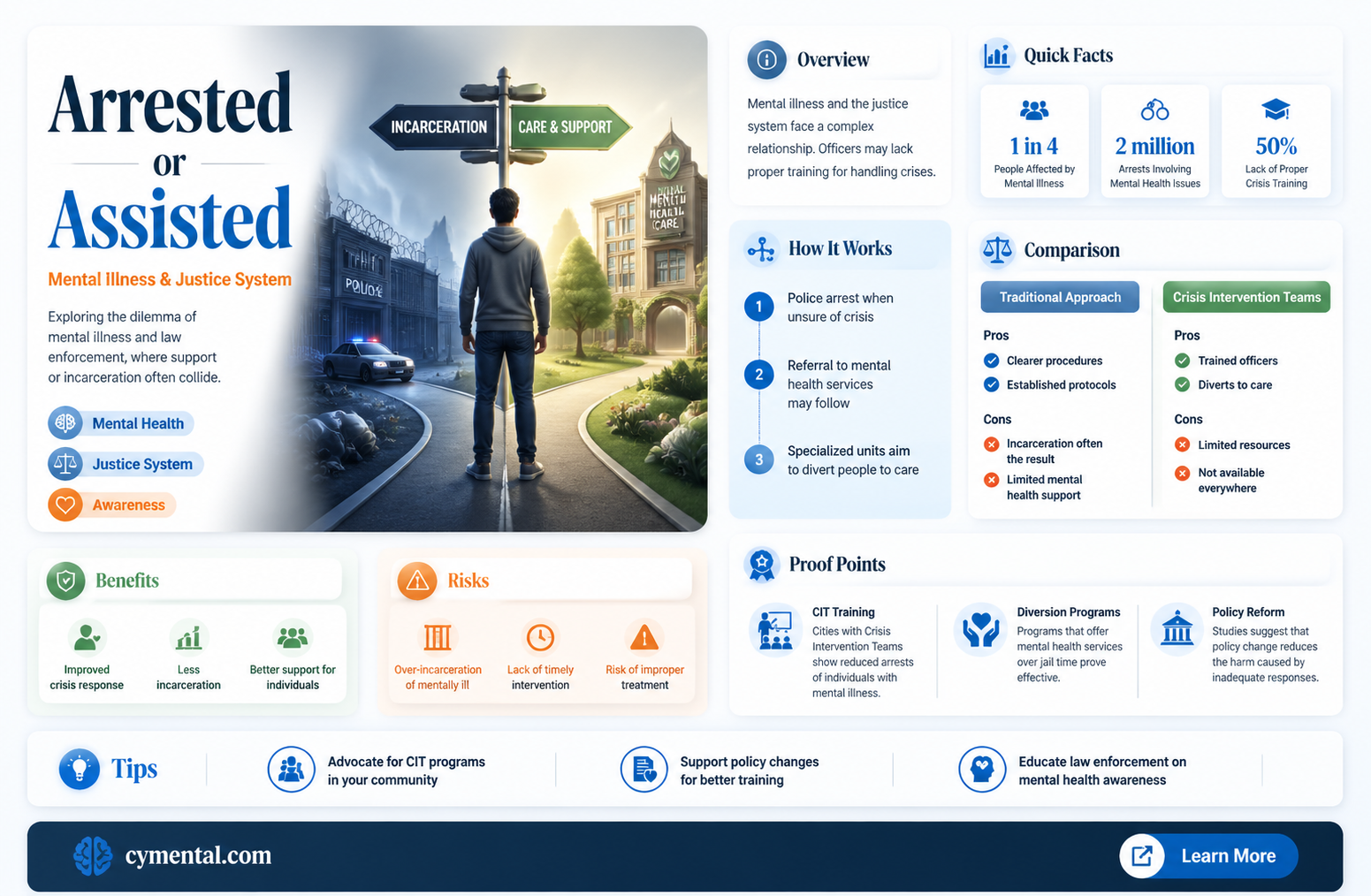
The question of whether more individuals with mental illnesses are arrested rather than receiving appropriate assistance is a pressing concern in today's society. This issue highlights a critical intersection between mental health and the criminal justice system, raising important questions about how we, as a society, address and support those struggling with mental health challenges. With a growing awareness of mental health issues, it becomes increasingly vital to examine the pathways that lead individuals with mental illnesses into the criminal justice system and to explore alternative approaches that prioritize treatment, support, and rehabilitation over incarceration. Understanding the complexities of this topic is essential for developing more compassionate and effective responses to mental health crises.
| Characteristics | Values |
|---|---|
| Prevalence of Arrests | People with mental illnesses are disproportionately represented in arrests, with estimates suggesting 2-4 times higher likelihood of arrest compared to the general population. |
| Jail Population | Approximately 15-20% of individuals in U.S. jails have a serious mental illness, compared to ~5% in the general population. |
| Lack of Treatment Access | Only ~50% of individuals with mental illness receive treatment, often due to limited resources, stigma, or lack of healthcare access. |
| Criminalization vs. Treatment | Law enforcement often serves as the first point of contact for mental health crises, leading to arrests instead of referrals to treatment. |
| Crisis Intervention Programs | Programs like Crisis Intervention Team (CIT) training for police have shown promise but are not universally implemented. |
| Recidivism Rates | Individuals with mental illnesses have higher recidivism rates, often due to untreated conditions and lack of community support. |
| Cost Comparison | Incarceration costs significantly more than mental health treatment; e.g., jail costs ~$30,000/year per person vs. ~$10,000 for treatment. |
| Policy Gaps | Many regions lack policies to divert individuals with mental illnesses from the criminal justice system into treatment programs. |
| Public Perception | Stigma and misconceptions about mental illness often lead to punitive responses rather than supportive interventions. |
| Global Trends | Similar patterns of criminalization over treatment are observed in other countries, though data varies by region. |
Explore related products

$9.99


What You'll Learn
- Arrest Rates vs. Treatment Access: Comparing arrest statistics to mental health treatment availability
- Police Training Gaps: Lack of crisis intervention training in law enforcement
- Criminalization of Illness: Treating mental health symptoms as criminal behavior
- Jail as Default: Prisons becoming de facto mental health facilities
- Community Support Failures: Insufficient resources for early intervention and care

Arrest Rates vs. Treatment Access: Comparing arrest statistics to mental health treatment availability
The stark reality is that individuals with mental illnesses are disproportionately represented in the criminal justice system. Studies show that people with serious mental illnesses are booked into jails over 2 million times per year in the United States alone. This raises a critical question: are we criminalizing mental illness instead of addressing it as a public health issue?
A closer look at the data reveals a disturbing trend. In many communities, the likelihood of a person with a mental illness encountering law enforcement far exceeds their chances of receiving adequate treatment. For example, a 2015 report found that in Los Angeles County, people with serious mental illness were nearly 4 times more likely to be arrested than hospitalized for treatment. This disparity highlights a systemic failure to prioritize mental health care and divert individuals away from the criminal justice system.
Imagine a scenario where a person experiencing a psychotic episode, acting erratically due to untreated schizophrenia, is met with handcuffs instead of a crisis intervention team. This all-too-common scenario illustrates the dire need for a paradigm shift. We must invest in community-based mental health services, train law enforcement in de-escalation techniques, and establish diversion programs that connect individuals with treatment rather than incarceration.
Supporting Your Adult Son’s Mental Health: Practical Steps for Parents
You may want to see also
Explore related products


Police Training Gaps: Lack of crisis intervention training in law enforcement
A startling reality confronts us: individuals experiencing mental health crises are more likely to encounter law enforcement than medical professionals. This intersection of mental health and criminal justice highlights a critical gap in police training—the absence of comprehensive crisis intervention skills. When officers lack the tools to de-escalate situations involving mental illness, arrests often become the default response, perpetuating a cycle of criminalization rather than care.
Consider the scenario: a person in the throes of a psychotic episode, disoriented and agitated, is reported as a disturbance. Without crisis intervention training (CIT), officers may misinterpret erratic behavior as noncompliance or aggression, leading to forceful restraint or arrest. In contrast, CIT-trained officers are equipped to recognize symptoms of mental illness, communicate effectively, and connect individuals to appropriate resources. For instance, the Memphis Model, a pioneering CIT program, has demonstrated a 40% reduction in officer injuries and a 3-fold increase in referrals to mental health services. This evidence underscores the transformative potential of specialized training.
Implementing CIT programs requires a structured approach. First, curricula should include role-playing scenarios that simulate mental health crises, allowing officers to practice de-escalation techniques in a safe environment. Second, partnerships with mental health professionals are essential; co-responding models, where clinicians accompany officers on calls, provide real-time guidance and ensure appropriate care. Third, ongoing training and evaluation are critical to maintaining competency and adapting to evolving best practices. For example, the One Mind Campaign advocates for a minimum of 40 hours of CIT training, emphasizing both theoretical knowledge and practical skills.
Despite its benefits, CIT is not a panacea. Officers must also be trained to recognize implicit biases that may influence their interactions with individuals experiencing mental illness. For instance, studies show that Black and Hispanic individuals are disproportionately arrested during mental health crises, reflecting systemic inequities in policing. Addressing these biases requires not only CIT but also broader cultural competency training and accountability measures. Without this dual focus, even well-intentioned interventions risk perpetuating harm.
Ultimately, closing the training gap in crisis intervention is a moral and practical imperative. By equipping officers with the skills to respond compassionately and effectively, we can shift the paradigm from punishment to support. The question is not whether we can afford to invest in such training, but whether we can afford the consequences of failing to do so. Every arrest of a person in crisis is a missed opportunity to provide help—and a reminder of the urgent need for change.
Journaling for Mental Health: Unlocking Emotional Healing and Self-Discovery
You may want to see also
Explore related products

$12.99 $16.99


Criminalization of Illness: Treating mental health symptoms as criminal behavior
In the United States, individuals with untreated serious mental illness are 16 times more likely to be arrested than the general population. This staggering statistic underscores a systemic failure: the criminalization of behaviors rooted in mental health crises. Law enforcement officers, often the first responders to such incidents, are ill-equipped to de-escalate situations involving psychosis, mania, or severe depression. Instead, symptoms like erratic behavior, aggression, or public disturbances are misinterpreted as criminal intent, funneling vulnerable individuals into a cycle of incarceration rather than treatment.
Consider the case of a 28-year-old man with schizophrenia arrested for trespassing after wandering into a closed store during a psychotic episode. Lacking access to consistent medication (antipsychotics like olanzapine, which require daily adherence), his symptoms spiraled. In jail, he received no psychiatric evaluation, only a 30-day sentence. This scenario is not anomalous: 20% of state prison inmates report symptoms of serious psychological distress, yet fewer than half receive treatment during incarceration. The criminal justice system, designed for punishment, becomes a default mental health provider—one that exacerbates illness through isolation, trauma, and disrupted care.
The financial and human costs are stark. Housing an inmate with mental illness costs 30-50% more than a non-mentally ill prisoner due to specialized needs, yet these funds rarely translate to adequate care. Meanwhile, community-based treatment programs, such as Assertive Community Treatment (ACT) teams, which pair individuals with psychiatrists, social workers, and case managers, reduce arrest rates by 60%. A 2019 study in *Psychiatric Services* found that every dollar invested in ACT yields $2.17 in savings from reduced arrests and hospitalizations. Yet, such programs remain underfunded, with only 1 in 5 counties in the U.S. offering ACT services.
To disrupt this cycle, policymakers must prioritize crisis intervention training (CIT) for law enforcement. CIT programs, which include 40 hours of training in mental health first aid and de-escalation techniques, have shown promise: in Memphis, where CIT originated, arrests involving mentally ill individuals dropped by 40%. Simultaneously, diversion programs like mental health courts offer an alternative to incarceration, mandating treatment plans instead of jail time. For example, the Miami-Dade County court reduced recidivism by 57% among participants. However, these initiatives require sustained funding and cross-agency collaboration—a challenge in an era of budget cuts and siloed systems.
Ultimately, treating mental illness as a crime is a moral and practical failure. It demands a paradigm shift: from punishment to prevention, from handcuffs to care. Until society invests in early intervention, accessible treatment, and compassionate responses, jails will remain the largest psychiatric facilities in America—a damning indictment of a system that criminalizes suffering.
Empowering Actions: Simple Ways to Make a Positive Impact Today
You may want to see also
Explore related products


Jail as Default: Prisons becoming de facto mental health facilities
Prisons in the United States now house three times as many people with mental illnesses as the largest remaining state psychiatric hospitals. This stark statistic reveals a disturbing trend: jails and prisons have become the nation’s default mental health facilities. With over 40% of incarcerated individuals experiencing mental health issues, the criminal justice system is increasingly shouldering a burden it was never designed to carry. This shift didn’t happen overnight; it’s the result of decades of underfunded community mental health programs, deinstitutionalization without adequate support, and a lack of accessible treatment options. As a result, law enforcement officers often serve as the first—and sometimes only—responders to mental health crises, leading to arrests rather than referrals to care.
Consider the case of a 28-year-old man with schizophrenia arrested for trespassing after wandering into a store during a psychotic episode. Instead of receiving medication and therapy, he’s placed in a jail cell, where his condition deteriorates due to lack of treatment and the stressful environment. This scenario is not an outlier; it’s a common outcome for individuals whose mental illnesses go untreated until they intersect with the criminal justice system. Prisons, ill-equipped to provide specialized care, often rely on solitary confinement or excessive force to manage behavioral symptoms, exacerbating mental health issues rather than addressing them. Meanwhile, the average cost of incarcerating someone with a mental illness is 30% higher than for the general prison population, placing an additional financial strain on already overburdened systems.
To break this cycle, a multi-faceted approach is essential. First, invest in community-based mental health services, such as crisis intervention teams (CITs) trained to de-escalate situations without resorting to arrest. Second, expand access to affordable outpatient treatment, including therapy and medication management, particularly in underserved areas. Third, establish diversion programs that redirect individuals with mental illnesses from jails to treatment facilities. For example, mental health courts in cities like Miami and San Antonio have shown promising results, reducing recidivism rates by up to 50% among participants. These programs not only improve outcomes for individuals but also alleviate the burden on law enforcement and correctional facilities.
However, implementing these solutions requires overcoming significant challenges. Stigma surrounding mental illness persists, leading to public resistance against treatment facilities in residential areas. Funding remains a critical issue, as mental health budgets often take a backseat to other priorities. Additionally, coordination between healthcare providers, law enforcement, and the legal system is fraught with logistical hurdles. To address these barriers, policymakers must prioritize mental health as a public health issue rather than a criminal one. This includes allocating resources, fostering cross-sector collaboration, and educating the public about the benefits of early intervention.
Ultimately, the transformation of prisons into de facto mental health facilities is a symptom of a broken system. By redirecting focus and resources toward prevention, treatment, and support, society can reduce the number of individuals with mental illnesses entering the criminal justice system. This shift won’t happen overnight, but every step toward integrating mental health care into community settings brings us closer to a more just and compassionate society. The question isn’t whether we can afford to make this change—it’s whether we can afford not to.
Exercise and Mental Health: Unlocking the Mind-Body Connection for Wellness
You may want to see also
Explore related products


Community Support Failures: Insufficient resources for early intervention and care
The stark reality is that many individuals with mental illnesses encounter the criminal justice system far more often than they receive appropriate healthcare. This disturbing trend highlights a critical failure in community support structures, particularly in the realm of early intervention and care. When resources are inadequate, minor symptoms can escalate into crises, leading to behaviors that attract law enforcement rather than medical professionals. For instance, a person experiencing untreated psychosis might act erratically in public, prompting a 911 call and subsequent arrest, whereas timely access to a mental health professional could have de-escalated the situation.
Consider the numbers: in the United States, individuals with untreated mental illnesses are 16 times more likely to be incarcerated than hospitalized. This disparity underscores a systemic issue where jails and prisons have become de facto mental health facilities, despite being ill-equipped to provide therapeutic care. Early intervention programs, such as mobile crisis units or community-based outpatient services, could prevent many of these arrests. However, funding for such initiatives is often insufficient, leaving vulnerable populations without the support they need. For example, a study in California found that for every dollar spent on community mental health services, five dollars were saved in law enforcement and incarceration costs, yet these programs remain chronically underfunded.
The lack of resources extends beyond funding to include trained personnel and accessible facilities. In rural areas, where mental health providers are scarce, individuals often face long wait times or must travel significant distances for care. This delay can be catastrophic for someone in the early stages of a mental health crisis. For instance, a teenager exhibiting signs of depression might not receive therapy until their condition worsens, increasing the risk of self-harm or legal entanglements. Schools and primary care settings could serve as critical intervention points, but without adequate training or referral pathways, opportunities are missed.
To address this failure, communities must adopt a multi-faceted approach. First, policymakers should allocate funding to expand early intervention programs, such as school-based mental health services or peer support networks. Second, law enforcement officers need comprehensive training in crisis intervention techniques, like those taught in Crisis Intervention Team (CIT) programs, to better handle encounters with individuals in distress. Third, integrating mental health screenings into primary care settings can identify at-risk individuals before their conditions deteriorate. Finally, public awareness campaigns can reduce stigma and encourage early help-seeking behaviors.
Without these measures, the cycle of criminalization will persist, perpetuating harm to individuals and communities alike. The question is not whether we can afford to invest in early intervention but whether we can afford not to. Every arrest of a person with an untreated mental illness is a testament to a system that has failed to prioritize care over punishment. By redirecting resources toward prevention and support, we can shift the narrative from one of incarceration to one of healing.
Finding Support: Where to Go for Mental Health Help and Guidance
You may want to see also
Frequently asked questions
Studies show that people with mental illnesses are disproportionately represented in the criminal justice system, often due to lack of access to adequate mental health care. However, it is not accurate to say more are arrested than helped, as many receive treatment through healthcare systems, community programs, and support networks.
Factors such as untreated symptoms, lack of community resources, and criminalization of behaviors related to mental illness (e.g., homelessness, substance use) contribute to higher arrest rates. Law enforcement often serves as a default response when mental health systems fail.
Alternatives include crisis intervention teams, mobile mental health units, diversion programs, and increased funding for community-based mental health services to address issues before they escalate.
Society can invest in affordable mental health care, improve training for law enforcement, expand housing and employment opportunities, and reduce stigma to ensure individuals receive help rather than punishment.