Harper Lewis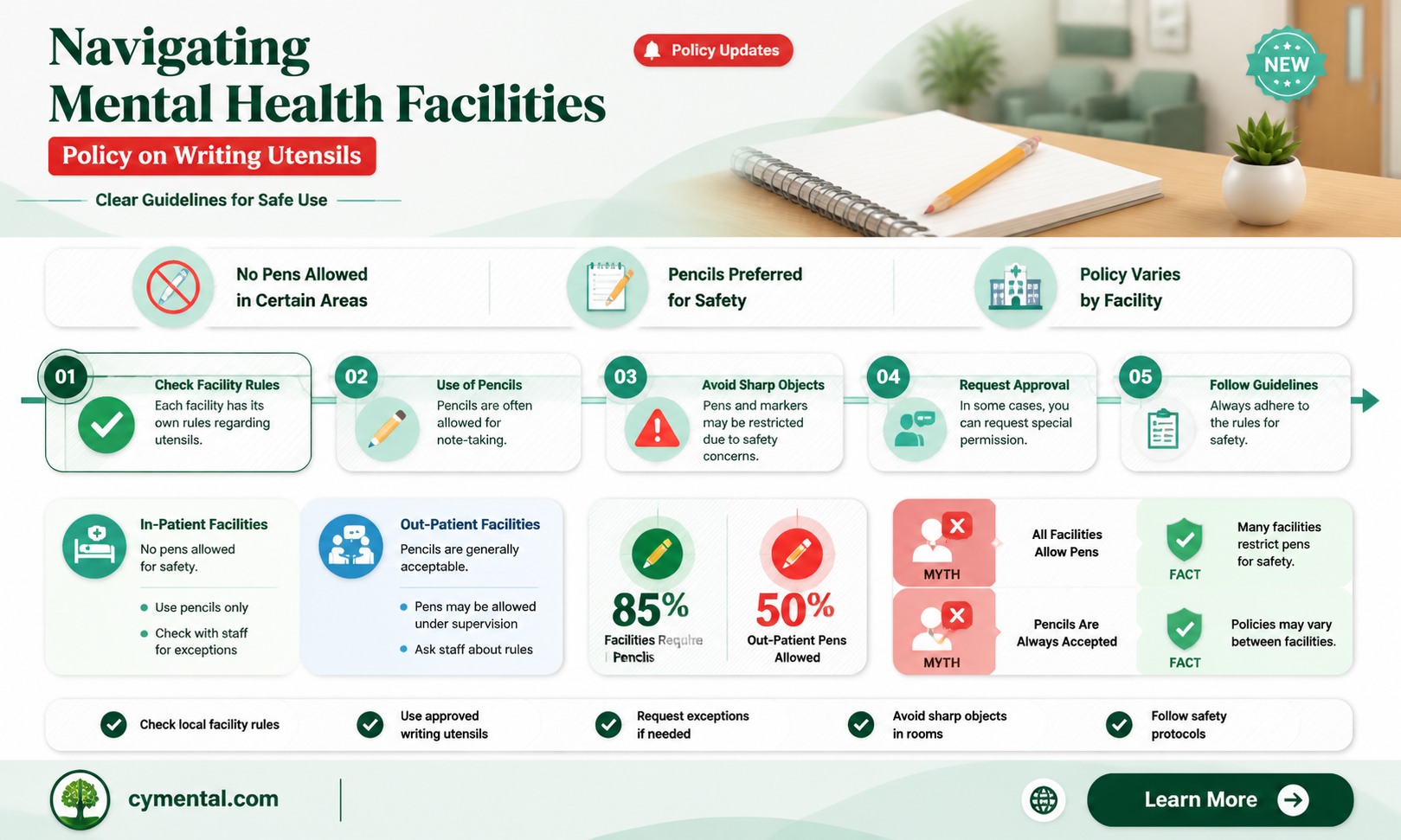
In mental health facilities, the regulations regarding personal items, including writing utensils, can vary significantly depending on the specific policies of the institution and the individual's treatment plan. Generally, these facilities prioritize the safety and well-being of their patients, which may lead to restrictions on items that could potentially be used as weapons or tools for self-harm. Writing utensils, such as pens and pencils, are often permitted but may be subject to certain conditions or limitations. For instance, some facilities might provide patients with blunt-tipped pens or pencils to minimize the risk of injury. It's essential for individuals to be aware of and adhere to the specific guidelines set forth by the mental health facility to ensure a safe and supportive environment for all patients.
Explore related products


What You'll Learn
- General Policies: Varying rules on writing utensils across different mental health facilities
- Safety Concerns: Potential risks associated with writing tools and how they're mitigated
- Patient Rights: Balancing patient expression and safety in mental health settings
- Facility Guidelines: Specific examples of policies from various institutions
- Alternatives Provided: Non-traditional writing tools offered to patients for safety reasons

General Policies: Varying rules on writing utensils across different mental health facilities
In mental health facilities, the rules regarding writing utensils can vary significantly. Some institutions may prohibit patients from having any writing tools due to safety concerns, while others may allow limited access under supervision. These policies are often shaped by the facility's security protocols, patient population, and therapeutic goals.
For instance, facilities that cater to patients with a history of self-harm or suicidal ideation may be more stringent in their policies, opting to remove any potential means of harm, including writing utensils. In contrast, facilities that focus on rehabilitation and reintegration may encourage patients to use writing tools as part of their therapy, such as journaling or creative writing exercises.
The rationale behind these varying policies lies in the dual nature of writing utensils. On one hand, they can be therapeutic tools that aid in emotional expression and cognitive processing. On the other hand, they can be perceived as potential weapons or means of self-harm. As such, mental health facilities must carefully balance these considerations when formulating their policies.
Patients and their families should be aware of these varying policies when seeking treatment. It is essential to understand and respect the facility's rules, as they are in place to ensure the safety and well-being of all patients. If writing utensils are prohibited, patients may need to find alternative ways to express themselves, such as through art therapy or verbal communication with staff and peers.
In conclusion, the rules on writing utensils in mental health facilities are not one-size-fits-all. They reflect the unique needs and challenges of each institution and its patient population. By understanding these policies, patients and their families can better navigate the mental health system and support their loved ones' recovery.
Exploring Safety in Mental Health Facilities: A Comprehensive Overview
You may want to see also
Explore related products



Safety Concerns: Potential risks associated with writing tools and how they're mitigated
In mental health facilities, the safety of patients and staff is paramount. Writing tools, seemingly innocuous, can pose significant risks if not properly managed. One of the primary concerns is the potential for these items to be used as weapons. In a setting where emotions can run high and conflicts may arise, any object that can be wielded as a weapon must be carefully controlled. Facilities often implement strict protocols for the distribution and collection of writing tools, ensuring they are only available when necessary and under supervision.
Another risk associated with writing tools is the possibility of ingestion or self-harm. Patients may attempt to swallow pens or pencils, or use them to inflict injuries on themselves. To mitigate this risk, mental health facilities often provide writing tools that are specifically designed to be safe for use in such environments. These may include pens with blunt tips or pencils made from materials that are less harmful if ingested. Additionally, staff are trained to monitor patients closely when they are using writing tools and to intervene if there is any indication of self-harm.
The risk of infection is also a concern, as writing tools can become contaminated with bacteria or viruses if shared between patients or not properly sanitized. Facilities typically have strict hygiene protocols in place, which include regular cleaning and disinfection of all shared items, including writing tools. Patients may also be encouraged to use their own writing tools, brought from home or purchased from the facility's commissary, to reduce the risk of cross-contamination.
In some cases, writing tools can also pose a risk of escape or unauthorized access to sensitive areas. Patients might use pens or pencils to tamper with locks or create makeshift tools for picking locks. To prevent this, facilities may restrict the types of writing tools available, opting for those that are less likely to be used in such a manner. Additionally, staff are vigilant in monitoring patients' activities and ensuring that writing tools are not being used inappropriately.
Overall, while writing tools are essential for communication and therapeutic activities in mental health facilities, they must be managed carefully to ensure the safety of all individuals involved. Through a combination of strict protocols, staff training, and the use of specially designed writing tools, facilities can mitigate the potential risks and provide a safe environment for patients to express themselves and engage in their treatment.
Exploring the Myths and Realities of Psychiatric Facilities
You may want to see also
Explore related products


Patient Rights: Balancing patient expression and safety in mental health settings
In mental health settings, the balance between patient expression and safety is a delicate one. Patients have the right to express themselves freely, yet this must be weighed against the potential risks to their well-being and the safety of others. Writing utensils, such as pens and pencils, are often a point of contention in these settings. While they can be a valuable tool for patients to communicate their thoughts and feelings, they can also pose a risk if used inappropriately.
To navigate this complex issue, mental health facilities must establish clear policies and guidelines regarding the use of writing utensils. These policies should take into account the individual needs and risks associated with each patient, as well as the overall safety of the facility. For example, patients who are deemed to be at high risk of self-harm or aggression may be restricted from accessing writing utensils, while those who are considered to be at low risk may be allowed to use them under supervision.
In addition to establishing policies, mental health facilities should also provide training to staff on how to manage the use of writing utensils in a safe and therapeutic manner. This training should include strategies for monitoring patients' use of writing utensils, as well as techniques for de-escalating situations where patients may be using writing utensils in an unsafe or aggressive manner.
Ultimately, the goal of balancing patient expression and safety in mental health settings is to create an environment where patients can express themselves freely while also feeling safe and supported. By establishing clear policies and providing training to staff, mental health facilities can help to achieve this goal and ensure that patients' rights are protected while also minimizing risks to their well-being and the safety of others.
Understanding the Financial Aspects of Mental Health Care: Do Mental Hospitals Cost Money?
You may want to see also
Explore related products


Facility Guidelines: Specific examples of policies from various institutions
In the context of mental health facilities, the regulations regarding personal items, including writing utensils, can vary widely. Some institutions may permit patients to have pens and pencils, while others might restrict them due to safety concerns. For instance, a facility might allow writing utensils during supervised activities but confiscate them during unsupervised periods to prevent potential self-harm or harm to others.
The rationale behind such policies often stems from the need to balance patient autonomy with safety. Writing utensils can be seen as tools for self-expression and therapeutic engagement, yet they also pose a risk if misused. Facilities must therefore establish clear guidelines that outline when and how these items can be used.
To illustrate, let's consider the policies of three different mental health institutions. Institution A might have a strict no-writing-utensil policy, citing the potential for these items to be used as weapons or for self-harm. Institution B, on the other hand, might allow patients to have writing utensils but only under close supervision, such as during group therapy sessions or when a staff member is present. Institution C might take a more lenient approach, permitting patients to keep writing utensils in their personal belongings but requiring them to be checked out and returned at specific times.
When examining these policies, it's important to consider the specific needs and risks associated with each facility's patient population. For example, a facility that specializes in treating patients with severe mental illnesses might be more likely to restrict writing utensils, while a facility that focuses on outpatient therapy might be more permissive.
In conclusion, the guidelines regarding writing utensils in mental health facilities are shaped by a complex interplay of safety concerns, patient needs, and institutional policies. By understanding these factors, we can better appreciate the nuances of such regulations and their impact on patient care.
Exploring Less Restrictive Mental Health Facilities: A Comprehensive Guide
You may want to see also
Explore related products




Alternatives Provided: Non-traditional writing tools offered to patients for safety reasons
In mental health facilities, ensuring patient safety is paramount. One aspect of this safety protocol involves the careful management of writing utensils, which can potentially be used as weapons or tools for self-harm. To mitigate these risks, many institutions have implemented alternative writing tools that are safer for patients to use.
One such alternative is the use of blunt-tipped pens or pencils. These writing instruments are designed to minimize the risk of injury while still allowing patients to express themselves through writing. Another option is the use of breakaway pens, which are designed to snap apart if excessive force is applied, reducing the risk of stabbing or other forms of violence.
In addition to these specialized writing tools, some facilities may also provide patients with digital devices, such as tablets or computers, which can be used for writing and communication purposes. These devices can be particularly beneficial for patients who may be at higher risk of self-harm or violence, as they eliminate the need for physical writing utensils altogether.
It is important to note that the specific alternatives provided may vary depending on the facility and the individual needs of the patients. Some institutions may also have strict protocols in place for the distribution and collection of writing utensils, including regular checks and inventories to ensure that all items are accounted for and that patients are not stockpiling potentially dangerous objects.
Overall, the provision of alternative writing tools is just one aspect of the comprehensive safety measures that mental health facilities implement to protect their patients. By offering safer options for writing and communication, these institutions can help to reduce the risk of harm while still supporting patients' therapeutic needs and promoting a healing environment.
Exploring the Efficacy of Mental Hospitals: A Comprehensive Analysis
You may want to see also
Frequently asked questions
Generally, patients in mental hospitals are allowed to have writing utensils, but there may be restrictions based on individual circumstances and the hospital's policies.
Most mental hospitals permit common writing utensils like pens, pencils, and markers. However, some facilities may restrict certain types, such as permanent markers or pens with metal components, due to safety concerns.
Restrictions on writing utensils in mental hospitals are usually in place to ensure patient safety and prevent potential harm. For example, sharp objects or items that could be used as weapons may be prohibited. Additionally, some hospitals may limit the number of writing utensils a patient can have at one time to prevent hoarding or misuse.