Madison Cole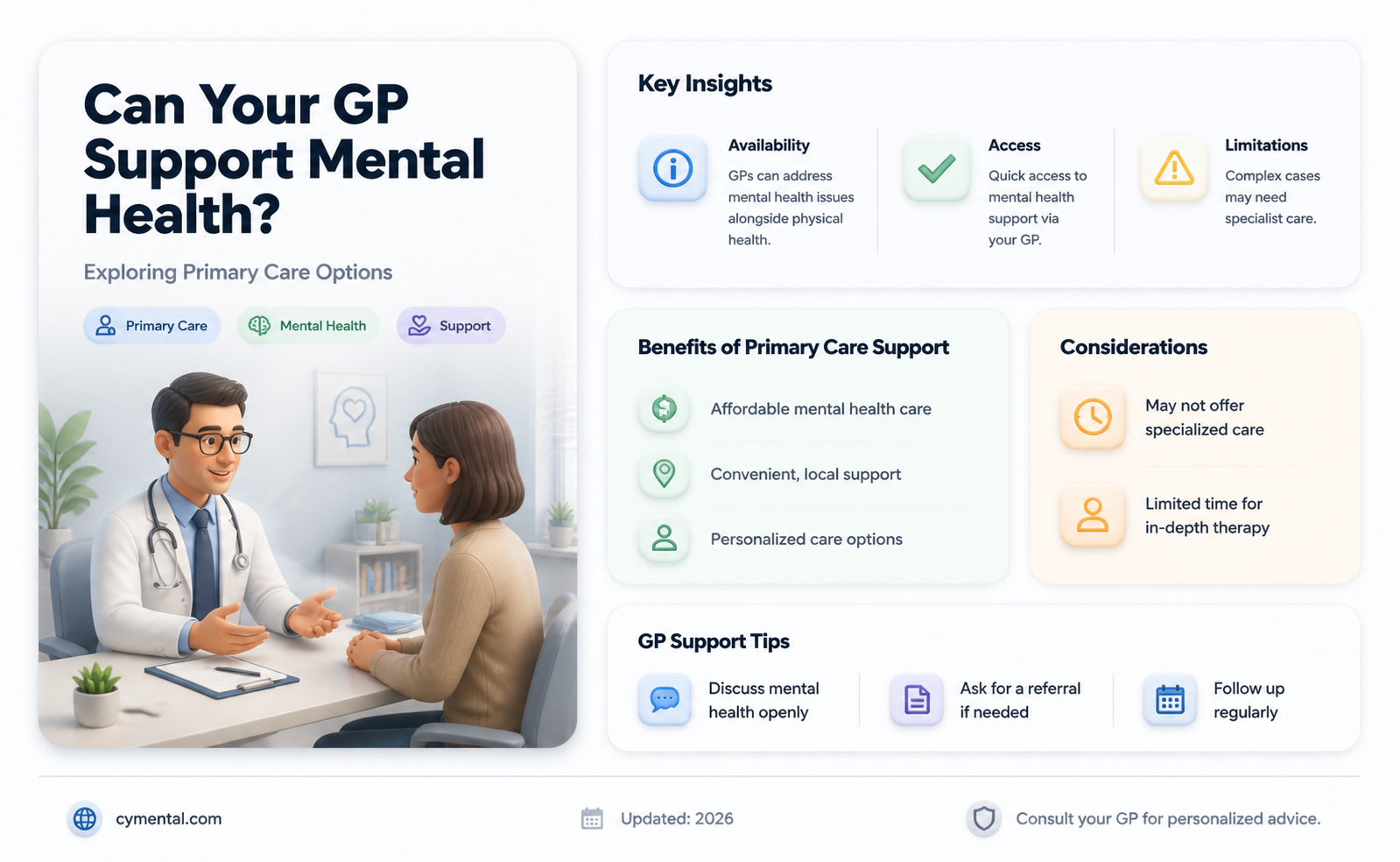
General practitioners (GPs) play a crucial role in addressing mental health concerns, often serving as the first point of contact for individuals seeking support. While they are not specialized mental health professionals, GPs are trained to recognize and manage common mental health issues such as anxiety, depression, and stress. They can provide initial assessments, offer advice on self-care strategies, prescribe medication if necessary, and refer patients to specialists like psychologists, psychiatrists, or counselors for further treatment. Additionally, GPs can monitor ongoing mental health conditions, ensuring a holistic approach to patient care by considering both physical and psychological well-being. Their accessibility and familiarity with patients’ medical histories make them a valuable resource for those navigating mental health challenges.
Explore related products


What You'll Learn
- GPs as First Point of Contact: Initial mental health assessments and referrals to specialists
- Medication Management: Prescribing and monitoring mental health medications like antidepressants
- Therapy Options: Offering brief interventions or recommending talking therapies like CBT
- Crisis Support: Providing urgent care and safety plans during mental health crises
- Holistic Care: Addressing physical health issues linked to mental well-being

GPs as First Point of Contact: Initial mental health assessments and referrals to specialists
General Practitioners (GPs) often serve as the first point of contact for individuals seeking help with mental health concerns, acting as a crucial gateway to specialized care. Their role is multifaceted, beginning with initial assessments that can identify symptoms of common mental health conditions such as anxiety, depression, or stress-related disorders. During these consultations, GPs employ tools like the PHQ-9 (Patient Health Questionnaire) for depression or GAD-7 (Generalized Anxiety Disorder) for anxiety to quantify symptom severity. These assessments are not just diagnostic but also help in tailoring immediate interventions, such as recommending lifestyle changes, mindfulness techniques, or short-term use of medications like SSRIs (selective serotonin reuptake inhibitors) in mild to moderate cases.
The referral process is where GPs truly bridge the gap between primary and specialized care. When symptoms are severe, persistent, or complex—such as in cases of bipolar disorder, schizophrenia, or treatment-resistant depression—GPs refer patients to psychiatrists, psychologists, or mental health teams. This step is critical, as early specialist involvement can prevent symptom escalation. For instance, a GP might refer a patient experiencing suicidal ideation to a crisis intervention team or recommend cognitive-behavioral therapy (CBT) for someone with generalized anxiety disorder. The GP’s role here is not just administrative but also supportive, ensuring patients understand the referral process and feel empowered to seek further help.
One of the strengths of GPs in mental health care is their ability to contextualize mental health within broader physical health. For example, a patient presenting with fatigue and low mood might be screened for thyroid dysfunction or vitamin D deficiency, conditions that can mimic depressive symptoms. This holistic approach ensures that underlying medical issues are not overlooked, providing a more accurate foundation for treatment. Additionally, GPs can monitor medication side effects, such as weight gain from antipsychotics or sexual dysfunction from SSRIs, adjusting dosages or prescribing alternatives as needed.
However, the GP’s role is not without challenges. Limited consultation time, varying levels of mental health training, and the complexity of mental health conditions can sometimes hinder effective initial assessments. To mitigate this, patients can prepare for appointments by keeping a symptom diary, noting triggers, and listing questions or concerns. GPs, in turn, can stay updated on mental health guidelines, such as those from NICE (National Institute for Health and Care Excellence), and collaborate with local mental health services to streamline referrals.
In conclusion, GPs are indispensable in the mental health care pathway, offering initial assessments, immediate interventions, and referrals to specialists. Their unique position allows them to address mental health in the context of overall well-being, ensuring a comprehensive approach to care. By leveraging their skills and resources effectively, GPs can significantly improve outcomes for patients navigating the complexities of mental health.
Revitalize Your Mind: Strategies to Overcome Mental Exhaustion Effectively
You may want to see also
Explore related products


Medication Management: Prescribing and monitoring mental health medications like antidepressants
General Practitioners (GPs) play a pivotal role in the initial assessment and ongoing management of mental health conditions, often serving as the first point of contact for patients seeking help. One critical aspect of their role is medication management, particularly the prescribing and monitoring of mental health medications like antidepressants. This responsibility requires a nuanced understanding of pharmacology, patient-specific factors, and the delicate balance between therapeutic benefits and potential side effects.
Prescribing Antidepressants: A Tailored Approach
When a GP prescribes antidepressants, they consider several factors to ensure the medication aligns with the patient’s needs. For instance, selective serotonin reuptake inhibitors (SSRIs) like fluoxetine (Prozac) or sertraline (Zoloft) are often the first-line treatment for depression and anxiety disorders due to their efficacy and relatively mild side effect profile. Dosage typically starts low—e.g., 20 mg/day for fluoxetine—and is adjusted based on response and tolerance. For older adults, lower starting doses (e.g., 10 mg/day) are common to minimize risks like orthostatic hypotension. GPs also account for drug interactions, such as avoiding SSRIs in patients taking monoamine oxidase inhibitors (MAOIs) due to the risk of serotonin syndrome.
Monitoring: Beyond the Prescription
Prescribing is only the first step; ongoing monitoring is essential to ensure safety and efficacy. GPs schedule follow-up appointments every 2–4 weeks initially to assess symptoms, side effects, and adherence. For example, patients on SSRIs may report nausea, insomnia, or sexual dysfunction, which can often be managed by adjusting dosage or timing (e.g., taking medication at night to reduce daytime fatigue). Blood tests may be ordered to monitor medications like tricyclic antidepressants (TCAs), which can affect liver function or cardiac health. For adolescents and young adults, GPs must vigilantly monitor for increased suicidal ideation, a rare but serious risk associated with SSRIs in this age group.
Practical Tips for Patients
Patients can actively participate in medication management by maintaining open communication with their GP. Keeping a symptom diary to track mood changes, side effects, and medication adherence can provide valuable insights during consultations. It’s also crucial to avoid abrupt discontinuation of antidepressants, as this can lead to withdrawal symptoms like dizziness or flu-like sensations. Instead, GPs typically taper doses gradually over weeks. Patients should inform their GP about all medications, including over-the-counter supplements like St. John’s wort, which can interact with antidepressants.
Comparative Perspective: GPs vs. Psychiatrists
While GPs handle the majority of antidepressant prescriptions, complex cases may require referral to a psychiatrist. GPs excel in managing straightforward depression and anxiety but may defer to specialists for conditions like bipolar disorder or treatment-resistant depression. However, GPs often continue to monitor medications even after specialist involvement, ensuring continuity of care. This collaborative approach maximizes patient outcomes while leveraging the strengths of both primary and specialized care.
Medication management by GPs is a cornerstone of mental health treatment, blending clinical expertise with personalized care. By carefully prescribing, monitoring, and adjusting medications, GPs help patients navigate the complexities of mental health with confidence. While not a one-size-fits-all solution, this approach offers accessible, effective support for many, underscoring the GP’s indispensable role in mental healthcare.
Nature's Healing Power: Boosting Mental Health and Well-being Naturally
You may want to see also
Explore related products





Therapy Options: Offering brief interventions or recommending talking therapies like CBT
General practitioners (GPs) often serve as the first point of contact for individuals seeking mental health support, and one of their key roles is to assess and recommend appropriate therapy options. Among these, brief interventions and talking therapies like Cognitive Behavioral Therapy (CBT) are highly effective tools for addressing mild to moderate mental health issues. Brief interventions, typically lasting 5 to 30 minutes, focus on specific issues such as stress management or sleep hygiene, providing immediate strategies to alleviate symptoms. For example, a GP might teach a patient a 10-minute progressive muscle relaxation technique to reduce anxiety, offering a practical tool that can be used daily.
When brief interventions are insufficient, GPs frequently recommend talking therapies, with CBT being one of the most evidence-based approaches. CBT is structured, goal-oriented, and typically delivered in 6 to 20 sessions, depending on the severity of the condition. It is particularly effective for conditions like depression, anxiety, and phobias. For instance, a patient with generalized anxiety disorder might work with a therapist to identify and challenge negative thought patterns over 12 weekly sessions, each lasting 50 minutes. GPs often provide referrals to local mental health services or digital platforms offering CBT, ensuring accessibility for patients of all ages, including adolescents and older adults.
While CBT is widely recommended, GPs must consider individual needs and preferences. For some patients, alternative therapies like mindfulness-based cognitive therapy (MBCT) or interpersonal psychotherapy (IPT) may be more suitable. MBCT, for example, integrates mindfulness techniques with cognitive therapy and is often recommended for recurrent depression. GPs play a critical role in tailoring recommendations, ensuring patients receive the most appropriate care. They may also suggest combining therapy with medication, such as selective serotonin reuptake inhibitors (SSRIs), for more severe cases, always weighing the benefits and potential side effects.
Practical tips for patients include keeping a symptom journal to track progress during therapy and practicing CBT techniques, such as thought records, between sessions. GPs can encourage patients to engage actively in their treatment by setting small, achievable goals, like identifying one negative thought pattern per week to challenge. Additionally, digital tools, such as CBT-based apps, can supplement in-person therapy, offering exercises and reminders to reinforce learning. By offering these options, GPs empower patients to take an active role in their mental health, fostering resilience and long-term well-being.
In conclusion, GPs are well-positioned to offer brief interventions and recommend talking therapies like CBT, providing a vital bridge to mental health care. Their ability to assess individual needs, educate patients, and coordinate referrals ensures that therapy options are accessible and effective. Whether through a quick stress-reduction technique or a structured CBT program, GPs play a pivotal role in helping patients navigate their mental health journey, one step at a time.
Exercise and Mental Health: Unlocking the Mind-Body Connection for Wellness
You may want to see also
Explore related products




Crisis Support: Providing urgent care and safety plans during mental health crises
In moments of acute mental health crisis, immediate and effective intervention can be life-saving. General Practitioners (GPs) often serve as the first point of contact, offering urgent care that bridges the gap until specialized services become available. During these critical moments, GPs assess risk levels, provide stabilization techniques, and initiate safety plans tailored to the individual’s needs. For instance, a patient experiencing severe suicidal ideation may require a rapid referral to a crisis team or emergency department, while another might benefit from a prescribed short-term anxiolytic like lorazepam (0.5–2 mg, as directed) to manage overwhelming anxiety. The GP’s role here is not just clinical but also compassionate, ensuring the person feels heard and supported in their darkest hour.
Safety planning is a cornerstone of crisis support, and GPs are uniquely positioned to help patients develop these plans during urgent visits. A safety plan typically includes identifying early warning signs, listing coping strategies (e.g., deep breathing exercises, grounding techniques), and providing emergency contacts such as local crisis hotlines or trusted individuals. For example, a GP might guide a patient in creating a step-by-step list: "If I feel like self-harming, I will call the Samaritans on 116 123, then text my sister, and finally use the 5-4-3-2-1 grounding technique." Such plans empower individuals to take proactive steps during moments of distress, reducing the likelihood of escalation.
While GPs play a vital role in crisis support, it’s essential to recognize the limitations of their scope. Mental health crises often require multidisciplinary intervention, and GPs must collaborate with psychiatrists, therapists, and crisis teams to ensure comprehensive care. For instance, a GP might prescribe a short-term medication like sertraline (25–50 mg daily for adults) to address acute symptoms of depression or anxiety, but long-term management would typically involve a mental health specialist. Additionally, GPs should be mindful of the risk of over-reliance on medication and prioritize holistic approaches, such as encouraging social support and lifestyle modifications.
Finally, the impact of timely crisis support cannot be overstated. Studies show that early intervention significantly reduces the risk of hospitalization and long-term complications. For example, a 2021 review highlighted that patients who received GP-led crisis care were 30% less likely to require emergency psychiatric admission within 30 days. This underscores the importance of GPs being equipped with the tools and training to handle such situations effectively. By combining clinical expertise with empathy and practical strategies, GPs can provide a vital safety net for those in mental health crises, offering hope and stability when it matters most.
Supporting Loved Ones: Practical Ways to Help with Anxiety and Depression
You may want to see also
Explore related products


Holistic Care: Addressing physical health issues linked to mental well-being
Physical health and mental well-being are inextricably linked, yet traditional medical approaches often treat them in isolation. A growing body of research highlights how conditions like diabetes, cardiovascular disease, and chronic pain can exacerbate anxiety, depression, and other mental health issues—and vice versa. For instance, individuals with depression are 64% more likely to develop coronary artery disease, while those with chronic pain are three times more likely to experience symptoms of depression. This bidirectional relationship underscores the need for holistic care, where GPs play a pivotal role in addressing both physical and mental health simultaneously.
Consider the case of a 45-year-old patient with type 2 diabetes who presents with persistent fatigue and low mood. A GP practicing holistic care wouldn’t merely adjust their metformin dosage (typically 500–2000 mg daily) or recommend dietary changes. Instead, they’d explore how the patient’s diabetes management—or lack thereof—impacts their mental state. Poor glycemic control, for example, can lead to fluctuations in energy levels and mood, creating a cycle of despair. The GP might integrate cognitive-behavioral therapy (CBT) techniques to help the patient develop coping strategies, alongside prescribing an SSRI like sertraline (25–200 mg daily) if appropriate. This dual approach not only improves physical health but also breaks the mental health barrier that often hinders self-care.
For older adults, particularly those over 65, the interplay between physical and mental health becomes even more pronounced. Conditions like arthritis or osteoporosis can limit mobility, leading to social isolation and increased risk of depression. A holistic GP might recommend low-impact exercises like swimming or tai chi, proven to reduce joint pain while boosting mood through endorphin release. Additionally, they could screen for vitamin D deficiency—common in this age group—and supplement with 1000–2000 IU daily, as low levels are linked to both bone health issues and depressive symptoms. This integrated strategy ensures that physical limitations don’t become mental health liabilities.
Younger populations, especially adolescents and young adults, also benefit from this approach. For instance, a 19-year-old with irritable bowel syndrome (IBS) and anxiety might find their symptoms worsen during stressful periods. A GP could prescribe gut-directed hypnotherapy, a proven treatment for IBS, while also teaching mindfulness techniques to manage anxiety. Practical tips, such as maintaining a food diary to identify triggers and avoiding caffeine (a known gut irritant), further empower the patient to take control of both conditions. This proactive, interconnected care model fosters resilience and prevents minor issues from escalating into chronic problems.
The takeaway is clear: holistic care isn’t just a buzzword—it’s a necessity. GPs are uniquely positioned to bridge the gap between physical and mental health, offering tailored interventions that address the root causes of interconnected issues. By adopting this approach, they can transform patient outcomes, proving that true healing requires treating the whole person, not just their symptoms.
Supporting Teens: Practical Strategies for Navigating Mental Health Challenges
You may want to see also
Frequently asked questions
Yes, a GP can diagnose common mental health conditions such as depression, anxiety, and stress. They may use questionnaires, discussions, and assessments to determine the appropriate diagnosis and next steps.
Yes, a GP can prescribe medication for mental health conditions like antidepressants or anti-anxiety medications. However, for more complex cases, they may refer you to a psychiatrist for specialized treatment.
Yes, a GP can refer you to mental health specialists such as psychologists, counselors, or psychiatrists if needed. They can also connect you with local mental health services or talking therapies like Cognitive Behavioral Therapy (CBT).