Ava Ramirez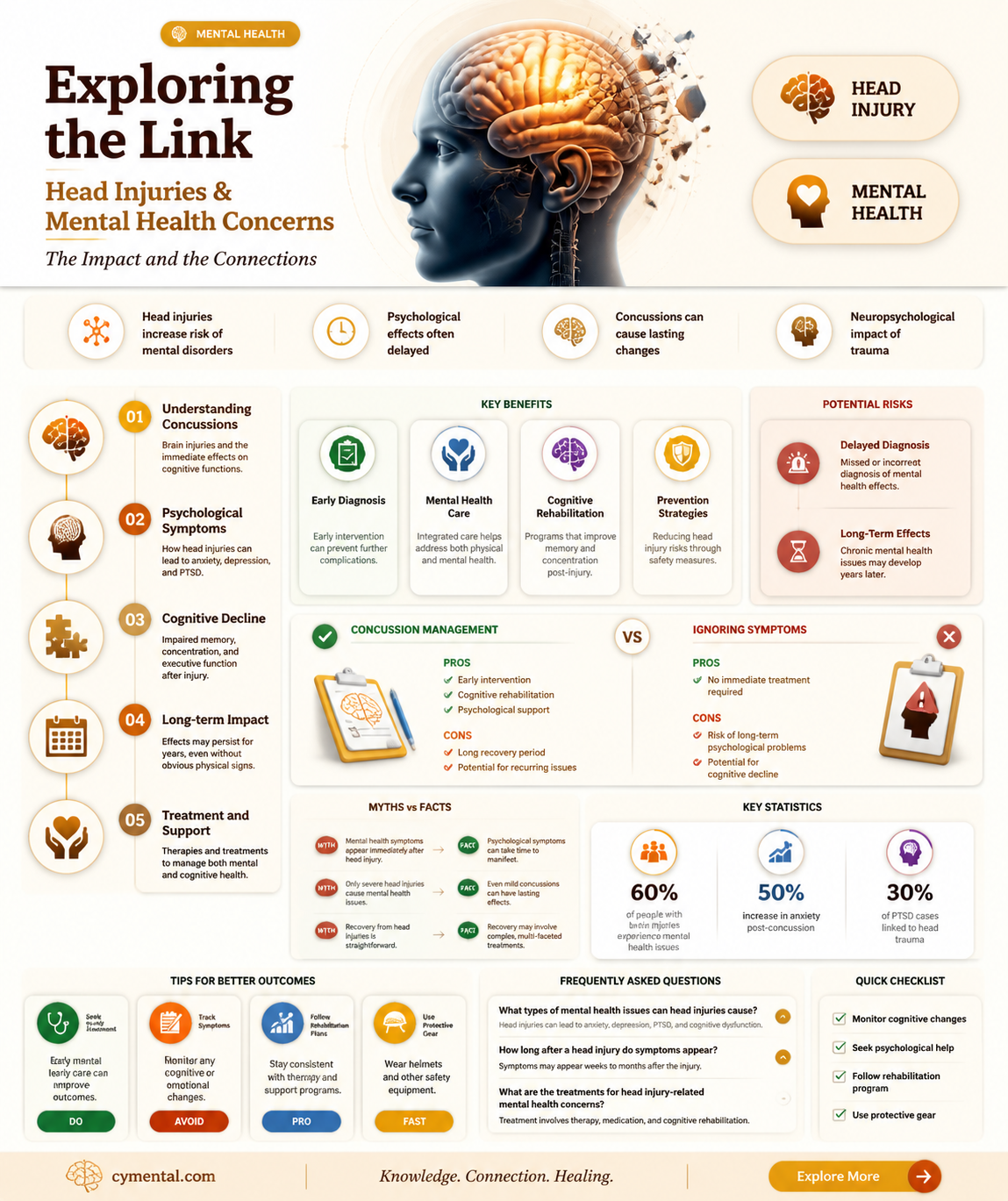
Head injuries, particularly traumatic brain injuries (TBIs), have been a significant area of concern in medical and psychological research due to their potential long-term effects on mental health. Studies have shown that individuals who experience head injuries may be at an increased risk of developing various mental health issues, including depression, anxiety, post-traumatic stress disorder (PTSD), and even psychosis. The severity and nature of the injury, as well as individual factors such as age, genetics, and pre-existing mental health conditions, can influence the likelihood and extent of these mental health consequences. Understanding the complex relationship between head injuries and mental health is crucial for developing effective prevention and treatment strategies.
| Characteristics | Values |
|---|---|
| Definition | A head injury refers to any damage to the scalp, skull, or brain. Mental problems encompass a wide range of conditions affecting mood, thinking, and behavior. |
| Types of Head Injuries | Traumatic brain injuries (TBIs), concussions, skull fractures, contusions, and penetrating head injuries. |
| Common Mental Problems | Depression, anxiety, post-traumatic stress disorder (PTSD), mood swings, irritability, and cognitive impairments such as memory loss or difficulty concentrating. |
| Mechanism of Injury | Blunt force trauma, falls, vehicle accidents, sports injuries, or violent assaults. |
| Severity Levels | Mild (e.g., minor concussions), moderate (e.g., contusions), and severe (e.g., penetrating injuries or extensive brain damage). |
| Symptoms | Physical symptoms like headaches, dizziness, and nausea; cognitive symptoms like confusion, memory loss, and difficulty speaking; emotional symptoms like mood swings and anxiety. |
| Diagnosis | Medical evaluation, neurological examination, imaging tests (CT scans, MRIs), and psychological assessments. |
| Treatment Options | Medical treatment for physical injuries, cognitive rehabilitation therapy, psychotherapy, and medication management for mental health symptoms. |
| Prognosis | Varies depending on the severity of the injury and the individual's overall health. Some may experience a full recovery, while others may have long-term mental health challenges. |
| Prevention | Wearing protective gear during sports, using seat belts and helmets in vehicles, maintaining a safe environment at home and work, and avoiding risky behaviors. |
| Research Findings | Studies have shown a significant link between head injuries and the development of mental health disorders, particularly depression and anxiety. |
| Support Resources | Mental health professionals, support groups, online resources, and rehabilitation centers specializing in brain injury recovery. |
| Case Studies | Numerous documented cases of individuals developing mental health issues following head injuries, highlighting the importance of early intervention and comprehensive treatment. |
| Legal Implications | In some cases, head injuries resulting in mental problems may lead to legal action, particularly if the injury was caused by negligence or intentional harm. |
| Societal Impact | Head injuries and their associated mental health effects can have a substantial impact on individuals, families, and communities, affecting productivity, relationships, and overall quality of life. |
Explore related products

$26.5 $27.95


What You'll Learn
- Concussions and Cognitive Impairment: Exploring the link between concussions and long-term cognitive issues
- Traumatic Brain Injuries (TBIs) and Mental Health: Discussing how TBIs can lead to mental health disorders
- Post-Traumatic Stress Disorder (PTSD) After Head Trauma: Examining the development of PTSD following head injuries
- Brain Chemistry Changes Post-Injury: Investigating alterations in brain chemistry that may contribute to mental problems
- Rehabilitation and Recovery Strategies: Outlining effective approaches for mental health recovery after a head injury

Concussions and Cognitive Impairment: Exploring the link between concussions and long-term cognitive issues
Recent studies have shed light on the alarming connection between concussions and long-term cognitive impairment. A concussion, often dismissed as a minor head injury, can have profound and lasting effects on brain function. Research indicates that even a single concussion can increase the risk of developing cognitive issues such as memory loss, attention deficits, and decreased processing speed. These symptoms can persist for months or even years after the initial injury, significantly impacting an individual's quality of life and ability to perform daily tasks.
One of the most concerning aspects of this link is the potential for cumulative damage. Repeated concussions, common in contact sports and certain occupations, can lead to a condition known as chronic traumatic encephalopathy (CTE). CTE is a degenerative brain disease characterized by the buildup of abnormal tau proteins, which can result in severe cognitive decline, mood disorders, and even suicidal behavior. The long-term consequences of concussions are not limited to cognitive impairment; they can also affect emotional well-being and social interactions.
The mechanisms underlying the connection between concussions and cognitive impairment are complex and multifaceted. While the exact cause is still under investigation, it is believed that the physical trauma of a concussion can disrupt normal brain function and lead to a cascade of biochemical changes. These changes can impair the brain's ability to process information, regulate emotions, and maintain healthy neural connections. Furthermore, the inflammatory response triggered by the injury can exacerbate these effects and contribute to long-term damage.
Given the potential severity of these consequences, it is crucial to take steps to prevent concussions and provide proper care for those who experience them. This includes implementing safety measures in sports and workplaces, educating the public about the risks and symptoms of concussions, and ensuring that individuals receive appropriate medical attention and rehabilitation. By addressing concussions proactively, we can help mitigate the risk of long-term cognitive impairment and improve outcomes for those affected by these injuries.
Exploring the Link Between Heartbreak and Mental Health
You may want to see also
Explore related products


Traumatic Brain Injuries (TBIs) and Mental Health: Discussing how TBIs can lead to mental health disorders
Traumatic Brain Injuries (TBIs) can have profound and lasting effects on an individual's mental health. Research has shown that people who have experienced a TBI are at a higher risk of developing mental health disorders such as depression, anxiety, and post-traumatic stress disorder (PTSD). The severity and location of the injury can influence the type and intensity of mental health symptoms that may emerge. For instance, injuries to the frontal lobe, which is responsible for regulating emotions and decision-making, can lead to impulsive behavior and mood swings.
One of the challenges in addressing mental health issues following a TBI is the delayed onset of symptoms. It may take months or even years for the full impact of the injury to become apparent. This delay can make it difficult for individuals to connect their mental health struggles to the TBI, leading to misdiagnosis or inadequate treatment. Healthcare providers must be vigilant in monitoring TBI patients for signs of mental health decline and be prepared to offer appropriate interventions.
In addition to the direct effects of TBIs on mental health, there are also indirect consequences that can exacerbate psychological distress. For example, individuals may experience social isolation due to cognitive impairments or physical limitations resulting from the injury. This isolation can contribute to feelings of loneliness and depression. Furthermore, the financial burden of medical treatment and the potential loss of employment can add to the stress and anxiety experienced by TBI survivors.
Treatment for mental health disorders following a TBI often involves a multidisciplinary approach. Cognitive-behavioral therapy (CBT) has been shown to be effective in managing symptoms of depression and anxiety. Medications such as selective serotonin reuptake inhibitors (SSRIs) may also be prescribed to help regulate mood. In some cases, vocational rehabilitation and social support programs can assist individuals in reintegration into their communities and finding meaningful employment.
It is crucial for society to recognize the link between TBIs and mental health and to provide adequate resources and support for those affected. This includes raising awareness about the signs and symptoms of mental health disorders following a TBI, ensuring access to mental health services, and promoting research into the long-term effects of TBIs on mental health. By addressing these issues, we can help improve the quality of life for TBI survivors and their families.
Unraveling the Roots of Mental Exhaustion: A Comprehensive Guide
You may want to see also
Explore related products


Post-Traumatic Stress Disorder (PTSD) After Head Trauma: Examining the development of PTSD following head injuries
Post-Traumatic Stress Disorder (PTSD) is a mental health condition that can develop after experiencing or witnessing a traumatic event. While PTSD is often associated with combat veterans or survivors of natural disasters, it can also occur following head injuries. Research suggests that the risk of developing PTSD after a head injury is significant, particularly in cases where the injury was severe or resulted in a prolonged loss of consciousness.
One study found that individuals who suffered a traumatic brain injury (TBI) were at a higher risk of developing PTSD compared to those who experienced other types of injuries. The severity of the TBI was also found to be a predictor of PTSD risk, with more severe injuries leading to a greater likelihood of developing the disorder. Additionally, the study found that the presence of PTSD symptoms was associated with poorer cognitive functioning and a lower quality of life.
The development of PTSD after a head injury is thought to be related to the disruption of normal brain function and the subsequent psychological impact of the injury. Head injuries can lead to a range of cognitive and emotional difficulties, including memory problems, mood swings, and anxiety. These symptoms can be distressing and may contribute to the development of PTSD.
It is important to note that not all individuals who experience a head injury will develop PTSD. The risk of developing the disorder is influenced by a variety of factors, including the severity of the injury, the individual's prior mental health history, and the presence of social support. Early intervention and treatment can help to reduce the risk of developing PTSD and improve outcomes for those who do develop the disorder.
In conclusion, PTSD is a significant concern following head injuries, particularly in cases where the injury is severe. Understanding the risk factors and mechanisms underlying the development of PTSD can help to inform prevention and treatment strategies, ultimately improving outcomes for individuals who experience head injuries.
Unraveling the Roots of Mental Confusion: A Comprehensive Guide
You may want to see also
Explore related products


Brain Chemistry Changes Post-Injury: Investigating alterations in brain chemistry that may contribute to mental problems
Traumatic brain injuries (TBIs) can lead to significant changes in brain chemistry, which may contribute to the development of mental health problems. One of the key changes observed post-injury is the disruption of neurotransmitter systems. Neurotransmitters are chemical messengers that facilitate communication between brain cells, and their imbalance can result in various psychiatric symptoms.
For instance, studies have shown that TBIs can lead to a decrease in serotonin levels, which is associated with mood regulation. This decrease can contribute to the development of depression and anxiety disorders. Additionally, there is evidence of increased levels of glutamate, an excitatory neurotransmitter, which can lead to neuronal damage and is implicated in the pathophysiology of post-traumatic stress disorder (PTSD).
Another critical aspect of brain chemistry changes post-injury is the impact on the hypothalamic-pituitary-adrenal (HPA) axis. The HPA axis is a complex system that regulates stress response, and its dysfunction can lead to a range of mental health issues, including depression, anxiety, and PTSD. Research suggests that TBIs can cause hyperactivation of the HPA axis, leading to increased cortisol levels and contributing to the development of these disorders.
Furthermore, TBIs can also lead to changes in the expression of genes involved in brain function and mental health. For example, studies have shown that genes related to neurotransmitter systems, such as the serotonin transporter gene, can be downregulated following a TBI. This downregulation can contribute to the development of depression and other mental health problems.
In conclusion, the changes in brain chemistry following a TBI can have significant implications for mental health. Understanding these changes can help in the development of targeted interventions and treatments for individuals suffering from mental health problems post-injury. It is essential to consider the complex interplay between neurotransmitter systems, the HPA axis, and genetic factors when investigating the link between brain injuries and mental health disorders.
Unraveling the Link: Mental Illness and Anger Outbursts Explained
You may want to see also
Explore related products


Rehabilitation and Recovery Strategies: Outlining effective approaches for mental health recovery after a head injury
Cognitive rehabilitation therapy (CRT) is a vital component in the recovery process for individuals experiencing mental health issues post-head injury. This specialized form of therapy focuses on improving cognitive functions such as memory, attention, and problem-solving skills, which are often impaired following traumatic brain injuries. CRT involves a series of structured exercises and activities designed to enhance cognitive abilities and promote adaptive strategies for managing daily life challenges.
In addition to CRT, mindfulness-based interventions have shown promise in supporting mental health recovery after head injuries. Mindfulness practices, such as meditation and yoga, can help individuals develop greater awareness of their thoughts and emotions, leading to improved emotional regulation and reduced symptoms of anxiety and depression. These interventions also promote relaxation and stress reduction, which are essential for overall well-being during the recovery process.
Physical exercise is another crucial element in rehabilitation and recovery strategies. Regular physical activity has been shown to improve cognitive function, mood, and overall quality of life in individuals with head injuries. Exercise can also help reduce the risk of developing chronic health conditions, such as obesity and cardiovascular disease, which are common in populations with traumatic brain injuries. It is important to consult with a healthcare professional to develop an appropriate exercise plan tailored to the individual's specific needs and abilities.
Social support plays a significant role in the mental health recovery process after a head injury. Connecting with friends, family, and community resources can provide emotional support, reduce feelings of isolation, and enhance overall well-being. Support groups specifically for individuals with head injuries can also be beneficial, as they offer a platform for sharing experiences, learning from others, and developing coping strategies.
Nutrition and sleep hygiene are often overlooked but essential components of rehabilitation and recovery. A balanced diet rich in nutrients can support cognitive function and overall health, while adequate sleep is crucial for memory consolidation and emotional regulation. Establishing a consistent sleep schedule, creating a relaxing bedtime routine, and avoiding stimulants before bedtime can help improve sleep quality and support mental health recovery.
In conclusion, a comprehensive approach to rehabilitation and recovery after a head injury should incorporate cognitive rehabilitation therapy, mindfulness-based interventions, physical exercise, social support, and attention to nutrition and sleep hygiene. By addressing these various aspects of mental health, individuals can optimize their recovery process and improve their overall quality of life.
Unraveling the Genetic Puzzle of Mental Illness: One Gene's Impact?
You may want to see also
Frequently asked questions
Yes, a head injury can cause mental problems. Traumatic brain injuries (TBIs) can lead to a range of mental health issues, including depression, anxiety, mood swings, and cognitive impairments.
Common mental problems associated with head injuries include depression, anxiety disorders, post-traumatic stress disorder (PTSD), mood swings, irritability, and cognitive impairments such as memory loss and difficulty concentrating.
Mental problems can appear immediately after a head injury or may develop over time. Some symptoms may be delayed, appearing weeks, months, or even years after the initial injury.
If someone experiences mental problems after a head injury, they should seek medical attention from a healthcare professional. A doctor can evaluate the symptoms, provide a diagnosis, and recommend appropriate treatment options, which may include therapy, medication, or other interventions.