Madison Cole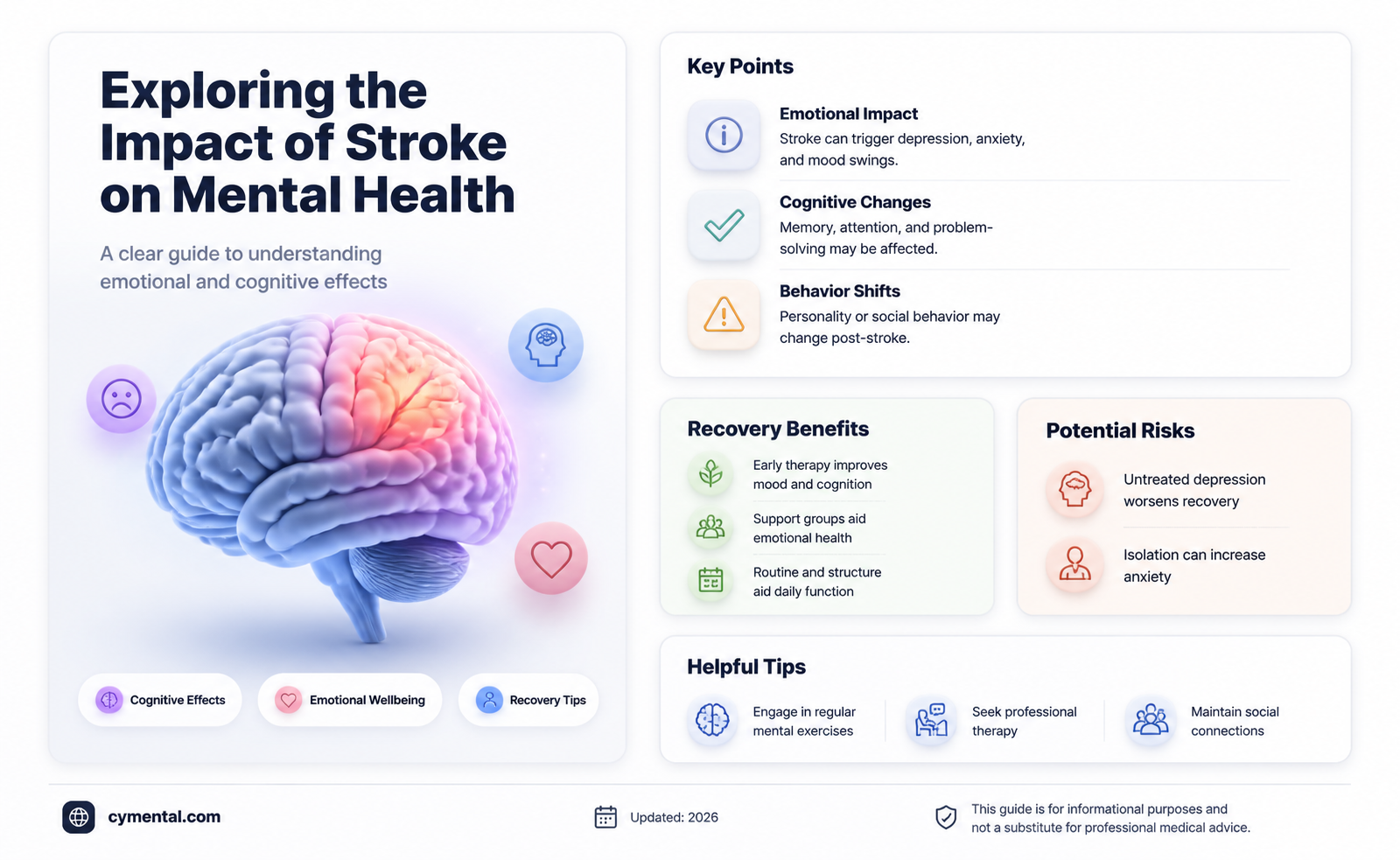
A stroke can have profound effects on an individual's mental health, often leading to a range of psychological challenges. Post-stroke depression is a common condition, with symptoms including persistent feelings of sadness, hopelessness, and a loss of interest in activities once enjoyed. Anxiety disorders can also emerge, characterized by excessive worry, fear, and a sense of impending doom. Cognitive changes, such as difficulties with memory, attention, and problem-solving, can further exacerbate mental health issues. These cognitive impairments may lead to frustration, irritability, and a diminished sense of self-worth. Additionally, the physical limitations imposed by a stroke can contribute to social isolation, which in turn can worsen mental health outcomes. It is crucial for stroke survivors to receive comprehensive care that addresses both their physical and mental well-being, including access to mental health professionals, support groups, and therapeutic interventions tailored to their specific needs.
| Characteristics | Values |
|---|---|
| Definition | A stroke is a medical condition where blood flow to the brain is disrupted, leading to brain cell damage and potential physical and mental health effects. |
| Types of strokes | Ischemic (most common, caused by blood clot), Hemorrhagic (caused by bleeding in the brain), Transient Ischemic Attack (TIA, a mini-stroke with temporary symptoms). |
| Prevalence | Strokes are a leading cause of death and disability worldwide, with approximately 15 million people experiencing a stroke each year. |
| Risk factors | High blood pressure, smoking, diabetes, high cholesterol, obesity, physical inactivity, poor diet, excessive alcohol consumption, family history of stroke. |
| Symptoms | Sudden weakness or numbness in face, arm, or leg, difficulty speaking or understanding speech, vision problems, severe headache, dizziness, loss of balance. |
| Diagnosis | Medical professionals use various tests such as CT scans, MRI, blood tests, and physical examinations to diagnose a stroke. |
| Treatment | Treatment depends on the type of stroke: Ischemic strokes may be treated with clot-busting drugs or mechanical clot removal, while hemorrhagic strokes may require surgery to remove blood or repair blood vessels. |
| Recovery | Rehabilitation is crucial for stroke survivors to regain physical and mental function. This may include physical therapy, occupational therapy, speech therapy, and psychological support. |
| Mental health impact | Strokes can lead to various mental health issues such as depression, anxiety, mood swings, cognitive impairment, and personality changes. |
| Support for mental health | Stroke survivors may benefit from counseling, antidepressant medication, cognitive-behavioral therapy, and support groups to manage mental health challenges. |
| Prevention | Lifestyle changes such as maintaining a healthy weight, exercising regularly, eating a balanced diet, quitting smoking, and managing chronic conditions can help prevent strokes. |
| Research | Ongoing research aims to improve stroke diagnosis, treatment, and recovery, including the development of new therapies and technologies to enhance patient outcomes. |
| Resources | Organizations such as the American Stroke Association and the National Stroke Association provide valuable resources, information, and support for stroke survivors and their families. |
Explore related products


What You'll Learn
- Depression: Post-stroke depression is common, affecting up to 50% of survivors, significantly impacting recovery
- Anxiety: Stroke survivors may experience heightened anxiety levels, often linked to concerns about future strokes or health issues
- Cognitive Changes: Stroke can lead to cognitive impairments, including memory loss, difficulty concentrating, and problem-solving challenges
- Emotional Lability: Survivors may exhibit sudden mood swings or emotional outbursts, a condition known as emotional lability
- Support and Therapy: Access to mental health support and therapy is crucial for stroke survivors to manage psychological effects and improve overall well-being

Depression: Post-stroke depression is common, affecting up to 50% of survivors, significantly impacting recovery
Post-stroke depression is a significant and prevalent issue that affects up to half of all stroke survivors. This condition can have a profound impact on the recovery process, making it essential to address and manage effectively. The onset of depression following a stroke can be attributed to various factors, including the physical changes in the brain, the emotional toll of the event, and the challenges associated with rehabilitation.
One of the primary challenges in dealing with post-stroke depression is its potential to exacerbate the difficulties faced during recovery. Depression can lead to a lack of motivation, decreased energy levels, and a diminished ability to concentrate, all of which can hinder the progress of physical and cognitive rehabilitation. Furthermore, depression can also affect the immune system, making stroke survivors more susceptible to infections and other health complications.
It is crucial for healthcare providers to screen stroke survivors for signs of depression regularly. Early detection and intervention can significantly improve outcomes and quality of life. Treatment options for post-stroke depression may include antidepressant medications, psychotherapy, or a combination of both. Additionally, supportive care from family and friends, as well as participation in support groups, can provide valuable emotional support and help alleviate feelings of isolation and hopelessness.
In conclusion, post-stroke depression is a common and serious condition that can have a significant impact on the recovery process. By understanding the factors that contribute to its development and implementing appropriate screening and treatment strategies, healthcare providers can help improve the mental health and overall well-being of stroke survivors.
Exploring the Mental Health Impact of Blood Transfusions
You may want to see also
Explore related products


Anxiety: Stroke survivors may experience heightened anxiety levels, often linked to concerns about future strokes or health issues
Stroke survivors often find themselves grappling with heightened anxiety levels, a common yet complex issue that can significantly impact their mental health. This anxiety is frequently rooted in concerns about the possibility of future strokes or other health complications, creating a persistent sense of unease and uncertainty. Understanding the link between stroke and anxiety is crucial for developing effective coping strategies and improving the overall well-being of stroke survivors.
Research indicates that anxiety disorders are more prevalent among stroke survivors compared to the general population. The fear of recurrence is a major contributor to this heightened anxiety, as survivors may constantly worry about the potential for another stroke. Additionally, the physical and cognitive changes resulting from a stroke can exacerbate anxiety, as individuals may struggle with new limitations and challenges in their daily lives.
Addressing anxiety in stroke survivors requires a multifaceted approach. Cognitive-behavioral therapy (CBT) has been shown to be effective in reducing anxiety levels by helping individuals identify and challenge negative thought patterns. Medications, such as selective serotonin reuptake inhibitors (SSRIs), may also be prescribed to manage anxiety symptoms. Furthermore, lifestyle modifications, including regular exercise, a balanced diet, and stress management techniques, can play a vital role in promoting mental health and reducing anxiety.
Support groups and counseling services can provide stroke survivors with a platform to share their experiences and connect with others who understand their struggles. These resources can help alleviate feelings of isolation and offer practical advice for managing anxiety. Additionally, educating stroke survivors and their caregivers about the potential for anxiety and the available treatment options is essential for fostering a proactive and informed approach to mental health.
In conclusion, anxiety is a significant issue that can affect the mental health of stroke survivors, often stemming from concerns about future strokes or health problems. By adopting a comprehensive treatment plan that includes therapy, medication, lifestyle changes, and support networks, stroke survivors can effectively manage their anxiety and improve their overall quality of life.
Navigating Emotional Turbulence: Miscarriage's Impact on Mental Health
You may want to see also
Explore related products


Cognitive Changes: Stroke can lead to cognitive impairments, including memory loss, difficulty concentrating, and problem-solving challenges
Stroke survivors often face a myriad of cognitive challenges that can significantly impact their daily lives. One of the most common cognitive impairments following a stroke is memory loss. This can manifest in various ways, such as difficulty remembering recent events, forgetting names, or struggling to recall important information. Memory loss can be particularly frustrating for stroke survivors, as it can affect their ability to communicate effectively and maintain social relationships.
In addition to memory loss, stroke survivors may also experience difficulty concentrating and maintaining attention. This can make it challenging to engage in activities that require sustained focus, such as reading, writing, or completing tasks at work or home. Concentration difficulties can also lead to increased fatigue and decreased productivity, further exacerbating the emotional toll of stroke recovery.
Problem-solving challenges are another common cognitive impairment following a stroke. Stroke survivors may find it difficult to think critically, make decisions, or plan and organize their daily activities. This can lead to feelings of helplessness and dependency, as well as increased stress and anxiety. Problem-solving difficulties can also impact a person's ability to manage their finances, care for themselves, and maintain their independence.
It is important for stroke survivors and their caregivers to be aware of these potential cognitive changes and to seek appropriate support and resources. Cognitive rehabilitation therapy, which focuses on improving memory, attention, and problem-solving skills, can be an effective way to address these challenges. Additionally, lifestyle modifications, such as regular exercise, a healthy diet, and stress management techniques, can help to support cognitive function and overall well-being.
In conclusion, cognitive changes following a stroke can have a significant impact on a person's quality of life. By understanding these challenges and seeking appropriate support, stroke survivors can work towards improving their cognitive function and regaining a sense of control and independence in their lives.
The Silent Struggle: Isolation's Impact on Mental Health
You may want to see also
Explore related products


Emotional Lability: Survivors may exhibit sudden mood swings or emotional outbursts, a condition known as emotional lability
Survivors of stroke may experience a range of emotional challenges, one of the most common being emotional lability. This condition is characterized by sudden and unpredictable mood swings, where individuals may rapidly shift from one emotional state to another. Such fluctuations can be distressing for both the survivor and their caregivers, significantly impacting daily life and relationships. Emotional lability can manifest as episodes of intense crying, irritability, or even laughter, often without an apparent trigger. Understanding this condition is crucial for providing appropriate support and managing its effects on mental health.
The pathophysiology of emotional lability post-stroke is complex and not fully understood. However, it is believed to be related to the disruption of neural pathways that regulate emotional responses. Damage to areas of the brain involved in mood regulation, such as the limbic system, can lead to an inability to control emotional expressions. Additionally, the psychological impact of experiencing a stroke, including the loss of independence and changes in lifestyle, can contribute to emotional instability. It is important to note that emotional lability is not a sign of weakness or a character flaw, but rather a medical condition that requires compassionate understanding and treatment.
Managing emotional lability involves a multifaceted approach. Medications such as antidepressants and mood stabilizers may be prescribed to help regulate emotional responses. Cognitive-behavioral therapy (CBT) can also be beneficial, teaching survivors strategies to cope with emotional fluctuations and improve overall mental well-being. Support groups provide a platform for survivors to share their experiences and connect with others who understand their challenges. Caregivers play a vital role in managing emotional lability by providing a stable and supportive environment, helping to identify triggers, and assisting with the implementation of coping strategies.
In addition to these interventions, lifestyle modifications can also help alleviate symptoms of emotional lability. Regular exercise, a balanced diet, and adequate sleep are essential for maintaining overall health and can positively impact mood regulation. Engaging in activities that bring joy and a sense of accomplishment can help boost self-esteem and reduce emotional distress. It is also important for survivors to communicate openly with their healthcare providers about their emotional experiences, as this can lead to more effective treatment plans.
In conclusion, emotional lability is a significant challenge faced by many stroke survivors, affecting their mental health and quality of life. By understanding the underlying causes and implementing a comprehensive management plan, survivors can learn to cope with emotional fluctuations and improve their overall well-being. Support from caregivers, healthcare providers, and the broader community is crucial in helping survivors navigate this complex condition and regain a sense of control over their emotional lives.
The Impact of School on Students' Mental Health: A Comprehensive Look
You may want to see also
Support and Therapy: Access to mental health support and therapy is crucial for stroke survivors to manage psychological effects and improve overall well-being
Access to mental health support and therapy is a critical component of the recovery process for stroke survivors. The psychological impact of a stroke can be profound, often leading to depression, anxiety, and cognitive impairments. Therapy provides a safe space for individuals to process their experiences, develop coping strategies, and improve their mental well-being. Cognitive-behavioral therapy (CBT) is one effective approach, helping patients to identify and challenge negative thought patterns and behaviors. Additionally, group therapy can offer a sense of community and support, allowing stroke survivors to connect with others who understand their challenges.
Beyond traditional therapy, alternative forms of support can also be beneficial. Art therapy, for example, can help individuals express their emotions and improve their fine motor skills. Music therapy has been shown to enhance mood and cognitive function. Furthermore, mindfulness and meditation practices can aid in stress reduction and emotional regulation. It is essential for healthcare providers to recognize the importance of mental health support and to integrate these services into the overall care plan for stroke survivors.
In addition to professional therapy, social support from family and friends plays a vital role in the mental health recovery of stroke survivors. Loved ones can offer emotional support, help with daily tasks, and encourage participation in social activities, which can combat feelings of isolation and loneliness. Support groups, both in-person and online, can also provide a valuable network of peers who share similar experiences and challenges.
Access to mental health support and therapy can significantly improve the quality of life for stroke survivors. By addressing the psychological effects of a stroke, individuals can better manage their symptoms, improve their overall well-being, and enhance their ability to participate in daily activities. It is crucial for stroke survivors to be proactive in seeking mental health support and for healthcare providers to prioritize these services as part of comprehensive stroke care.
Revitalize Your Mind: The Power of Leisure in Boosting Mental Health
You may want to see also
Frequently asked questions
Yes, a stroke can directly impact a person's mental health. The brain damage caused by a stroke can lead to changes in mood, behavior, and cognitive function. Depression, anxiety, and mood swings are common mental health issues that can arise after a stroke.
Common mental health symptoms that may appear after a stroke include depression, anxiety, mood swings, irritability, and changes in behavior. Cognitive changes such as difficulty with memory, attention, and problem-solving can also occur.
Mental health issues after a stroke can be managed or treated through a combination of approaches. These may include medication, such as antidepressants or anti-anxiety drugs, as well as therapy, like cognitive-behavioral therapy or counseling. Support groups and rehabilitation programs can also play a crucial role in helping individuals cope with the emotional and psychological challenges following a stroke.