Lucas Bennett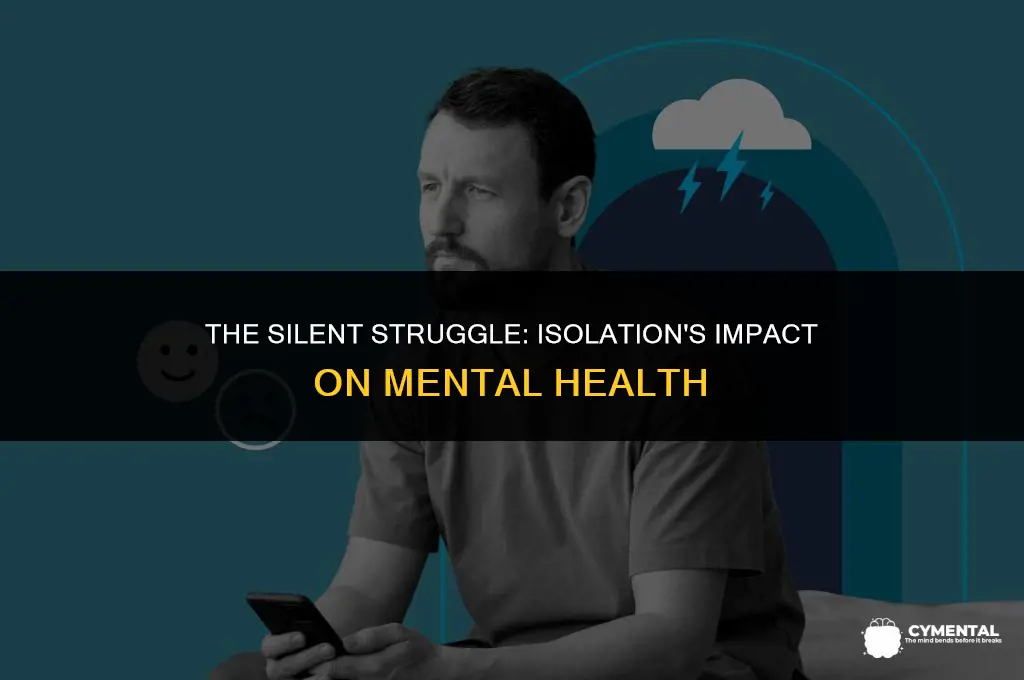
Isolation can have a profound impact on mental health, leading to feelings of loneliness, depression, and anxiety. When individuals are cut off from social interactions and support networks, they may experience a decline in their emotional well-being. This can manifest in various ways, such as increased stress levels, difficulty concentrating, and a lack of motivation. Furthermore, prolonged isolation can exacerbate existing mental health conditions and even contribute to the development of new ones. It is essential to recognize the importance of social connections and seek ways to maintain them, especially during times when physical distancing is necessary.
Explore related products


$181 $225.95


What You'll Learn
- Social Deprivation: Lack of social interaction can lead to feelings of loneliness and disconnection
- Increased Anxiety: Isolation may exacerbate anxiety disorders, making it difficult to cope with everyday stressors
- Depression: Prolonged isolation can contribute to the development of depressive symptoms and worsen existing depression
- Cognitive Decline: Reduced social engagement may lead to decreased cognitive stimulation, potentially affecting memory and problem-solving skills
- Trauma Response: Isolation can trigger or worsen symptoms of post-traumatic stress disorder (PTSD) in individuals who have experienced trauma

Social Deprivation: Lack of social interaction can lead to feelings of loneliness and disconnection
Social deprivation, characterized by a lack of social interaction, can profoundly impact an individual's mental health, leading to pervasive feelings of loneliness and disconnection. This condition can arise from various circumstances, such as geographical isolation, social anxiety, or the loss of a significant relationship. The absence of meaningful social connections can disrupt the delicate balance of emotional well-being, often resulting in a cascade of negative psychological effects.
Research has shown that social deprivation can lead to increased levels of stress, anxiety, and depression. The human brain is wired for social interaction, and when this need is unmet, it can trigger a fight-or-flight response, releasing stress hormones like cortisol. Prolonged exposure to these hormones can have detrimental effects on both physical and mental health, including impaired cognitive function, weakened immune system, and a heightened risk of developing mood disorders.
Furthermore, social deprivation can exacerbate feelings of loneliness, which can be particularly damaging to mental health. Loneliness is not merely the absence of company but a subjective feeling of isolation and disconnection from others. This emotional state can lead to a negative feedback loop, where individuals may become increasingly withdrawn and isolated, further intensifying their feelings of loneliness. Breaking this cycle can be challenging, as it often requires reaching out to others, which can be daunting for those experiencing social anxiety or low self-esteem.
In addition to its psychological impacts, social deprivation can also have significant consequences for physical health. Studies have linked social isolation to a range of health problems, including increased blood pressure, heart disease, and a weakened immune system. The lack of social support can also hinder an individual's ability to cope with stress and adversity, making them more susceptible to illness and disease.
To mitigate the effects of social deprivation, it is essential to prioritize social connections and build a strong support network. This can involve joining social groups, volunteering, or simply making an effort to stay in touch with friends and family. For those struggling with social anxiety, seeking professional help can be beneficial in developing strategies to overcome these challenges and form meaningful connections with others.
In conclusion, social deprivation can have far-reaching consequences for mental and physical health, underscoring the importance of maintaining strong social connections. By recognizing the signs of social deprivation and taking steps to foster social interaction, individuals can help protect their well-being and lead more fulfilling lives.
Unveiling the Impact: Nicotine's Effects on Mental Health Explored
You may want to see also
Explore related products


Increased Anxiety: Isolation may exacerbate anxiety disorders, making it difficult to cope with everyday stressors
Social isolation can significantly exacerbate anxiety disorders, making it challenging for individuals to manage everyday stressors effectively. Research indicates that prolonged periods of isolation can lead to heightened levels of anxiety, as the lack of social interaction and support can intensify feelings of loneliness and helplessness. This can create a vicious cycle where anxiety symptoms worsen, further isolating the individual and perpetuating the negative effects on mental health.
One of the primary reasons isolation can worsen anxiety is the absence of social support networks. When individuals are isolated, they often lack access to friends, family, or community resources that can provide emotional support and help them cope with stressors. This can lead to feelings of being overwhelmed and unable to manage daily challenges, which in turn can exacerbate anxiety symptoms.
Moreover, isolation can disrupt normal routines and activities that help individuals maintain a sense of structure and purpose. Without regular social interactions, work, or leisure activities, individuals may struggle to find meaning and motivation, leading to increased anxiety and feelings of aimlessness. Establishing and maintaining a consistent daily routine can be crucial in mitigating these effects, as it provides a sense of control and predictability that can help reduce anxiety levels.
Another factor contributing to increased anxiety during isolation is the lack of opportunities for physical activity and exercise. Regular physical activity is known to have anxiolytic effects, reducing stress and anxiety by releasing endorphins and promoting overall well-being. When individuals are isolated, they may be less likely to engage in physical activities, leading to a sedentary lifestyle that can exacerbate anxiety symptoms.
To address the issue of increased anxiety during isolation, it is essential to prioritize self-care and seek alternative sources of support. This can include engaging in virtual social interactions, participating in online support groups, or seeking professional counseling services. Additionally, maintaining a healthy lifestyle by incorporating regular exercise, balanced nutrition, and adequate sleep can help mitigate the negative effects of isolation on anxiety levels.
In conclusion, isolation can have a profound impact on mental health, particularly by exacerbating anxiety disorders. By understanding the underlying mechanisms and implementing strategies to maintain social connections, structure, and physical activity, individuals can better cope with the challenges posed by isolation and safeguard their mental well-being.
The Impact of Body Image on Mental Health: A Comprehensive Guide
You may want to see also
Explore related products


Depression: Prolonged isolation can contribute to the development of depressive symptoms and worsen existing depression
Prolonged isolation can significantly contribute to the development of depressive symptoms and exacerbate existing depression. This is due to the lack of social interaction and support, which are crucial for maintaining mental well-being. When individuals are isolated, they may experience feelings of loneliness, worthlessness, and hopelessness, which can lead to a downward spiral of negative thoughts and emotions.
Research has shown that social isolation can lead to changes in brain chemistry, including decreased levels of serotonin and dopamine, which are neurotransmitters that play a key role in regulating mood. Additionally, isolation can disrupt the body's natural circadian rhythms, leading to sleep disturbances and further contributing to depressive symptoms.
It is important to note that the effects of isolation on depression can vary depending on individual factors such as age, personality, and life circumstances. For example, older adults may be more susceptible to the negative effects of isolation due to decreased mobility and social networks. Similarly, individuals with pre-existing mental health conditions may be more vulnerable to the exacerbation of their symptoms.
To mitigate the effects of isolation on depression, it is essential to maintain social connections and engage in activities that promote mental well-being. This can include virtual social interactions, such as video calls with friends and family, as well as in-person interactions when possible. Additionally, practicing self-care activities such as exercise, meditation, and hobbies can help to improve mood and reduce feelings of isolation.
In conclusion, prolonged isolation can have a significant impact on mental health, particularly in terms of depression. By understanding the risks and taking steps to maintain social connections and promote mental well-being, individuals can help to mitigate the negative effects of isolation and improve their overall mental health.
The Impact of Beauty Standards on Mental Health: A Comprehensive Look
You may want to see also
Explore related products


Cognitive Decline: Reduced social engagement may lead to decreased cognitive stimulation, potentially affecting memory and problem-solving skills
Social engagement plays a crucial role in maintaining cognitive health. When individuals participate in social activities, they are often required to recall information, make decisions, and solve problems, all of which stimulate the brain and help maintain cognitive function. Conversely, reduced social engagement can lead to decreased cognitive stimulation, potentially affecting memory and problem-solving skills. This cognitive decline can be particularly problematic for older adults, who may already be experiencing age-related cognitive changes.
Research has shown that social isolation can have a significant impact on cognitive health. A study published in the Journal of the American Medical Association found that older adults who reported feeling lonely had a higher risk of developing dementia. Another study, published in the journal Psychological Science, found that social isolation can impair cognitive function in young adults as well. These findings suggest that social engagement is essential for maintaining cognitive health across the lifespan.
There are several mechanisms by which social isolation may lead to cognitive decline. One possibility is that social isolation reduces the amount of cognitive stimulation that individuals receive. When people are socially engaged, they are often required to think critically, remember information, and solve problems, all of which help to keep the brain active and healthy. In contrast, social isolation may lead to a lack of cognitive stimulation, which can contribute to cognitive decline.
Another possibility is that social isolation may lead to increased stress and anxiety, which can also have a negative impact on cognitive health. Chronic stress has been shown to impair cognitive function and increase the risk of cognitive decline. Social isolation may also lead to depression, which is another risk factor for cognitive decline.
Fortunately, there are steps that individuals can take to mitigate the effects of social isolation on cognitive health. Engaging in regular social activities, such as joining clubs or volunteering, can help to maintain cognitive stimulation and reduce the risk of cognitive decline. Additionally, staying physically active and maintaining a healthy diet can also help to support cognitive health.
In conclusion, social engagement is essential for maintaining cognitive health. Reduced social engagement can lead to decreased cognitive stimulation, potentially affecting memory and problem-solving skills. This cognitive decline can be particularly problematic for older adults, who may already be experiencing age-related cognitive changes. However, by engaging in regular social activities and maintaining a healthy lifestyle, individuals can help to mitigate the effects of social isolation on cognitive health.
The Impact of Vaping on Mental Health: A Comprehensive Guide
You may want to see also
Explore related products


Trauma Response: Isolation can trigger or worsen symptoms of post-traumatic stress disorder (PTSD) in individuals who have experienced trauma
Isolation can significantly exacerbate the symptoms of post-traumatic stress disorder (PTSD) in individuals who have experienced trauma. This is because isolation strips away the social support systems that are crucial for coping with traumatic experiences. Without the buffer of social connections, individuals may find themselves more susceptible to the intrusive thoughts, flashbacks, and emotional dysregulation that characterize PTSD.
One of the key ways isolation impacts PTSD symptoms is by disrupting the normal stress response. In the presence of social support, the body's stress response is more likely to return to baseline after a traumatic event. However, isolation can lead to a prolonged state of hyperarousal, where the body remains in a heightened state of alertness. This can manifest as increased anxiety, difficulty sleeping, and a heightened startle response.
Moreover, isolation can impede the process of emotional regulation, which is already challenging for individuals with PTSD. Social interactions often provide opportunities for emotional expression and validation, which are essential for processing traumatic experiences. Without these outlets, individuals may struggle to manage their emotions, leading to increased feelings of shame, guilt, and anger.
Isolation can also hinder access to mental health resources and treatment. Many individuals with PTSD rely on therapy and support groups to manage their symptoms. However, isolation can create barriers to accessing these resources, whether due to physical limitations, financial constraints, or stigma. This lack of access can further compound the negative effects of isolation on PTSD symptoms.
In conclusion, isolation can have a profound impact on the mental health of individuals who have experienced trauma. By disrupting the normal stress response, impeding emotional regulation, and hindering access to mental health resources, isolation can trigger or worsen symptoms of PTSD. It is therefore crucial to address the issue of isolation in the context of trauma response and to provide individuals with the social support and resources they need to cope with their experiences.
The Psychological Impact of Infidelity on Men: A Deep Dive
You may want to see also
Frequently asked questions
The immediate effects of isolation on mental health can include feelings of loneliness, anxiety, and depression. These emotions can intensify over time if isolation persists.
Yes, prolonged isolation can lead to chronic mental health conditions such as persistent depressive disorder, social anxiety disorder, and even cognitive decline.
Individuals who are already experiencing mental health challenges, the elderly, and those with limited social support networks are often the most vulnerable to the detrimental effects of isolation.
Strategies to mitigate the negative impact of isolation include staying connected with friends and family through technology, engaging in regular physical activity, maintaining a routine, and seeking professional mental health support when needed.
While social media can provide a sense of connection, excessive use can also exacerbate feelings of isolation by creating a false sense of social interaction and leading to comparisons that may result in feelings of inadequacy or loneliness.