Noah Parker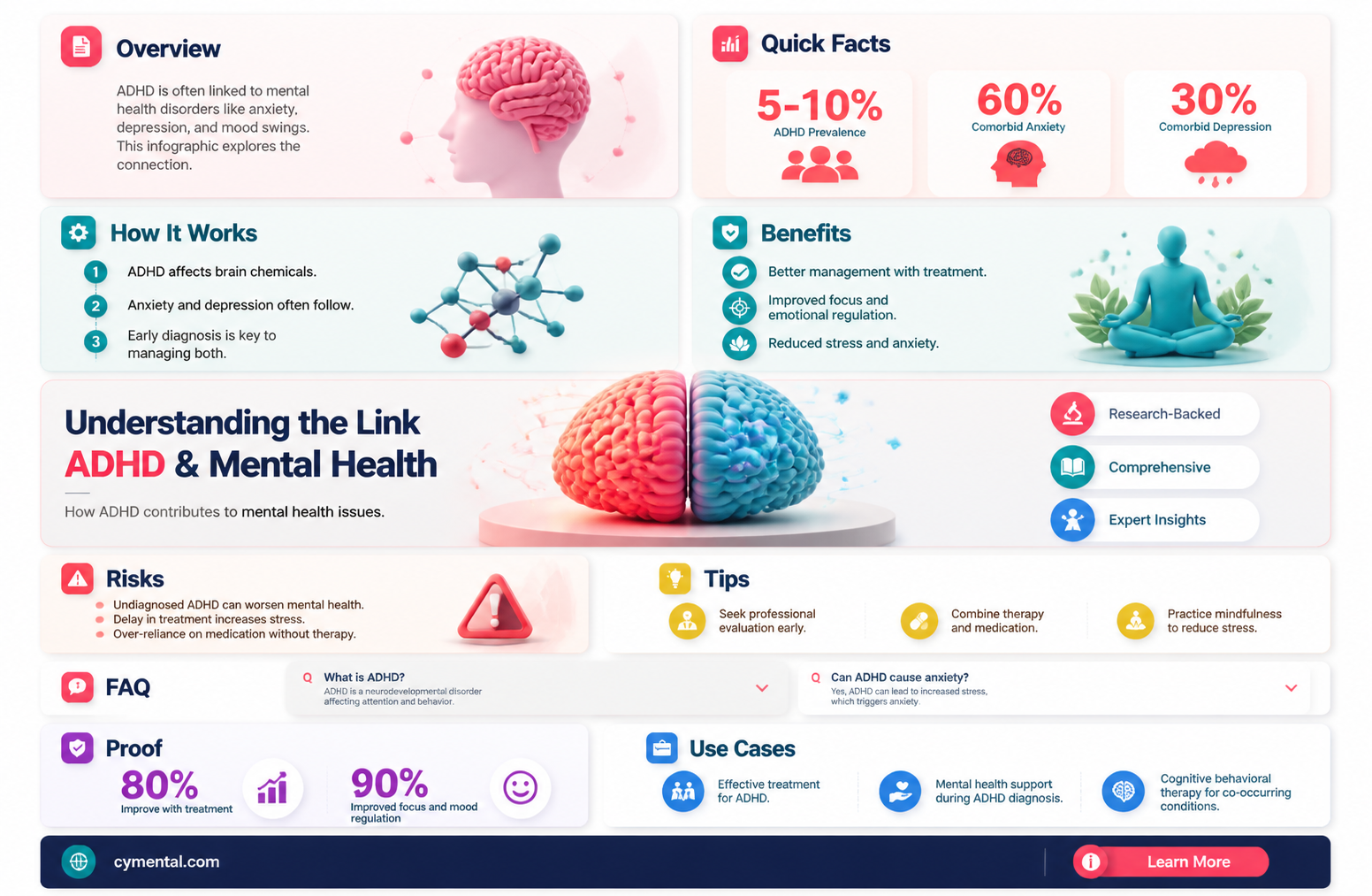
ADHD, or Attention Deficit Hyperactivity Disorder, is a neurodevelopmental condition characterized by symptoms such as inattention, hyperactivity, and impulsiveness. While often associated with childhood, ADHD can persist into adulthood and significantly impact various aspects of life, including mental health. Research indicates that individuals with ADHD are at a higher risk of developing mental health conditions such as anxiety, depression, and substance abuse disorders. The interplay between ADHD symptoms and mental health can be complex, with each condition potentially exacerbating the other. Understanding this relationship is crucial for providing comprehensive care and support to those affected by ADHD.
| Characteristics | Values |
|---|---|
| Definition | ADHD (Attention Deficit Hyperactivity Disorder) is a neurodevelopmental disorder characterized by inattention, hyperactivity, and impulsivity. |
| Prevalence | ADHD affects approximately 5-10% of children and 2-5% of adults worldwide. |
| Symptoms | Common symptoms include difficulty paying attention, excessive fidgeting, restlessness, impulsivity, and forgetfulness. |
| Impact on Mental Health | ADHD can significantly impact mental health, leading to issues such as anxiety, depression, low self-esteem, and substance abuse. |
| Comorbidities | Individuals with ADHD are at a higher risk of developing other mental health conditions, including bipolar disorder, obsessive-compulsive disorder (OCD), and sleep disorders. |
| Treatment | Treatment options include behavioral therapy, medication (such as stimulants and non-stimulants), and lifestyle changes. |
| Prognosis | With proper treatment and support, individuals with ADHD can lead successful and fulfilling lives. However, untreated ADHD can lead to long-term negative consequences on mental health and overall well-being. |
| Environmental Factors | Environmental factors such as exposure to toxins, poor nutrition, and stressful life events may contribute to the development of ADHD. |
| Genetic Factors | ADHD has a strong genetic component, with studies suggesting that it may be inherited in a complex polygenic manner. |
| Brain Structure | Research has shown that individuals with ADHD may have differences in brain structure and function, particularly in areas responsible for attention and impulse control. |
| Social Impact | ADHD can affect social relationships, leading to difficulties with communication, empathy, and maintaining friendships. |
| Educational Impact | Students with ADHD may struggle academically, experiencing difficulties with focus, organization, and completing tasks. |
| Occupational Impact | Adults with ADHD may face challenges in the workplace, including difficulties with time management, task completion, and maintaining employment. |
| Family Impact | ADHD can affect the entire family, leading to stress, conflict, and difficulties with parenting. |
| Stigma | There is often stigma associated with ADHD, leading to misunderstandings and negative perceptions of individuals with the disorder. |
| Support Resources | Various support resources are available, including support groups, online forums, and educational materials. |
| Research | Ongoing research is focused on better understanding the causes of ADHD, developing more effective treatments, and improving outcomes for individuals with the disorder. |
Explore related products





What You'll Learn
- Increased risk of depression and anxiety disorders in individuals with ADHD
- Potential for substance abuse and addiction in ADHD patients
- Higher likelihood of mood swings and emotional dysregulation
- Impact of ADHD on self-esteem and social relationships
- Co-occurrence of ADHD with other mental health conditions like bipolar disorder

Increased risk of depression and anxiety disorders in individuals with ADHD
Individuals with ADHD are at a significantly higher risk of developing depression and anxiety disorders compared to the general population. This increased risk is attributed to several factors, including the chronic stress of managing ADHD symptoms, the impact of ADHD on social and academic functioning, and the presence of comorbid conditions.
The chronic stress of living with ADHD can lead to feelings of overwhelm, frustration, and hopelessness, which are common precursors to depression. Additionally, the social and academic challenges faced by individuals with ADHD can contribute to low self-esteem and a sense of inadequacy, further increasing the risk of depression. Anxiety disorders may also arise as a result of the constant worry and fear associated with ADHD symptoms, such as inattention and impulsivity.
Moreover, individuals with ADHD are more likely to have comorbid conditions, such as sleep disorders, substance abuse, and other mental health issues, which can exacerbate the risk of depression and anxiety. It is essential for healthcare professionals to recognize the increased risk of these mental health conditions in individuals with ADHD and to provide appropriate screening, diagnosis, and treatment.
Early intervention and treatment can significantly reduce the risk of depression and anxiety disorders in individuals with ADHD. This may include a combination of medication, psychotherapy, and lifestyle modifications. Medications such as antidepressants and anti-anxiety drugs can help alleviate symptoms, while psychotherapy can provide individuals with coping strategies and support. Lifestyle modifications, such as regular exercise, a healthy diet, and stress management techniques, can also play a crucial role in improving mental health outcomes.
In conclusion, the increased risk of depression and anxiety disorders in individuals with ADHD highlights the importance of comprehensive mental health care for this population. By addressing the unique challenges faced by individuals with ADHD and providing appropriate treatment and support, healthcare professionals can help improve mental health outcomes and enhance overall quality of life.
Exploring the Link Between Thiamin Deficiency and Mental Health
You may want to see also
Explore related products
$21.58 $25.95


Potential for substance abuse and addiction in ADHD patients
Individuals with Attention Deficit Hyperactivity Disorder (ADHD) may be at a higher risk for substance abuse and addiction due to several factors. One key factor is the impulsivity commonly associated with ADHD, which can lead to risky behaviors, including the misuse of drugs and alcohol. Additionally, individuals with ADHD may use substances as a form of self-medication to cope with their symptoms, such as inattention and hyperactivity.
Research has shown that ADHD patients are more likely to develop substance use disorders compared to the general population. For example, a study published in the Journal of Clinical Psychiatry found that adults with ADHD had a significantly higher risk of developing alcohol use disorder and other substance use disorders. This increased risk highlights the importance of addressing substance abuse concerns in the context of ADHD treatment.
Healthcare providers should consider screening ADHD patients for substance abuse and addiction, especially during adolescence and young adulthood when the risk is highest. Early intervention and treatment can help prevent the development of more severe substance use disorders. Behavioral therapies, such as cognitive-behavioral therapy (CBT) and contingency management, have been shown to be effective in treating substance abuse in ADHD patients.
In addition to behavioral therapies, medication management is crucial in addressing both ADHD symptoms and substance abuse. Stimulant medications, which are commonly used to treat ADHD, should be prescribed with caution in individuals with a history of substance abuse, as they have the potential for misuse. Non-stimulant medications, such as atomoxetine and clonidine, may be considered as alternatives in these cases.
Support groups and community resources can also play a vital role in helping ADHD patients overcome substance abuse and addiction. These resources provide a safe and supportive environment for individuals to share their experiences, learn coping strategies, and receive encouragement from others who are facing similar challenges. By addressing the unique needs of ADHD patients in the context of substance abuse treatment, healthcare providers can help improve outcomes and reduce the risk of relapse.
Exploring the Link Between Vegan Diets and Mental Health
You may want to see also
Explore related products


Higher likelihood of mood swings and emotional dysregulation
Individuals with ADHD are often more susceptible to rapid and intense mood swings. This heightened emotional reactivity can manifest as sudden shifts from euphoria to irritability or sadness, often in response to minor triggers. Such mood swings can be disorienting and distressing, both for the individual experiencing them and for those around them. Emotional dysregulation, a common comorbidity with ADHD, further exacerbates these mood fluctuations, making it challenging for individuals to manage their emotional responses appropriately.
One unique aspect of ADHD-related mood swings is their tendency to be triggered by specific situations or stimuli. For example, a person with ADHD might experience a sudden bout of frustration when faced with a task that requires sustained attention or when interrupted during a period of intense focus. These mood swings can also be influenced by external factors such as sleep deprivation, stress, or changes in routine, which can amplify the emotional impact of ADHD symptoms.
Managing these mood swings often requires a multifaceted approach. Behavioral therapies, such as cognitive-behavioral therapy (CBT) and dialectical behavior therapy (DBT), can help individuals with ADHD develop strategies to regulate their emotions and respond more adaptively to stressors. Medications, particularly those that target both ADHD and mood disorders, can also be effective in stabilizing mood and reducing the frequency and intensity of mood swings. Additionally, lifestyle modifications, such as maintaining a consistent sleep schedule, engaging in regular physical activity, and practicing mindfulness, can contribute to better emotional regulation.
It is crucial for individuals with ADHD to recognize the signs of mood swings and emotional dysregulation and to seek appropriate treatment. Untreated, these symptoms can lead to significant impairments in daily functioning, relationships, and overall well-being. By addressing these challenges proactively, individuals with ADHD can learn to manage their emotions more effectively and improve their quality of life.
Unraveling the Mental Impact: Anxiety's Influence on Your Mind
You may want to see also
Explore related products


Impact of ADHD on self-esteem and social relationships
Individuals with ADHD often face challenges in maintaining healthy self-esteem and social relationships. The constant struggle to focus, complete tasks, and meet expectations can lead to feelings of inadequacy and low self-worth. These feelings can be further exacerbated by the negative feedback and criticism they may receive from others, whether it's from parents, teachers, or peers. Over time, this can result in a negative self-image and a lack of confidence in their abilities.
In terms of social relationships, individuals with ADHD may find it difficult to form and maintain friendships. They may struggle with social cues, such as understanding body language and facial expressions, which can lead to misunderstandings and conflicts. Additionally, their impulsivity and tendency to interrupt others can make it challenging to engage in meaningful conversations and build strong connections. These social difficulties can further contribute to feelings of isolation and loneliness.
It's important to note that the impact of ADHD on self-esteem and social relationships can vary greatly from person to person. Some individuals may be more resilient and able to cope with these challenges, while others may require additional support and intervention. In the next section, we'll explore some strategies for managing these difficulties and improving overall mental health.
The Impact of Body Image on Mental Health: A Comprehensive Guide
You may want to see also
Explore related products


Co-occurrence of ADHD with other mental health conditions like bipolar disorder
Individuals with Attention Deficit Hyperactivity Disorder (ADHD) often face a complex interplay of symptoms that can significantly impact their mental health. One notable aspect is the high rate of co-occurrence between ADHD and other mental health conditions, such as bipolar disorder. This co-morbidity can complicate diagnosis, treatment, and overall management of both conditions.
Research indicates that up to 20% of individuals with ADHD may also experience symptoms of bipolar disorder. This overlap can manifest in various ways, such as mood swings, impulsivity, and difficulties with emotional regulation. The presence of both conditions can lead to more severe and unpredictable symptoms, making it crucial for healthcare providers to consider the possibility of co-occurrence during diagnosis.
Effective management of ADHD and bipolar disorder often requires a multifaceted approach. Medications such as mood stabilizers and stimulants may be prescribed to address the specific symptoms of each condition. Additionally, psychotherapy, particularly cognitive-behavioral therapy (CBT), can help individuals develop coping strategies and improve their ability to manage daily challenges.
It is also important to consider the impact of lifestyle factors on symptom management. Regular exercise, a balanced diet, and adequate sleep can play a significant role in mitigating the effects of both ADHD and bipolar disorder. Furthermore, support networks, including family, friends, and mental health professionals, can provide invaluable assistance in navigating the complexities of these co-occurring conditions.
In conclusion, the co-occurrence of ADHD with bipolar disorder highlights the need for a comprehensive and integrated approach to mental health care. By addressing both conditions simultaneously and considering the unique challenges they present, individuals can work towards achieving better overall mental health and well-being.
The Impact of Vaping on Mental Health: A Comprehensive Guide
You may want to see also
Frequently asked questions
Yes, ADHD can significantly impact mental health. Individuals with ADHD are at a higher risk of developing conditions such as depression, anxiety, and bipolar disorder. The chronic stress of managing ADHD symptoms can lead to emotional exhaustion and negatively affect overall well-being.
ADHD can make it challenging to regulate emotions effectively. Individuals may experience rapid mood swings, intense emotional reactions, and difficulty calming down after becoming upset. This emotional dysregulation can lead to strained relationships and increased stress levels.
Yes, certain mental health conditions are more prevalent among individuals with ADHD. These include major depressive disorder, generalized anxiety disorder, oppositional defiant disorder, and conduct disorder. Additionally, ADHD can co-occur with other conditions like autism spectrum disorder and substance use disorders.
Several strategies can help mitigate the mental health effects of ADHD. These include:
- Medication: Stimulants and non-stimulants can help manage ADHD symptoms and improve focus.
- Therapy: Cognitive-behavioral therapy (CBT) and other forms of counseling can teach coping mechanisms and improve emotional regulation.
- Lifestyle changes: Regular exercise, a balanced diet, and sufficient sleep can positively impact mood and overall well-being.
- Support systems: Building a strong support network of friends, family, and mental health professionals can provide valuable assistance and encouragement.









![The Unseen Impact: How [Topic] Can Affect Your Mental Health](/images/resources/can-affect-your-mental-health_20260313131904.webp)