Noah Parker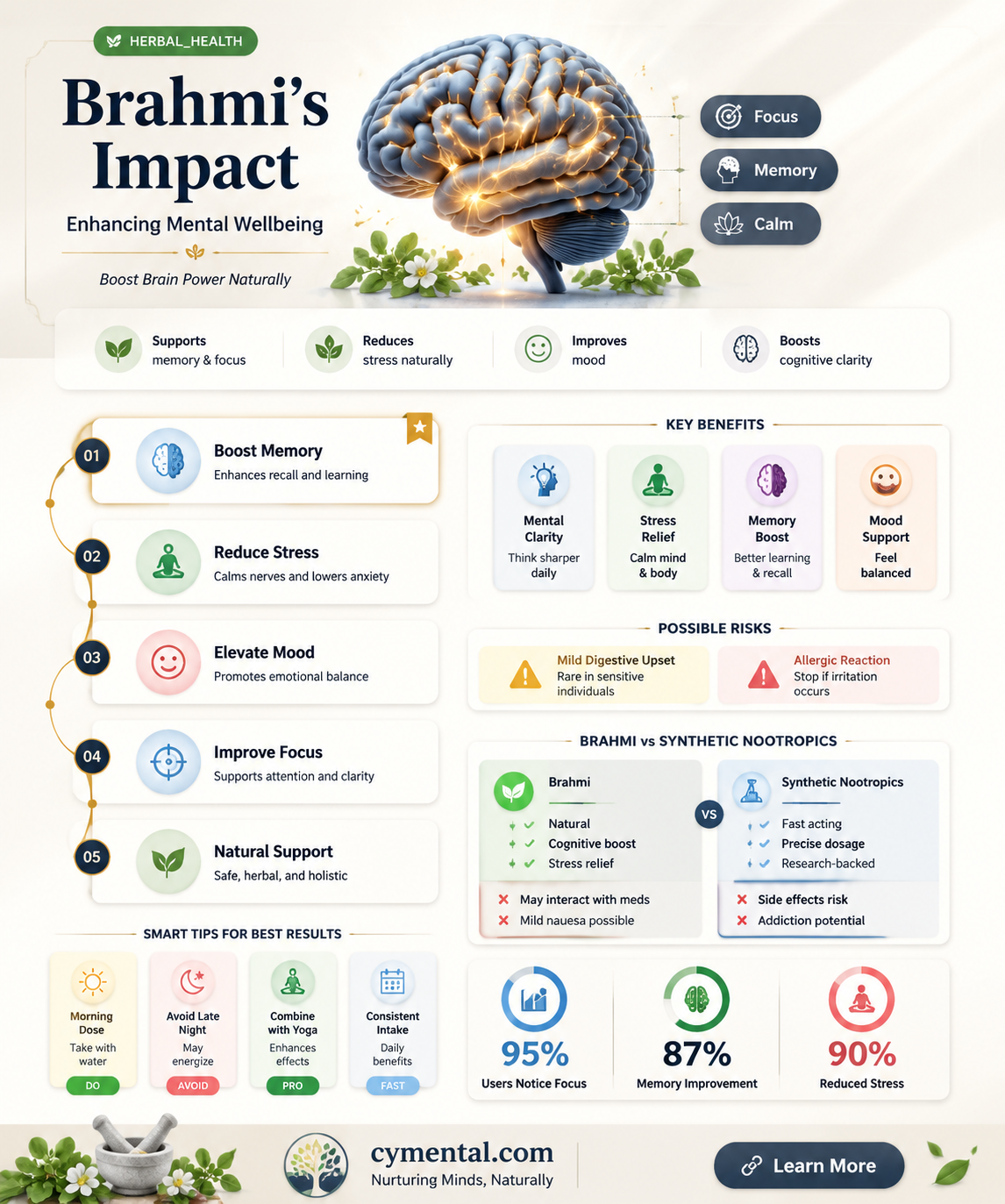
Brahmi, a traditional herb deeply rooted in Ayurvedic medicine, has gained attention for its potential benefits in enhancing mental wellbeing. Known scientifically as *Bacopa monnieri*, this adaptogenic plant is believed to support cognitive functions such as memory, focus, and stress reduction. Rich in antioxidants and active compounds like bacosides, Brahmi is thought to protect the brain from oxidative stress and improve neural communication. While anecdotal evidence and some studies suggest it may alleviate anxiety, enhance mood, and promote mental clarity, further research is needed to fully understand its mechanisms and efficacy. For those exploring natural remedies to support mental health, Brahmi offers a promising yet historically revered option worth considering.
| Characteristics | Values |
|---|---|
| Anxiety Reduction | Brahmi (Bacopa monnieri) has been shown to reduce anxiety and stress levels by modulating neurotransmitters like serotonin and GABA. Studies suggest it may have anxiolytic effects comparable to certain medications. |
| Cognitive Enhancement | It improves memory, attention, and cognitive processing. Clinical trials indicate enhanced learning and information retention, particularly in older adults. |
| Neuroprotection | Brahmi exhibits neuroprotective properties, potentially reducing the risk of neurodegenerative diseases like Alzheimer's by protecting neurons from damage and promoting brain cell regeneration. |
| Stress Management | It helps lower cortisol levels, the stress hormone, and promotes relaxation, making it beneficial for managing chronic stress. |
| Mood Regulation | Brahmi may improve mood and reduce symptoms of depression by influencing dopamine and serotonin levels, though more research is needed in this area. |
| Anti-Inflammatory Effects | Its anti-inflammatory properties may indirectly support mental wellbeing by reducing brain inflammation linked to mood disorders. |
| Adaptogenic Properties | As an adaptogen, Brahmi helps the body adapt to stress, improving overall resilience and mental balance. |
| Safety and Side Effects | Generally safe for most people, but may cause mild side effects like nausea, fatigue, or digestive issues. Consult a healthcare provider before use, especially if pregnant, breastfeeding, or on medication. |
| Dosage | Common dosage ranges from 300–500 mg per day, but consult a healthcare professional for personalized advice. |
| Evidence Level | While promising, more large-scale studies are needed to fully validate its mental health benefits. Current evidence is primarily from small to moderate-sized trials. |
Explore related products


What You'll Learn
- Brahmi's impact on stress reduction and relaxation techniques
- Enhancing cognitive function and memory with Brahmi supplementation
- Brahmi's role in alleviating symptoms of anxiety and depression
- Improving focus and concentration through regular Brahmi consumption
- Brahmi's potential in supporting overall mental clarity and emotional balance

Brahmi's impact on stress reduction and relaxation techniques
Brahmi, a herb steeped in Ayurvedic tradition, has gained modern attention for its potential to alleviate stress and promote relaxation. Scientific studies suggest that its active compounds, bacosides, may enhance cognitive function and reduce cortisol levels, the body’s primary stress hormone. For instance, a 2016 study published in *Evidence-Based Complementary and Alternative Medicine* found that participants who took 300 mg of Brahmi extract daily reported significant reductions in anxiety and stress symptoms compared to a placebo group. This evidence positions Brahmi as a natural ally in managing the mental toll of daily pressures.
Incorporating Brahmi into relaxation techniques can amplify its stress-reducing effects. One practical approach is to combine Brahmi supplementation with mindfulness practices. Start by taking 250–500 mg of Brahmi extract in the morning, followed by a 10-minute meditation session. The herb’s adaptogenic properties may enhance mental clarity, making it easier to focus during meditation. Alternatively, brew Brahmi tea by steeping 1–2 teaspoons of dried leaves in hot water for 5–7 minutes. Sip this tea during moments of tension to induce a calming effect. Pairing the tea with deep-breathing exercises—inhale for 4 seconds, hold for 4, exhale for 6—can further deepen relaxation.
While Brahmi is generally safe for adults, caution is advised for pregnant or breastfeeding women, as research on its effects in these groups is limited. Additionally, individuals on anti-anxiety or thyroid medications should consult a healthcare provider, as Brahmi may interact with these drugs. Dosage is key: exceeding 750 mg daily can lead to side effects like nausea or fatigue. For optimal results, begin with the lowest effective dose and monitor your body’s response. Consistency is crucial; regular use over 4–6 weeks often yields the most noticeable benefits.
Comparing Brahmi to other stress-relief methods highlights its unique advantages. Unlike pharmaceutical options, Brahmi offers a holistic approach, addressing both mental and physical aspects of stress without the risk of dependency. Its cognitive-enhancing properties set it apart from herbal alternatives like chamomile or valerian, which primarily induce sleepiness. For those seeking a natural, multifaceted solution, Brahmi stands out as a versatile tool. Pairing it with lifestyle changes—such as regular exercise and a balanced diet—maximizes its efficacy, creating a robust defense against stress.
Seeking Support: A Guide to Asking for Mental Health Assistance
You may want to see also
Explore related products


Enhancing cognitive function and memory with Brahmi supplementation
Brahmi, scientifically known as *Bacopa monnieri*, has been a cornerstone of Ayurvedic medicine for centuries, revered for its potential to enhance cognitive function and memory. Modern research supports these traditional claims, with studies indicating that Brahmi may improve attention, information processing, and learning rates. For instance, a 12-week study involving healthy adults aged 18–60 showed significant improvements in memory recall and cognitive performance after daily supplementation with 300 mg of Brahmi extract. This evidence positions Brahmi as a promising natural supplement for those seeking to sharpen their mental acuity.
To harness Brahmi’s cognitive benefits, consistency and proper dosage are key. Adults are typically advised to start with 250–500 mg of standardized Brahmi extract daily, taken with meals to enhance absorption. For older adults or those with specific cognitive concerns, a dosage of up to 750 mg may be recommended, but consultation with a healthcare provider is essential. It’s important to note that Brahmi’s effects are not immediate; noticeable improvements in memory and focus often emerge after 4–6 weeks of regular use. Pairing supplementation with a balanced diet rich in omega-3 fatty acids and antioxidants can further amplify its cognitive benefits.
While Brahmi is generally safe, its use requires caution in certain populations. Pregnant or breastfeeding women should avoid it due to insufficient safety data. Additionally, individuals with thyroid disorders must exercise care, as Brahmi may interfere with thyroid hormone production. Side effects are rare but can include mild gastrointestinal discomfort or fatigue, particularly when starting supplementation. To minimize these, begin with a lower dose and gradually increase it as tolerated. Always opt for high-quality, third-party tested supplements to ensure purity and potency.
Comparing Brahmi to other cognitive enhancers highlights its unique advantages. Unlike synthetic nootropics, Brahmi is a natural, holistic option with a low risk of dependency or severe side effects. Its dual action as an adaptogen also means it may help reduce stress and anxiety, common barriers to optimal cognitive function. For students, professionals, or seniors looking to maintain mental sharpness, Brahmi offers a sustainable, evidence-backed solution. Incorporating it into a daily routine alongside mindfulness practices or brain-training exercises can yield synergistic benefits for long-term cognitive health.
Reading the Bible: A Path to Mental Health and Healing?
You may want to see also
Explore related products


Brahmi's role in alleviating symptoms of anxiety and depression
Brahmi, a herb steeped in Ayurvedic tradition, has gained modern attention for its potential to alleviate symptoms of anxiety and depression. Scientific studies suggest that its active compounds, bacosides, may enhance cognitive function and reduce stress by modulating neurotransmitters like serotonin and dopamine. For instance, a 2016 study published in *Evidence-Based Complementary and Alternative Medicine* found that participants taking 300 mg of Brahmi extract daily reported significant reductions in anxiety and cortisol levels compared to a placebo group. This evidence positions Brahmi as a promising natural adjunct to conventional mental health treatments.
To incorporate Brahmi into your routine, start with a standardized extract of 250–500 mg per day, divided into two doses. Capsules or tinctures are convenient options, but traditional preparations like Brahmi tea (1–2 teaspoons of dried leaves steeped in hot water) can also be effective. For those aged 18–65, this dosage is generally safe, though pregnant or breastfeeding individuals should consult a healthcare provider. Pairing Brahmi with a balanced diet and mindfulness practices, such as meditation, may amplify its calming effects.
While Brahmi shows potential, it’s not a standalone cure for anxiety or depression. Its benefits are most pronounced when used alongside therapy, medication, or lifestyle changes. For example, a 2019 study in *Phytotherapy Research* highlighted that Brahmi’s anxiolytic effects were more significant in participants already undergoing cognitive-behavioral therapy. This synergy underscores the importance of a holistic approach to mental wellbeing.
One practical tip is to monitor your response over 4–6 weeks, as Brahmi’s effects are often subtle and cumulative. Keep a journal to track mood changes, sleep quality, and stress levels. If you experience side effects like nausea or fatigue, reduce the dosage or discontinue use. For those on antidepressants or anti-anxiety medications, consult a doctor to avoid potential interactions. Brahmi’s role in mental health is not about quick fixes but sustained, gentle support for the nervous system.
In comparison to other adaptogens like Ashwagandha, Brahmi stands out for its cognitive-enhancing properties, making it particularly beneficial for anxiety linked to mental fog or overwhelm. While Ashwagandha is more studied for its stress-reducing effects, Brahmi’s dual action on memory and mood offers a unique advantage. Combining both herbs under professional guidance could provide comprehensive support for both mental clarity and emotional balance. Ultimately, Brahmi’s role in alleviating anxiety and depression lies in its ability to nurture the mind from within, offering a natural, evidence-backed tool for those seeking relief.
Animal Companionship: Boosting Mental Health and Emotional Well-Being in Humans
You may want to see also
Explore related products


Improving focus and concentration through regular Brahmi consumption
Brahmi, a herb steeped in Ayurvedic tradition, has long been revered for its cognitive-enhancing properties. Among its many benefits, improving focus and concentration stands out as a particularly compelling reason for its regular consumption. Scientific studies suggest that Brahmi, botanically known as *Bacopa monnieri*, contains active compounds like bacosides, which promote neural communication and protect brain cells from damage. This neuroprotective effect is crucial for sustaining attention and mental clarity, especially in an age where distractions are omnipresent.
To harness Brahmi’s focus-enhancing potential, consistency is key. Incorporating it into your daily routine can yield noticeable results over time. For adults, a typical dosage ranges from 300 to 450 mg of standardized Brahmi extract per day, often divided into two doses. Alternatively, traditional methods like brewing Brahmi leaves into tea or adding powdered Brahmi to smoothies can be equally effective. However, it’s essential to start with a lower dose to assess tolerance, as some individuals may experience mild side effects like nausea or digestive discomfort.
One practical tip for maximizing Brahmi’s benefits is to pair its consumption with mindfulness practices. For instance, taking Brahmi 30 minutes before meditation or a focused task can amplify its cognitive effects. Additionally, combining it with a balanced diet rich in omega-3 fatty acids and antioxidants can further support brain health. For students or professionals seeking sustained concentration, integrating Brahmi into a morning routine ensures its effects align with peak productivity hours.
While Brahmi is generally safe for most age groups, caution is advised for pregnant or breastfeeding women, as research on its effects in these populations is limited. Children and adolescents may benefit from Brahmi, but dosages should be adjusted based on age and weight, ideally under the guidance of a healthcare provider. It’s also worth noting that Brahmi’s effects are cumulative, meaning consistent use over several weeks is necessary to experience its full cognitive benefits.
In conclusion, regular Brahmi consumption offers a natural, evidence-backed approach to improving focus and concentration. By adhering to appropriate dosages, combining it with complementary practices, and being mindful of individual needs, anyone can unlock its potential to enhance mental clarity and productivity. Whether you’re a student, professional, or simply seeking sharper focus, Brahmi stands as a valuable ally in your cognitive toolkit.
Nurturing Your Mind: Practical Strategies for Better Mental Health
You may want to see also
Explore related products


Brahmi's potential in supporting overall mental clarity and emotional balance
Brahmi, a herb steeped in Ayurvedic tradition, has long been revered for its cognitive-enhancing properties. Modern research now sheds light on its potential to foster mental clarity and emotional equilibrium. Studies suggest that Brahmi, scientifically known as *Bacopa monnieri*, may modulate neurotransmitters like acetylcholine, which plays a pivotal role in memory and learning. For instance, a 2016 meta-analysis published in *Evidence-Based Complementary and Alternative Medicine* found that Brahmi supplementation significantly improved attention, cognitive processing, and memory in adults aged 18–65. To harness these benefits, a typical dosage ranges from 300 to 450 mg per day, standardized to 55% bacosides, the active compounds responsible for its effects.
Consider the daily grind: stress, information overload, and emotional fluctuations can cloud mental clarity. Brahmi’s adaptogenic properties may offer a natural counterbalance. Adaptogens help the body resist stressors by regulating the hypothalamic-pituitary-adrenal (HPA) axis, which governs the stress response. A 2014 study in *Neurochemistry International* demonstrated that Brahmi reduced cortisol levels in chronically stressed rats, suggesting similar benefits for humans. For practical application, incorporating Brahmi into a morning routine—either as a capsule, tincture, or tea—may help set a calm, focused tone for the day. Pairing it with mindfulness practices like meditation or deep breathing could amplify its stress-relieving effects.
Emotional balance is another area where Brahmi shows promise. Its anxiolytic properties, comparable to those of certain pharmaceuticals but with fewer side effects, make it a compelling option for mild anxiety. A randomized controlled trial published in *The Journal of Alternative and Complementary Medicine* (2012) found that participants taking Brahmi experienced reduced symptoms of anxiety and improved mood over 12 weeks. For those seeking emotional stability, combining Brahmi with lifestyle adjustments—such as regular exercise, adequate sleep, and a balanced diet—can create a synergistic effect. However, it’s crucial to consult a healthcare provider before starting any new supplement, especially if you’re taking medications or have pre-existing conditions.
While Brahmi’s benefits are promising, its effects are not instantaneous. Unlike stimulants, which provide quick but fleeting results, Brahmi works gradually, often requiring 4–6 weeks of consistent use to notice improvements in mental clarity and emotional balance. Patience is key. Additionally, sourcing high-quality supplements from reputable brands ensures purity and potency. For those new to Brahmi, starting with a lower dose (e.g., 150 mg daily) and gradually increasing can help assess tolerance. Finally, integrating Brahmi into a holistic wellness plan—rather than relying on it as a standalone solution—maximizes its potential to support long-term mental and emotional health.
Nurturing Mental Well-Being: Essential Strategies for a Healthier Mind
You may want to see also
Frequently asked questions
Brahmi, scientifically known as *Bacopa monnieri*, is an adaptogenic herb used in traditional Ayurvedic medicine. It is believed to enhance cognitive function, reduce stress, and improve mental clarity, making it a popular supplement for supporting mental wellbeing.
Yes, Brahmi is known for its anxiolytic properties. It may help reduce stress and anxiety by lowering cortisol levels and promoting relaxation, though individual results may vary.
A: Studies suggest that Brahmi can enhance memory, focus, and cognitive performance by supporting neurotransmitter function and promoting neural communication.
While generally safe, some people may experience mild side effects like nausea, digestive issues, or fatigue. It’s advisable to start with a low dose and consult a healthcare provider before use.
The effects of Brahmi are often gradual. Most users report noticeable improvements in mental clarity, stress levels, and memory after consistent use for 4–6 weeks.