Madison Cole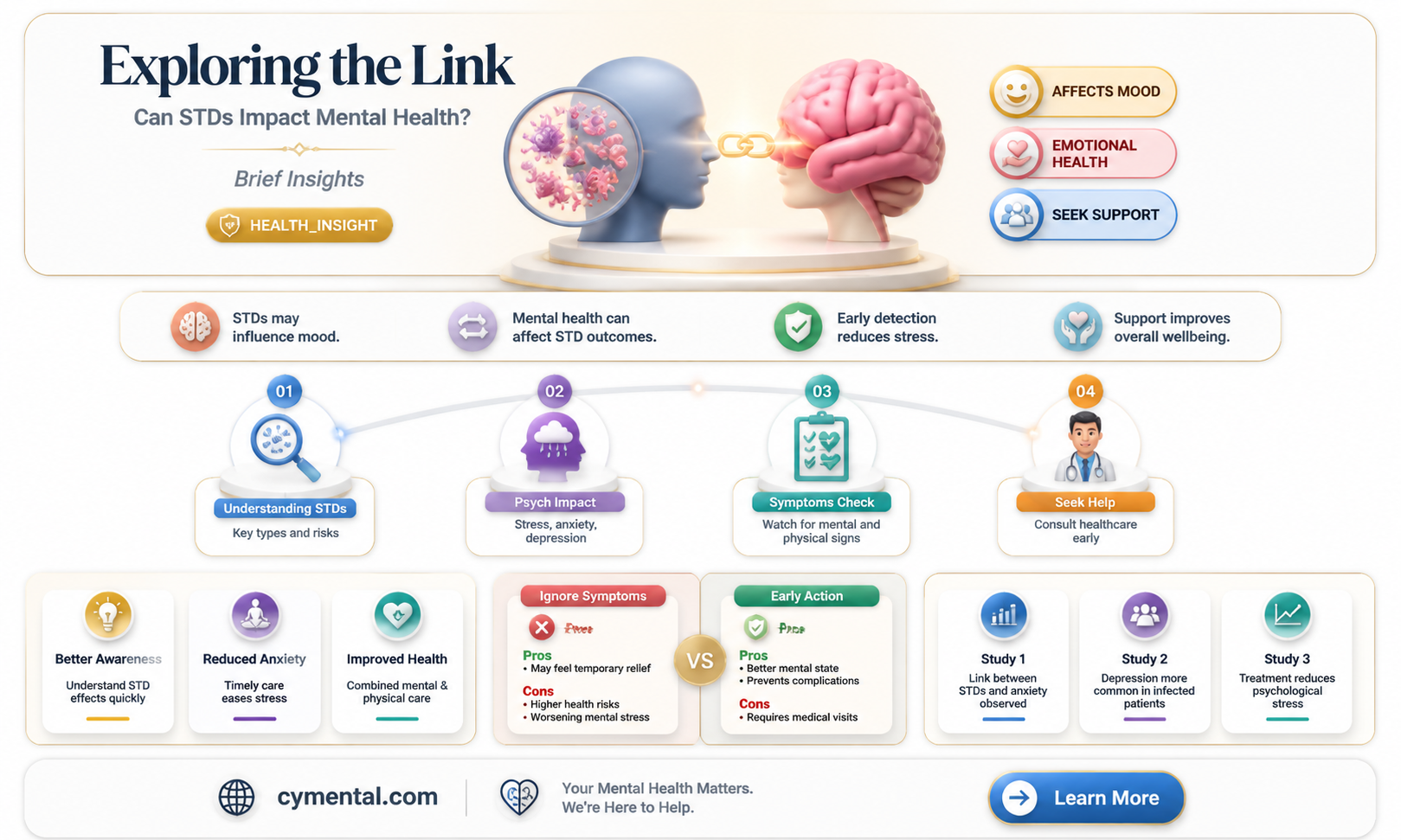
Sexually transmitted diseases (STDs) are known to have significant physical health implications, but there is growing evidence to suggest that they may also impact mental health. While the direct causal link between STDs and mental illness is still a topic of ongoing research, it is clear that the stress and stigma associated with contracting an STD can exacerbate existing mental health conditions or contribute to the development of new ones. For instance, individuals diagnosed with an STD may experience anxiety, depression, or feelings of isolation due to the fear of disclosure or rejection by others. Furthermore, some STDs, such as syphilis, can have neurological effects that may manifest as mental health symptoms if left untreated. Therefore, it is crucial to consider both the physical and mental health aspects when addressing STDs in healthcare settings.
| Characteristics | Values |
|---|---|
| Direct causation | While STDs can lead to mental health issues, they do not directly cause mental illness. The relationship is often indirect and influenced by various factors. |
| Types of STDs | Certain STDs like syphilis and HIV have been more commonly associated with mental health symptoms due to their impact on the nervous system. |
| Symptoms | Symptoms of mental illness due to STDs can include depression, anxiety, mood swings, and cognitive impairment. These symptoms may vary depending on the type of STD and individual health factors. |
| Treatment | Treatment for STDs usually involves antibiotics or antiviral medications. Mental health symptoms may require additional treatment such as therapy or psychiatric medications. |
| Prevention | Preventing STDs through safe sex practices, regular testing, and vaccination (where available) can help reduce the risk of developing associated mental health issues. |
| Public awareness | There is a need for increased public awareness about the potential mental health impacts of STDs to encourage early detection and treatment. |
| Research | Ongoing research is essential to better understand the complex relationship between STDs and mental illness, and to develop effective treatment strategies. |
| Stigma | Stigma surrounding STDs can exacerbate mental health issues by leading to feelings of shame, isolation, and reluctance to seek help. |
| Support systems | Strong support systems, including healthcare providers, friends, and family, can play a crucial role in managing both STDs and associated mental health challenges. |
| Long-term effects | Some STDs can have long-term effects on mental health, even after the initial infection has been treated. Regular monitoring and follow-up care are important. |
| Age and vulnerability | Certain age groups, such as adolescents and young adults, may be more vulnerable to both STDs and mental health issues due to factors like lack of experience and access to healthcare. |
| Socioeconomic factors | Socioeconomic factors, including poverty and lack of access to healthcare, can increase the risk of STDs and mental health problems. Addressing these factors is crucial for prevention and treatment. |
| Education | Comprehensive sexual education that includes information about STDs and mental health can help reduce the incidence of STDs and promote early detection and treatment. |
| Healthcare access | Ensuring access to affordable and quality healthcare is essential for the prevention, detection, and treatment of STDs and associated mental health issues. |
| Policy and advocacy | Policies and advocacy efforts should focus on increasing funding for STD prevention and mental health services, as well as promoting education and awareness. |
Explore related products


What You'll Learn
- STDs and Depression: Exploring the potential link between sexually transmitted diseases and depressive disorders
- Anxiety Disorders: Investigating whether STDs can trigger or exacerbate anxiety-related mental health conditions
- Psychological Impact: Discussing the emotional and psychological effects of living with an STD
- Neurological Complications: Examining rare cases where STDs might lead to neurological symptoms or disorders
- Treatment and Support: Addressing mental health considerations in the treatment and support of individuals with STDs

STDs and Depression: Exploring the potential link between sexually transmitted diseases and depressive disorders
Research has begun to uncover a potential link between sexually transmitted diseases (STDs) and depressive disorders. While the connection is not yet fully understood, several studies have suggested that individuals diagnosed with STDs may be at a higher risk of developing depression. This correlation could be attributed to various factors, including the psychological impact of an STD diagnosis, the physical symptoms associated with certain STDs, and the potential for social stigma and isolation.
One study published in the Journal of Affective Disorders found that individuals with a history of STDs were more likely to experience depressive symptoms compared to those without a history of STDs. The researchers hypothesized that the psychological distress associated with an STD diagnosis, as well as the potential for relationship problems and social stigma, could contribute to the development of depression.
Another study, published in the journal Sexually Transmitted Infections, examined the relationship between STDs and depression in a sample of young adults. The researchers found that individuals who had been diagnosed with an STD were more likely to report symptoms of depression, anxiety, and post-traumatic stress disorder (PTSD). The study also suggested that the link between STDs and depression may be stronger in women than in men.
While these studies provide valuable insights into the potential link between STDs and depression, it is important to note that they do not establish a causal relationship. Further research is needed to determine whether STDs can directly cause depression or if other factors are at play.
In the meantime, healthcare providers should be aware of the potential for depression in individuals diagnosed with STDs and should consider screening for depressive symptoms as part of routine STD care. Additionally, public health campaigns should aim to reduce the stigma associated with STDs, which may help to mitigate the psychological impact of an STD diagnosis and potentially reduce the risk of depression.
Exploring the Link: Parietal Lobe Injuries and Mental Health
You may want to see also
Explore related products


$25.95 $25.95


Anxiety Disorders: Investigating whether STDs can trigger or exacerbate anxiety-related mental health conditions
Research indicates that there may be a correlation between sexually transmitted diseases (STDs) and anxiety disorders. While STDs are primarily physical health concerns, the psychological impact of living with an STD can be significant. Individuals diagnosed with STDs may experience heightened levels of anxiety due to factors such as the stigma associated with these conditions, fear of transmission, and concerns about long-term health consequences.
Studies have shown that certain STDs, such as herpes simplex virus (HSV) and human papillomavirus (HPV), may be linked to an increased risk of developing anxiety disorders. The chronic nature of these infections can lead to persistent worry and stress, which are hallmark symptoms of anxiety. Furthermore, the recurrent outbreaks associated with HSV can cause individuals to feel a sense of dread and helplessness, exacerbating anxiety symptoms.
In addition to the direct psychological effects of STDs, the treatment and management of these conditions can also contribute to anxiety. For example, individuals undergoing treatment for STDs may experience side effects from medications or worry about the effectiveness of their treatment. Moreover, the need for ongoing monitoring and potential lifestyle changes can add to the emotional burden, increasing anxiety levels.
It is essential for healthcare providers to recognize the potential mental health implications of STDs and to address these concerns in their treatment plans. Screening for anxiety and other mental health conditions should be a routine part of care for individuals with STDs. Furthermore, providing education and support to help individuals cope with the psychological aspects of their condition can improve overall health outcomes and quality of life.
In conclusion, while the primary focus of STD management is on physical health, it is crucial to acknowledge and address the potential mental health consequences, particularly anxiety disorders. By taking a holistic approach to care, healthcare providers can help individuals with STDs manage their conditions more effectively and improve their overall well-being.
The Lingering Impact: PTSD and Mental Abuse in Relationships
You may want to see also
Explore related products


Psychological Impact: Discussing the emotional and psychological effects of living with an STD
Living with a sexually transmitted disease (STD) can have profound psychological and emotional effects on an individual. The stigma associated with STDs often leads to feelings of shame, guilt, and isolation. These emotions can be particularly intense if the individual contracts the infection from a partner they trusted, leading to a breach of that trust and potentially the end of the relationship. The fear of disclosure and the anticipation of negative reactions from others can also contribute to anxiety and depression.
Moreover, the chronic nature of some STDs, such as herpes or HIV, can lead to long-term psychological distress. Individuals may experience ongoing feelings of uncertainty and fear about their health and future. The need for regular medical check-ups and the possibility of transmitting the infection to others can also be sources of constant worry. In some cases, these stressors can exacerbate existing mental health conditions or lead to the development of new ones, such as generalized anxiety disorder or major depressive disorder.
The psychological impact of STDs is not limited to the individual; it can also affect their social and professional lives. Stigma and discrimination can lead to social exclusion and difficulties in forming new relationships. In the workplace, the fear of disclosure can hinder career advancement and lead to job insecurity. These broader societal implications can further compound the emotional toll on the individual, creating a cycle of stress and isolation.
Addressing the psychological impact of STDs requires a multifaceted approach. Mental health professionals can provide therapy and support to help individuals cope with their emotions and develop strategies for managing stress. Public health campaigns can work to reduce stigma and increase awareness about STDs, promoting a more supportive and understanding environment. Additionally, access to accurate information and resources can empower individuals to take control of their health and make informed decisions about their care.
In conclusion, the psychological impact of living with an STD is a significant and often overlooked aspect of these infections. By acknowledging and addressing the emotional and psychological effects, we can better support individuals affected by STDs and work towards reducing the stigma and discrimination that often accompany these conditions.
Understanding Mental Retardation: Causes and Prevention Strategies
You may want to see also
Explore related products


Neurological Complications: Examining rare cases where STDs might lead to neurological symptoms or disorders
In rare instances, sexually transmitted diseases (STDs) can lead to neurological complications, manifesting as a range of symptoms from mild to severe. These cases, while uncommon, highlight the importance of prompt diagnosis and treatment to prevent long-term damage. One such example is neurosyphilis, a condition that occurs when the bacterium Treponema pallidum, responsible for syphilis, invades the central nervous system. Symptoms can include headaches, seizures, personality changes, and even dementia. Another example is the Guillain-Barré syndrome, which can be triggered by various infections, including STDs like chlamydia and gonorrhea. This autoimmune disorder causes nerve damage and muscle weakness, potentially leading to paralysis.
The mechanisms by which STDs cause neurological symptoms are complex and not fully understood. In some cases, the infection itself may directly affect the nervous system, while in others, the body's immune response to the infection may be the primary cause of neurological damage. For instance, in the case of HIV, the virus can lead to a condition known as HIV-associated neurocognitive disorder (HAND), which affects memory, thinking, and behavior. The severity of HAND can vary widely, from mild cognitive impairment to severe dementia.
Diagnosing neurological complications related to STDs can be challenging, as symptoms may be nonspecific and can overlap with those of other conditions. A thorough medical history, including sexual health, is crucial for accurate diagnosis. Laboratory tests, such as blood tests for syphilis antibodies or cerebrospinal fluid analysis for HIV, can help confirm the presence of an STD and its potential impact on the nervous system. Imaging studies, like MRI or CT scans, may also be used to visualize any structural damage to the brain or spinal cord.
Treatment for neurological complications of STDs typically involves a combination of antimicrobial therapy to address the underlying infection and supportive care to manage symptoms. For example, neurosyphilis is treated with intravenous penicillin, while HAND may require antiretroviral therapy to control HIV replication. In some cases, corticosteroids or other immunosuppressive medications may be used to reduce inflammation and prevent further nerve damage.
Prevention is key in avoiding these rare but potentially devastating complications. Safe sexual practices, regular STD testing, and prompt treatment of infections can significantly reduce the risk of neurological symptoms. Public health initiatives aimed at increasing awareness and access to sexual health services play a vital role in mitigating the impact of STDs on neurological health.
In conclusion, while neurological complications related to STDs are rare, they underscore the importance of comprehensive sexual health care. Recognizing the potential for these complications can lead to earlier diagnosis and more effective treatment, ultimately improving patient outcomes and preventing long-term neurological damage.
Unveiling the Link: Allergic Reactions and Mental Health Symptoms
You may want to see also
Explore related products




Treatment and Support: Addressing mental health considerations in the treatment and support of individuals with STDs
Individuals diagnosed with sexually transmitted diseases (STDs) often face a myriad of mental health challenges that can significantly impact their overall well-being. Addressing these mental health considerations is crucial in the comprehensive treatment and support of those affected. A holistic approach that integrates psychological care with medical treatment can lead to better health outcomes and improved quality of life.
One effective strategy in addressing mental health concerns in individuals with STDs is the incorporation of counseling services into their treatment plans. Counseling can provide a safe space for individuals to express their feelings, concerns, and fears related to their diagnosis. It can also help them develop coping mechanisms to deal with the emotional distress and stigma associated with STDs. Furthermore, counseling can aid in the reduction of anxiety and depression, which are common mental health issues among those diagnosed with STDs.
In addition to counseling, support groups can play a vital role in the mental health support of individuals with STDs. Support groups offer a sense of community and understanding, allowing individuals to connect with others who share similar experiences. This can help reduce feelings of isolation and shame, and provide a platform for sharing information and resources. Online support groups and forums can also be beneficial for those who may not have access to in-person groups or prefer the anonymity of online interactions.
Another important aspect of addressing mental health in the treatment of STDs is the education and awareness of healthcare providers. Healthcare providers should be trained to recognize the mental health implications of an STD diagnosis and be equipped to provide appropriate referrals and resources. They should also be sensitive to the emotional needs of their patients and create a non-judgmental and supportive environment during medical consultations.
Lastly, public health campaigns and initiatives can contribute to the reduction of stigma and promote mental health awareness among individuals with STDs. These campaigns can help normalize conversations about STDs and mental health, encouraging those affected to seek support and treatment without fear of judgment or discrimination.
In conclusion, addressing mental health considerations in the treatment and support of individuals with STDs is essential for their overall well-being. By integrating psychological care, support groups, healthcare provider education, and public health initiatives, we can create a more comprehensive and compassionate approach to managing the mental health challenges associated with STD diagnoses.
Exploring the Mind-Body Connection: Can Thoughts Trigger Palpitations?
You may want to see also
Frequently asked questions
While STDs themselves do not directly cause mental illness, the stress, stigma, and potential long-term health consequences associated with having an STD can contribute to mental health issues such as anxiety, depression, and emotional distress.
Indirectly, STDs can impact mental health through the stress of dealing with symptoms, the fear of transmission to others, the anxiety of facing social stigma, and the potential for long-term complications that could affect one's quality of life. Additionally, some STDs, like syphilis, can have neurological effects that may contribute to mental health symptoms if left untreated.
Yes, untreated STDs can lead to severe mental health conditions in some cases. For example, untreated syphilis can progress to neurosyphilis, which can cause symptoms such as confusion, mood swings, and even dementia. Other STDs, if untreated, can lead to chronic pain or infertility, both of which can have significant negative impacts on mental health.



![珍説忠臣蔵 [DVD] STD-113](https://m.media-amazon.com/images/I/51xSJEFZ+qL._AC_UL320_.jpg)


![Easy@Home Vaginal pH Test Strips: [5 Pack] Yeast Infection & BV (Bacterial Vaginosis) Testing Kit for Women with Swabs, Feminine pH Balance Health Tests, at Home pH Level Tester #EVPH-S](https://m.media-amazon.com/images/I/71iBzBVr6eL._AC_UL320_.jpg)