Caleb Wright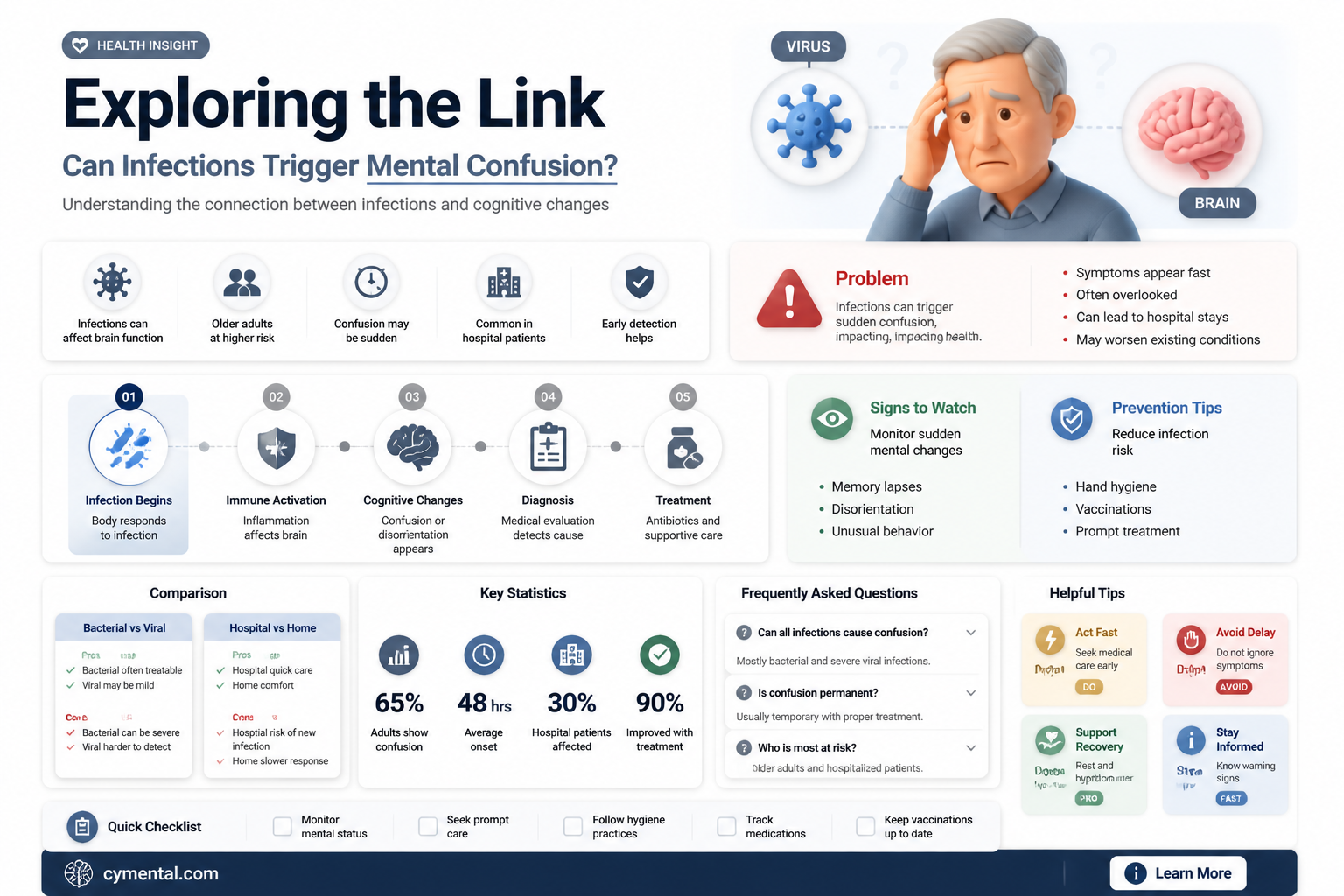
Yes, certain infections can indeed cause mental confusion. This phenomenon is often referred to as delirium, which is a state of acute confusion that can result from various medical conditions, including infections. Infections such as meningitis, encephalitis, and sepsis can directly affect the brain and lead to symptoms of delirium. Additionally, the body's immune response to an infection can release cytokines and other chemicals that may impact brain function, contributing to mental confusion. It is crucial for healthcare providers to recognize and address these symptoms promptly, as they can significantly affect a patient's recovery and long-term cognitive function.
| Characteristics | Values |
|---|---|
| Condition | Infection |
| Symptom | Mental confusion |
| Possible Causes | Bacterial, viral, fungal, or parasitic infections |
| Common Examples | Meningitis, encephalitis, sepsis, Lyme disease |
| Onset | Sudden or gradual, depending on the infection |
| Duration | Varies, can be acute or chronic |
| Severity | Mild to severe, impacting daily functioning |
| Diagnosis | Medical history, physical examination, lab tests, imaging studies |
| Treatment | Antibiotics, antivirals, antifungals, or antiparasitics |
| Prognosis | Generally good with prompt treatment, but can be serious if left untreated |
| Complications | Delirium, dementia, seizures, coma |
| Prevention | Vaccinations, proper hygiene, avoiding tick bites |
| Risk Factors | Weakened immune system, elderly age, chronic illnesses |
| Impact on Life | Can affect work, relationships, and overall quality of life |
| Research | Ongoing studies on the link between infections and mental health |
| Public Awareness | Important for early recognition and treatment |
Explore related products


What You'll Learn
- Infections and Cognitive Impairment: Exploring the link between infections and mental confusion, including common pathogens
- Neurological Impact of Infections: How infections can affect brain function, leading to symptoms like confusion and delirium
- Risk Factors for Infection-Induced Confusion: Identifying individuals most susceptible to mental confusion caused by infections
- Diagnosing Infection-Related Confusion: Methods and criteria for diagnosing mental confusion resulting from infections
- Treatment and Management Strategies: Approaches to treating infections that cause mental confusion, including medical and supportive care

Infections and Cognitive Impairment: Exploring the link between infections and mental confusion, including common pathogens
Infections can indeed lead to cognitive impairment, a condition often referred to as mental confusion. This phenomenon is observed across various age groups and can be caused by a multitude of pathogens. The link between infections and cognitive decline is complex and multifaceted, involving both direct and indirect mechanisms.
Direct mechanisms include the invasion of the central nervous system (CNS) by pathogens, which can lead to conditions such as meningitis or encephalitis. These infections can cause inflammation and damage to brain tissue, resulting in cognitive disturbances. For instance, bacterial meningitis, caused by organisms like Streptococcus pneumoniae or Neisseria meningitidis, can lead to severe cognitive impairment if not treated promptly.
Indirect mechanisms involve the body's immune response to infections. During an infection, the immune system releases various cytokines and other inflammatory molecules. These substances can cross the blood-brain barrier and affect brain function, leading to symptoms such as confusion, memory loss, and difficulty concentrating. This is often seen in conditions like sepsis, where the body's response to a severe infection can lead to acute cognitive dysfunction.
Common pathogens associated with cognitive impairment include viruses such as herpes simplex virus (HSV) and human immunodeficiency virus (HIV), bacteria like Lyme disease-causing Borrelia burgdorferi, and parasites such as Toxoplasma gondii. Each of these pathogens can affect the brain in unique ways, leading to a range of cognitive symptoms.
The impact of infections on cognitive function can vary widely depending on factors such as the type and severity of the infection, the individual's immune response, and the presence of any underlying health conditions. In some cases, cognitive impairment may be temporary and resolve with appropriate treatment. However, in other instances, the damage may be permanent, leading to long-term cognitive decline.
Understanding the link between infections and cognitive impairment is crucial for developing effective prevention and treatment strategies. This includes recognizing the early signs of cognitive dysfunction in patients with infections, providing timely and appropriate medical interventions, and conducting further research to elucidate the underlying mechanisms of this complex relationship.
Exploring the Complex Link Between Mental Illnesses and Chemical Imbalances
You may want to see also
Explore related products


Neurological Impact of Infections: How infections can affect brain function, leading to symptoms like confusion and delirium
Infections can have a profound impact on brain function, leading to a range of neurological symptoms. One of the most common manifestations is mental confusion, which can occur due to the body's immune response to the infection. When the immune system is activated, it releases various cytokines and other inflammatory molecules that can cross the blood-brain barrier and affect brain tissue. This can lead to changes in cognitive function, including difficulties with concentration, memory, and decision-making.
Delirium is another potential neurological symptom of infection, characterized by a sudden and severe change in mental status. It can manifest as disorientation, agitation, and hallucinations, and is often associated with high fever. In some cases, delirium can be a sign of a serious underlying infection, such as meningitis or encephalitis, which require immediate medical attention.
The elderly are particularly vulnerable to the neurological effects of infections, as their immune systems are often less robust and their brains may be more susceptible to damage. Infections such as urinary tract infections and pneumonia are common causes of delirium in older adults, and can lead to long-term cognitive decline if not treated promptly.
In addition to the direct effects of infections on the brain, there are also indirect mechanisms by which infections can contribute to mental confusion. For example, infections can lead to dehydration and electrolyte imbalances, which can impair cognitive function. Furthermore, the stress and anxiety associated with being ill can also exacerbate symptoms of confusion and delirium.
It is important to recognize the potential neurological impact of infections, as early treatment can help to mitigate symptoms and prevent long-term damage. If you or a loved one is experiencing mental confusion or delirium, it is essential to seek medical attention promptly to determine the underlying cause and receive appropriate treatment.
Unraveling the Complex Factors Behind Poor Mental Health
You may want to see also
Explore related products

![Confusion de Confusiones [1688]: Portions Descriptive of the Amsterdam Stock Exchange](https://m.media-amazon.com/images/I/71Ndj0iImvL._AC_UY218_.jpg)


Risk Factors for Infection-Induced Confusion: Identifying individuals most susceptible to mental confusion caused by infections
Individuals with compromised immune systems are at a higher risk of developing infection-induced confusion. This includes those undergoing chemotherapy, individuals with HIV/AIDS, and patients taking immunosuppressive medications for conditions such as rheumatoid arthritis or organ transplants. In these cases, the body's reduced ability to fight off infections can lead to a higher likelihood of mental confusion when an infection does occur.
Elderly individuals are another high-risk group for infection-induced confusion. As people age, their immune systems naturally weaken, making them more susceptible to infections. Additionally, older adults may have underlying health conditions that further increase their risk. For example, those with dementia or Alzheimer's disease may experience a rapid decline in mental function when faced with an infection.
Chronic conditions such as diabetes, heart disease, and lung disease can also increase the risk of infection-induced confusion. These conditions often require ongoing medical treatment, which can weaken the immune system over time. Furthermore, the stress of managing a chronic illness can make individuals more vulnerable to infections and their associated mental health effects.
Individuals who have recently undergone surgery or have been hospitalized for an extended period are at an increased risk of developing infections, which can lead to mental confusion. In these cases, the body is under significant stress, and the immune system may be compromised, making it more difficult to fight off infections.
Finally, individuals who are malnourished or dehydrated are also at a higher risk of infection-induced confusion. Proper nutrition and hydration are essential for maintaining a healthy immune system, and deficiencies in these areas can make individuals more susceptible to infections and their associated mental health effects.
Unraveling the Complex Causes of Obesity: Physical vs. Mental
You may want to see also
Explore related products


Diagnosing Infection-Related Confusion: Methods and criteria for diagnosing mental confusion resulting from infections
In diagnosing infection-related confusion, healthcare professionals employ a multifaceted approach that combines clinical evaluation, laboratory tests, and imaging studies. The process begins with a thorough medical history and physical examination to identify potential sources of infection and assess the patient's cognitive function. This initial step is crucial as it helps narrow down the differential diagnosis and guides further testing.
Laboratory tests play a pivotal role in diagnosing infection-related confusion. Complete blood counts, blood cultures, and urinalyses are commonly ordered to detect signs of infection such as elevated white blood cell counts, presence of bacteria in the blood or urine, and other abnormalities. Additionally, cerebrospinal fluid (CSF) analysis may be performed if meningitis or encephalitis is suspected, as these conditions can cause mental confusion.
Imaging studies, such as computed tomography (CT) scans or magnetic resonance imaging (MRI), are also utilized to visualize the brain and identify any structural abnormalities that may be contributing to the confusion. These imaging modalities can help rule out other potential causes of mental impairment, such as tumors or hemorrhages, and provide valuable information about the extent and nature of any brain involvement.
The criteria for diagnosing infection-related confusion typically include the presence of an infection, as evidenced by laboratory tests or imaging studies, along with a change in mental status that cannot be attributed to other factors. The confusion may manifest as disorientation, difficulty concentrating, or altered consciousness, and it should be significant enough to impact the patient's daily functioning.
In some cases, the diagnosis of infection-related confusion may require a process of elimination, as other conditions such as delirium, dementia, or psychiatric disorders can present with similar symptoms. Therefore, a comprehensive evaluation that considers the patient's medical history, physical examination findings, laboratory results, and imaging studies is essential for an accurate diagnosis.
Ultimately, the successful diagnosis of infection-related confusion relies on a high index of suspicion, a thorough and systematic approach, and the integration of information from multiple sources. By combining clinical expertise with diagnostic tools, healthcare professionals can identify and treat the underlying infection, thereby improving the patient's cognitive function and overall outcomes.
Exploring the Link: Malnutrition and Mental Health Concerns
You may want to see also
Treatment and Management Strategies: Approaches to treating infections that cause mental confusion, including medical and supportive care
Antibiotics are the cornerstone of treating bacterial infections that lead to mental confusion. The choice of antibiotic depends on the type of bacteria causing the infection. For instance, if the infection is caused by Streptococcus pneumoniae, a common culprit for meningitis, antibiotics such as ceftriaxone or vancomycin may be used. It's crucial to administer these medications promptly and at the correct dosage to prevent the spread of infection and reduce the risk of complications. In some cases, antiviral medications may be necessary if the infection is viral in nature.
Supportive care is equally important in the management of infections causing mental confusion. This includes ensuring adequate hydration, maintaining a stable body temperature, and providing nutritional support. Patients may require assistance with breathing through mechanical ventilation if their respiratory function is compromised. Additionally, monitoring and managing intracranial pressure is vital in cases of meningitis or encephalitis to prevent brain damage.
In the context of COVID-19, which can also cause mental confusion, treatment strategies may include the use of corticosteroids like dexamethasone to reduce inflammation, as well as remdesivir, an antiviral medication. Supportive care in these cases often involves oxygen therapy and, in severe cases, extracorporeal membrane oxygenation (ECMO) to support lung function.
It's important to note that the treatment approach can vary significantly based on the patient's age, overall health, and the severity of the infection. For example, elderly patients or those with compromised immune systems may require more aggressive treatment and closer monitoring. In all cases, early diagnosis and intervention are key to improving outcomes and reducing the long-term effects of infections on mental function.
Finally, preventive measures such as vaccination and good hygiene practices play a crucial role in reducing the incidence of infections that can lead to mental confusion. Vaccines are available for many common bacterial and viral infections, and their use can significantly lower the risk of developing severe infections. Additionally, practicing good hand hygiene, avoiding close contact with sick individuals, and maintaining a healthy lifestyle can all contribute to preventing infections and their associated complications.
Exploring the Link Between Stroke and Cognitive Impairment
You may want to see also
Frequently asked questions
Yes, certain infections can lead to mental confusion. Infections that affect the central nervous system, such as encephalitis or meningitis, can cause symptoms like confusion, disorientation, and altered mental status.
Infections that directly impact the brain or spinal cord are most likely to cause mental confusion. These include bacterial, viral, or fungal infections such as meningitis, encephalitis, or abscesses in the brain.
Infections can lead to mental confusion by causing inflammation, swelling, or damage to brain tissues. This can disrupt normal brain function and lead to symptoms like confusion, memory problems, and difficulty concentrating.
Other symptoms that may accompany mental confusion due to infection include fever, headache, neck stiffness, nausea, vomiting, seizures, and changes in consciousness or behavior.