Ava Ramirez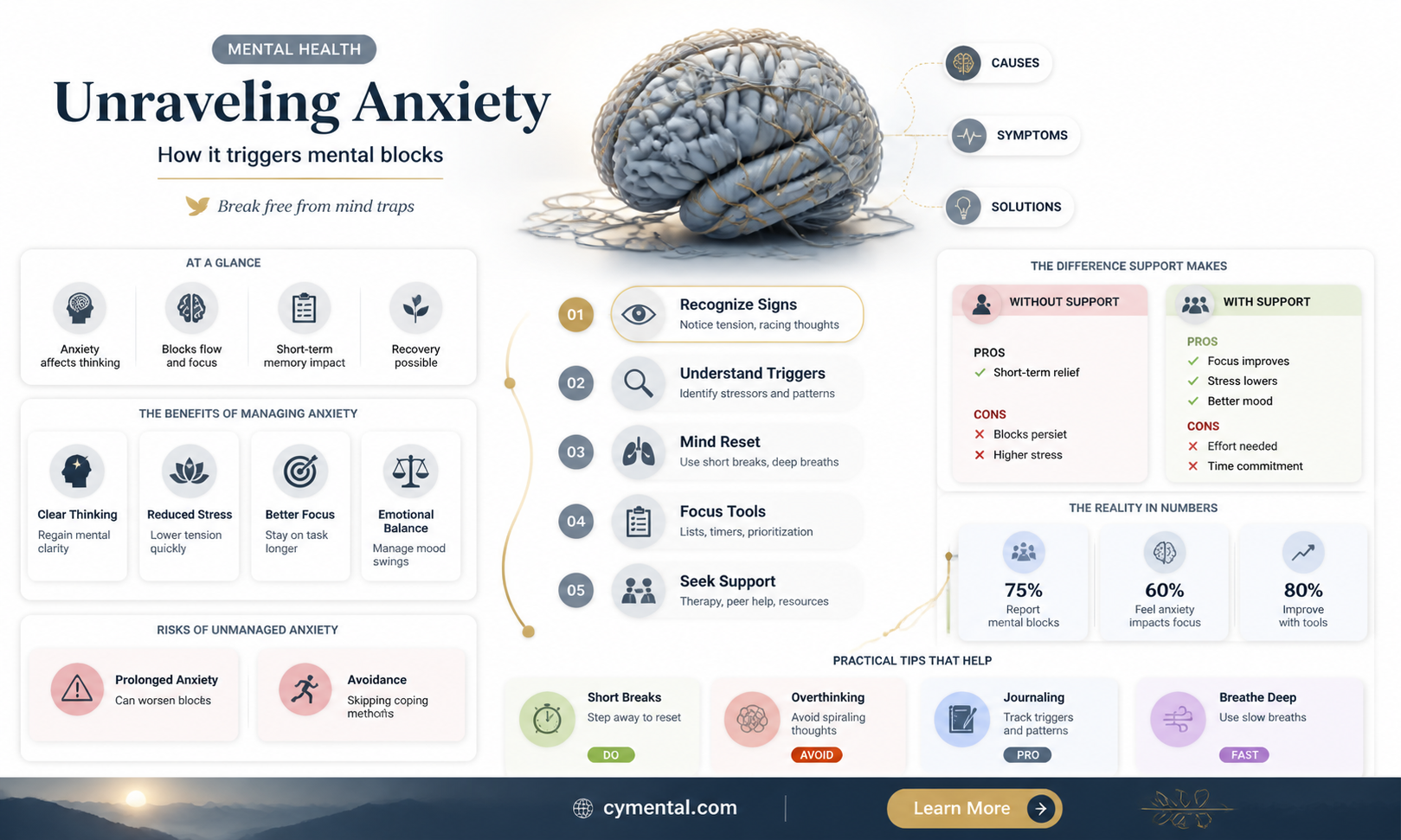
Anxiety, a pervasive and often debilitating condition, can manifest in various ways, including the phenomenon of mental blocks. These mental blocks, also known as cognitive barriers or thought blocks, occur when an individual's anxiety levels become so heightened that they impede normal thought processes and decision-making abilities. This can lead to difficulties in concentrating, remembering information, or even performing simple tasks. Understanding the relationship between anxiety and mental blocks is crucial for developing effective coping strategies and interventions to help individuals manage their symptoms and improve their overall well-being.
| Characteristics | Values |
|---|---|
| Definition | Anxiety-induced mental blocks refer to the cognitive impairment experienced due to heightened anxiety levels, affecting an individual's ability to think clearly, concentrate, and recall information. |
| Symptoms | Symptoms include difficulty concentrating, memory lapses, racing thoughts, indecisiveness, and a feeling of being overwhelmed. |
| Causes | Primary causes are elevated stress hormones, such as cortisol, which interfere with cognitive functions. Underlying anxiety disorders, traumatic experiences, and chronic stress can exacerbate these effects. |
| Impact on Daily Life | Mental blocks can hinder performance at work or school, strain relationships, and reduce overall quality of life due to the inability to effectively manage tasks and responsibilities. |
| Duration | The duration varies; some individuals may experience temporary blocks during periods of high stress, while others may suffer from persistent impairment if anxiety remains untreated. |
| Treatment Options | Cognitive-behavioral therapy (CBT), mindfulness practices, medication such as selective serotonin reuptake inhibitors (SSRIs), and stress management techniques are commonly used treatments. |
| Prevention Strategies | Regular exercise, adequate sleep, healthy diet, social support, and stress reduction techniques like meditation and deep breathing exercises can help prevent anxiety-related mental blocks. |
| Associated Conditions | Often co-occurs with conditions like generalized anxiety disorder, panic disorder, depression, and post-traumatic stress disorder (PTSD). |
| Research Findings | Studies show that anxiety significantly impacts working memory and cognitive flexibility. Neuroimaging reveals changes in brain activity patterns, particularly in the prefrontal cortex and amygdala. |
| Personal Experiences | Individuals often report feeling 'frozen' or 'paralyzed' by their thoughts, unable to make decisions or complete tasks, leading to feelings of frustration and helplessness. |
| Support Resources | Online support groups, mental health hotlines, and community-based anxiety management workshops provide valuable resources for those experiencing anxiety-related mental blocks. |
| Case Studies | Clinical case studies illustrate how anxiety-induced mental blocks can be successfully treated with a combination of therapy, medication, and lifestyle changes, leading to improved cognitive function and overall well-being. |
Explore related products


What You'll Learn
- Cognitive Overload: Excessive worry can overwhelm the mind, leading to difficulty in processing information
- Fear of Failure: Anxiety about making mistakes can create a mental barrier, hindering performance and decision-making
- Rumination: Obsessive thinking about past events or future concerns can consume mental resources, leaving little room for other thoughts
- Avoidance Behaviors: Anxiety may lead individuals to avoid situations or tasks, reinforcing mental blocks and limiting personal growth
- Physiological Symptoms: Physical manifestations of anxiety, such as increased heart rate or muscle tension, can distract and impede mental clarity

Cognitive Overload: Excessive worry can overwhelm the mind, leading to difficulty in processing information
Excessive worry can lead to a state of cognitive overload, where the mind becomes overwhelmed and struggles to process information effectively. This can manifest as difficulty concentrating, making decisions, or remembering important details. Cognitive overload is a common symptom of anxiety disorders and can significantly impact daily functioning and overall well-being.
One way to understand cognitive overload is to consider the brain's limited capacity for processing information. When we are constantly bombarded with worries and fears, our working memory becomes taxed, and we may find it challenging to focus on tasks that require sustained attention. This can lead to a vicious cycle, where increased anxiety further impairs cognitive function, making it even more difficult to manage stress and worry.
Research has shown that cognitive overload can be mitigated through various strategies, such as mindfulness meditation, cognitive-behavioral therapy, and stress management techniques. These interventions aim to reduce the mental burden of anxiety by teaching individuals how to reframe negative thoughts, prioritize tasks, and allocate mental resources more efficiently. By learning to manage cognitive overload, individuals can improve their ability to process information, make decisions, and cope with the challenges of daily life.
In addition to these therapeutic approaches, there are practical steps that can be taken to alleviate cognitive overload in everyday situations. For example, breaking down complex tasks into smaller, more manageable steps can help reduce the mental strain associated with decision-making. Similarly, setting aside dedicated time for relaxation and self-care can provide a much-needed respite from the constant barrage of worries and fears.
Ultimately, understanding and addressing cognitive overload is crucial for individuals struggling with anxiety. By recognizing the signs of cognitive overload and implementing strategies to manage it, individuals can improve their mental well-being and enhance their ability to navigate the complexities of modern life.
Exploring the Complex Link Between Hysterectomy and Mental Health
You may want to see also
Explore related products


Fear of Failure: Anxiety about making mistakes can create a mental barrier, hindering performance and decision-making
Fear of failure is a pervasive form of anxiety that can significantly impact an individual's ability to perform and make decisions. This mental barrier stems from a deep-seated dread of making mistakes, which can lead to a range of negative outcomes, from damaged self-esteem to missed opportunities. In the context of mental blocks caused by anxiety, fear of failure is particularly insidious because it can create a self-fulfilling prophecy: the more one fears failure, the more likely they are to experience it due to the anxiety-induced mental paralysis.
One of the primary ways fear of failure manifests is through procrastination. Individuals may delay starting tasks or making decisions because they are overwhelmed by the prospect of not succeeding. This avoidance behavior can lead to a cycle of inaction, where the fear of failure becomes a constant companion, further reinforcing the mental block. Moreover, when individuals do finally attempt to tackle tasks, the anxiety surrounding potential failure can impair their cognitive functions, making it more difficult to think clearly, solve problems, and execute tasks effectively.
In a professional setting, fear of failure can have far-reaching consequences. Employees may hesitate to take on new projects or responsibilities, fearing that they will not meet expectations. This can result in stagnation in their careers, as well as a lack of innovation and progress within the organization. Leaders, too, can be affected by fear of failure, leading to indecisiveness and an inability to make bold, strategic decisions. This can create a ripple effect throughout the company, fostering a culture of risk aversion and mediocrity.
To overcome the mental block caused by fear of failure, it is essential to adopt a growth mindset. This involves recognizing that failure is not only inevitable but also a valuable learning experience. By reframing failure as an opportunity for growth and development, individuals can begin to approach tasks and decisions with a sense of curiosity and openness, rather than dread. Additionally, setting realistic goals and breaking tasks down into manageable steps can help to reduce the overwhelming nature of fear of failure, making it easier to take action and make progress.
Another effective strategy is to practice self-compassion. Often, individuals are their own harshest critics, which can exacerbate the fear of failure. By treating oneself with kindness and understanding, it becomes easier to accept the possibility of making mistakes and to learn from them, rather than being paralyzed by the fear of them. Furthermore, seeking support from others, whether through mentorship, coaching, or peer support groups, can provide a sense of accountability and encouragement, helping individuals to push through their fear and take calculated risks.
Ultimately, overcoming the fear of failure requires a multifaceted approach that addresses both the cognitive and emotional aspects of anxiety. By adopting a growth mindset, practicing self-compassion, and seeking support, individuals can begin to break down the mental barriers created by fear of failure, unlocking their potential and achieving greater success in their personal and professional lives.
Exploring the Link Between Root Canals and Mental Health Concerns
You may want to see also
Explore related products


Rumination: Obsessive thinking about past events or future concerns can consume mental resources, leaving little room for other thoughts
Rumination, the act of obsessively thinking about past events or future concerns, can significantly impact mental resources. This cognitive process can be so consuming that it leaves little room for other thoughts, leading to a state of mental blockage. When individuals are trapped in a cycle of rumination, they often find it challenging to focus on the present moment or engage in productive activities. This can result in decreased efficiency, impaired decision-making, and a heightened sense of anxiety.
One of the key mechanisms by which rumination contributes to mental blocks is through the depletion of working memory. Working memory is a cognitive system that temporarily holds and manipulates information, allowing us to perform tasks such as problem-solving and decision-making. When we are ruminating, our working memory becomes occupied with repetitive thoughts and worries, leaving less capacity for processing new information or engaging in complex cognitive tasks. This can lead to feelings of being overwhelmed or stuck, as the individual struggles to move beyond their preoccupying thoughts.
Furthermore, rumination can also lead to the activation of the body's stress response system. When we dwell on past mistakes or future uncertainties, our brain interprets these thoughts as threats, triggering the release of stress hormones such as cortisol. Chronic activation of this stress response can have detrimental effects on both physical and mental health, including impaired cognitive function, reduced immune system functioning, and increased risk of anxiety and depressive disorders.
Breaking the cycle of rumination requires a multifaceted approach. One effective strategy is to practice mindfulness meditation, which involves focusing on the present moment and observing thoughts without judgment. This can help individuals develop a greater awareness of their thought patterns and learn to disengage from ruminative thinking. Additionally, cognitive-behavioral therapy (CBT) can be beneficial in addressing the underlying beliefs and thought distortions that contribute to rumination. CBT helps individuals identify and challenge negative thought patterns, replacing them with more balanced and realistic perspectives.
In conclusion, rumination can have a profound impact on mental resources, leading to mental blocks and decreased cognitive functioning. By understanding the mechanisms underlying rumination and employing strategies such as mindfulness meditation and CBT, individuals can learn to manage their thoughts more effectively and reduce the negative impact of rumination on their mental health.
Exploring the Link: Childhood Head Injuries and Mental Health
You may want to see also
Explore related products



Avoidance Behaviors: Anxiety may lead individuals to avoid situations or tasks, reinforcing mental blocks and limiting personal growth
Anxiety can manifest in various ways, and one of its most insidious effects is the development of avoidance behaviors. These behaviors occur when individuals, overwhelmed by anxiety, choose to avoid situations or tasks that they perceive as threatening or stressful. While this avoidance might provide temporary relief, it ultimately reinforces mental blocks and hinders personal growth.
Avoidance behaviors can take many forms. For instance, a person might avoid public speaking engagements due to a fear of being judged or embarrassed. Another might skip social gatherings to prevent feelings of awkwardness or rejection. In a professional context, an individual might procrastinate on important projects or tasks, fearing failure or the pressure of meeting deadlines. These behaviors, while seemingly protective, actually perpetuate anxiety by preventing individuals from confronting and overcoming their fears.
The reinforcement of mental blocks through avoidance is a significant concern. When individuals consistently avoid challenging situations, they miss out on opportunities to develop coping mechanisms and build resilience. This can lead to a cycle of increasing anxiety and decreasing confidence, making it even more difficult to face future challenges. Moreover, avoidance behaviors can limit personal growth by restricting experiences and opportunities for learning and self-improvement.
Breaking the cycle of avoidance requires a proactive approach. Cognitive-behavioral therapy (CBT) is a highly effective method for addressing anxiety-related avoidance behaviors. CBT helps individuals identify and challenge negative thought patterns, gradually exposing them to feared situations in a controlled and supportive environment. This exposure therapy allows individuals to build confidence and develop effective coping strategies, ultimately reducing anxiety and promoting personal growth.
In addition to professional therapy, there are practical steps individuals can take to combat avoidance behaviors. Setting small, achievable goals can help build confidence and gradually reduce anxiety. Seeking support from friends, family, or support groups can provide encouragement and accountability. Mindfulness practices, such as meditation and deep breathing exercises, can help manage anxiety symptoms and promote a sense of calm.
In conclusion, while avoidance behaviors might offer temporary respite from anxiety, they ultimately reinforce mental blocks and impede personal growth. By understanding the nature of these behaviors and taking proactive steps to address them, individuals can break the cycle of avoidance and cultivate a more resilient and fulfilling life.
Exploring the Link Between Stroke and Mental Health Challenges
You may want to see also
Explore related products


Physiological Symptoms: Physical manifestations of anxiety, such as increased heart rate or muscle tension, can distract and impede mental clarity
Anxiety can manifest in various physical symptoms that significantly impact mental clarity and cognitive function. One of the most common physiological symptoms is an increased heart rate, which can lead to a state of hyperarousal. This heightened state of alertness can make it difficult for individuals to focus and concentrate, as their brain is constantly processing the perceived threat. Additionally, muscle tension is another prevalent physical symptom of anxiety that can contribute to mental blocks. When muscles are tense, it can lead to discomfort and pain, further distracting the individual from their thoughts and tasks at hand.
Moreover, anxiety can also cause gastrointestinal issues, such as nausea and stomach cramps, which can disrupt the body's normal functioning and lead to a decrease in mental clarity. These physical symptoms can create a vicious cycle, where the individual becomes more anxious due to their inability to focus, which in turn exacerbates the physical symptoms. It is essential to recognize and address these physiological manifestations of anxiety to prevent them from impeding mental clarity and overall well-being.
One effective way to manage these physical symptoms is through relaxation techniques, such as deep breathing exercises and progressive muscle relaxation. These techniques can help to calm the body and reduce the intensity of the physical symptoms, allowing individuals to regain focus and mental clarity. Additionally, regular exercise and a balanced diet can also contribute to reducing anxiety and its associated physical symptoms. By incorporating these strategies into daily life, individuals can better manage anxiety and prevent mental blocks caused by physiological symptoms.
Exploring the Link: Vertigo and Mental Confusion Explained
You may want to see also
Frequently asked questions
Yes, anxiety can indeed cause mental blocks. When a person is anxious, their brain's focus shifts to the perceived threat, making it difficult to concentrate on other tasks. This can lead to a mental block, where the individual struggles to recall information, make decisions, or think clearly.
Anxiety affects cognitive functioning by impairing attention, memory, and decision-making abilities. It can cause racing thoughts, making it hard to focus on one thing at a time. Anxiety can also lead to forgetfulness and difficulty in retrieving memories. In addition, it can make decision-making more challenging, as the individual may become overwhelmed by the fear of making a mistake.
Some strategies to overcome mental blocks caused by anxiety include practicing relaxation techniques, such as deep breathing and meditation, to reduce overall anxiety levels. Additionally, breaking tasks into smaller, manageable steps can help alleviate the feeling of being overwhelmed. Engaging in physical activity and getting enough sleep can also improve cognitive functioning and reduce the impact of anxiety on mental blocks.