Lucas Bennett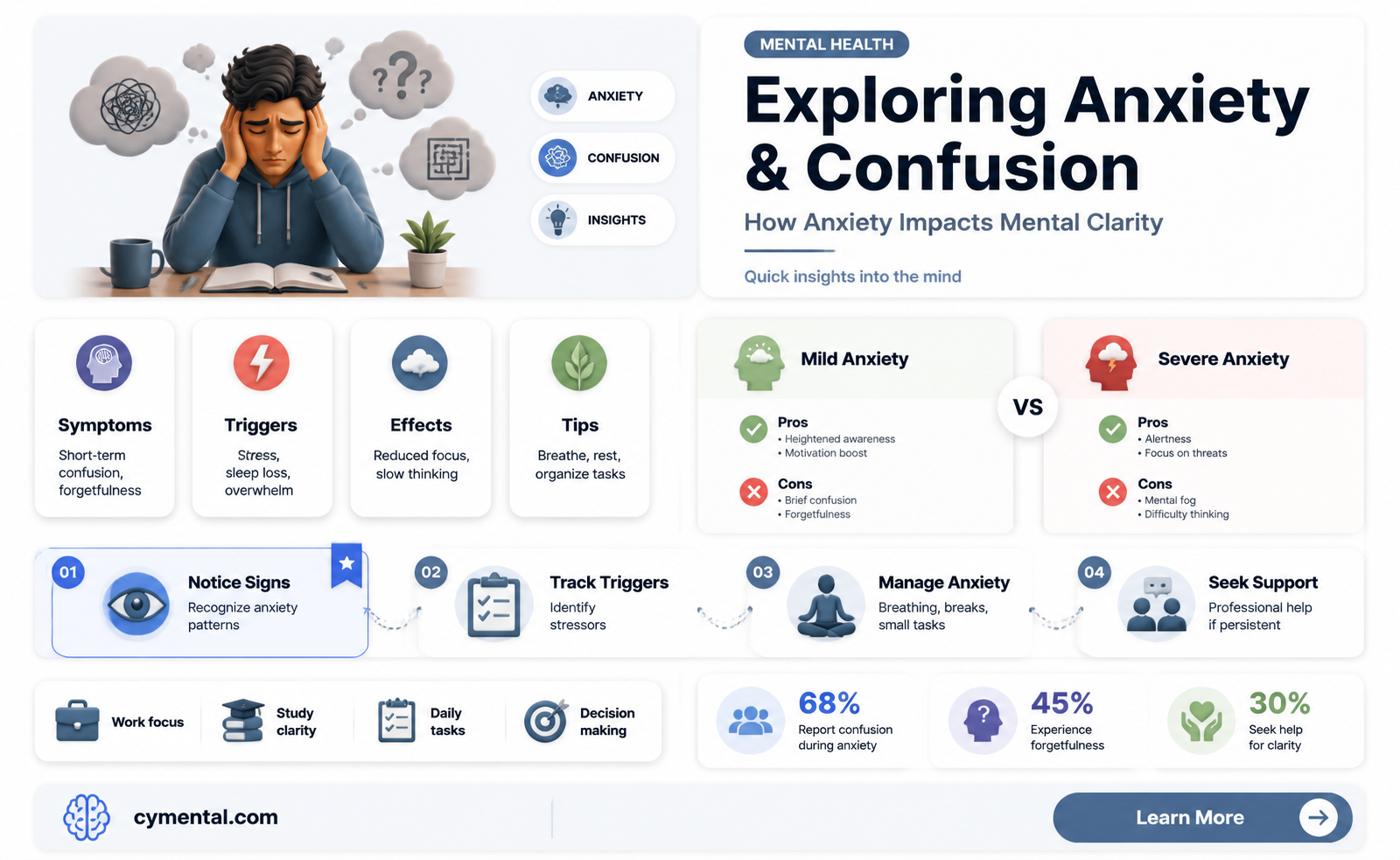
Anxiety is a common mental health condition characterized by feelings of worry, nervousness, and fear. While it primarily affects emotional well-being, anxiety can also have a significant impact on cognitive functioning. One of the lesser-known effects of anxiety is its potential to cause mental confusion. This confusion can manifest in various ways, such as difficulty concentrating, memory problems, and a general sense of disorientation. Understanding the relationship between anxiety and mental confusion is crucial for developing effective treatment strategies and improving the overall quality of life for individuals suffering from anxiety disorders.
| Characteristics | Values |
|---|---|
| Definition | Anxiety is a mental state characterized by feelings of worry, nervousness, and apprehension. Mental confusion refers to a state of disorientation or difficulty in thinking clearly. |
| Symptoms of Anxiety | Restlessness, irritability, difficulty concentrating, muscle tension, sleep disturbances, rapid heartbeat, sweating, trembling, feelings of panic. |
| Symptoms of Mental Confusion | Difficulty remembering things, trouble concentrating, disorientation, confusion about time and place, difficulty recognizing people, problems with decision-making. |
| Can Anxiety Cause Mental Confusion? | Yes, anxiety can lead to mental confusion. The overwhelming feelings of worry and stress associated with anxiety can impair cognitive function, making it difficult to think clearly and process information effectively. |
| Mechanism | Anxiety activates the body's fight-or-flight response, which can lead to increased heart rate, rapid breathing, and a surge of adrenaline. These physiological changes can interfere with normal brain function, leading to mental confusion. |
| Duration | The duration of mental confusion caused by anxiety can vary. It may last for a short period during an anxiety attack or persist for longer periods in individuals with chronic anxiety disorders. |
| Severity | The severity of mental confusion can range from mild, where individuals may feel slightly disoriented, to severe, where they may experience significant difficulty in thinking and decision-making. |
| Impact on Daily Life | Mental confusion caused by anxiety can interfere with daily activities, work performance, and social interactions. It can make it challenging to complete tasks that require concentration and clear thinking. |
| Treatment Options | Treatment for anxiety-related mental confusion may include therapy, medication, or a combination of both. Cognitive-behavioral therapy (CBT) and anti-anxiety medications are commonly used to manage anxiety disorders. |
| Prevention Strategies | Practicing relaxation techniques, such as deep breathing and meditation, engaging in regular physical activity, maintaining a healthy diet, getting adequate sleep, and seeking support from friends and family can help prevent anxiety and associated mental confusion. |
| Comorbid Conditions | Anxiety disorders often co-occur with other mental health conditions, such as depression, obsessive-compulsive disorder (OCD), and post-traumatic stress disorder (PTSD). These comorbid conditions can exacerbate mental confusion. |
| Age and Gender Differences | Anxiety disorders are more common in women than men and often begin in childhood or adolescence. Mental confusion associated with anxiety can affect individuals of all ages but may be more pronounced in older adults due to age-related cognitive decline. |
| Cultural Factors | Cultural factors can influence the experience and expression of anxiety and mental confusion. Different cultures may have varying perceptions of mental health and may use different coping strategies to manage anxiety. |
| Neurobiological Basis | Anxiety disorders are associated with alterations in brain structure and function, particularly in regions involved in emotional processing and regulation, such as the amygdala and prefrontal cortex. These neurobiological changes can contribute to mental confusion. |
| Psychosocial Factors | Psychosocial factors, such as traumatic life events, chronic stress, and social isolation, can contribute to the development of anxiety disorders and associated mental confusion. |
| Differential Diagnosis | It is essential to differentiate between mental confusion caused by anxiety and other conditions, such as dementia, delirium, or substance-induced psychosis, to ensure appropriate treatment. |
Explore related products


What You'll Learn
- Anxiety's impact on cognitive function: Explore how anxiety affects attention, memory, and decision-making
- The role of stress hormones: Discuss how elevated cortisol levels contribute to mental confusion
- Anxiety and information processing: Examine how anxiety impairs the brain's ability to process information efficiently
- Mental confusion as a symptom: Identify anxiety disorders where mental confusion is a common symptom
- Coping strategies and treatments: Present techniques and therapies to manage anxiety-related mental confusion

Anxiety's impact on cognitive function: Explore how anxiety affects attention, memory, and decision-making
Anxiety's impact on cognitive function is multifaceted, affecting various aspects of mental processes. One significant area of influence is attention. Individuals experiencing anxiety often find it challenging to focus on tasks or conversations, as their minds are preoccupied with worries and fears. This can lead to difficulties in concentrating, following instructions, or engaging in activities that require sustained attention.
Memory is another cognitive function that can be impaired by anxiety. High levels of anxiety can interfere with the encoding and retrieval of memories, making it harder to remember important information or events. This can manifest as forgetfulness, difficulty learning new material, or even distorted memories of past experiences.
Decision-making is also affected by anxiety. When faced with choices, anxious individuals may struggle to weigh options objectively and make rational decisions. Instead, they may be more likely to make impulsive choices or avoid making decisions altogether due to fear of potential negative outcomes. This can lead to feelings of indecisiveness and frustration.
Furthermore, anxiety can impact executive functions, such as planning, organizing, and problem-solving. These higher-level cognitive processes are essential for managing daily tasks and responsibilities, and their impairment can significantly affect an individual's ability to function effectively in various aspects of life.
In conclusion, anxiety's impact on cognitive function is profound and can affect attention, memory, decision-making, and executive functions. Understanding these effects is crucial for developing strategies to manage anxiety and mitigate its impact on mental processes.
Unveiling the Link: Allergies and Mental Fog Explored
You may want to see also
Explore related products

$13.93 $14.95


The role of stress hormones: Discuss how elevated cortisol levels contribute to mental confusion
Cortisol, often referred to as the "stress hormone," plays a crucial role in the body's response to stress. When we encounter a stressful situation, our adrenal glands release cortisol into the bloodstream, which helps us cope with the immediate threat by increasing our heart rate, blood pressure, and blood sugar levels. However, chronically elevated cortisol levels can have detrimental effects on our mental health, including contributing to mental confusion.
One way in which elevated cortisol levels can lead to mental confusion is by impairing cognitive function. Studies have shown that prolonged exposure to high levels of cortisol can damage the hippocampus, a region of the brain responsible for memory and learning. This can result in difficulties with concentration, memory retention, and problem-solving, all of which can contribute to feelings of mental confusion.
Another way in which cortisol can contribute to mental confusion is by disrupting the balance of neurotransmitters in the brain. Neurotransmitters are chemical messengers that allow brain cells to communicate with each other, and an imbalance in these chemicals can lead to a range of mental health issues, including anxiety and depression. Elevated cortisol levels can interfere with the production and regulation of neurotransmitters such as serotonin and dopamine, which can further exacerbate feelings of mental confusion.
In addition to its effects on cognitive function and neurotransmitter balance, elevated cortisol levels can also contribute to mental confusion by causing physical symptoms that can be distressing and distracting. For example, high cortisol levels can lead to sleep disturbances, digestive issues, and chronic pain, all of which can make it difficult to focus and think clearly.
To mitigate the effects of elevated cortisol levels on mental confusion, it is important to find ways to manage stress effectively. This can include engaging in regular exercise, practicing relaxation techniques such as meditation and deep breathing, and seeking support from friends, family, or mental health professionals. By taking steps to reduce stress and lower cortisol levels, individuals can improve their cognitive function, neurotransmitter balance, and overall mental well-being, thereby reducing the likelihood of experiencing mental confusion.
Exploring the Link: Sinus Infections and Mental Health Changes
You may want to see also
Explore related products


Anxiety and information processing: Examine how anxiety impairs the brain's ability to process information efficiently
Anxiety has a profound impact on the brain's ability to process information efficiently. When we are anxious, our brain's resources are hijacked by the fight-or-flight response, which prioritizes survival over cognitive functions. This means that the prefrontal cortex, the part of the brain responsible for executive functions such as decision-making, problem-solving, and attention, is less active. As a result, our ability to focus, concentrate, and process information is significantly impaired.
One of the key ways in which anxiety affects information processing is by increasing the brain's sensitivity to threats. This heightened sensitivity can lead to a phenomenon known as "threat rigidity," where the brain becomes fixated on potential dangers and is unable to shift its focus to other tasks. This can make it difficult to concentrate on work, school, or other activities that require sustained attention.
Anxiety can also impair memory formation and retrieval. When we are anxious, our brain is more likely to encode memories in a way that emphasizes negative emotions and threats. This can lead to a biased recall of past events, where we are more likely to remember negative experiences and less likely to recall positive ones. Additionally, anxiety can interfere with the consolidation of new memories, making it harder to learn and retain new information.
Furthermore, anxiety can disrupt the brain's ability to regulate emotions, leading to a state of emotional dysregulation. This can manifest as mood swings, irritability, and an inability to cope with stress. Emotional dysregulation can further impair cognitive functions, making it harder to focus, concentrate, and process information efficiently.
In conclusion, anxiety has a significant impact on the brain's ability to process information efficiently. By hijacking the brain's resources, increasing threat sensitivity, impairing memory formation and retrieval, and disrupting emotional regulation, anxiety can make it difficult to focus, concentrate, and process information effectively. This can have far-reaching consequences for our daily lives, affecting our performance at work, school, and in our personal relationships.
Exploring the Link Between Cannabis Use and Mental Health
You may want to see also
Explore related products


Mental confusion as a symptom: Identify anxiety disorders where mental confusion is a common symptom
Anxiety disorders can manifest in various ways, and one common symptom that individuals may experience is mental confusion. This confusion can arise from the overwhelming nature of anxiety, which can impair cognitive functions and make it difficult to think clearly. In this section, we will identify specific anxiety disorders where mental confusion is a prevalent symptom.
One such disorder is Generalized Anxiety Disorder (GAD). Individuals with GAD often experience excessive worry and fear that interfere with their daily lives. This constant state of heightened alertness can lead to mental confusion, as the brain is preoccupied with processing anxious thoughts and emotions. Another disorder where mental confusion is common is Panic Disorder. During a panic attack, individuals may feel a sudden surge of intense fear or discomfort, which can be accompanied by disorientation and confusion.
Obsessive-Compulsive Disorder (OCD) is another anxiety disorder that can cause mental confusion. The intrusive thoughts and compulsive behaviors associated with OCD can be mentally exhausting, leading to difficulties in concentrating and processing information. Additionally, Post-Traumatic Stress Disorder (PTSD) can result in mental confusion, as individuals may experience flashbacks or nightmares that disrupt their cognitive processes.
It is essential to recognize that mental confusion can be a symptom of these anxiety disorders, as it can significantly impact an individual's quality of life. If you or someone you know is experiencing mental confusion along with other anxiety symptoms, it is crucial to seek professional help for an accurate diagnosis and appropriate treatment.
Exploring the Link: Parasites and Mental Confusion Uncovered
You may want to see also
Explore related products



Coping strategies and treatments: Present techniques and therapies to manage anxiety-related mental confusion
Cognitive Behavioral Therapy (CBT) is a frontline treatment for managing anxiety-related mental confusion. This therapeutic approach focuses on identifying and challenging negative thought patterns that contribute to anxiety and confusion. Through CBT, individuals learn to reframe their thoughts in a more positive and realistic light, which can significantly reduce feelings of mental fog and improve cognitive clarity. Typically, CBT involves weekly sessions with a trained therapist over a period of several months, though the exact duration can vary based on individual needs.
Mindfulness-Based Stress Reduction (MBSR) is another effective strategy for coping with anxiety-induced mental confusion. MBSR combines mindfulness meditation with yoga and body awareness exercises to help individuals become more attuned to their physical and emotional states. By cultivating a greater sense of awareness, individuals can better recognize the onset of anxiety and take proactive steps to manage it before it leads to mental confusion. MBSR programs usually consist of eight weekly sessions, each lasting about two hours, and participants are encouraged to practice mindfulness techniques daily at home.
In addition to these therapeutic approaches, lifestyle modifications can also play a crucial role in managing anxiety-related mental confusion. Regular physical activity, for instance, has been shown to reduce anxiety symptoms and improve cognitive function. Aiming for at least 30 minutes of moderate exercise most days of the week can be beneficial. Furthermore, maintaining a balanced diet rich in whole foods and limiting the intake of caffeine and alcohol can help stabilize mood and reduce feelings of mental fog. Adequate sleep is also essential, as chronic sleep deprivation can exacerbate anxiety and cognitive impairment. Establishing a consistent sleep schedule and creating a relaxing bedtime routine can improve sleep quality and duration.
For some individuals, medication may be necessary to manage anxiety symptoms that contribute to mental confusion. Selective Serotonin Reuptake Inhibitors (SSRIs) and Benzodiazepines are commonly prescribed medications for anxiety disorders. SSRIs, such as sertraline and paroxetine, work by increasing the levels of serotonin in the brain, which can help regulate mood and reduce anxiety. Benzodiazepines, like alprazolam and clonazepam, act more quickly to alleviate anxiety symptoms but are typically used for short-term relief due to their potential for dependence. It is important to consult with a healthcare professional to determine the most appropriate medication and dosage for individual needs.
Lastly, social support and stress management techniques can further aid in coping with anxiety-related mental confusion. Engaging in social activities and maintaining strong relationships with friends and family can provide emotional support and reduce feelings of isolation. Stress management techniques, such as deep breathing exercises, progressive muscle relaxation, and journaling, can also help individuals better cope with anxiety-provoking situations. By incorporating these strategies into daily life, individuals can improve their overall mental well-being and reduce the impact of anxiety on cognitive function.
Unraveling the Complex Web: What Causes Mental Health Issues?
You may want to see also
Frequently asked questions
Yes, anxiety can indeed cause mental confusion. When a person is anxious, their brain's ability to process information efficiently can be impaired, leading to difficulties in concentration, memory, and decision-making. This mental fog is a common symptom of anxiety disorders and can significantly impact daily functioning.
Anxiety affects cognitive functions by altering the brain's neurotransmitter balance, particularly increasing the activity of the fight-or-flight response. This can lead to heightened alertness and arousal, making it challenging to focus and process information calmly. Additionally, chronic anxiety can reduce the volume of the hippocampus, a brain region crucial for memory formation, further contributing to cognitive difficulties.
Common symptoms of anxiety-related mental confusion include difficulty concentrating, forgetfulness, racing thoughts, indecisiveness, and a feeling of being overwhelmed. Individuals may also experience physical symptoms such as headaches, fatigue, and sleep disturbances, which can exacerbate mental confusion.
Yes, there are effective treatments for anxiety-induced mental confusion. Cognitive-behavioral therapy (CBT) is a common approach that helps individuals identify and challenge negative thought patterns contributing to anxiety. Medications such as selective serotonin reuptake inhibitors (SSRIs) can also be prescribed to help manage anxiety symptoms. Additionally, lifestyle changes like regular exercise, mindfulness practices, and stress management techniques can significantly improve mental clarity and reduce anxiety-related confusion.