Harper Lewis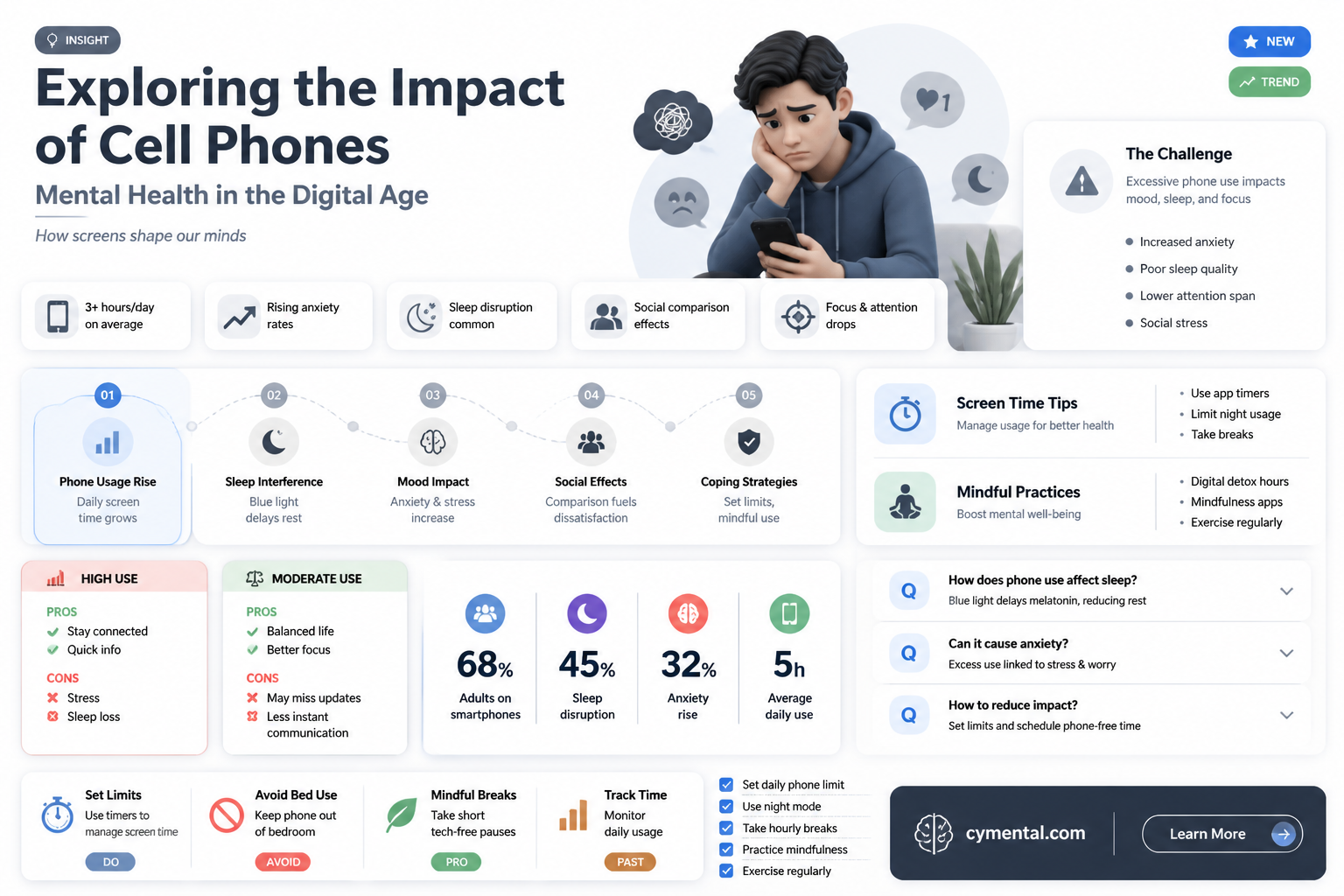
Cell phones have become an integral part of modern life, revolutionizing the way we communicate, work, and access information. However, their pervasive use has raised concerns about their impact on mental health. Research suggests that excessive cell phone use can contribute to a range of mental health issues, including anxiety, depression, and sleep disturbances. The constant connectivity and barrage of notifications can lead to feelings of overwhelm and stress, while the blue light emitted by screens can interfere with sleep patterns. Furthermore, social media use on cell phones can foster feelings of isolation and low self-esteem, particularly among young people. As our reliance on cell phones continues to grow, it is essential to understand the potential risks they pose to mental health and to develop strategies for mitigating these effects.
Explore related products


What You'll Learn
- Social Media Impact: Excessive use can lead to anxiety, depression, and loneliness due to constant comparison and cyberbullying
- Sleep Disturbances: Blue light exposure and late-night usage disrupt sleep patterns, affecting overall mental well-being
- Addiction: Compulsive checking and usage can result in addiction, causing stress and impairing daily functioning
- Cognitive Effects: Multitasking and constant notifications may decrease attention span and cognitive performance over time
- Isolation: Over-reliance on virtual communication can reduce face-to-face interactions, potentially leading to social isolation

Social Media Impact: Excessive use can lead to anxiety, depression, and loneliness due to constant comparison and cyberbullying
Social media platforms, designed to connect people, paradoxically contribute to feelings of isolation and inadequacy. A study by the Royal Society for Public Health found that social media use is associated with increased rates of anxiety, depression, and loneliness, particularly among young people. The constant barrage of curated images and updates creates a culture of comparison, where individuals measure their self-worth against the seemingly perfect lives of others online.
Cyberbullying is another significant threat to mental health. The anonymity of the internet emboldens bullies, making it easier to harass and intimidate others without facing consequences. Victims of cyberbullying often experience severe emotional distress, including anxiety, depression, and even suicidal thoughts. The impact can be long-lasting, affecting not only the victim's mental health but also their academic and social development.
Excessive social media use can also disrupt sleep patterns, further exacerbating mental health issues. The blue light emitted by screens interferes with the production of melatonin, a hormone that regulates sleep. This can lead to insomnia, daytime fatigue, and a host of other health problems. Moreover, the constant connectivity can create a sense of FOMO (fear of missing out), compelling individuals to stay online long into the night, sacrificing sleep for the sake of staying connected.
To mitigate these effects, it's essential to establish healthy boundaries with social media. Limiting screen time, taking regular breaks, and engaging in offline activities can help reduce the negative impact on mental health. Parents and educators also play a crucial role in teaching young people about the potential risks of social media and promoting responsible use. By fostering a balanced relationship with technology, individuals can harness the benefits of social media without sacrificing their mental well-being.
Navigating Emotional Turbulence: Miscarriage's Impact on Mental Health
You may want to see also
Explore related products




Sleep Disturbances: Blue light exposure and late-night usage disrupt sleep patterns, affecting overall mental well-being
The pervasive use of cell phones has introduced a myriad of sleep disturbances, primarily due to blue light exposure and late-night usage. Blue light, emitted by the screens of electronic devices, interferes with the body's natural sleep-wake cycle by suppressing the production of melatonin, the hormone responsible for inducing sleep. This disruption can lead to difficulty falling asleep, reduced sleep quality, and daytime fatigue, all of which can negatively impact mental well-being.
Late-night cell phone usage exacerbates these issues by stimulating the brain when it should be winding down for sleep. Engaging in activities such as scrolling through social media, texting, or playing games can keep the mind active, making it harder to relax and fall asleep. Furthermore, the constant connectivity and notifications from cell phones can create a sense of urgency and stress, even during the night, leading to interrupted sleep patterns.
Research has shown that individuals who use their cell phones before bedtime experience poorer sleep quality and are more likely to suffer from sleep disorders such as insomnia. A study published in the journal Sleep found that exposure to blue light from screens can reduce melatonin levels by up to 27%, significantly impacting sleep onset and duration. Additionally, a survey by the National Sleep Foundation revealed that 60% of people who use electronic devices before bed report experiencing sleep problems.
To mitigate these sleep disturbances, it is essential to establish healthy boundaries with cell phone usage. Implementing a digital detox period before bedtime, typically an hour or more, can help reduce blue light exposure and allow the brain to unwind. Using blue light filtering apps or wearing blue light blocking glasses can also minimize the impact of screen time on sleep. Furthermore, creating a relaxing bedtime routine that does not involve electronic devices can signal to the body that it is time to sleep, improving overall sleep quality and mental well-being.
The Unseen Impact: How Car Accidents Can Affect Your Mental Health
You may want to see also
Explore related products



Addiction: Compulsive checking and usage can result in addiction, causing stress and impairing daily functioning
The pervasive nature of cell phones in modern society has led to a significant increase in compulsive checking and usage, which can result in addiction. This addiction is characterized by an irresistible urge to constantly check and use the device, even when it interferes with daily activities and responsibilities. The stress caused by this compulsive behavior can have detrimental effects on mental health, leading to anxiety, depression, and a decrease in overall well-being.
One of the primary reasons for this addictive behavior is the constant stream of notifications and alerts that cell phones provide. Social media platforms, messaging apps, and email notifications can create a sense of urgency and importance, compelling individuals to check their devices repeatedly throughout the day. This constant stimulation can lead to a dopamine rush, which reinforces the addictive behavior and makes it difficult for individuals to resist the urge to check their phones.
Furthermore, the fear of missing out (FOMO) can also contribute to compulsive checking and usage. The constant connectivity provided by cell phones can create a sense of being constantly available and accessible, leading individuals to feel anxious when they are not able to check their devices. This anxiety can be exacerbated by the pressure to respond quickly to messages and notifications, creating a cycle of compulsive checking and usage.
The impact of cell phone addiction on daily functioning can be significant. Individuals may find it difficult to concentrate on tasks, leading to decreased productivity and performance. Relationships may also be affected, as compulsive checking and usage can lead to neglect and disconnection from friends and family. Additionally, the constant stimulation and stress caused by cell phone addiction can lead to physical health problems, such as headaches, eye strain, and sleep disturbances.
To combat cell phone addiction, it is important to establish boundaries and limits for device usage. This can include setting specific times for checking and using the phone, as well as designating phone-free zones and activities. It is also helpful to engage in alternative activities that provide a sense of fulfillment and relaxation, such as exercise, meditation, or hobbies. By taking steps to reduce compulsive checking and usage, individuals can improve their mental health and overall well-being.
The Impact of Body Image on Mental Health: A Comprehensive Guide
You may want to see also
Explore related products


Cognitive Effects: Multitasking and constant notifications may decrease attention span and cognitive performance over time
The constant barrage of notifications and the multitasking nature of modern digital life can have profound cognitive effects. Research indicates that these behaviors may lead to a decrease in attention span and overall cognitive performance over time. This is primarily due to the way our brains adapt to the frequent switching between tasks and the immediate gratification provided by notifications.
One study found that individuals who frequently multitasked had reduced activity in the prefrontal cortex, the area of the brain responsible for executive functions such as decision-making and attention control. This reduction in activity can impair the ability to focus on a single task for an extended period, leading to decreased productivity and increased mental fatigue.
Furthermore, the constant stream of notifications can create a state of perpetual distraction, making it difficult for individuals to engage in deep, focused work. This can have long-term implications for cognitive health, as chronic distraction has been linked to increased stress levels and a higher risk of developing attention disorders.
To mitigate these effects, it is essential to establish boundaries around digital usage. This can include setting specific times for checking notifications, limiting the number of apps and devices used, and engaging in regular digital detoxes. By taking these steps, individuals can help protect their cognitive health and improve their ability to focus and engage in meaningful activities.
Harmonizing Minds: The Powerful Impact of Music on Mental Health
You may want to see also
Explore related products


Isolation: Over-reliance on virtual communication can reduce face-to-face interactions, potentially leading to social isolation
The rise of virtual communication has undeniably transformed the way we interact with one another. While cell phones and social media platforms have made it easier than ever to stay connected, there is a growing concern that this over-reliance on digital communication may be contributing to social isolation. Research suggests that face-to-face interactions are crucial for maintaining mental health and well-being, and that excessive screen time can lead to feelings of loneliness and disconnection.
One of the primary ways in which virtual communication can contribute to social isolation is by reducing the quality of our interactions. When we communicate through screens, we miss out on the nonverbal cues and physical touch that are essential for building and maintaining strong relationships. This can lead to misunderstandings, miscommunications, and a general sense of disconnection from others. Furthermore, the constant stream of notifications and messages can create a sense of being "always on," making it difficult to fully engage in meaningful conversations or to take time for oneself.
Another factor to consider is the impact of social media on our perception of others' lives. The curated images and updates that we see on social media platforms can create unrealistic expectations and promote feelings of inadequacy or envy. This can lead to a decrease in self-esteem and a reluctance to engage in social activities, further exacerbating feelings of isolation. Additionally, the echo chambers that can form on social media platforms can limit our exposure to diverse perspectives and ideas, making it more difficult to form connections with people who have different backgrounds or opinions.
So, what can be done to mitigate the effects of virtual communication on social isolation? One approach is to set boundaries around screen time and to prioritize face-to-face interactions whenever possible. This could involve scheduling regular meetups with friends and family, joining clubs or organizations that align with your interests, or simply making an effort to have more in-person conversations. Another strategy is to be mindful of how you use social media platforms, avoiding excessive scrolling and focusing on creating meaningful connections rather than accumulating likes or followers.
Ultimately, while virtual communication has its benefits, it is important to recognize the potential risks associated with over-reliance on digital interactions. By taking steps to maintain a healthy balance between screen time and face-to-face communication, we can help to reduce the negative impact of virtual communication on mental health and well-being.
Emotional Resilience: Mastering the Art of Unfazed Living
You may want to see also
Frequently asked questions
Yes, excessive use of cell phones has been linked to various mental health issues such as anxiety, depression, and sleep disturbances.
Social media on cell phones can contribute to feelings of loneliness, inadequacy, and anxiety due to constant comparison and the pressure to present a perfect online image.
Strategies include setting boundaries for screen time, engaging in offline activities, practicing mindfulness, and using apps that promote mental well-being.
Yes, cell phones can provide access to mental health resources, support networks, and therapeutic apps that can aid in managing mental health conditions.