Harper Lewis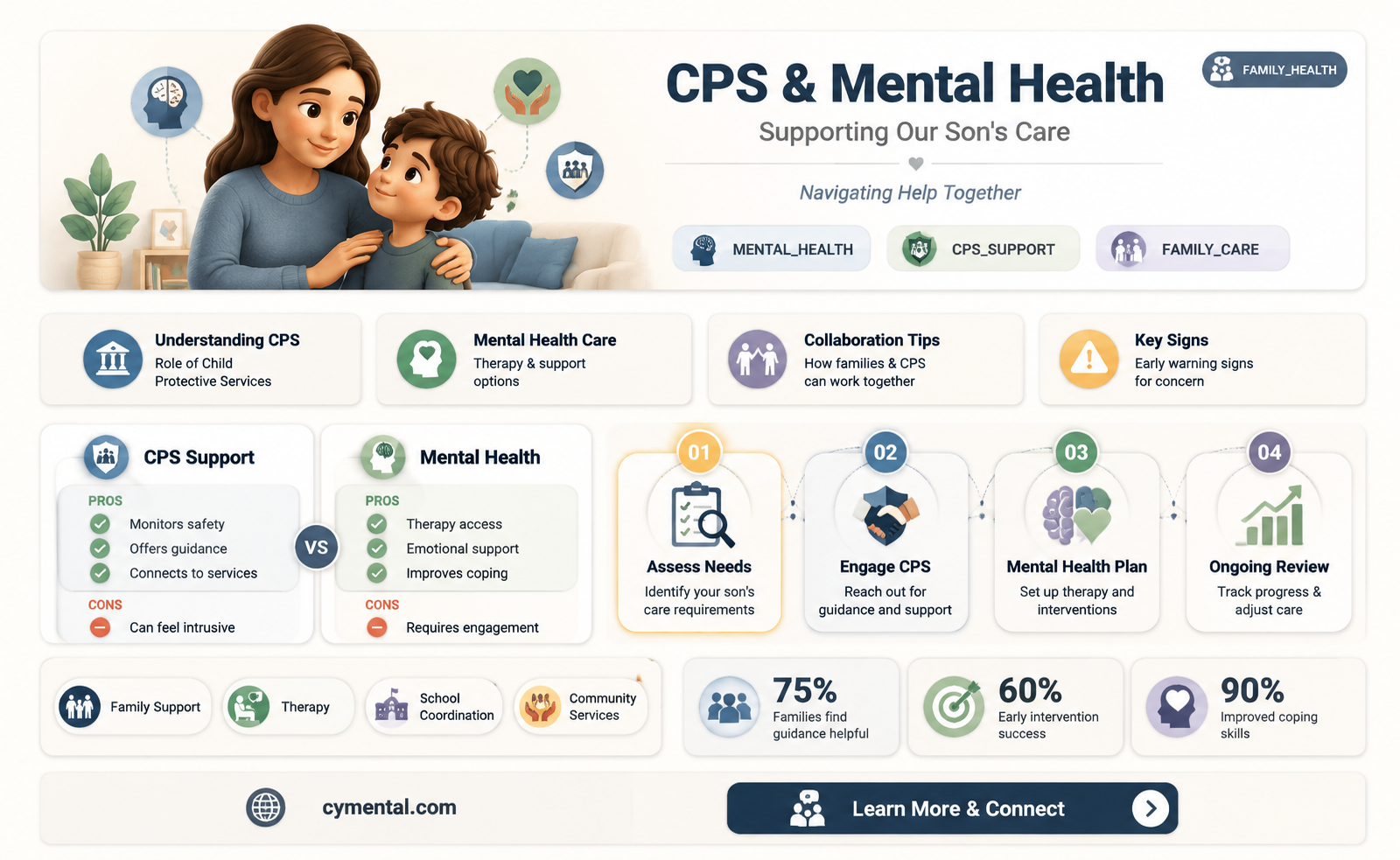
Navigating mental health care for a child can be overwhelming, leaving many parents wondering if Child Protective Services (CPS) can assist in securing necessary treatment. While CPS primarily focuses on protecting children from abuse and neglect, they may become involved if a child's mental health needs are unmet to the point of posing a safety risk. However, CPS is not a direct provider of mental health services. Their role is to ensure children are safe and connected to appropriate resources. If you're concerned about your son's mental health, reaching out to CPS could trigger an investigation, but it's crucial to explore other avenues first, such as contacting your pediatrician, school counselor, or local mental health agencies, which are better equipped to provide direct support and treatment options.
| Characteristics | Values |
|---|---|
| CPS Role | CPS (Child Protective Services) primarily investigates reports of child abuse or neglect. They are not a direct provider of mental health services but can connect families to resources. |
| Mental Health Referrals | CPS can refer families to mental health services if a child's mental health needs are identified during an investigation and are related to abuse or neglect. |
| Voluntary Services | CPS may offer voluntary services to families, including mental health referrals, if there are concerns about a child's well-being but no evidence of abuse or neglect. |
| Court-Ordered Services | If CPS files a court case, a judge may order mental health services as part of a family's case plan. |
| Limitations | CPS cannot force a family to accept mental health services if there is no evidence of abuse or neglect. They also cannot provide long-term mental health care. |
| Collaboration | CPS often collaborates with other agencies, such as mental health providers, schools, and community organizations, to ensure children receive necessary services. |
| Emergency Situations | In crisis situations, CPS can help stabilize a child's environment and connect them to emergency mental health services. |
| Parental Involvement | CPS typically involves parents in the process of accessing mental health care for their child, unless there are safety concerns. |
| Confidentiality | CPS must follow confidentiality laws, but information may be shared with mental health providers to ensure appropriate care. |
| State Variations | The extent of CPS involvement in mental health care varies by state and local policies. |
| Prevention Focus | CPS aims to prevent harm and may use mental health services as a preventive measure in some cases. |
| Resource Availability | The availability of mental health resources through CPS depends on local funding and community services. |
Explore related products


What You'll Learn

CPS resources for mental health services
Child Protective Services (CPS) often serves as a critical gateway to mental health resources for children in need. While their primary role is to investigate reports of abuse or neglect, CPS agencies frequently collaborate with community organizations and healthcare providers to ensure children receive comprehensive care. For instance, if a CPS caseworker identifies mental health concerns during an assessment, they can refer families to specialized programs such as therapeutic foster care, outpatient counseling, or crisis intervention services. These referrals are tailored to the child’s age, severity of symptoms, and family circumstances, ensuring a more targeted approach to treatment.
One practical resource CPS can connect families with is Medicaid-funded mental health services, which cover a range of treatments for eligible children. For example, children under 18 may qualify for individual therapy sessions (typically 1–2 times per week), psychiatric evaluations, and medication management. CPS caseworkers often assist families in navigating the Medicaid application process, removing barriers to access. Additionally, CPS can link families to school-based mental health programs, which provide counseling and behavioral support during school hours, minimizing disruption to the child’s routine.
A lesser-known but valuable CPS resource is the wraparound services model, designed for children with complex mental health needs. This approach involves a team of professionals—therapists, educators, and family advocates—working together to create a personalized care plan. For example, a 12-year-old with severe anxiety and ADHD might receive in-home behavioral therapy, academic accommodations, and parent training sessions. CPS facilitates access to these services by coordinating with local providers and ensuring the family’s active participation in the planning process.
However, it’s essential to recognize the limitations of CPS in mental health care. While they can initiate referrals, CPS is not a direct provider of mental health services. Families must actively engage with the recommended programs and follow through with appointments to see lasting improvements. For instance, a child prescribed antidepressants may need consistent monitoring by a psychiatrist, which requires parental commitment to scheduling and attending follow-up visits. CPS can provide reminders and support, but the responsibility ultimately lies with the family.
To maximize the benefits of CPS resources, families should advocate for their child’s needs during assessments. For example, if a parent notices their teenager exhibiting signs of depression, they should explicitly communicate these concerns to the CPS caseworker. This ensures the caseworker can prioritize mental health referrals and connect the family with age-appropriate services, such as adolescent group therapy or peer support programs. By working collaboratively with CPS, families can access a network of resources designed to address their child’s mental health challenges effectively.
Supporting Mental Health: Practical Ways to Help Loved Ones Heal
You may want to see also
Explore related products



Accessing therapy through CPS involvement
Child Protective Services (CPS) involvement can serve as a pivotal gateway to mental health care for children in need, particularly when families face barriers like financial constraints, lack of awareness, or systemic hurdles. While CPS’s primary role is to ensure child safety, its interventions often include connecting families to therapeutic resources as part of a broader case plan. For instance, if a child exhibits behavioral issues stemming from trauma or neglect, CPS may mandate therapy as a condition of case closure, ensuring the child receives professional support. This approach not only addresses immediate safety concerns but also lays the groundwork for long-term emotional and psychological well-being.
However, accessing therapy through CPS involvement is not without challenges. Families may feel stigmatized or overwhelmed by the legal and bureaucratic processes, which can deter engagement with recommended services. Additionally, the quality and availability of therapy options can vary widely depending on geographic location and local resources. For example, rural families might face limited access to specialized therapists, while urban families may encounter long waitlists. CPS caseworkers, though well-intentioned, may also lack the expertise to match children with the most appropriate therapeutic modalities, such as cognitive-behavioral therapy (CBT) for anxiety or trauma-focused CBT for abuse-related issues.
To navigate these challenges, families should actively advocate for their child’s needs during CPS involvement. Start by clearly communicating specific concerns—such as depression, aggression, or social withdrawal—to the caseworker, who can then prioritize mental health services in the case plan. Request a comprehensive assessment by a licensed mental health professional to identify tailored interventions, such as individual therapy, family therapy, or medication management. If the recommended therapy is unavailable locally, inquire about telehealth options or transportation assistance, which some CPS agencies provide.
A practical tip for families is to document all interactions with CPS and mental health providers, including dates, recommendations, and outcomes. This not only ensures accountability but also helps track progress and identify gaps in care. For instance, if a child is attending weekly therapy sessions but shows no improvement after three months, families can request a reassessment or alternative treatment plan. Collaborating with CPS as a partner rather than an adversary can also foster trust and increase the likelihood of securing adequate resources.
Ultimately, while CPS involvement can be a critical pathway to therapy, its effectiveness depends on proactive family engagement, clear communication, and advocacy. By understanding the system’s limitations and leveraging available resources, families can transform a potentially adversarial process into an opportunity for healing and growth for their child.
Supporting Loved Ones: Practical Ways to Help Family with Mental Illness
You may want to see also
Explore related products


CPS role in treatment planning
Child Protective Services (CPS) can play a pivotal role in securing mental health care for children, particularly when families face barriers like limited resources or complex diagnoses. While CPS’s primary mandate is to ensure child safety, their involvement often extends to treatment planning, especially in cases where mental health issues contribute to or result from neglect, abuse, or unsafe environments. For instance, if a child’s untreated anxiety or depression leads to school refusal or self-harm, CPS may step in to coordinate services, ensuring the child receives therapy, medication, or residential care as needed. This intervention is not punitive but collaborative, aiming to stabilize the child’s mental health while addressing underlying family dynamics.
In practice, CPS’s role in treatment planning begins with a comprehensive assessment of the child’s needs and the family’s capacity to provide care. This assessment often involves input from mental health professionals, educators, and medical providers to create a tailored plan. For example, a 12-year-old with severe ADHD and oppositional defiant disorder might require a combination of behavioral therapy, stimulant medication (e.g., methylphenidate 10–60 mg/day, adjusted by weight), and parent training programs. CPS ensures these services are accessible, often leveraging their partnerships with community agencies to secure funding or waivers for uninsured families. Without such intervention, many families would struggle to navigate the fragmented mental health system alone.
However, CPS’s involvement in treatment planning is not without challenges. Families may perceive CPS as intrusive or adversarial, particularly if they feel judged for their inability to manage their child’s mental health. To mitigate this, CPS workers must adopt a strengths-based approach, acknowledging the family’s efforts while clearly communicating the child’s needs. For instance, instead of dictating a treatment plan, CPS might facilitate a family team meeting where parents, therapists, and caseworkers collaboratively decide on goals, such as reducing aggressive outbursts or improving school attendance. This shared decision-making fosters trust and increases the likelihood of plan adherence.
A critical aspect of CPS’s role is monitoring progress and adjusting the treatment plan as needed. Mental health is not static; a child’s needs may change due to developmental milestones, medication side effects, or environmental stressors. CPS ensures continuity of care by scheduling regular check-ins, reviewing therapy progress notes, and advocating for adjustments, such as switching medications or increasing therapy sessions. For example, if a teenager on selective serotonin reuptake inhibitors (SSRIs) shows no improvement after 6–8 weeks, CPS might coordinate a psychiatric reevaluation to explore alternative treatments like cognitive-behavioral therapy or a different medication class.
Ultimately, CPS’s role in treatment planning is both a safeguard and a resource for families navigating the complexities of child mental health care. By bridging gaps in access, fostering collaboration, and ensuring accountability, CPS helps children receive the care they need to thrive. However, success hinges on their ability to balance authority with empathy, recognizing that families are often doing their best with limited tools. For parents seeking CPS assistance, the first step is reaching out—whether through a self-referral or a school counselor—and being open to the support they can provide. While CPS involvement may feel daunting, it can be a turning point in securing the mental health care a child deserves.
Mental Health Attitudes: Impact on Help-Seeking Behavior and Service Utilization
You may want to see also
Explore related products

$51



Mental health assessments via CPS
Child Protective Services (CPS) can initiate mental health assessments as part of their mandate to ensure a child’s safety and well-being. When a report raises concerns about a child’s mental health, CPS may step in to evaluate the situation, often involving professionals like psychologists or social workers. These assessments are not punitive but diagnostic, aiming to identify underlying issues such as anxiety, depression, or trauma. For instance, if a teacher reports a child exhibiting severe behavioral changes, CPS might coordinate a comprehensive evaluation to determine the root cause. This process typically includes interviews with the child, parents, and other caregivers, as well as standardized testing tools like the Achenbach System of Empirically Based Assessment (ASEBA) for children aged 6–18.
The involvement of CPS in mental health assessments can be a double-edged sword. On one hand, it ensures that children who might otherwise slip through the cracks receive timely attention. For example, a 12-year-old with undiagnosed ADHD and resulting academic struggles could benefit from CPS-facilitated access to therapy and medication management. On the other hand, the presence of CPS can feel intrusive or stigmatizing for families, particularly if they perceive the intervention as a judgment of their parenting. To mitigate this, CPS often collaborates with community mental health resources, such as local clinics or school-based programs, to provide support without alienating families.
One practical tip for parents navigating this process is to maintain open communication with CPS caseworkers. Clearly articulate your concerns and any steps you’ve already taken to address your child’s mental health needs, such as previous therapy sessions or medication trials. This demonstrates proactive engagement and can influence the assessment’s direction. Additionally, familiarize yourself with your state’s CPS protocols, as they vary widely. For instance, some states require CPS to involve a mental health professional in all assessments, while others may rely more heavily on social workers.
A critical takeaway is that CPS-led mental health assessments are often a gateway to services rather than an endpoint. If the assessment identifies a need, CPS can help connect families with Medicaid-funded therapy, psychiatric consultations, or specialized programs like cognitive-behavioral therapy (CBT) for children with anxiety disorders. However, families should be aware that CPS involvement typically ends once a safety plan is in place, shifting long-term care coordination to other agencies or healthcare providers. This transition can be challenging, so advocating for a clear aftercare plan is essential.
Finally, while CPS can be a valuable resource, it’s not the only pathway to mental health care for children. Families can also seek assessments through pediatricians, school counselors, or private mental health providers. For example, a pediatrician might administer the Pediatric Symptom Checklist (PSC) during a well-child visit, flagging potential mental health concerns early. Comparing these options, CPS is best suited for cases where there are immediate safety concerns or barriers to accessing care, such as financial constraints or parental resistance. Understanding these nuances empowers families to make informed decisions about their child’s mental health journey.
Supporting Loved Ones: A Guide to Accessing Mental Health Care for Family
You may want to see also
Explore related products


CPS coordination with healthcare providers
Child Protective Services (CPS) can play a pivotal role in connecting families with mental health resources, but effective coordination with healthcare providers is essential for success. This collaboration ensures that children receive timely, appropriate, and comprehensive care tailored to their needs. For instance, CPS caseworkers often act as liaisons between families and mental health professionals, facilitating referrals to therapists, psychiatrists, or specialized programs. However, the effectiveness of this coordination depends on clear communication, shared goals, and a mutual understanding of the child’s situation. Without this, families may face delays, fragmented care, or services that fail to address the root of the issue.
To streamline CPS coordination with healthcare providers, a structured approach is necessary. First, caseworkers should conduct thorough assessments to identify the child’s specific mental health needs, including any trauma, behavioral issues, or developmental concerns. This information must be communicated clearly to healthcare providers through detailed reports or joint case conferences. Second, CPS should advocate for families by helping them navigate insurance barriers, scheduling appointments, and ensuring transportation to and from treatment sessions. For example, if a 12-year-old with severe anxiety requires weekly therapy and monthly psychiatric evaluations, CPS can assist in securing Medicaid coverage and arranging reliable transportation, removing logistical hurdles that often derail treatment plans.
One critical challenge in CPS-healthcare coordination is the potential for misalignment between the two systems. CPS operates within a legal framework focused on safety and risk mitigation, while healthcare providers prioritize clinical outcomes. To bridge this gap, both parties must adopt a collaborative mindset. For instance, CPS caseworkers can participate in treatment planning meetings to ensure that interventions align with the child’s safety plan. Conversely, healthcare providers should educate CPS on the nuances of mental health conditions, such as the importance of consistent medication adherence for ADHD or the long-term nature of trauma recovery. This bidirectional understanding fosters a more cohesive support system for the child.
Practical tools can enhance CPS-healthcare coordination. Shared care plans, for example, outline the child’s diagnosis, treatment goals, and responsibilities of each party, ensuring everyone is on the same page. Technology, such as secure messaging platforms or electronic health records accessible to both CPS and providers, can improve communication efficiency. Additionally, CPS agencies can partner with community mental health organizations to create referral networks, reducing wait times for services. For a teenager with depression, this might mean a swift referral to a local outpatient program instead of a months-long wait for an overburdened clinic.
Ultimately, successful CPS coordination with healthcare providers hinges on trust, flexibility, and a child-centered approach. Families must feel supported, not scrutinized, while providers need to trust that CPS involvement enhances, rather than complicates, their work. By fostering these relationships and implementing practical strategies, CPS can indeed help children access the mental health care they need, transforming their lives for the better.
Acupuncture and Mental Health: A Natural Path to Wellness?
You may want to see also
Frequently asked questions
Yes, CPS can connect families with mental health resources, assess the child's needs, and ensure they receive appropriate care, especially if there are safety concerns.
CPS may conduct an assessment, refer the child to mental health professionals, or work with community agencies to create a treatment plan tailored to the child’s needs.
CPS prioritizes keeping families together whenever safe. Removal is a last resort and only occurs if there are immediate safety risks, not solely for mental health needs.
CPS can help identify low-cost or free mental health resources, connect families with Medicaid or other programs, and ensure access to necessary care.
CPS can work with the family and providers to address resistance, offer counseling, and create a supportive plan to encourage the child’s participation in treatment.