Harper Lewis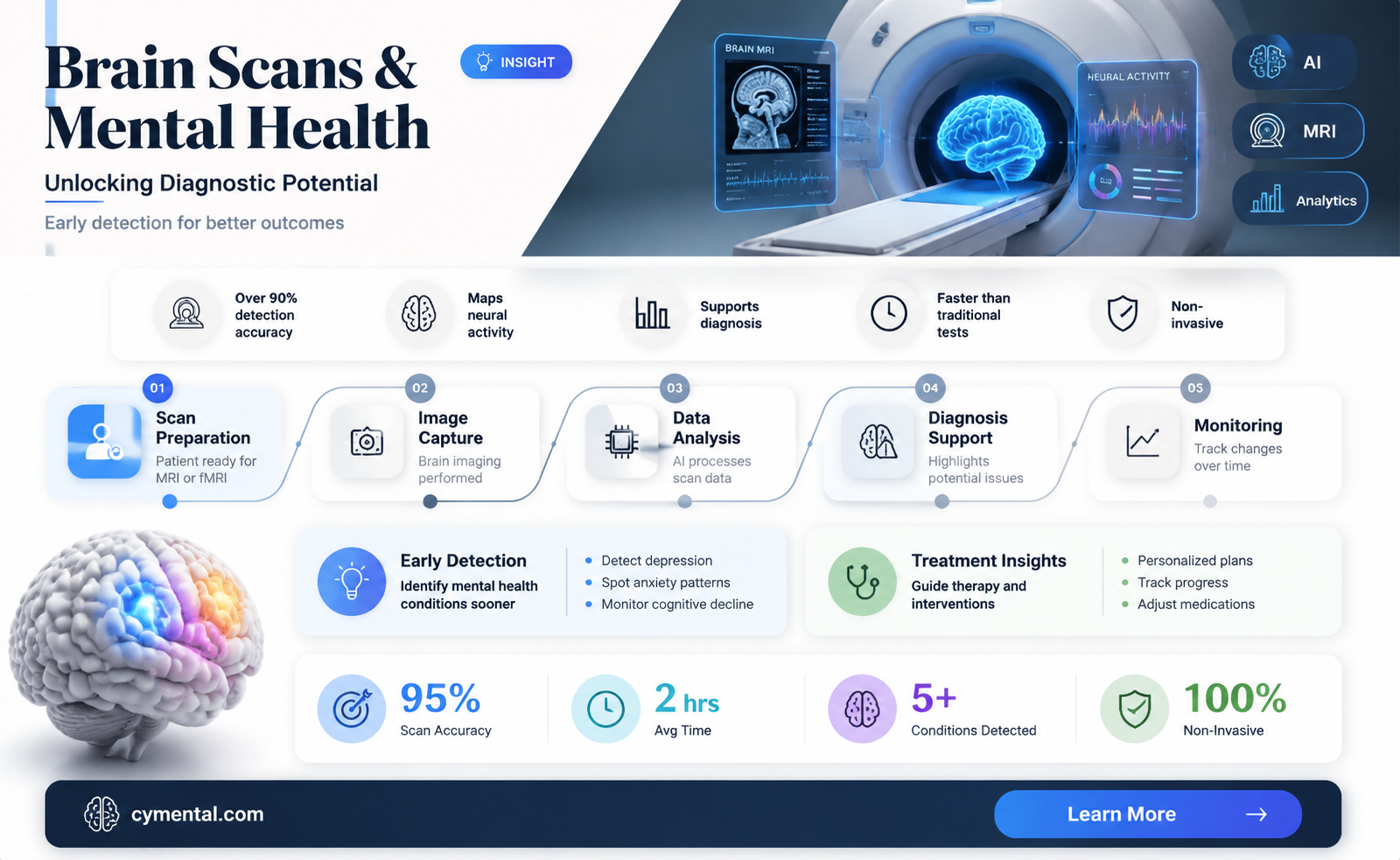
Brain scans, such as MRI, fMRI, and PET scans, have emerged as valuable tools in the field of mental health, offering insights into the structure and function of the brain. While they cannot yet definitively diagnose mental illnesses like depression, schizophrenia, or anxiety disorders, they provide crucial information about neural activity, connectivity, and abnormalities that may correlate with specific conditions. By identifying patterns or markers associated with mental disorders, brain scans can complement traditional diagnostic methods, such as clinical interviews and psychological assessments, potentially leading to earlier and more accurate diagnoses. However, their use remains a topic of debate, as the complexity of mental illness often involves factors beyond what imaging can capture, and ethical considerations around privacy and interpretation persist. Despite these challenges, ongoing research continues to explore how brain scans might revolutionize the way we understand and treat mental health disorders.
Explore related products




What You'll Learn
- Accuracy of brain scans in identifying mental health disorders
- Limitations of current brain imaging technologies in diagnosis
- Ethical concerns in using brain scans for mental illness diagnosis
- Role of brain scans in differentiating between similar conditions
- Potential future advancements in brain scan diagnostics for mental health

Accuracy of brain scans in identifying mental health disorders
Brain scans, such as MRI, fMRI, and PET, have emerged as promising tools in the quest to diagnose mental health disorders more objectively. These technologies can reveal structural and functional abnormalities in the brain, offering a glimpse into the biological underpinnings of conditions like depression, schizophrenia, and ADHD. For instance, studies have shown that individuals with major depressive disorder often exhibit reduced hippocampal volume, a finding that has been replicated across multiple research cohorts. Similarly, hyperactivity in the amygdala has been linked to anxiety disorders, providing a potential biomarker for diagnosis. These examples suggest that brain scans can indeed identify distinct neural signatures associated with specific mental health conditions.
However, the accuracy of brain scans in diagnosing mental health disorders is not without limitations. One major challenge is the overlap of brain abnormalities across different disorders. For example, both schizophrenia and bipolar disorder are associated with reduced gray matter volume in the prefrontal cortex, making it difficult to differentiate between the two based on imaging alone. Additionally, many studies report high variability in findings, which may stem from differences in sample size, imaging protocols, or even the heterogeneity of the disorders themselves. This variability underscores the need for standardized imaging techniques and larger, more diverse datasets to improve diagnostic precision.
To enhance the accuracy of brain scans, researchers are exploring advanced analytical methods, such as machine learning algorithms. These tools can identify complex patterns in brain imaging data that may not be apparent through traditional analysis. For instance, a 2020 study used machine learning to classify individuals with autism spectrum disorder based on functional connectivity patterns with 70% accuracy. While this represents progress, it also highlights the current limitations—a 70% accuracy rate is insufficient for clinical diagnosis without additional validation. Practitioners must therefore integrate brain scan data with clinical assessments, behavioral observations, and patient history to make informed diagnoses.
Another critical factor in the accuracy of brain scans is the context in which they are used. For pediatric populations, for example, interpreting brain imaging results is particularly complex due to ongoing brain development. A child’s brain undergoes significant structural and functional changes until early adulthood, making it challenging to distinguish between typical developmental variations and pathological abnormalities. In such cases, longitudinal imaging studies—tracking brain changes over time—may provide more reliable insights. For adults, factors like medication use, comorbid conditions, and lifestyle habits (e.g., substance use) can also influence scan results, necessitating careful consideration of these variables.
In conclusion, while brain scans hold significant potential for identifying mental health disorders, their accuracy remains a work in progress. Current evidence supports their use as complementary tools rather than standalone diagnostic methods. Clinicians and researchers must navigate the complexities of interpreting imaging data, from addressing variability across studies to accounting for individual differences. As technology advances and our understanding of the brain deepens, brain scans may one day become a cornerstone of mental health diagnosis—but for now, they serve as valuable, if imperfect, aids in the broader diagnostic toolkit.
Finding Support: A Guide to Getting Help for Schizophrenia
You may want to see also
Explore related products


Limitations of current brain imaging technologies in diagnosis
Brain imaging technologies, such as MRI and fMRI, have been hailed as revolutionary tools in understanding mental illness. However, their diagnostic utility remains limited by several critical factors. One major constraint is the lack of specificity in identifying mental health disorders. For instance, while abnormalities in the amygdala or prefrontal cortex may be observed in individuals with depression or anxiety, these same patterns can also appear in people without any diagnosable condition. This overlap complicates the use of brain scans as a definitive diagnostic tool, as they cannot reliably distinguish between disorders or even between affected and unaffected individuals.
Another limitation lies in the temporal resolution of current imaging techniques. Mental illnesses are dynamic conditions, with symptoms fluctuating over time and in response to environmental factors. Technologies like fMRI capture brain activity in snapshots, typically over seconds or minutes, which fails to account for the chronic, evolving nature of disorders such as schizophrenia or bipolar disorder. Without the ability to track long-term changes or predict symptom progression, brain scans offer only a fragmented view of the underlying neurobiology, limiting their diagnostic value.
Practical considerations further hinder the widespread application of brain imaging in mental health diagnosis. The cost of advanced imaging technologies, such as PET scans or diffusion tensor imaging (DTI), remains prohibitively high for routine clinical use. Additionally, these procedures often require specialized expertise to interpret results, which is not universally available. For example, a PET scan using a radiotracer like [^18F]fluorodeoxyglucose (FDG) to measure glucose metabolism in the brain costs upwards of $3,000 and necessitates a trained nuclear medicine physician for analysis. These barriers restrict access and limit the feasibility of integrating brain imaging into standard diagnostic protocols.
Finally, the ethical implications of relying on brain scans for diagnosis cannot be overlooked. Misinterpretation of imaging results could lead to stigmatization or overmedicalization of mental health conditions. For instance, if a patient’s scan shows atypical brain activity, they might be labeled with a disorder prematurely, potentially influencing treatment decisions or insurance coverage. Clinicians must balance the allure of objective, biological data with the subjective, multifaceted nature of mental illness, ensuring that imaging remains a complementary tool rather than a standalone diagnostic criterion.
In summary, while brain imaging technologies offer valuable insights into the neurobiological underpinnings of mental illness, their limitations in specificity, temporal resolution, practicality, and ethical considerations restrict their current diagnostic utility. Addressing these challenges will require advancements in technology, accessibility, and interpretative frameworks to ensure their effective integration into mental health care.
First Responders' Mental Health: Personal Struggles and Support Solutions
You may want to see also
Explore related products


Ethical concerns in using brain scans for mental illness diagnosis
Brain scans, such as fMRI and PET, have been touted as potential tools for diagnosing mental illnesses by identifying neural patterns associated with conditions like depression or schizophrenia. However, their use raises significant ethical concerns that must be carefully navigated. One primary issue is the risk of misinterpretation. Brain imaging data is complex and often open to multiple interpretations, which can lead to misdiagnosis. For instance, a study published in *Nature* highlighted that up to 20% of fMRI results may yield false positives due to methodological limitations. Misdiagnosis could result in inappropriate treatment, such as unnecessary medication or therapy, exacerbating patient distress and eroding trust in psychiatric care.
Another ethical concern is privacy and data protection. Brain scans generate highly sensitive data that could reveal not only mental health conditions but also personal traits, such as cognitive abilities or predispositions to certain behaviors. Without robust safeguards, this information could be misused by employers, insurers, or law enforcement, leading to discrimination or stigmatization. For example, a person flagged as having a "predisposition to aggression" based on a brain scan might face unfair prejudice in hiring or legal contexts. Ensuring secure storage and anonymization of such data is critical but remains a challenge in practice.
The potential for over-reliance on technology also poses ethical dilemmas. If brain scans become the gold standard for diagnosis, there is a risk of devaluing clinical judgment and patient narratives. Mental health is inherently subjective, and reducing it to biological markers alone could overlook the social, environmental, and psychological factors that contribute to illness. For instance, a teenager’s depression might stem from familial conflict rather than a detectable neural anomaly, yet a scan-focused approach might miss this context. Balancing technological insights with holistic assessment is essential to ethical practice.
Finally, accessibility and equity are pressing concerns. Advanced brain imaging technologies are expensive and often unavailable in underserved regions, creating a diagnostic divide. Wealthier patients might benefit from cutting-edge scans, while others rely on less precise methods, perpetuating healthcare disparities. Additionally, marginalized groups, such as racial minorities or those with lower socioeconomic status, may face greater scrutiny or misuse of their brain data due to systemic biases. Policymakers must address these inequities to ensure ethical implementation of brain scans in mental health diagnosis.
In summary, while brain scans hold promise for mental illness diagnosis, their ethical implications demand careful consideration. From the risks of misinterpretation and privacy breaches to the dangers of over-reliance on technology and inequitable access, each concern underscores the need for rigorous oversight and patient-centered approaches. As this technology evolves, ethical frameworks must evolve in tandem to protect individuals and uphold the integrity of mental healthcare.
Revitalize Your Mind: Strategies to Overcome Mental Exhaustion Effectively
You may want to see also
Explore related products





Role of brain scans in differentiating between similar conditions
Brain scans, such as MRI and fMRI, have emerged as powerful tools in mental health diagnostics, particularly in distinguishing between conditions with overlapping symptoms. For instance, depression and bipolar disorder often present with similar mood disturbances, yet their treatment pathways diverge significantly. Here, brain imaging can reveal distinct neural signatures: bipolar disorder may show hyperactive amygdala responses to emotional stimuli, while depression often correlates with reduced hippocampal volume. These differences, though subtle, can guide clinicians toward more accurate diagnoses and tailored interventions.
Consider the case of ADHD and autism spectrum disorder (ASD), both characterized by social and attentional challenges. Structural MRI studies have identified thicker cortical regions in certain brain areas in individuals with ASD compared to those with ADHD, who often exhibit reduced volume in the basal ganglia. Such findings underscore the potential of brain scans to clarify diagnoses in complex cases, especially in children where behavioral symptoms may be less defined. However, interpreting these results requires expertise, as variability in brain structure and function can be influenced by factors like age, genetics, and environmental exposures.
To leverage brain scans effectively, clinicians must follow a systematic approach. First, identify the specific conditions in question and their known neurobiological markers. For example, schizophrenia and schizoaffective disorder share psychotic features but differ in emotional symptomology, with the latter showing more pronounced limbic system abnormalities on fMRI. Second, integrate scan results with clinical history and behavioral assessments to avoid over-reliance on imaging alone. Third, stay updated on evolving research, as new markers (e.g., functional connectivity patterns in PTSD vs. generalized anxiety disorder) continually refine diagnostic precision.
Despite their promise, brain scans are not without limitations. False positives and negatives can occur, particularly in conditions like borderline personality disorder and complex PTSD, where neural correlates are less established. Additionally, cost and accessibility remain barriers, limiting widespread use in routine practice. Practitioners must balance the benefits of enhanced diagnostic clarity with practical considerations, reserving scans for cases where differentiation is critical for treatment planning. When used judiciously, brain imaging can transform diagnostic ambiguity into actionable insights, improving outcomes for patients with closely related mental health conditions.
Mental Therapists and SSI Disability: Can Therapy Strengthen Your Claim?
You may want to see also
Explore related products


Potential future advancements in brain scan diagnostics for mental health
Brain scans, such as MRI and fMRI, have already begun to reveal patterns associated with conditions like depression, schizophrenia, and ADHD. However, current diagnostic accuracy remains limited due to the complexity of mental illnesses and the variability of individual brain structures. Future advancements will likely focus on refining these patterns through large-scale data aggregation and machine learning algorithms. By analyzing thousands of scans across diverse populations, researchers could identify subtle biomarkers that distinguish not only between mental illnesses but also between subtypes within a single diagnosis. For instance, depression might be categorized based on neural circuit activity rather than self-reported symptoms alone, enabling more targeted treatments.
One promising avenue is the integration of multimodal imaging techniques. Combining structural MRI, functional MRI, and diffusion tensor imaging (DTI) could provide a comprehensive view of brain anatomy, activity, and connectivity. For example, DTI could reveal disruptions in white matter tracts associated with conditions like bipolar disorder, while fMRI could highlight abnormal activation patterns during emotional tasks. This layered approach would move beyond single-modality limitations, offering a richer diagnostic profile. Clinicians could then correlate these findings with genetic data, lifestyle factors, and symptom severity to create personalized treatment plans.
Advancements in real-time imaging and portable technology could revolutionize accessibility. Imagine a future where handheld, low-cost fMRI devices allow for point-of-care diagnostics in primary care settings or even at home. Such devices could monitor neural changes over time, providing early warning signs of relapse or treatment resistance. For instance, a patient with PTSD might use a portable scanner to track amygdala activity during stress, adjusting therapy or medication proactively. This shift would democratize mental health care, particularly in underserved regions where specialist access is limited.
Ethical considerations will be paramount as these technologies evolve. Clear guidelines must address data privacy, consent, and the potential for misuse, such as stigmatization or insurance discrimination based on brain scan results. Additionally, ensuring equitable access to advanced diagnostics will be critical to avoid exacerbating healthcare disparities. Policymakers, clinicians, and technologists must collaborate to establish frameworks that prioritize patient autonomy and fairness while fostering innovation.
In conclusion, the future of brain scan diagnostics in mental health holds immense potential but requires careful navigation. By leveraging multimodal imaging, portable technology, and ethical frameworks, we can transform mental illness diagnosis from a subjective art to a precise science. This shift could not only improve treatment outcomes but also reduce the societal burden of misdiagnosis and delayed intervention. The journey is complex, but the destination—a world where mental health care is as personalized and accessible as physical health care—is worth pursuing.
Supporting Mental Health: Effective Ways to Help Someone in Need
You may want to see also
Frequently asked questions
No, brain scans cannot definitively diagnose mental illness on their own. They are tools that provide additional information but are not conclusive. Diagnosis typically relies on clinical assessments, symptoms, and behavioral observations.
Common brain scans used include MRI (Magnetic Resonance Imaging), fMRI (functional MRI), PET (Positron Emission Tomography), and CT (Computed Tomography) scans. Each provides different insights into brain structure, function, and activity.
Brain scans can reveal abnormalities in brain structure, activity, or chemical processes that may be associated with mental illness. They help researchers and clinicians identify patterns linked to conditions like depression, schizophrenia, or ADHD.
In most cases, brain scans are not necessary for diagnosing mental illness. They are typically used in research or when there is a need to rule out other neurological conditions, such as tumors or injuries.
While brain scans can identify certain biomarkers or patterns associated with mental illness, they cannot reliably predict who will develop a condition. Prediction remains complex due to the interplay of genetic, environmental, and lifestyle factors.