Harper Lewis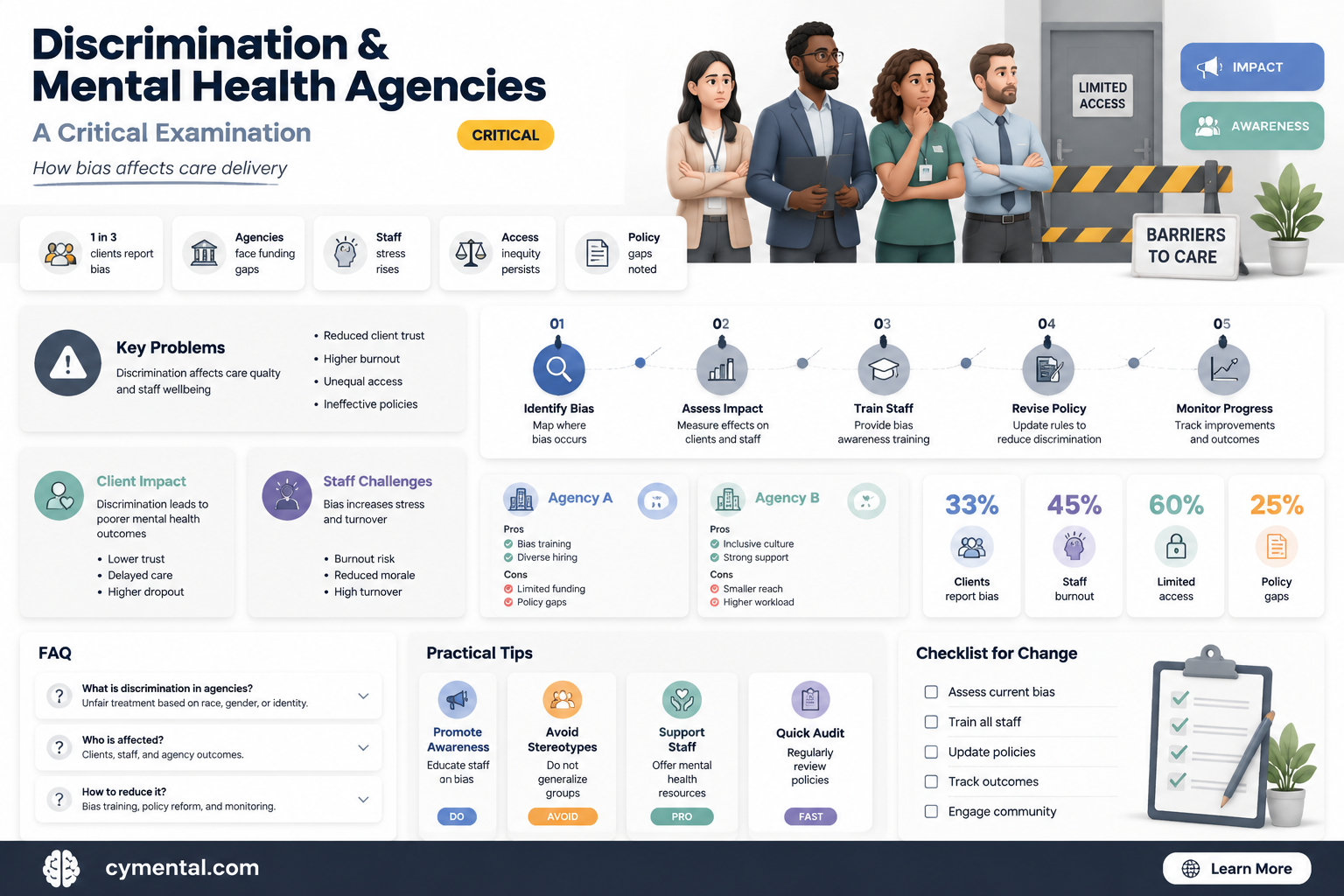
Discrimination can significantly impact the functioning of a mental health agency. When discrimination is present, it can create a hostile environment that affects both the staff and the clients. For clients, discrimination can lead to feelings of mistrust, anxiety, and depression, making it more challenging for them to seek and receive the care they need. For staff, discrimination can result in decreased job satisfaction, increased stress, and a higher likelihood of burnout. Furthermore, discrimination can also limit the agency's ability to attract and retain a diverse workforce, which is essential for providing culturally competent care. Therefore, it is crucial for mental health agencies to address and eliminate discrimination to ensure that they can effectively serve their communities.
Explore related products


$71.95 $89.95

$21.77 $24.95


What You'll Learn
- Stigmatization of Clients: Discrimination can lead to clients feeling stigmatized, affecting their willingness to seek help
- Staff Bias and Training: Unconscious biases among staff can impact client care, necessitating comprehensive diversity training
- Resource Allocation: Discrimination may influence how resources are allocated, potentially neglecting certain community needs
- Community Trust: Discriminatory practices can erode trust within the community, making outreach and engagement challenging
- Legal and Ethical Implications: Discrimination violates ethical guidelines and can result in legal repercussions for the agency

Stigmatization of Clients: Discrimination can lead to clients feeling stigmatized, affecting their willingness to seek help
Stigmatization of clients is a profound issue that can significantly impact the functioning of a mental health agency. When clients feel discriminated against, they may experience a deep sense of shame and isolation, which can deter them from seeking the help they need. This reluctance to engage with mental health services can lead to a decline in the overall well-being of the community the agency serves.
One of the primary ways discrimination can lead to stigmatization is through the perpetuation of harmful stereotypes and biases. Mental health professionals must be vigilant in recognizing and challenging these attitudes within themselves and their practice settings. By fostering an environment of inclusivity and respect, agencies can begin to break down the barriers that prevent clients from accessing care.
Moreover, discrimination can also manifest in more subtle forms, such as through the use of language that inadvertently marginalizes certain groups. Mental health agencies must ensure that their communication materials and interactions with clients are free from such biases. This includes using gender-neutral language, avoiding assumptions based on race or ethnicity, and being mindful of the diverse experiences and backgrounds of their clientele.
To effectively address the issue of stigmatization, mental health agencies should implement comprehensive training programs for their staff. These programs should focus on increasing awareness of the various forms of discrimination, as well as providing strategies for creating a more welcoming and supportive environment for all clients. Additionally, agencies should actively seek feedback from clients to better understand their experiences and identify areas for improvement.
Ultimately, the key to combating stigmatization lies in promoting a culture of empathy and understanding. By prioritizing the dignity and worth of each individual, mental health agencies can help to reduce the negative impact of discrimination and encourage more people to seek the help they need. This not only benefits the clients themselves but also strengthens the overall effectiveness and reach of the agency's services.
The Pandemic's Impact: Unraveling the Mental Health Consequences
You may want to see also
Explore related products


Staff Bias and Training: Unconscious biases among staff can impact client care, necessitating comprehensive diversity training
Unconscious biases among staff can significantly impact client care in mental health agencies. These biases, often ingrained and unrecognized, can lead to discriminatory practices that affect the quality of care provided to clients. For instance, a staff member's implicit bias against a particular racial group may influence their diagnostic decisions, treatment plans, and interactions with clients, potentially leading to misdiagnosis or inadequate care.
Comprehensive diversity training is essential to address these issues. Such training should be designed to increase staff awareness of their own biases, provide education on the impact of these biases on client care, and offer strategies to mitigate them. Effective training programs often include interactive workshops, case studies, and role-playing exercises that allow staff to practice recognizing and addressing biases in real-life scenarios.
Moreover, diversity training should be an ongoing process, rather than a one-time event. Regular refresher courses and continuous education can help staff stay updated on the latest research and best practices in addressing unconscious biases. Additionally, agencies should consider implementing policies and procedures that promote diversity and inclusion, such as diverse hiring practices, cultural competency assessments, and client feedback mechanisms to ensure that care is equitable and respectful of all clients' backgrounds.
In conclusion, addressing staff bias through comprehensive diversity training is crucial for ensuring that mental health agencies provide high-quality, equitable care to all clients. By fostering a culture of awareness, education, and continuous improvement, agencies can mitigate the negative impacts of unconscious biases and create a more inclusive and supportive environment for both staff and clients.
Exploring the Complex Factors That Influence Mental Health
You may want to see also
Explore related products


Resource Allocation: Discrimination may influence how resources are allocated, potentially neglecting certain community needs
Discrimination can significantly impact the allocation of resources within a mental health agency, leading to disparities in service provision and potentially neglecting the needs of certain community groups. This issue arises when biases and stereotypes influence decision-making processes, resulting in an unequal distribution of funds, personnel, and facilities. For instance, a study by the National Institute of Mental Health found that minority communities often receive fewer mental health services and have higher rates of unmet mental health needs compared to their white counterparts. This disparity can be attributed to systemic discrimination that prioritizes the needs of dominant groups over those of marginalized communities.
One of the primary ways discrimination affects resource allocation is through the perpetuation of harmful stereotypes and biases. These attitudes can lead agency administrators to make assumptions about the mental health needs of different groups, resulting in the misallocation of resources. For example, if a mental health agency believes that a particular community group is more prone to substance abuse, they may allocate more resources to substance abuse treatment programs, even if the actual needs of the community are different. This misallocation can result in inadequate support for other mental health issues, such as depression or anxiety, which may be more prevalent in that community.
Furthermore, discrimination can also influence the hiring and training practices of mental health agencies, leading to a workforce that lacks diversity and cultural competence. This can exacerbate the problem of resource misallocation, as staff members may not be equipped to understand and address the unique needs of diverse community groups. For instance, if a mental health agency primarily hires staff from a single cultural background, they may not have the necessary expertise to provide culturally sensitive care to clients from other backgrounds. This can lead to a lack of trust and engagement between clients and providers, ultimately resulting in poor mental health outcomes.
To address these issues, mental health agencies must take proactive steps to identify and eliminate discriminatory practices in resource allocation. This can involve conducting regular audits of resource distribution, implementing diversity and inclusion training for staff, and engaging with community groups to better understand their mental health needs. By taking these steps, agencies can work towards creating a more equitable and inclusive mental health care system that meets the needs of all community members.
Exploring the Impact of Concussions on Cognitive Function
You may want to see also
Explore related products

$12.99


Community Trust: Discriminatory practices can erode trust within the community, making outreach and engagement challenging
Discriminatory practices within a mental health agency can significantly undermine community trust, creating barriers to effective outreach and engagement. This erosion of trust is often a gradual process, beginning with subtle biases and stereotypes that permeate the agency's culture and interactions with clients. Over time, these biases can manifest in overt discrimination, leading to a breakdown in communication and a decline in the community's willingness to seek services from the agency.
One of the primary ways in which discriminatory practices erode trust is by creating an environment where individuals from marginalized groups feel unsafe and unwelcome. This can be particularly damaging in the context of mental health services, where clients are often in a vulnerable state and require a safe space to discuss their concerns. When clients perceive that they are being judged or mistreated based on their race, ethnicity, gender, or other characteristics, they are less likely to engage openly and honestly with their providers, which can hinder their treatment and recovery.
Furthermore, discriminatory practices can lead to disparities in access to care and treatment outcomes. When certain groups are systematically denied services or receive lower quality care, word spreads within the community, further damaging trust and deterring others from seeking help. This can have a ripple effect, as individuals who are unable to access mental health services may experience worsening symptoms, which can impact their ability to function in daily life and contribute to the overall well-being of the community.
Rebuilding trust in the aftermath of discriminatory practices is a challenging but essential task for mental health agencies. It requires a multifaceted approach that includes acknowledging past wrongs, implementing policies and procedures to prevent discrimination, and actively engaging with the community to demonstrate a commitment to inclusivity and equity. Agencies must also invest in training their staff to recognize and address biases, and to create a culture that values diversity and promotes respect for all clients.
Ultimately, the impact of discriminatory practices on community trust cannot be overstated. By fostering an environment of inclusivity and respect, mental health agencies can begin to rebuild trust and ensure that all members of the community have access to the care they need. This is not only a moral imperative but also a practical one, as agencies that fail to address discrimination may find themselves increasingly isolated and unable to fulfill their mission of promoting mental health and well-being.
Boost Your Mood: The Power of Physical Activity on Mental Health
You may want to see also
Explore related products

Legal and Ethical Implications: Discrimination violates ethical guidelines and can result in legal repercussions for the agency
Discrimination within a mental health agency not only compromises the ethical standards of the profession but also exposes the agency to significant legal risks. Ethical guidelines, such as those outlined by the American Psychological Association (APA) and the National Association of Social Workers (NASW), explicitly prohibit discrimination based on race, ethnicity, gender, sexual orientation, and other protected characteristics. Violating these guidelines can lead to disciplinary actions, including revocation of licenses and professional censure.
From a legal standpoint, discrimination can result in lawsuits filed under federal and state anti-discrimination laws, such as Title VII of the Civil Rights Act of 1964 and the Americans with Disabilities Act (ADA). These laws protect individuals from discrimination in employment and public accommodations, including mental health services. Agencies found guilty of discrimination may face substantial financial penalties, injunctions to cease discriminatory practices, and mandatory training programs to prevent future violations.
Moreover, discrimination can undermine the agency's functioning by creating a hostile work environment, leading to high turnover rates among staff and a decline in the quality of care provided to clients. A diverse and inclusive workplace is essential for attracting and retaining talented professionals and ensuring that clients receive culturally competent care. Discrimination can also damage the agency's reputation, making it difficult to secure funding, partnerships, and community support.
To mitigate these risks, mental health agencies should implement comprehensive anti-discrimination policies and training programs. These initiatives should focus on raising awareness about implicit bias, promoting cultural competence, and fostering an inclusive organizational culture. Regular audits and evaluations can help identify and address potential discriminatory practices before they lead to legal and ethical consequences.
In conclusion, discrimination within a mental health agency has far-reaching implications that extend beyond the immediate harm caused to individuals. By violating ethical guidelines and legal protections, agencies risk compromising their operations, reputation, and ability to provide effective care. Proactive measures to prevent discrimination are essential for ensuring the well-being of both staff and clients and maintaining the integrity of the mental health profession.
Unraveling the Complex Web: Addiction's Impact on Mental Health
You may want to see also
Frequently asked questions
Yes, discrimination can significantly impact the functioning of a mental health agency. It can lead to a hostile work environment, reduce staff morale, and hinder the agency's ability to provide effective and inclusive services to diverse populations.
Discrimination in a mental health agency can take various forms, including racial, ethnic, gender, sexual orientation, age, and disability discrimination. These can manifest in hiring practices, promotion opportunities, client treatment, and workplace culture.
Discrimination can lead to increased stress, anxiety, and depression among agency staff. It can also result in feelings of isolation, decreased job satisfaction, and a higher likelihood of burnout, ultimately affecting their overall mental health and well-being.
To address discrimination, a mental health agency can implement diversity and inclusion training, establish clear anti-discrimination policies, promote open communication, and ensure fair hiring and promotion practices. Additionally, creating a supportive environment that values diversity can help mitigate the negative effects of discrimination.