Madison Cole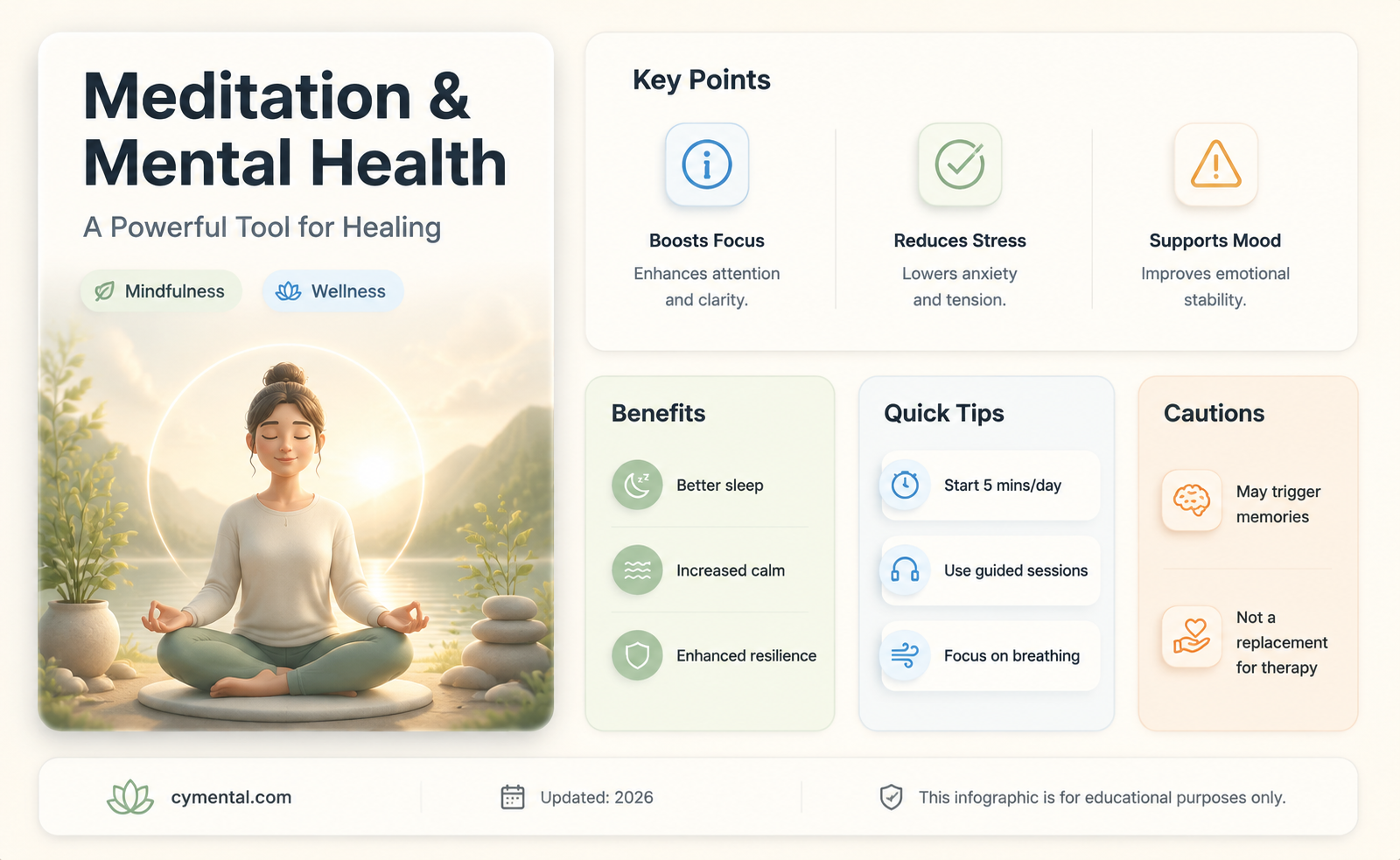
Meditation has gained significant attention as a potential tool for managing mental illness, with many claiming it can reduce symptoms of anxiety, depression, and stress. While it is not a replacement for professional treatment, research suggests that regular meditation practice may complement traditional therapies by promoting mindfulness, emotional regulation, and overall well-being. Studies have shown that techniques like mindfulness-based stress reduction (MBSR) and loving-kindness meditation can positively impact brain function and reduce the severity of mental health symptoms. However, its effectiveness varies from person to person, and it is essential to approach meditation as one part of a comprehensive mental health strategy rather than a standalone cure.
| Characteristics | Values |
|---|---|
| Reduces Stress | Meditation activates the parasympathetic nervous system, lowering cortisol levels and reducing symptoms of anxiety and stress. |
| Improves Mood | Regular practice increases serotonin and dopamine, enhancing emotional well-being and reducing symptoms of depression. |
| Enhances Focus | Mindfulness meditation improves attention and cognitive flexibility, benefiting conditions like ADHD. |
| Regulates Emotions | Meditation fosters emotional regulation, reducing reactivity and improving resilience in conditions like borderline personality disorder. |
| Alleviates Anxiety | Techniques like mindfulness-based stress reduction (MBSR) have been shown to reduce anxiety symptoms significantly. |
| Supports PTSD Recovery | Mindfulness-based interventions help reduce hyperarousal and intrusive thoughts in PTSD patients. |
| Complements Therapy | Meditation is often used alongside traditional therapies (e.g., CBT) to enhance treatment outcomes. |
| Promotes Neuroplasticity | Regular meditation increases gray matter density in areas associated with memory, empathy, and stress regulation. |
| Reduces Insomnia | Mindfulness practices improve sleep quality by calming the mind and reducing racing thoughts. |
| Not a Standalone Cure | While beneficial, meditation should not replace professional treatment for severe mental illnesses. |
| Individual Variability | Effectiveness varies based on the type of meditation, consistency, and individual mental health conditions. |
| Evidence-Based Support | Numerous studies (e.g., from JAMA Psychiatry, Lancet) support meditation's positive impact on mental health. |
Explore related products


What You'll Learn

Meditation's Impact on Anxiety Reduction
Anxiety disorders affect over 40 million adults in the United States alone, making it the most common mental illness in the country. Amidst the myriad of treatments, meditation has emerged as a promising, non-invasive tool for anxiety reduction. Research from institutions like Harvard Medical School and Johns Hopkins University suggests that consistent meditation practice can decrease anxiety symptoms by altering the brain’s neural pathways associated with stress. Specifically, mindfulness meditation, which focuses on present-moment awareness, has been shown to reduce activity in the amygdala, the brain’s "fight or flight" center, while increasing connectivity in the prefrontal cortex, responsible for rational decision-making.
To harness meditation’s anxiety-reducing benefits, start with a daily practice of 10–20 minutes. Beginners can use guided meditation apps like Headspace or Calm, which offer structured sessions tailored to anxiety relief. Techniques such as deep breathing exercises, body scans, or loving-kindness meditation are particularly effective. For instance, box breathing—inhale for 4 seconds, hold for 4 seconds, exhale for 4 seconds, and pause for 4 seconds—can be practiced anytime to calm the nervous system. Consistency is key; studies show that 8 weeks of regular practice can lead to measurable reductions in anxiety levels, as evidenced by lower cortisol levels and improved self-reported symptoms.
While meditation is not a cure-all, it complements traditional treatments like therapy and medication. A meta-analysis published in *JAMA Internal Medicine* found that mindfulness meditation programs had moderate evidence of improved anxiety levels, comparable to the effects of antidepressants in some cases. However, it’s crucial to approach meditation as a long-term practice rather than a quick fix. For individuals with severe anxiety or trauma, meditation should be introduced cautiously and under professional guidance, as it can sometimes bring suppressed emotions to the surface.
One practical tip for integrating meditation into daily life is to anchor it to existing routines. For example, meditate immediately after brushing your teeth in the morning or before dinner. For those who struggle with sitting still, walking meditation—focusing on each step and breath while moving slowly—can be equally effective. Additionally, combining meditation with physical activity, such as yoga, enhances its anxiety-reducing effects by addressing both mental and physical tension.
In conclusion, meditation’s impact on anxiety reduction is supported by both scientific research and anecdotal evidence. By dedicating a small portion of each day to mindfulness practices, individuals can rewire their brains to respond more calmly to stressors. While it may not replace conventional treatments, meditation offers a powerful, accessible tool for managing anxiety and fostering overall mental well-being. Start small, stay consistent, and let the practice evolve with your needs.
Medications for Mental Illness: A Helpful Treatment or Not?
You may want to see also
Explore related products



Mindfulness for Depression Management
Depression often manifests as a relentless cycle of negative thoughts and emotional numbness, making it difficult to break free from its grip. Mindfulness, rooted in the practice of present-moment awareness, offers a unique approach to disrupting this cycle. By cultivating non-judgmental attention to thoughts, feelings, and bodily sensations, individuals can observe their depressive patterns without becoming entangled in them. This shift in perspective doesn't eliminate depression but provides a mental space to manage its symptoms more effectively.
Consider a simple mindfulness exercise: sit quietly, close your eyes, and focus on your breath. Notice the sensation of air entering and leaving your nostrils. When your mind wanders (which it inevitably will), gently bring your attention back to the breath. This practice, done for 10–20 minutes daily, trains the brain to stay grounded in the present, reducing the tendency to ruminate on past regrets or future anxieties—common triggers for depressive episodes. Research suggests that consistent mindfulness practice can alter brain structures associated with mood regulation, such as the prefrontal cortex and amygdala, offering a neurological basis for its effectiveness.
However, mindfulness isn’t a one-size-fits-all solution. For some, the act of observing their thoughts can initially heighten distress, especially if they’re new to the practice or experiencing severe depression. It’s crucial to approach mindfulness with patience and self-compassion, avoiding the trap of self-criticism if the mind resists focus. Pairing mindfulness with professional therapy, such as Cognitive Behavioral Therapy (CBT), can enhance its benefits, providing structured guidance to navigate the emotional challenges that may arise.
Practical integration is key. Start small—incorporate mindful breathing during daily activities like brushing your teeth or walking. Use guided apps or recordings if solo practice feels daunting. For those in group settings, mindfulness-based cognitive therapy (MBCT) programs, typically 8-week courses, offer a supportive environment to learn and apply these techniques. Remember, mindfulness for depression management is not about achieving a state of perpetual calm but about building resilience to face emotional turbulence with clarity and kindness.
Moving Out: A Mental Health Boost or Added Stress?
You may want to see also
Explore related products

$8.44 $14.99


$29.69 $29.99

$17.79 $29.99


Stress Relief Through Meditation Practices
Meditation has been shown to reduce cortisol levels, the body’s primary stress hormone, by up to 20% in regular practitioners, according to studies from Harvard Medical School. This physiological change underscores its effectiveness as a stress-relief tool. Unlike quick fixes like caffeine or screen time, meditation addresses stress at its root by calming the nervous system and promoting mindfulness. For those grappling with mental illness, this can be a game-changer, offering a natural, accessible way to manage symptoms without relying solely on medication or therapy.
To begin, find a quiet space and set aside 10–15 minutes daily. Start with a simple technique like focused attention meditation: sit comfortably, close your eyes, and concentrate on your breath. When your mind wanders (which it will), gently bring it back to the sensation of inhaling and exhaling. Consistency is key—practicing at the same time each day, such as first thing in the morning or before bed, helps build a habit. For beginners, guided meditation apps like Headspace or Calm can provide structure and variety, ensuring you stay engaged without feeling overwhelmed.
While meditation is widely beneficial, it’s not a one-size-fits-all solution. Individuals with severe anxiety or PTSD may find certain practices, like breathwork, triggering if not approached carefully. In such cases, working with a trained therapist to tailor techniques can prevent adverse reactions. Additionally, meditation should complement, not replace, professional treatment for mental illness. Combining it with therapy or medication often yields the best results, creating a holistic approach to mental health management.
The beauty of meditation lies in its adaptability. For stress relief, techniques like progressive muscle relaxation or loving-kindness meditation can be particularly effective. Progressive muscle relaxation involves tensing and releasing different muscle groups while focusing on the sensation, helping to physically release tension. Loving-kindness meditation, on the other hand, cultivates compassion toward oneself and others, reducing stress by fostering positive emotions. Experimenting with these methods allows you to discover what works best for your unique needs.
Incorporating meditation into daily life doesn’t require a monastic commitment. Even micro-meditations—brief, 2–3 minute pauses to focus on your breath—can interrupt stress cycles throughout the day. Pairing meditation with other stress-reducing activities, like walking or journaling, amplifies its benefits. Over time, regular practice can rewire the brain’s stress response, making you more resilient to life’s challenges. For those struggling with mental illness, this can mean fewer stress-induced flare-ups and a greater sense of control over their well-being.
Supporting Through Crisis: Texting Tips for Mental Breakdown Assistance
You may want to see also
Explore related products


Meditation and PTSD Symptom Improvement
Post-traumatic stress disorder (PTSD) often leaves individuals grappling with intrusive memories, hyperarousal, and emotional numbing. Meditation, particularly mindfulness-based practices, has emerged as a promising adjunctive therapy. Studies show that mindfulness meditation can reduce the severity of PTSD symptoms by fostering greater emotional regulation and decreasing reactivity to traumatic triggers. For instance, a randomized controlled trial published in *JAMA Psychiatry* found that veterans practicing mindfulness meditation experienced a 14% greater reduction in PTSD symptom severity compared to those receiving standard care alone. This suggests that meditation, when integrated into a comprehensive treatment plan, can offer tangible benefits for those struggling with PTSD.
To harness meditation’s potential for PTSD symptom improvement, consistency is key. Aim for 20–30 minutes of daily practice, focusing on techniques like body scans, mindful breathing, or loving-kindness meditation. These practices help individuals ground themselves in the present moment, disrupting the cycle of rumination and fear. For beginners, guided meditations—available through apps like Headspace or Calm—can provide structure and support. It’s also crucial to approach meditation with patience; progress may be gradual, and some days will feel more challenging than others. Remember, the goal isn’t to eliminate thoughts or emotions but to observe them without judgment.
One of the most compelling aspects of meditation for PTSD is its ability to alter brain function. Neuroimaging studies reveal that regular meditation practice increases activity in the prefrontal cortex, the brain’s center for decision-making and emotional regulation, while decreasing activity in the amygdala, which drives fear responses. This neurological shift can help individuals respond to trauma-related cues with greater calm and clarity. For example, a study in *Depression and Anxiety* found that mindfulness meditation led to measurable changes in brain regions associated with PTSD symptoms, even after just eight weeks of practice. Such findings underscore meditation’s role as a tool for both symptom management and long-term brain health.
While meditation shows promise, it’s not a standalone cure for PTSD. It works best when paired with evidence-based therapies like cognitive behavioral therapy (CBT) or eye movement desensitization and reprocessing (EMDR). Additionally, individuals with severe PTSD should consult a mental health professional before starting a meditation practice, as certain techniques may inadvertently trigger distress. For instance, focusing on the breath might be challenging for those with respiratory-related trauma. In such cases, adaptations—like grounding exercises or gentle movement practices—can provide a safer entry point. Ultimately, meditation is a versatile and accessible tool that, when used thoughtfully, can significantly enhance the healing journey for those with PTSD.
Seeking Support: Where to Find Help and Guidance in Life
You may want to see also
Explore related products





Enhancing Focus with Meditation for ADHD
Meditation, often associated with calm and clarity, has emerged as a promising tool for individuals with ADHD to enhance focus and manage symptoms. Unlike traditional treatments that rely on medication or therapy alone, mindfulness meditation offers a complementary approach by training the brain to sustain attention and reduce impulsivity. Research suggests that consistent practice—even as little as 10 to 20 minutes daily—can lead to measurable improvements in focus and emotional regulation for those with ADHD.
Consider the practice of focused attention meditation, a technique particularly beneficial for ADHD. This involves concentrating on a single point, such as the breath or a mantra, and gently redirecting attention whenever the mind wanders. For example, a study published in the *Journal of Attention Disorders* found that adults with ADHD who practiced this form of meditation for 8 weeks showed significant reductions in self-reported symptoms of inattention and hyperactivity. To begin, set a timer for 5 minutes and gradually increase the duration as focus improves. Pairing this practice with a consistent routine, such as meditating immediately after waking or before bedtime, can enhance adherence.
However, meditation for ADHD is not without challenges. Individuals with ADHD often struggle with restlessness and a racing mind, making it difficult to sit still or maintain focus during practice. To address this, start with shorter sessions and incorporate movement-based mindfulness practices, such as walking meditation or yoga. Additionally, guided meditations—available through apps like Headspace or Calm—can provide structure and reduce the mental effort required to stay on track. For children with ADHD, age-appropriate techniques, such as visualizing calming scenes or using tactile objects like stress balls, can make meditation more engaging and accessible.
A critical aspect of using meditation for ADHD is managing expectations. While it is not a cure, it serves as a valuable tool for symptom management when combined with other treatments. For instance, a 12-week mindfulness-based intervention for adolescents with ADHD demonstrated improvements in attention and working memory, but these gains were most pronounced when paired with parental involvement and behavioral strategies. Consistency is key; skipping sessions can diminish progress, so integrating meditation into daily life—whether during a commute or while waiting in line—can help maintain momentum.
In conclusion, meditation offers a practical and evidence-based method for enhancing focus in individuals with ADHD. By starting small, adapting techniques to individual needs, and combining meditation with other therapies, those with ADHD can harness its benefits to improve attention and overall well-being. As with any skill, progress takes time, but the potential rewards make it a worthwhile endeavor.
Can Mental Health Case Managers Assist in Securing Disability Benefits?
You may want to see also
Frequently asked questions
Yes, meditation can be a helpful complementary tool for managing mental illness. Research suggests it can reduce symptoms of anxiety, depression, and stress by promoting relaxation, improving emotional regulation, and enhancing mindfulness. However, it should not replace professional treatment but can be used alongside therapy and medication.
Meditation has shown benefits for conditions like anxiety disorders, depression, PTSD, and ADHD. It can help reduce symptoms such as excessive worry, low mood, and difficulty focusing. For severe cases, it’s best used as part of a broader treatment plan under professional guidance.
Consistency is key. Starting with 5–10 minutes daily and gradually increasing to 20 minutes can yield noticeable benefits. Regular practice over several weeks or months often leads to improvements in mental well-being, though individual results may vary.