Noah Parker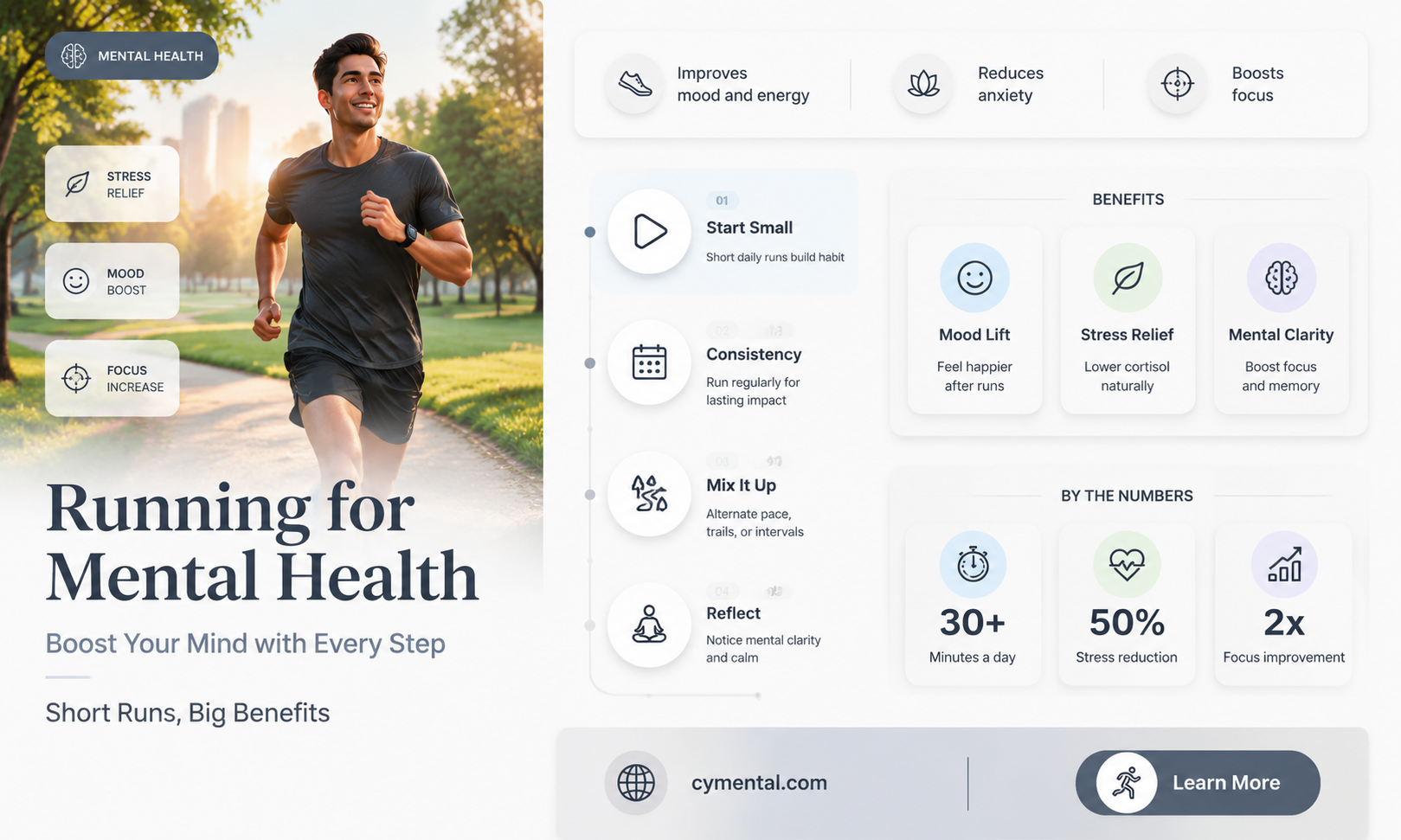
Running has been increasingly recognized as a powerful tool for improving mental health, offering a range of psychological benefits beyond its physical advantages. Regular running can reduce symptoms of anxiety and depression by boosting the production of endorphins, often referred to as feel-good hormones, and promoting the release of neurotransmitters like serotonin and dopamine. Additionally, the rhythmic and repetitive nature of running can induce a meditative state, helping to clear the mind and reduce stress. The sense of accomplishment from achieving running goals can also enhance self-esteem and confidence. Furthermore, running outdoors exposes individuals to natural environments, which have been shown to have calming effects and improve mood. Whether as a solo activity or part of a running community, this accessible form of exercise provides a holistic approach to mental well-being, making it a valuable addition to any mental health toolkit.
| Characteristics | Values |
|---|---|
| Reduces Stress | Running decreases cortisol (stress hormone) levels and increases endorphins, promoting relaxation and stress relief. |
| Improves Mood | Regular running boosts serotonin and norepinephrine, neurotransmitters linked to mood regulation, reducing symptoms of depression and anxiety. |
| Enhances Sleep | Running helps regulate sleep patterns, improving sleep quality and duration, which is crucial for mental health. |
| Boosts Self-Esteem | Achieving running goals fosters a sense of accomplishment, enhancing self-confidence and self-worth. |
| Alleviates Anxiety | Physical activity like running reduces anxiety symptoms by promoting the release of feel-good hormones and improving overall well-being. |
| Increases Focus | Running enhances cognitive function, including concentration and attention span, by promoting brain health. |
| Combats Depression | Running is a natural antidepressant, reducing symptoms of depression by increasing brain-derived neurotrophic factor (BDNF) and endorphins. |
| Promotes Mindfulness | Running can be a meditative practice, encouraging present-moment awareness and reducing rumination. |
| Strengthens Social Connections | Joining running groups or participating in races fosters social interaction, reducing feelings of loneliness and isolation. |
| Long-Term Mental Health Benefits | Consistent running is associated with a reduced risk of cognitive decline and improved overall mental well-being in the long term. |
Explore related products




What You'll Learn
- Stress Reduction: Running lowers cortisol, reduces anxiety, and promotes relaxation through physical activity
- Mood Enhancement: Releases endorphins, boosting happiness and combating symptoms of depression effectively
- Cognitive Benefits: Improves focus, memory, and brain function by increasing blood flow
- Social Connection: Group runs foster community, reduce loneliness, and provide emotional support
- Sleep Improvement: Regulates sleep patterns, enhancing mental health through better rest quality

Stress Reduction: Running lowers cortisol, reduces anxiety, and promotes relaxation through physical activity
Cortisol, often dubbed the "stress hormone," spikes in response to pressure, whether from work deadlines, personal challenges, or daily hassles. Running acts as a natural counterbalance, systematically reducing cortisol levels in the bloodstream. Studies show that even a 30-minute jog at a moderate pace can lower cortisol by up to 20%, offering immediate relief from stress. This physiological response isn’t just temporary; consistent runners often report a baseline reduction in stress over time, as their bodies become more resilient to cortisol spikes.
To harness this benefit, aim for 3–5 sessions of running per week, each lasting 20–40 minutes. Beginners should start with shorter durations and gradually increase intensity to avoid overexertion, which can paradoxically elevate stress. Incorporate mindfulness during runs—focus on your breath, the rhythm of your footsteps, or the environment around you. This dual approach of physical activity and mental focus amplifies the stress-reducing effects, turning each run into a moving meditation.
Anxiety thrives in a sedentary body, but running disrupts its cycle by triggering the release of endorphins, the body’s natural mood elevators. These chemicals counteract anxiety by promoting a sense of well-being and calm. For instance, a study published in *Frontiers in Psychiatry* found that participants who engaged in aerobic exercise like running experienced a 26% reduction in anxiety symptoms compared to non-exercisers. Unlike medication or therapy, running offers a side-effect-free method to manage anxiety, accessible to anyone with a pair of shoes and the will to move.
Practical tip: If anxiety feels overwhelming, try interval running—alternate between brisk walking and jogging for 20 minutes. This approach is less intimidating than a steady run and still delivers anxiety-reducing benefits. Pair running with deep breathing exercises post-workout to extend the calming effect.
Beyond its biochemical impact, running fosters relaxation by shifting focus away from stressors and into the present moment. The repetitive motion of running creates a meditative state, allowing the mind to unwind and let go of tension. This effect is particularly pronounced in outdoor settings, where exposure to nature further enhances relaxation. A study in the *International Journal of Environmental Research and Public Health* found that runners who exercised in green spaces reported significantly lower stress levels than those in urban environments.
For maximum relaxation, run in parks, trails, or along bodies of water. If outdoor access is limited, use a treadmill while listening to calming music or nature sounds. End each run with a 5-minute cool-down of stretching or walking to ease the transition back to daily life, ensuring the relaxed state lingers.
While running’s stress-reducing benefits are clear, overtraining can backfire, leading to increased cortisol and heightened anxiety. Balance is key—listen to your body and avoid pushing beyond your limits. Hydration, proper nutrition, and adequate sleep are essential to support both physical and mental recovery. For those with pre-existing anxiety or stress disorders, consult a healthcare provider to integrate running into a comprehensive treatment plan.
Takeaway: Running is a powerful tool for stress reduction, but it’s not a one-size-fits-all solution. Tailor your routine to your needs, combine it with other stress management techniques, and approach it as a sustainable habit rather than a quick fix. With consistency and mindfulness, running can transform from a mere exercise into a sanctuary for mental well-being.
Supporting Loved Ones: A Guide to Accessing Mental Health Care for Family
You may want to see also
Explore related products


Mood Enhancement: Releases endorphins, boosting happiness and combating symptoms of depression effectively
Running isn't just about physical fitness; it's a powerful tool for mental well-being. One of the most immediate and tangible benefits is its ability to enhance mood through the release of endorphins, often referred to as "feel-good" hormones. These chemicals act as natural painkillers and mood elevators, creating a sense of euphoria and relaxation. For individuals grappling with depression, this endorphin rush can provide a much-needed respite from persistent feelings of sadness and lethargy. Studies show that even a 30-minute run at a moderate pace can trigger this effect, making it an accessible and effective strategy for improving mental health.
To maximize the mood-enhancing benefits of running, consistency is key. Aim for at least three to four sessions per week, each lasting 20 to 45 minutes. Beginners should start with shorter durations and gradually increase intensity to avoid burnout. Incorporating varied terrain, such as trails or hills, can also amplify the endorphin release by engaging different muscle groups and keeping the activity engaging. Pairing running with mindfulness techniques, like focusing on your breath or the rhythm of your footsteps, can further deepen the mental health benefits by fostering a sense of presence and calm.
While running is a potent mood booster, it’s important to approach it as part of a holistic mental health strategy. For those with clinical depression, it should complement, not replace, professional treatment. Combining running with therapy, medication, or other self-care practices can create a synergistic effect, addressing both the physical and emotional aspects of mental health. Additionally, tracking your mood before and after runs can help you recognize patterns and tailor your routine for optimal results. Apps or journals can be useful tools for this purpose.
A common misconception is that running must be intense to yield mental health benefits. In reality, even low-impact jogging or brisk walking can stimulate endorphin release. The key is to find a pace and distance that feels manageable yet challenging enough to engage your body and mind. Group runs or joining a running community can also enhance the experience by providing social support and motivation. For older adults or individuals with physical limitations, modified forms of running, such as interval training or treadmill walking, can still deliver mood-enhancing effects without undue strain.
Finally, it’s worth noting that the mood-boosting effects of running aren’t just anecdotal; they’re backed by science. Research indicates that regular aerobic exercise, including running, can reduce symptoms of depression by up to 26%. This makes it a valuable, low-cost intervention accessible to people of all ages and fitness levels. By prioritizing running as a regular habit, individuals can harness its endorphin-driven benefits to cultivate greater happiness and resilience in the face of mental health challenges.
Brain Fingerprinting: Predicting Mental Health Risks Before Symptoms Appear?
You may want to see also
Explore related products


Cognitive Benefits: Improves focus, memory, and brain function by increasing blood flow
Running isn't just about building physical endurance; it's a powerful tool for sharpening your mind. The rhythmic motion increases blood flow to the brain, delivering oxygen and nutrients essential for optimal cognitive function. Think of it as a natural brain booster, enhancing focus, memory, and overall mental clarity.
Studies show that regular aerobic exercise, like running, stimulates the release of brain-derived neurotrophic factor (BDNF), a protein crucial for neuron growth and survival. This means running literally helps your brain build new connections, improving its ability to learn, adapt, and remember.
To reap these cognitive benefits, aim for at least 150 minutes of moderate-intensity running or 75 minutes of vigorous running per week, as recommended by the World Health Organization. Even shorter bursts of running, like 20-30 minute sessions, can provide a noticeable mental boost. Consistency is key; make running a regular part of your routine for long-term cognitive gains.
Consider incorporating interval training into your runs. Alternating between high-intensity bursts and recovery periods further enhances blood flow and stimulates brain activity.
While running is a fantastic cognitive enhancer, it's not a magic bullet. Combine it with other brain-healthy habits like adequate sleep, a balanced diet rich in omega-3 fatty acids, and mentally stimulating activities like reading or learning a new skill for optimal results. Remember, a healthy body and a healthy mind go hand in hand. Lace up your shoes and experience the mental clarity that comes with every stride.
Empowering Change: Simple Ways You Can Make a Difference Today
You may want to see also
Explore related products




Social Connection: Group runs foster community, reduce loneliness, and provide emotional support
Loneliness is a silent epidemic, affecting mental health across all age groups. Group runs offer a powerful antidote by weaving social connection into the fabric of physical activity. Unlike solitary jogging, these organized gatherings create a sense of belonging, where shared effort becomes a bond. A study published in the *Journal of Social and Clinical Psychology* found that group exercise participants reported significantly lower levels of loneliness compared to solo exercisers. This isn’t just anecdotal—it’s physiological. The release of endorphins during running, combined with the social interaction, creates a dual boost to mood and well-being.
To harness this benefit, start small. Join a local running club or community group that aligns with your pace and schedule. Many cities offer beginner-friendly options, such as parkrun, a free weekly 5K event open to all ages and abilities. If in-person groups feel intimidating, virtual running communities on platforms like Strava or Facebook can provide accountability and encouragement. Aim for consistency—even one group run per week can make a noticeable difference. Pro tip: Pair running with a social goal, like grabbing coffee afterward, to deepen connections.
The structure of group runs also fosters emotional support. Running alongside others creates a safe space to share struggles and triumphs, often without the pressure of direct eye contact or forced conversation. For instance, a 2021 survey by *Runner’s World* revealed that 78% of respondents felt more emotionally supported after joining a running group. This dynamic is particularly beneficial for individuals dealing with anxiety or depression, as it normalizes vulnerability and provides a sense of collective resilience.
However, not all group runs are created equal. For maximum mental health benefits, seek out inclusive environments that prioritize camaraderie over competition. Avoid groups that focus solely on performance metrics, as this can heighten stress rather than alleviate it. Instead, look for communities that celebrate personal achievements, regardless of speed or distance. For older adults or those with mobility concerns, walking groups or interval-based runs can be equally effective in building social connections.
Incorporating group runs into your routine doesn’t require a drastic lifestyle change. Start with a 30-minute weekly session and gradually increase frequency as comfort grows. Remember, the goal isn’t to run faster or farther—it’s to run together. By doing so, you’re not just improving physical health; you’re building a support system that strengthens mental resilience, one stride at a time.
Boost Focus and Calm: Strategies for Achieving Mental Clarity
You may want to see also
Explore related products





Sleep Improvement: Regulates sleep patterns, enhancing mental health through better rest quality
Quality sleep is the cornerstone of mental resilience, yet many overlook its intricate relationship with physical activity. Running, in particular, acts as a natural regulator of sleep patterns by influencing the body’s circadian rhythm. Studies show that moderate aerobic exercise, such as a 30-minute run, can advance the body’s internal clock, making it easier to fall asleep at a consistent time. This is because running increases core body temperature during the activity and triggers a sharp drop post-exercise, signaling to the brain that it’s time to wind down. For adults aged 18–64, incorporating 150 minutes of running or brisk walking weekly can significantly improve sleep onset latency—the time it takes to fall asleep—by up to 50%.
However, timing matters. Running too close to bedtime can have the opposite effect, as elevated adrenaline levels may disrupt sleep. Aim to complete your run at least 2–3 hours before bedtime to maximize benefits. For shift workers or those with irregular schedules, morning or midday runs are ideal. Pairing this routine with exposure to natural light further reinforces circadian alignment, enhancing both sleep quality and mental clarity.
The mental health benefits of improved sleep through running are profound. Deep sleep stages, particularly slow-wave sleep, are critical for emotional regulation and memory consolidation. Research indicates that consistent runners experience a 20% increase in deep sleep duration compared to sedentary individuals. This improvement correlates with reduced symptoms of anxiety and depression, as the brain processes and mitigates stress more effectively during these restorative cycles. For those struggling with insomnia or mood disorders, running can serve as a non-pharmacological intervention, offering a sustainable path to better mental health.
Practical tips can amplify these effects. Incorporate a post-run wind-down routine, such as stretching or reading, to signal relaxation. Avoid screens for at least an hour before bed, as blue light suppresses melatonin production. Hydration is key—dehydration from running can disrupt sleep, so ensure you replenish fluids post-exercise. For beginners, start with shorter runs (10–15 minutes) and gradually increase duration to avoid overexertion, which can counteract sleep benefits.
In comparison to other forms of exercise, running stands out for its accessibility and efficiency in improving sleep. Unlike high-intensity interval training (HIIT), which may overstimulate the nervous system, running provides a steady, rhythmic stimulus that promotes relaxation. While yoga and meditation are valuable for stress reduction, running uniquely combines physical exertion with cardiovascular benefits, making it a dual-purpose tool for sleep and mental health. By prioritizing consistency and mindful timing, running becomes more than exercise—it’s a sleep hygiene practice with transformative potential.
Accessing Mental Health Care Without Insurance: Affordable Options and Resources
You may want to see also
Frequently asked questions
Yes, running can significantly improve mental health by reducing symptoms of anxiety, depression, and stress. It stimulates the release of endorphins, often referred to as "feel-good" hormones, and promotes better sleep and overall mood.
Even moderate running, such as 20-30 minutes a few times a week, can provide mental health benefits. Consistency is key, so aim for a routine that fits your schedule and preferences.
While running is not a cure for long-term mental health issues, it can be a valuable complementary tool. Regular physical activity like running can reduce symptoms, improve resilience, and enhance overall well-being when combined with other treatments.