Noah Parker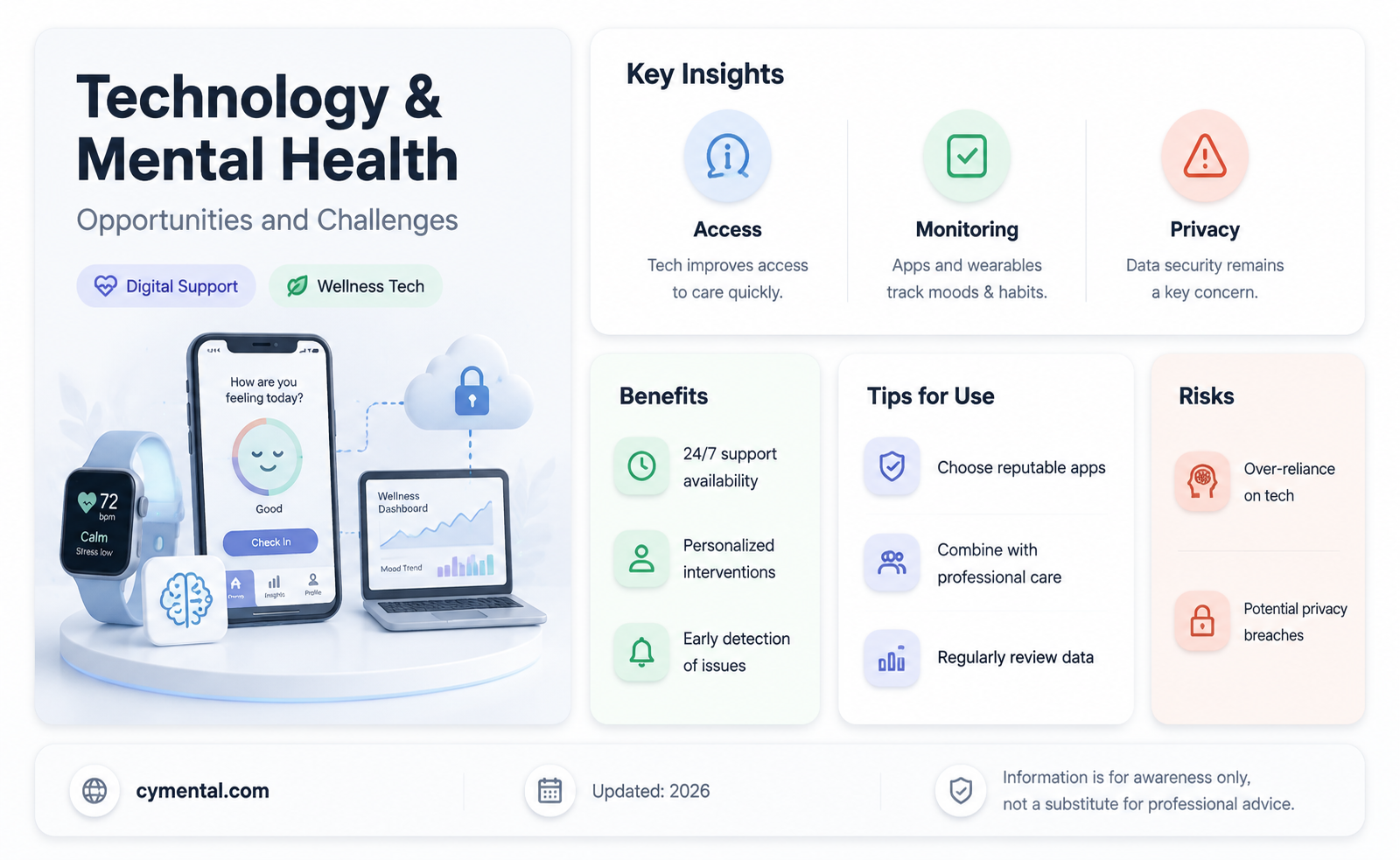
Technology has emerged as a transformative tool in addressing mental health challenges, offering innovative solutions to improve accessibility, affordability, and effectiveness of care. From mobile apps providing mindfulness exercises and therapy sessions to AI-driven chatbots offering real-time support, digital platforms are breaking down barriers to mental health resources. Wearable devices monitor stress levels and sleep patterns, while virtual reality therapies create immersive environments for treating conditions like anxiety and PTSD. Additionally, telemedicine enables remote consultations, making professional help available to those in underserved areas. While technology is not a panacea, its potential to complement traditional therapies and empower individuals in managing their mental well-being is undeniable, marking a significant shift in how we approach mental health care.
Explore related products



What You'll Learn
- Digital Therapy Tools: Apps and platforms offering accessible, affordable mental health support and resources
- AI-Powered Chatbots: Providing instant emotional support and coping strategies through conversational AI
- Wearable Devices: Tracking stress, sleep, and mood to promote mental well-being and self-awareness
- Virtual Reality Therapy: Immersive environments for treating anxiety, PTSD, and phobias effectively
- Online Support Communities: Connecting individuals for peer support and reducing feelings of isolation

Digital Therapy Tools: Apps and platforms offering accessible, affordable mental health support and resources
The rise of digital therapy tools has democratized access to mental health support, breaking down barriers of cost, geography, and stigma. Apps like Calm, Headspace, and BetterHelp offer guided meditation, cognitive behavioral therapy (CBT) exercises, and licensed counseling sessions at a fraction of traditional therapy costs. For instance, BetterHelp’s subscription model starts at $60 weekly, compared to $100–$200 per in-person session. These platforms often include features like mood tracking, journaling prompts, and crisis hotlines, providing users with a comprehensive toolkit for self-management. However, their effectiveness hinges on consistent use; studies show that users engaging with apps 3–5 times weekly report greater symptom reduction than sporadic users.
Consider the case of Woebot, an AI-driven chatbot that delivers CBT techniques through conversational interfaces. Designed for ages 13 and up, Woebot engages users in daily check-ins, offering evidence-based strategies for anxiety and depression. A 2021 study in *JMIR Mental Health* found that users experienced a 20% reduction in depressive symptoms after two weeks of use. Such tools are particularly valuable for individuals in remote areas or those hesitant to seek face-to-face therapy. Yet, they are not a one-size-fits-all solution; severe cases still require professional intervention, and over-reliance on apps can delay necessary treatment.
For parents and caregivers, apps like TeenCounseling (for ages 13–19) and Brightline (for families) address the unique mental health needs of younger demographics. These platforms pair adolescents with specialized therapists and provide parental resources for supporting children’s emotional development. For example, Brightline’s “Care Team” model includes coaches who help families implement strategies like structured routines and positive reinforcement. While these tools are promising, caregivers must monitor usage to ensure children don’t misuse them as substitutes for real-world connections.
Practical tips for maximizing digital therapy tools include setting daily reminders to engage with the app, integrating exercises into existing routines (e.g., meditating during a morning commute), and periodically reassessing whether the tool meets your needs. For instance, if you’re using an app for insomnia, track sleep improvements over 2–4 weeks; if no progress is seen, consult a healthcare provider. Additionally, combine app usage with offline practices like journaling or group therapy for a holistic approach. While digital tools are not a panacea, they offer a scalable, stigma-free entry point to mental health care, empowering individuals to take proactive steps toward well-being.
Gaming for Mental Health: A New Era Under the Presidency
You may want to see also
Explore related products


AI-Powered Chatbots: Providing instant emotional support and coping strategies through conversational AI
AI-powered chatbots are revolutionizing the way we access mental health support by offering instant, on-demand assistance through conversational interfaces. These tools leverage natural language processing to simulate empathetic dialogue, providing users with a safe space to express their emotions and receive coping strategies in real time. For instance, platforms like Woebot and Wysa use evidence-based techniques such as cognitive-behavioral therapy (CBT) to guide users through exercises like reframing negative thoughts or practicing mindfulness. Unlike traditional therapy, which often requires scheduling and waiting periods, chatbots are available 24/7, making them particularly valuable for individuals in crisis or those who lack immediate access to human support.
However, the effectiveness of AI chatbots hinges on their design and implementation. Developers must ensure these tools are rigorously tested for accuracy and sensitivity, as poorly crafted responses can exacerbate distress. For example, a chatbot that misinterprets a user’s emotional state or provides generic advice may undermine trust and worsen outcomes. To mitigate this, leading chatbots incorporate user feedback loops and continuous learning algorithms, allowing them to refine their interactions over time. Additionally, ethical considerations, such as data privacy and transparency about the bot’s limitations, are critical to maintaining user trust.
One practical application of AI chatbots is their use as a supplementary tool in mental health care. For mild to moderate symptoms of anxiety or depression, chatbots can serve as a first line of support, offering immediate relief while users await professional intervention. Studies have shown that regular engagement with CBT-based chatbots can reduce symptoms by up to 20% over six weeks, particularly among younger users aged 18–30 who are more comfortable with digital interfaces. However, it’s essential to clarify that chatbots are not a replacement for human therapists but rather a complementary resource.
To maximize the benefits of AI chatbots, users should approach them with realistic expectations. Start by setting specific goals, such as managing stress or improving sleep, and use the chatbot consistently for at least two weeks to gauge its effectiveness. Pairing chatbot use with other self-care practices, like journaling or physical activity, can enhance outcomes. For parents or caregivers, introducing these tools to teenagers or young adults can foster early engagement with mental health resources, provided the platforms are age-appropriate and vetted for safety.
In conclusion, AI-powered chatbots represent a promising avenue for democratizing mental health support, offering instant access to evidence-based coping strategies. While they are not a panacea, their ability to provide timely assistance and bridge gaps in care makes them a valuable addition to the mental health toolkit. By combining thoughtful design, ethical considerations, and user-centered practices, these tools can play a transformative role in fostering emotional well-being.
Probiotics and Mental Health: Can Gut Bacteria Boost Your Mood?
You may want to see also
Explore related products


Wearable Devices: Tracking stress, sleep, and mood to promote mental well-being and self-awareness
Wearable devices, such as smartwatches and fitness trackers, have evolved beyond counting steps to become powerful tools for monitoring mental health. These gadgets now track stress levels, sleep patterns, and mood fluctuations, offering users real-time insights into their emotional and psychological states. For instance, devices like the Apple Watch and Fitbit use heart rate variability (HRV) to detect stress, while apps like Moodpath analyze daily mood entries to identify trends. This data-driven approach empowers individuals to recognize patterns and take proactive steps toward mental well-being.
Consider the practical application of these devices in daily life. A 30-year-old professional experiencing chronic stress might notice a consistent drop in HRV during work hours, paired with disrupted sleep patterns. Armed with this information, they could experiment with stress-reduction techniques like deep breathing exercises or scheduled breaks, tracking their impact over time. Similarly, a teenager struggling with mood swings could use a wearable to correlate their emotional lows with poor sleep quality, prompting them to establish a consistent bedtime routine. These devices act as personal mental health assistants, providing actionable feedback tailored to individual needs.
However, reliance on wearables for mental health isn’t without caution. Over-monitoring can lead to anxiety, as users may become hyper-focused on metrics rather than overall well-being. For example, fixating on achieving "optimal" sleep scores can create unnecessary stress. Additionally, these devices are not diagnostic tools—they cannot replace professional mental health care. A wearable might flag persistent low mood, but it cannot diagnose depression. Users should view these tools as supplements to, not substitutes for, therapy or medical advice.
To maximize the benefits of wearables, integrate their insights into a holistic self-care routine. Start by setting realistic goals, such as improving sleep consistency rather than aiming for eight hours every night. Pair data analysis with journaling to reflect on emotional triggers and responses. For instance, if a wearable indicates elevated stress during meetings, note the context and experiment with coping strategies like mindfulness or pre-meeting preparation. Finally, share data with a healthcare provider to inform personalized treatment plans. When used thoughtfully, wearables can foster self-awareness and proactive mental health management.
Journaling for Mental Health: Unlocking Emotional Healing and Self-Discovery
You may want to see also
Explore related products


Virtual Reality Therapy: Immersive environments for treating anxiety, PTSD, and phobias effectively
Virtual Reality Therapy (VRT) leverages immersive environments to treat anxiety, PTSD, and phobias by exposing patients to controlled, simulated scenarios that trigger their fears. Unlike traditional exposure therapy, VRT allows therapists to customize intensity, duration, and context, making it a precise tool for gradual desensitization. For instance, a patient with a fear of flying might undergo a 30-minute session in a virtual airplane cabin, starting with calm conditions and progressing to turbulence. Studies show that 6–12 sessions, each lasting 45–60 minutes, can significantly reduce anxiety symptoms in adults aged 18–65. This structured approach ensures safety and consistency, addressing the limitations of real-world exposure.
The effectiveness of VRT lies in its ability to engage multiple senses simultaneously, creating a realistic yet manageable experience. For PTSD patients, therapists use historical recreations or abstract environments to revisit traumatic memories in a controlled setting. A 2021 study found that VRT reduced PTSD symptoms by 30% in veterans after 8 weeks of biweekly sessions. Similarly, phobia treatment often involves gradual exposure to feared objects or situations, such as heights or spiders, with therapists adjusting the virtual environment in real-time based on the patient’s response. Practical tips for practitioners include starting with low-intensity scenarios, monitoring physiological responses (e.g., heart rate), and incorporating relaxation techniques between exposures.
Comparatively, VRT offers advantages over traditional methods by eliminating real-world risks and providing measurable data on patient progress. For example, a therapist treating acrophobia (fear of heights) can track a patient’s proximity to a virtual ledge over time, quantifying improvement. However, VRT is not without challenges. Cost remains a barrier, with high-quality VR systems ranging from $500 to $3,000, and not all patients tolerate prolonged headset use due to motion sickness. Clinicians must also ensure sessions are tailored to individual needs, avoiding generic scenarios that may fail to address specific triggers.
To implement VRT effectively, therapists should follow a step-by-step protocol: assess the patient’s fear hierarchy, design a progressive exposure plan, and integrate cognitive-behavioral techniques during sessions. For anxiety disorders, combining VRT with mindfulness exercises can enhance outcomes. Cautions include avoiding overuse, as excessive exposure may lead to retraumatization, and ensuring patients feel safe and informed throughout the process. While VRT is not a one-size-fits-all solution, its adaptability and evidence-based success make it a valuable addition to mental health treatment arsenals. As technology advances, its accessibility and applications are poised to expand, offering hope to those struggling with debilitating fears.
Mental Health History: Boosting Temporary Insanity Claims in Court?
You may want to see also
Explore related products


Online Support Communities: Connecting individuals for peer support and reducing feelings of isolation
Online support communities have emerged as a powerful tool in the mental health landscape, offering a digital sanctuary for individuals grappling with emotional and psychological challenges. These platforms, often moderated by mental health professionals or experienced peers, provide a safe space for users to share their experiences, seek advice, and offer mutual encouragement. For instance, platforms like 7 Cups and Reddit’s mental health subreddits connect thousands of users daily, fostering a sense of belonging that can be particularly vital for those who feel misunderstood or isolated in their offline lives. The anonymity these communities afford allows individuals to express themselves freely, often leading to deeper, more honest conversations than might occur in face-to-face settings.
One of the most compelling aspects of online support communities is their accessibility. Unlike traditional therapy, which may be constrained by geography, cost, or stigma, these digital spaces are available 24/7 to anyone with an internet connection. This accessibility is especially critical for individuals in rural areas, those with physical disabilities, or those who cannot afford professional mental health services. For example, a study published in the *Journal of Medical Internet Research* found that participants in online mental health forums reported significant reductions in feelings of loneliness and improved coping mechanisms after just 8 weeks of consistent engagement. However, it’s essential to approach these communities with caution, as not all platforms are moderated effectively, and misinformation can spread quickly.
To maximize the benefits of online support communities, users should seek out platforms that align with their specific needs. For instance, someone dealing with anxiety might find value in forums dedicated to mindfulness techniques, while someone grieving a loss could benefit from grief-specific groups. Engaging actively—by posting regularly, offering support to others, and participating in structured discussions—can deepen the sense of connection and enhance the therapeutic impact. It’s also advisable to complement these communities with professional care when possible, as they are not a substitute for therapy or medication but rather a supplementary resource.
Despite their advantages, online support communities are not without limitations. The lack of face-to-face interaction can sometimes lead to misunderstandings, and the absence of professional oversight in some groups may result in harmful advice. Additionally, excessive reliance on these platforms can inadvertently reinforce isolation if users withdraw from offline relationships. To mitigate these risks, individuals should set boundaries on their usage, such as limiting daily engagement to 30–60 minutes, and remain critical of the information shared. Combining these communities with offline activities, like local support groups or hobbies, can create a balanced approach to mental health care.
In conclusion, online support communities represent a transformative way to address mental health challenges by leveraging technology to foster connection and reduce isolation. Their accessibility, anonymity, and peer-driven nature make them a valuable resource for many, but they must be used thoughtfully and in conjunction with other strategies. By choosing the right platform, engaging actively, and maintaining a balanced approach, individuals can harness the power of these communities to improve their mental well-being and build meaningful connections in an increasingly digital world.
Praying for Peace: Exploring the Mental Health Benefits of Prayer
You may want to see also
Frequently asked questions
Yes, technology can enhance mental health treatment through tools like therapy apps, telehealth platforms, and wearable devices that monitor stress levels. These resources provide accessible, convenient, and evidence-based support, complementing traditional therapy.
Many mental health apps are reliable when based on cognitive-behavioral therapy (CBT) or mindfulness principles. However, users should choose apps backed by research and consult professionals for severe or complex cases.
Technology cannot fully replace human therapists, as empathy and personalized interaction are crucial. However, it can serve as a valuable supplement, offering additional support and resources between sessions or for those with limited access to care.