Harper Lewis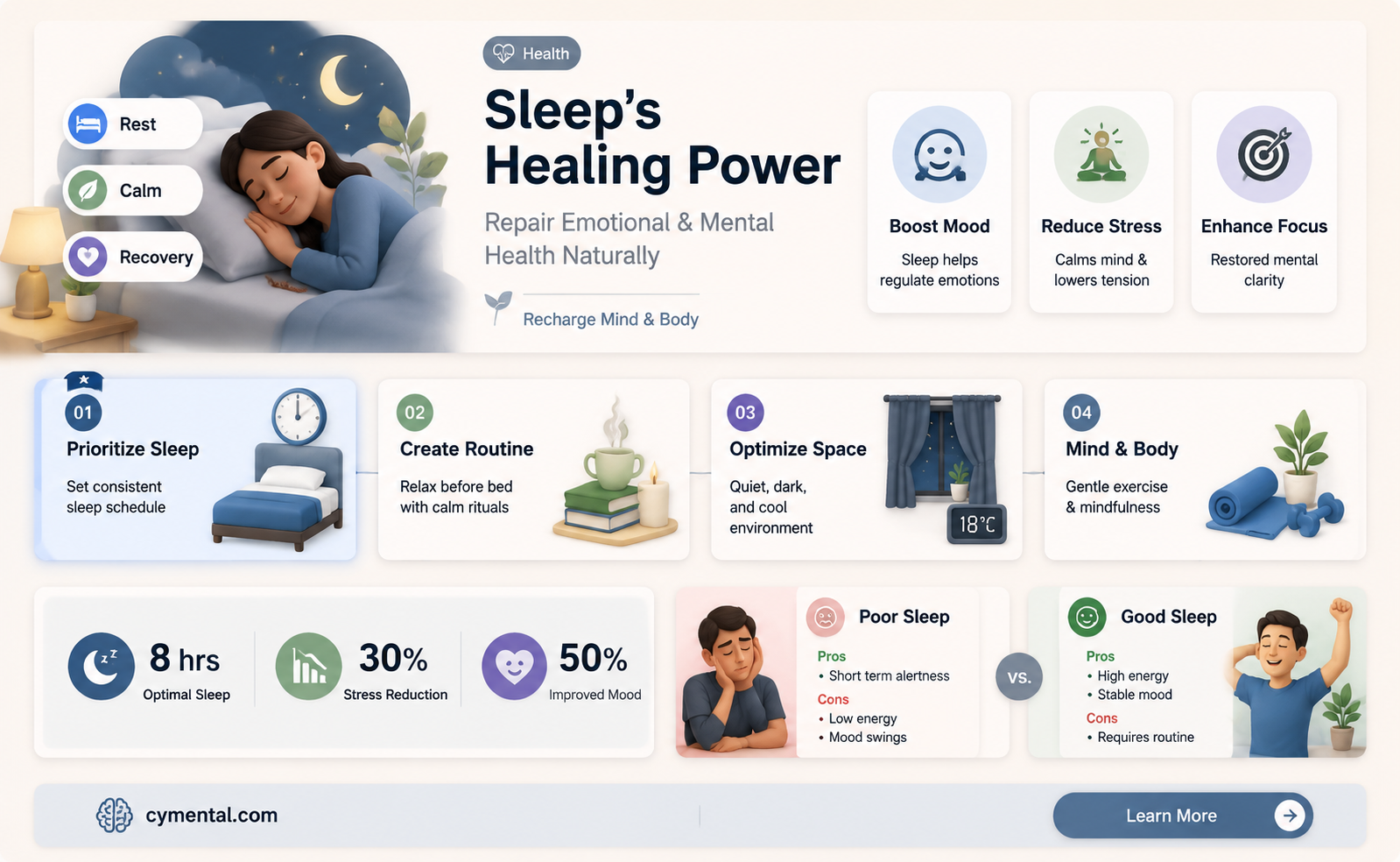
Sleep plays a crucial role in the repair and maintenance of both emotional and mental health. During sleep, the brain processes and consolidates emotions, helping to regulate mood and reduce stress. Deep sleep stages, such as REM (Rapid Eye Movement) sleep, are particularly important for emotional processing, allowing individuals to cope with traumatic experiences and reduce anxiety. Additionally, sleep supports cognitive functions like memory and problem-solving, which are essential for managing mental health challenges. Chronic sleep deprivation, on the other hand, has been linked to increased risks of depression, anxiety, and other mental health disorders. Thus, prioritizing quality sleep can be a powerful tool in fostering emotional resilience and mental well-being.
Explore related products




What You'll Learn
- Sleep reduces stress hormones, promoting emotional resilience and mental clarity
- REM sleep aids in processing emotions and traumatic memories effectively
- Adequate rest improves mood regulation and reduces anxiety symptoms
- Sleep enhances cognitive function, supporting better decision-making and focus
- Restorative sleep strengthens neural connections, boosting mental health recovery

Sleep reduces stress hormones, promoting emotional resilience and mental clarity
Sleep acts as a natural regulator of cortisol, the body’s primary stress hormone. During deep sleep stages, cortisol levels drop significantly, allowing the body to recover from the day’s stressors. Research shows that even a single night of adequate sleep (7–9 hours for adults) can reduce cortisol by up to 15%. Conversely, chronic sleep deprivation elevates cortisol levels, creating a vicious cycle of increased stress and impaired emotional regulation. For teens, who require 8–10 hours of sleep, this hormonal imbalance can exacerbate mood swings and anxiety, highlighting the age-specific importance of sleep in stress management.
Consider the practical steps to harness sleep’s stress-reducing benefits. Establishing a consistent sleep schedule trains the body’s internal clock, optimizing cortisol regulation. Incorporate a wind-down routine 30–60 minutes before bed, avoiding screens and engaging in calming activities like reading or meditation. For those with high-stress lifestyles, magnesium supplements (200–400 mg daily) or herbal teas like chamomile can promote relaxation. However, caution against relying on sleep aids without addressing underlying stress triggers, as this may mask rather than solve the problem.
The link between sleep and emotional resilience is particularly evident in its ability to enhance cognitive flexibility. When cortisol levels are balanced, the brain’s prefrontal cortex—responsible for decision-making and emotional control—functions more efficiently. Studies demonstrate that well-rested individuals are 30% more likely to approach challenges with a problem-solving mindset rather than reacting emotionally. This mental clarity is especially crucial for professionals in high-pressure roles, where sleep deprivation can lead to impulsive decisions and heightened irritability.
A comparative analysis reveals the stark contrast between sleep-deprived and well-rested individuals in handling emotional stressors. Those with poor sleep quality exhibit higher amygdala activity, the brain’s fear and stress center, while their prefrontal cortex remains underactive. In contrast, adequate sleep strengthens the neural pathways that connect these regions, fostering emotional balance. For instance, a study on college students found that those who slept 7+ hours nightly reported 40% lower stress levels during exam periods compared to their sleep-deprived peers.
To maximize sleep’s role in reducing stress hormones, prioritize sleep hygiene as a non-negotiable pillar of mental health. Keep the bedroom cool (60–67°F) and dark to optimize melatonin production, which counteracts cortisol. Limit caffeine intake after 2 p.m., as it can disrupt sleep even 6 hours later. For shift workers or those with irregular schedules, strategic napping (20–30 minutes) can mitigate cortisol spikes, though it’s no substitute for consistent nighttime sleep. By treating sleep as a proactive tool rather than a passive activity, individuals can build emotional resilience and maintain mental clarity in the face of life’s demands.
Supporting Mental Health: Practical Ways to Help Loved Ones Heal
You may want to see also
Explore related products


REM sleep aids in processing emotions and traumatic memories effectively
Sleep, particularly the REM (Rapid Eye Movement) phase, plays a pivotal role in emotional regulation and memory consolidation. During REM sleep, the brain processes and integrates emotional experiences, often reducing their intensity and helping individuals cope with stress. Research shows that this stage of sleep is critical for transforming raw, emotionally charged memories into more manageable, narrative forms. For instance, studies on individuals with PTSD reveal that REM sleep deprivation exacerbates symptoms, while adequate REM sleep aids in diminishing the emotional impact of traumatic events. This natural mechanism highlights the brain’s ability to heal during rest, making sleep a vital component of emotional recovery.
To harness the benefits of REM sleep for emotional processing, prioritize a consistent sleep schedule. Adults require 7–9 hours of sleep per night, with REM cycles occurring approximately every 90 minutes. Aim for uninterrupted sleep to ensure you complete multiple REM phases. Practical tips include creating a sleep-conducive environment—dim lights, a cool room, and minimal noise. Avoid stimulants like caffeine and screens at least an hour before bed, as they disrupt REM onset. For those struggling with trauma, incorporating relaxation techniques such as deep breathing or progressive muscle relaxation before sleep can enhance REM efficiency, allowing the brain to process emotions more effectively.
Comparing REM sleep to other stages reveals its unique role in emotional repair. While deep sleep (NREM Stage 3) focuses on physical restoration, REM sleep is the brain’s emotional workshop. It reactivates the amygdala, the brain’s emotional center, and the hippocampus, responsible for memory formation, to reprocess experiences. This interplay reduces the emotional charge of memories, making them less overwhelming. For example, a study published in *Nature Neuroscience* found that participants who experienced REM sleep after viewing distressing images reported lower emotional reactivity to those images the next day. This contrasts with non-REM sleep, which primarily consolidates factual memories without emotional modulation.
Despite its benefits, achieving optimal REM sleep isn’t without challenges. Stress, anxiety, and sleep disorders like insomnia can fragment REM cycles, hindering emotional processing. For individuals with chronic stress, mindfulness practices or cognitive-behavioral therapy (CBT) can improve sleep quality. Additionally, maintaining a consistent bedtime routine and limiting daytime naps can stabilize REM patterns. For those with trauma histories, consulting a sleep specialist or therapist can provide tailored strategies to enhance REM sleep. Remember, while sleep is a natural process, intentional steps can maximize its therapeutic potential for emotional healing.
Incorporating these insights into daily life can transform sleep from a passive activity into an active tool for emotional repair. By understanding REM sleep’s role and taking steps to optimize it, individuals can better process emotions and traumatic memories. This isn’t just about sleeping more—it’s about sleeping smarter. Whether you’re recovering from a stressful day or managing long-term emotional challenges, prioritizing REM sleep is a scientifically backed strategy to foster mental resilience and well-being.
Austin's Impact: How the City Boosts Mental Health and Well-Being
You may want to see also
Explore related products


Adequate rest improves mood regulation and reduces anxiety symptoms
Sleep isn't just a luxury; it's a cornerstone of emotional resilience. Research consistently shows that adequate rest—defined as 7-9 hours for adults—directly impacts our ability to regulate emotions. During sleep, the brain processes and consolidates emotional memories, effectively "cooling down" the amygdala, the brain's alarm system. This nocturnal recalibration allows us to approach the next day with a more balanced perspective, less prone to overreactions or mood swings.
Consider this: a study published in *Nature Communications* found that individuals who slept less than 6 hours a night exhibited a 30% higher reactivity to negative stimuli compared to those who slept 8 hours. Practically, this means that skimping on sleep can amplify stress responses, making even minor irritations feel overwhelming. To counteract this, prioritize a consistent sleep schedule. For instance, if you need to wake up at 7 AM, aim to be in bed by 10 PM, allowing for 8 hours of rest.
Anxiety thrives in the absence of restorative sleep. The prefrontal cortex, responsible for rational decision-making, weakens under sleep deprivation, while the amygdala becomes hyperactive. This imbalance fuels anxiety symptoms, creating a vicious cycle where worry disrupts sleep, which in turn heightens anxiety. Breaking this cycle requires intentional habits: limit screen time an hour before bed, as blue light suppresses melatonin, and incorporate relaxation techniques like deep breathing or progressive muscle relaxation.
For those struggling with anxiety, even small improvements in sleep quality can yield significant benefits. A 2018 meta-analysis in *JAMA Psychiatry* revealed that individuals who increased their sleep duration by just 30 minutes per night reported a 10% reduction in anxiety symptoms over 6 weeks. Start by setting a "wind-down" routine—dim lights, avoid caffeine after 2 PM, and keep the bedroom cool (60-67°F). These steps, though simple, can act as a buffer against anxiety's grip.
Finally, view sleep as a proactive tool for emotional health, not a passive activity. Just as you’d schedule a workout or therapy session, treat sleep as a non-negotiable appointment with yourself. For parents, encourage teens (who need 8-10 hours) to limit late-night studying, and for older adults, address sleep disruptions like insomnia promptly. Adequate rest isn’t a luxury—it’s a necessity for taming anxiety and stabilizing mood, one night at a time.
Cooking for Calm: How Kitchen Therapy Boosts Mental Well-Being
You may want to see also
Explore related products




Sleep enhances cognitive function, supporting better decision-making and focus
Quality sleep is the cornerstone of cognitive resilience, a fact underscored by neuroscientific research. During deep sleep, the brain consolidates memories and clears metabolic waste through the glymphatic system, optimizing neural efficiency. Studies show that adults who achieve 7-9 hours of uninterrupted sleep exhibit a 20-30% improvement in working memory and problem-solving tasks compared to those with fragmented rest. This physiological process isn’t just restorative—it’s transformative, laying the groundwork for sharper focus and strategic thinking.
Consider the practical implications for decision-making. Sleep deprivation impairs the prefrontal cortex, the brain’s executive center, leading to impulsivity and emotional reactivity. A 2018 study in *Nature Communications* revealed that individuals with less than 6 hours of sleep per night were 60% more likely to make high-risk decisions. Conversely, adequate sleep strengthens the brain’s ability to weigh consequences, filter distractions, and prioritize long-term goals over immediate gratification. For professionals, students, or anyone navigating complex choices, this cognitive edge is invaluable.
To harness sleep’s cognitive benefits, adopt a structured routine. Start by dimming screens 1 hour before bed to reduce blue light exposure, which suppresses melatonin. Incorporate a 10-minute mindfulness practice—deep breathing or progressive muscle relaxation—to signal to your brain that it’s time to wind down. Maintain a consistent sleep schedule, even on weekends, to reinforce your circadian rhythm. For those struggling with focus during the day, a 20-minute power nap can restore alertness without disrupting nighttime sleep, provided it’s taken before 3 PM.
A comparative analysis highlights the disparity between sleep’s role in cognitive function and its often-overlooked impact on mental health. While therapy and medication address emotional distress directly, sleep acts as a silent amplifier of these interventions. For instance, patients with depression who improve their sleep quality report a 50% greater reduction in symptoms compared to those who don’t, according to a *Journal of Clinical Psychiatry* study. This synergy between sleep and mental health underscores its dual role as both a cognitive enhancer and emotional stabilizer.
Incorporating these strategies requires awareness of individual needs. Teenagers, for example, require 8-10 hours of sleep due to ongoing brain development, yet 73% report insufficient rest. Older adults, while needing 7-8 hours, often face disruptions from conditions like sleep apnea. Tailoring sleep hygiene to age and lifestyle—whether through earlier bedtimes for teens or CPAP therapy for seniors—maximizes its cognitive and emotional benefits. Sleep isn’t a luxury; it’s a non-negotiable investment in mental clarity and resilience.
Supporting Loved Ones: Practical Ways to Help with Anxiety and Depression
You may want to see also
Explore related products


Restorative sleep strengthens neural connections, boosting mental health recovery
Sleep isn’t just downtime for the body—it’s an active process that rewires the brain. During deep sleep stages, particularly slow-wave sleep, the brain consolidates memories and prunes unnecessary neural connections, while strengthening those that matter. This process, known as synaptic plasticity, is essential for emotional regulation and cognitive resilience. Studies show that even one night of restorative sleep can enhance the brain’s ability to process emotions, reducing reactivity to stressors. For instance, a 2018 study in *Nature Communications* found that participants who slept after an emotional task exhibited lower amygdala activity (the brain’s fear center) when re-exposed to the same stimuli, compared to sleep-deprived individuals.
To harness this benefit, aim for 7–9 hours of uninterrupted sleep nightly, prioritizing consistency. Create a sleep-friendly environment by keeping the room cool (60–67°F), dark, and quiet. Limit exposure to screens at least an hour before bed, as blue light suppresses melatonin, the sleep hormone. Incorporate a relaxing bedtime routine—reading, meditation, or gentle stretching—to signal to your brain that it’s time to wind down. For those struggling with insomnia, cognitive behavioral therapy for insomnia (CBT-I) has proven effective, with 70–80% of patients experiencing long-term improvements in sleep quality.
Compare this to the effects of chronic sleep deprivation, which weakens neural connections and impairs the brain’s ability to recover from emotional strain. Over time, this can lead to heightened anxiety, depression, and even cognitive decline. A 2020 study published in *The Lancet Psychiatry* linked insufficient sleep to a 65% higher risk of developing mental health disorders. Conversely, restorative sleep acts as a protective factor, fostering emotional resilience and mental clarity. Think of it as nightly maintenance for your brain’s wiring—skipping it accumulates damage, while prioritizing it keeps the system running smoothly.
For practical implementation, consider tracking your sleep using a wearable device or journal to identify patterns and areas for improvement. If you’re over 65, aim for 7–8 hours, as older adults often experience lighter sleep. Parents of teens should encourage consistent bedtimes, as adolescent brains require 8–10 hours for optimal neural development. Finally, if stress or anxiety disrupts your sleep, try progressive muscle relaxation or guided imagery techniques. By treating sleep as a non-negotiable pillar of mental health, you’re not just resting—you’re actively rebuilding your brain’s capacity to heal and thrive.
Supporting Mental Health: Practical Ways to Make a Positive Impact
You may want to see also
Frequently asked questions
Yes, sleep plays a crucial role in emotional and mental health repair. During sleep, the brain processes emotions, consolidates memories, and reduces stress hormones like cortisol. Adequate sleep helps regulate mood, improve emotional resilience, and supports overall mental well-being.
Lack of sleep can exacerbate emotional and mental health issues. It increases irritability, anxiety, and depression, while impairing cognitive functions like decision-making and problem-solving. Chronic sleep deprivation can also disrupt the brain’s ability to regulate emotions, making it harder to cope with stress.
REM (Rapid Eye Movement) sleep is particularly important for emotional healing. During this stage, the brain processes and consolidates emotional memories, helping to reduce the intensity of negative experiences. It also aids in emotional regulation, allowing individuals to better manage stress and anxiety when awake.