Caleb Wright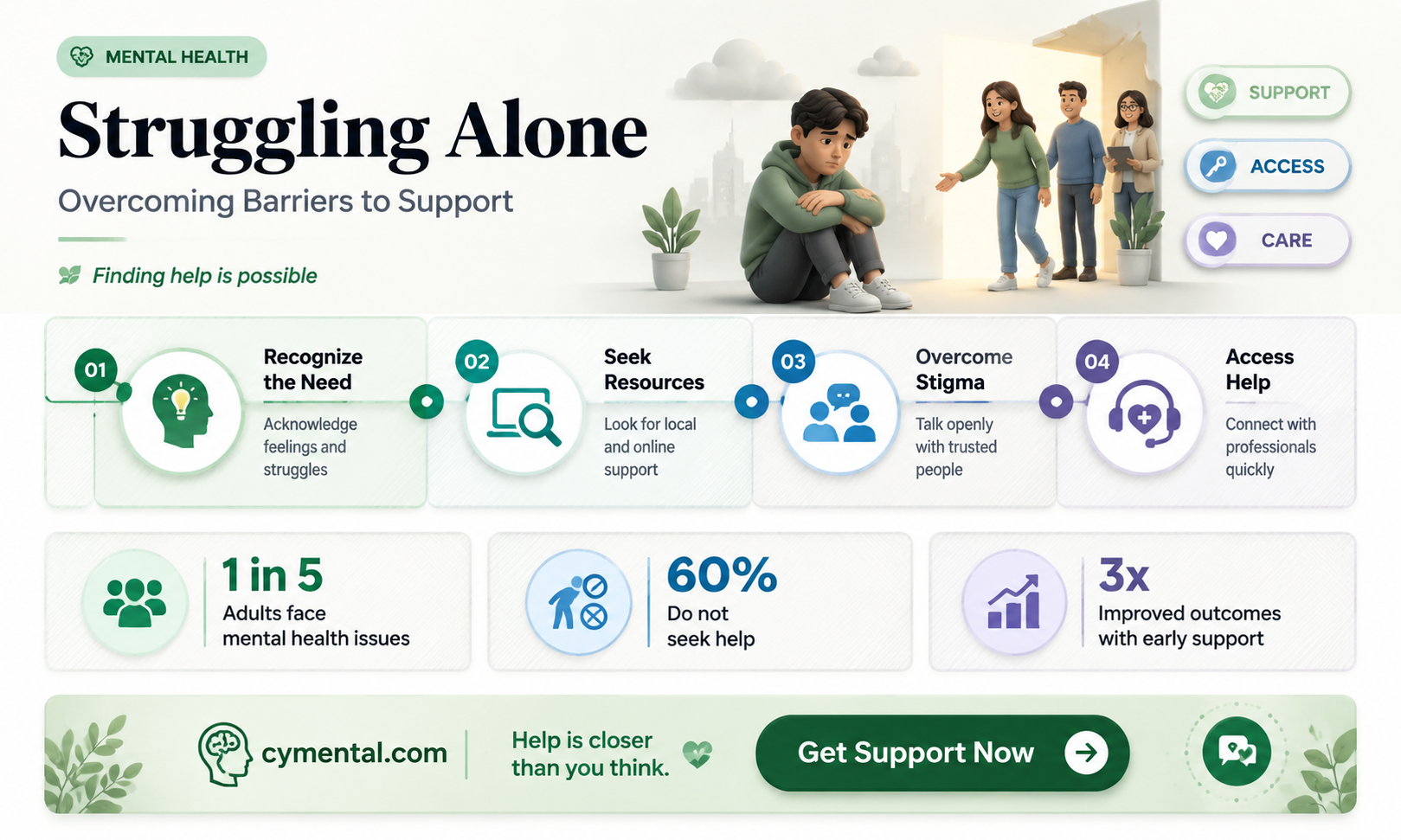
Access to mental health support remains a significant challenge for many individuals, often due to systemic barriers, stigma, and limited resources. Despite growing awareness, countless people struggle to find affordable, timely, or culturally sensitive care, leaving them feeling isolated and unsupported. Financial constraints, long wait times, and a shortage of mental health professionals exacerbate the issue, particularly in underserved communities. Additionally, societal misconceptions about mental illness can deter individuals from seeking help, fearing judgment or discrimination. These obstacles highlight the urgent need for comprehensive reforms to ensure equitable and accessible mental health services for all.
Explore related products


What You'll Learn
- Stigma and Shame: Fear of judgment prevents seeking help, perpetuating isolation and suffering silently
- Lack of Access: Limited resources, long wait times, and high costs block treatment options
- Misdiagnosis Risks: Inaccurate assessments lead to ineffective care, worsening mental health struggles
- Cultural Barriers: Societal norms and language differences hinder understanding and acceptance of mental health
- Professional Shortages: Insufficient mental health providers create gaps in care availability and support

Stigma and Shame: Fear of judgment prevents seeking help, perpetuating isolation and suffering silently
Stigma and shame cast long shadows over mental health, silencing those who desperately need support. Consider this: a 2021 survey by the American Psychological Association found that 40% of adults avoided seeking mental health treatment due to fear of being judged or labeled. This statistic isn’t just a number—it’s a reflection of how deeply ingrained societal attitudes can cripple individuals, trapping them in cycles of isolation and untreated suffering.
The fear of judgment often stems from pervasive myths that equate mental illness with weakness or moral failure. For instance, phrases like “just snap out of it” or “you’re overreacting” minimize struggles and reinforce the idea that seeking help is an admission of inadequacy. This internalized stigma becomes a barrier, particularly for marginalized groups, such as men, who are socialized to suppress emotions, or racial and ethnic minorities, who may face additional layers of discrimination in healthcare settings. The result? People delay or avoid treatment, allowing conditions to worsen, sometimes with fatal consequences.
Breaking this cycle requires actionable steps. First, normalize conversations about mental health in everyday settings—schools, workplaces, and homes. For example, employers can implement mandatory mental health training for managers, emphasizing empathy and confidentiality. Second, challenge stigmatizing language by replacing phrases like “commit suicide” with “die by suicide,” which reduces blame on the individual. Third, leverage peer support programs, where individuals share their experiences in safe spaces, reducing the sense of isolation. Practical tools, such as anonymous helplines (e.g., the National Alliance on Mental Illness Helpline at 1-800-950-NAMI) or online therapy platforms, can provide immediate relief without the fear of exposure.
Yet, dismantling stigma isn’t solely an individual responsibility—it’s a collective effort. Media plays a critical role by portraying mental health struggles with accuracy and compassion, avoiding sensationalism. Policymakers must fund campaigns that humanize mental illness, highlighting recovery stories to counter stereotypes. For instance, the UK’s “Time to Change” campaign reduced stigma by 5% over a decade through community engagement and storytelling. Such initiatives prove that systemic change, paired with personal courage, can erode the shame that keeps people silent.
Ultimately, the fear of judgment is a symptom of a larger cultural problem, but it’s one we can address. By fostering environments where vulnerability is met with support rather than scorn, we create pathways for healing. Remember: seeking help isn’t a sign of failure—it’s an act of resilience. Start small, whether by sharing your story or advocating for change, and contribute to a world where no one suffers in silence.
First Responders' Mental Health: Personal Struggles and Support Solutions
You may want to see also
Explore related products


Lack of Access: Limited resources, long wait times, and high costs block treatment options
In rural areas, where one psychiatrist may serve a population of 30,000 or more, the scarcity of mental health professionals is stark. Urban centers fare little better, with specialists often overbooked for months. This resource gap forces individuals to travel long distances or wait indefinitely, exacerbating conditions like depression or anxiety. For instance, a 2021 study found that 60% of nonmetropolitan counties in the U.S. lacked a single psychiatrist, leaving residents with limited options beyond primary care physicians, who may lack specialized training.
Consider the financial burden: a single therapy session averages $100–$200, and medication costs can soar to $500 monthly without insurance. Even with coverage, high deductibles and copays deter many from seeking help. For a 30-year-old earning $40,000 annually, allocating 20% of monthly income to mental health care is unsustainable. This economic barrier disproportionately affects low-income individuals, who are twice as likely to report unmet mental health needs compared to higher-income peers.
Long wait times compound the issue. In Canada, the average wait for psychiatric care is 12 weeks, during which symptoms often worsen. In the UK, 1.5 million people are on NHS mental health waiting lists, some waiting up to 18 months for treatment. These delays are particularly dangerous for conditions like bipolar disorder or schizophrenia, where early intervention is critical. A 2020 report revealed that 25% of patients dropped out of care entirely due to wait times, highlighting the system’s failure to retain those in need.
Practical solutions exist but require systemic change. Telehealth platforms, like BetterHelp or Talkspace, offer affordable alternatives starting at $60/week, yet they’re inaccessible to those without reliable internet. Community health clinics provide sliding-scale fees but are often underfunded and overwhelmed. Employers can mitigate costs by offering mental health stipends or EAPs (Employee Assistance Programs), though only 40% of workplaces currently do so. Policymakers must prioritize funding for rural clinics, loan forgiveness for mental health professionals, and insurance reforms to cap out-of-pocket expenses.
The takeaway is clear: lack of access isn’t just an inconvenience—it’s a crisis. Until resources are equitably distributed, wait times reduced, and costs lowered, millions will continue to suffer in silence. Addressing this requires collective action from governments, insurers, and employers, ensuring mental health care is treated as the essential service it is.
Unlocking Hope: Effective Mental Health Care in Prisons Explored
You may want to see also
Explore related products


Misdiagnosis Risks: Inaccurate assessments lead to ineffective care, worsening mental health struggles
Misdiagnosis in mental health is a silent epidemic, often overlooked yet profoundly damaging. Consider this: a 2021 study published in the *Journal of Clinical Psychology* found that up to 20% of patients with depression are initially misdiagnosed, frequently labeled with anxiety disorders or bipolar disorder. This isn’t merely a statistical error—it’s a gateway to ineffective treatment, unnecessary medication, and prolonged suffering. For instance, prescribing antidepressants to someone with bipolar disorder can trigger manic episodes, exacerbating their condition. The ripple effect? Lost trust in the healthcare system, financial strain from repeated consultations, and a deepening sense of hopelessness.
Now, let’s dissect the mechanics of misdiagnosis. Mental health assessments rely heavily on self-reported symptoms, which are inherently subjective. A patient might describe "feeling low" without mentioning insomnia or changes in appetite—key markers for depression. Clinicians, often under time constraints, may misinterpret these cues, especially in complex cases like ADHD in adults or PTSD in veterans. Compounding this, diagnostic tools like the DSM-5 are broad frameworks, leaving room for interpretation. For example, a teenager’s irritability could be labeled as oppositional defiant disorder instead of early-onset depression, leading to behavioral interventions that miss the root cause.
Here’s a practical tip: advocate for a second opinion or a comprehensive assessment. If you’re prescribed medication, ask your provider to explain the rationale behind the diagnosis. For instance, SSRIs (selective serotonin reuptake inhibitors) are commonly prescribed for depression, but dosages vary—20mg of fluoxetine might work for one person, while another needs 40mg. Keep a symptom journal to track patterns; note sleep quality, mood fluctuations, and triggers. This data can help clinicians refine their diagnosis and tailor treatment plans.
Compare this to physical health: if a doctor misdiagnosed a broken leg as a sprain, the error would be evident within days. Mental health misdiagnosis, however, can linger for years, masked by the invisibility of the condition. Take the case of borderline personality disorder (BPD), often misdiagnosed as bipolar disorder due to overlapping symptoms like mood swings. While bipolar disorder responds to mood stabilizers like lithium, BPD requires dialectical behavior therapy (DBT). The wrong treatment not only fails to help but can stigmatize the patient, making them less likely to seek help again.
In conclusion, misdiagnosis isn’t just a clinical error—it’s a systemic issue rooted in time constraints, subjective assessments, and overlapping symptoms. The takeaway? Be proactive. Question diagnoses, seek multidisciplinary input (e.g., psychologists, psychiatrists, and therapists), and educate yourself on the nuances of mental health conditions. Remember, accurate diagnosis is the cornerstone of effective care. Without it, even the most well-intentioned treatment can become a double-edged sword, worsening the very struggles it aims to alleviate.
Mental Health Medication: Effective for Co-Occurring Disorders?
You may want to see also
Explore related products





Cultural Barriers: Societal norms and language differences hinder understanding and acceptance of mental health
In many cultures, mental health struggles are seen as a sign of weakness or moral failing rather than a legitimate illness. This stigma silences individuals, preventing them from seeking help for fear of judgment, shame, or even ostracization. For example, in some Asian communities, mental health issues are often attributed to a lack of willpower or family dishonor, leading sufferers to internalize their pain rather than reach out. This cultural narrative not only delays treatment but can exacerbate symptoms, creating a cycle of suffering in silence.
Language barriers further complicate access to mental health care, particularly for immigrants and refugees. Therapy relies heavily on nuanced communication, and even minor misunderstandings can derail progress. Imagine trying to explain the complexities of anxiety or depression through a translator, or worse, relying on a family member who may unintentionally filter or misinterpret your words. This breakdown in communication can lead to misdiagnosis, ineffective treatment, or a complete abandonment of care. Bilingual therapists are in short supply, and while translation services exist, they often lack the cultural sensitivity needed to navigate these delicate conversations.
The intersection of societal norms and language differences creates a double bind for many. Take the concept of "saving face," prevalent in many collectivist cultures, where maintaining family reputation takes precedence over individual well-being. When coupled with a lack of culturally appropriate mental health resources, individuals are left with few options. They may resort to self-medicating, relying on informal support networks, or simply enduring their struggles alone. This highlights the urgent need for culturally tailored interventions that address both linguistic and societal barriers.
To bridge this gap, mental health services must adopt a culturally responsive approach. This includes training providers in cultural humility, offering therapy in multiple languages, and incorporating traditional healing practices where appropriate. Community-based initiatives, such as peer support groups led by bilingual facilitators, can also foster trust and reduce stigma. For instance, programs like the National Asian American Pacific Islander Mental Health Association (NAAPIMHA) have successfully integrated cultural values into mental health education, encouraging help-seeking behaviors. By acknowledging and respecting cultural differences, we can create a more inclusive mental health system that leaves no one behind.
Seeking Support: A Guide to Finding Help When You Need It Most
You may want to see also
Explore related products


Professional Shortages: Insufficient mental health providers create gaps in care availability and support
The global shortage of mental health professionals is a crisis that leaves millions without access to essential care. According to the World Health Organization, there are fewer than 10 mental health professionals per 100,000 people in low-income countries, compared to over 50 in high-income nations. This disparity highlights a systemic failure to prioritize mental health infrastructure, particularly in regions where stigma and resource limitations compound the issue. Without adequate providers, early intervention and ongoing support become unattainable, exacerbating conditions like depression, anxiety, and PTSD.
Consider the logistical challenges: In rural areas of the United States, for instance, individuals may need to travel over 100 miles to see a psychiatrist, assuming one is even available. Telehealth has emerged as a partial solution, but it requires reliable internet access and digital literacy, which are not universal. Even in urban settings, wait times for therapy appointments can stretch to months, during which symptoms often worsen. For children and adolescents, whose brains are still developing, delayed treatment can have lifelong consequences, including academic setbacks and increased risk of self-harm.
To address this gap, policymakers must rethink workforce strategies. Expanding the role of non-physician providers, such as nurse practitioners and social workers, could alleviate some pressure. For example, in the UK, mental health nurses are trained to prescribe medication and lead therapy sessions, effectively bridging the provider shortage. Similarly, integrating mental health services into primary care settings—where patients already seek treatment—could increase accessibility. However, these solutions require investment in training programs and policy reforms to expand scope-of-practice laws.
Another critical step is incentivizing professionals to work in underserved areas. Financial incentives, such as student loan forgiveness for those practicing in rural or low-income communities, have shown promise. For instance, the U.S. National Health Service Corps offers up to $50,000 in loan repayment for two years of service in a Health Professional Shortage Area. Pairing such programs with mentorship and professional development opportunities could further attract and retain talent. Without these measures, the gap between need and availability will only widen, leaving countless individuals without the care they deserve.
Running for Mental Health: How Lacing Up Boosts Your Mind
You may want to see also
Frequently asked questions
Barriers to mental health care include long wait times, limited availability of providers, high costs, stigma, and lack of awareness about available resources.
Look for low-cost or sliding-scale clinics, community health centers, free support groups, or online therapy platforms. Some organizations also offer financial assistance for mental health care.
Consider telehealth or online therapy services, which connect you with licensed professionals remotely. You can also explore self-help resources, hotlines, or peer support groups.