Harper Lewis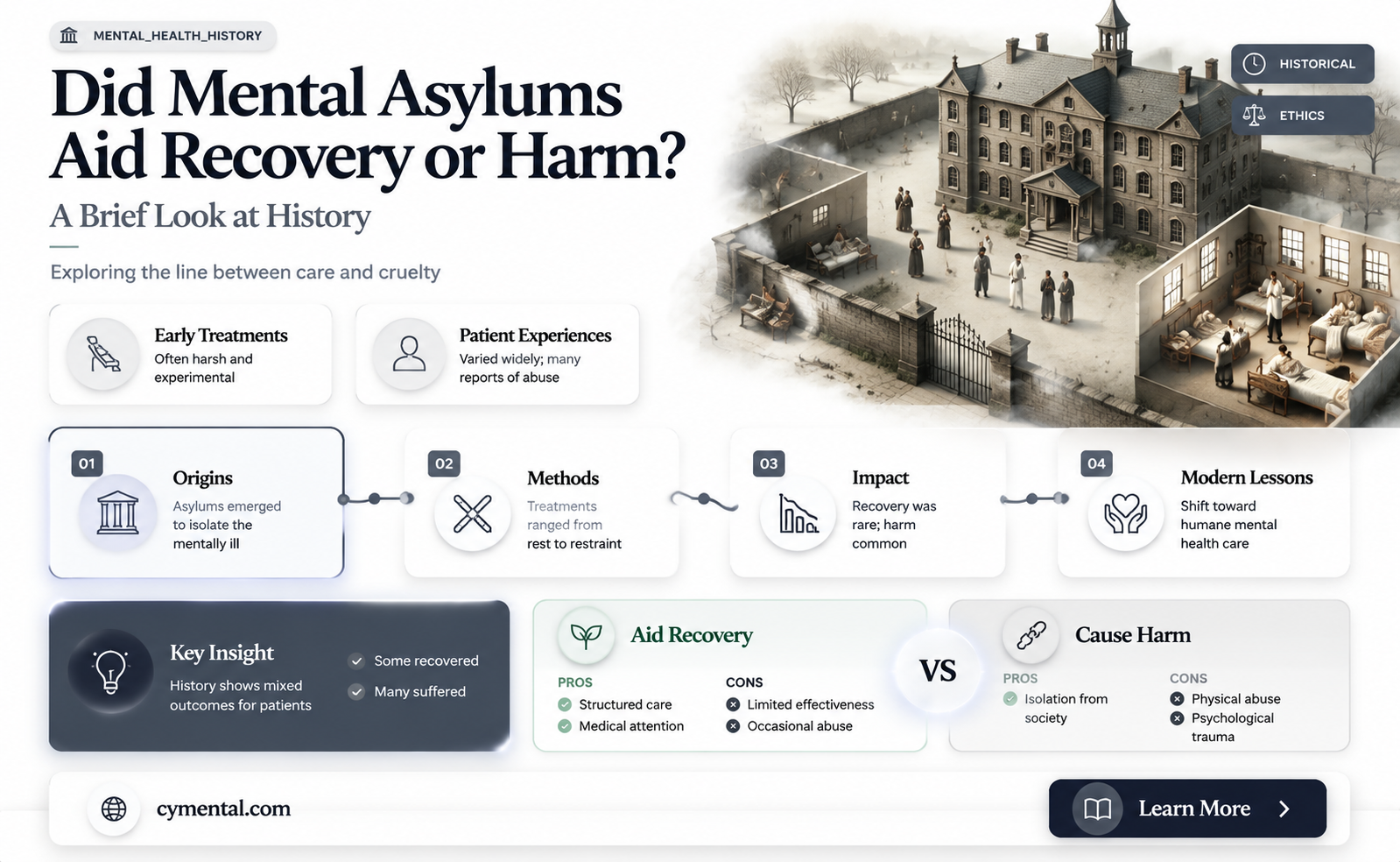
Mental asylums, once the primary institutions for treating individuals with mental illnesses, have long been a subject of debate regarding their efficacy and ethical implications. Established with the intention of providing care and shelter, these facilities often became places of confinement and neglect, where patients were subjected to harsh treatments and isolation. While some argue that asylums offered a structured environment and protection for those who had no other support, critics highlight the dehumanizing conditions, lack of effective therapies, and the stigmatization that often accompanied institutionalization. The question of whether mental asylums genuinely helped people remains complex, reflecting broader societal attitudes toward mental health and the evolution of treatment approaches over time.
| Characteristics | Values |
|---|---|
| Historical Context | Mental asylums emerged in the 18th and 19th centuries as a response to the growing number of people with mental illnesses. Initially, they aimed to provide care and shelter. |
| Intentions | Originally intended to offer treatment, protection, and rehabilitation for individuals with mental illnesses. |
| Treatment Methods | Early treatments included moral therapy (structured routines, occupational activities), but later shifted to controversial methods like lobotomies, electroconvulsive therapy (ECT), and chemical restraints. |
| Effectiveness | Mixed outcomes; some patients benefited from structured environments, while others suffered from neglect, abuse, and ineffective treatments. |
| Deinstitutionalization | Beginning in the mid-20th century, many asylums were closed due to concerns about human rights violations, overcrowding, and poor conditions. Patients were moved to community-based care. |
| Human Rights Concerns | Many asylums were criticized for inhumane conditions, forced treatments, and lack of patient autonomy. |
| Modern Perspective | Today, mental health care emphasizes outpatient treatment, therapy, medication, and community support, largely replacing the asylum model. |
| Legacy | The asylum era highlighted the need for ethical, patient-centered mental health care, influencing modern practices and policies. |
| Current Role of Institutions | Modern psychiatric hospitals focus on short-term, evidence-based treatments and prioritize patient rights, unlike historical asylums. |
| Public Perception | Mental asylums are often associated with stigma, fear, and mistreatment, though some acknowledge their role in early mental health care efforts. |
| Research and Data | Studies show that while some patients improved in asylums, many experienced long-term harm. Modern data supports community-based care as more effective and humane. |
Explore related products


What You'll Learn

Historical Context of Mental Asylums
The rise of mental asylums in the 18th and 19th centuries coincided with a shift in societal attitudes toward mental illness, moving from supernatural explanations to medicalized understandings. This period saw the emergence of institutions like the York Retreat in England (1796), which emphasized moral treatment—a humane approach focusing on structured routines, occupational therapy, and compassionate care. Such asylums initially aimed to provide refuge for those deemed "mad" or "insane," often removed from harsh conditions in poorhouses or prisons. However, the growing demand for these institutions quickly outpaced their capacity, leading to overcrowding and a decline in care quality. By the late 19th century, many asylums had become warehouses for the mentally ill, where patients were subjected to neglect, abuse, and experimental treatments like lobotomies and electroconvulsive therapy without anesthesia.
Consider the case of Dorothea Dix, a 19th-century American reformer who exposed the horrific conditions in which the mentally ill were housed. Her investigations revealed patients chained in basements, lacking basic necessities, and subjected to physical and emotional abuse. Dix’s advocacy led to the establishment of state-funded asylums, intended as sanctuaries. Yet, these institutions often became isolating environments, cutting patients off from their communities and families. The very structures meant to heal inadvertently stigmatized mental illness further, as being "committed" to an asylum carried a social stigma that persisted long after release.
A comparative analysis of asylums across cultures reveals divergent approaches to mental health care. In pre-colonial Africa, for instance, mental illness was often treated within community frameworks, with healers and spiritual leaders playing central roles. Contrast this with the Western model, where asylums became symbols of medical authority, often disregarding cultural or spiritual perspectives. The Japanese *yokei-in* system in the 19th century, inspired by Western asylums but adapted to local customs, highlights the importance of cultural context in mental health treatment. While Western asylums frequently dehumanized patients, some non-Western models maintained a focus on integration and community support, raising questions about the universality of the asylum model.
To understand the legacy of mental asylums, examine their role in shaping modern psychiatry. Early asylums laid the groundwork for diagnostic categories and treatment modalities still in use today. However, their failures—overcrowding, dehumanization, and coercive practices—prompted a global shift toward deinstitutionalization in the mid-20th century. This movement, while intended to prioritize community-based care, often left former patients without adequate support, leading to increased homelessness and incarceration. The historical context of asylums thus serves as a cautionary tale: while they offered a structured environment for some, their systemic flaws underscore the need for ethical, patient-centered mental health care.
Practical takeaways from this history include the importance of balancing medical intervention with humane treatment and community integration. Modern mental health systems must avoid the pitfalls of asylums by ensuring patient autonomy, cultural sensitivity, and accessible community resources. For instance, peer support programs and outpatient therapy models can provide the structure of asylums without the isolation. Policymakers and practitioners should study the asylum era not as a blueprint, but as a reminder of what happens when care prioritizes control over compassion. By learning from these mistakes, we can build mental health systems that truly help people, rather than merely containing them.
Accessing Free Mental Health Support: Options and Resources Available
You may want to see also
Explore related products


Effectiveness of Asylum Treatments
The historical effectiveness of mental asylum treatments is a complex tapestry of progress and pitfalls. Early asylums, emerging in the 18th and 19th centuries, often relied on harsh methods like restraint, isolation, and even physical punishment. These approaches, while intended to control behavior, frequently exacerbated patients' conditions, leading to long-term institutionalization and minimal recovery. For instance, the use of straitjackets and padded cells, though aimed at safety, often caused psychological trauma and deepened feelings of helplessness.
Contrastingly, the late 19th and early 20th centuries saw the introduction of more humane treatments, such as moral therapy, which emphasized structured daily routines, occupational activities, and compassionate care. This approach, pioneered by figures like Philippe Pinel and William Tuke, showed promise in improving patients' quality of life. For example, engaging patients in gardening, crafts, or social interactions helped reduce symptoms of depression and anxiety in some cases. However, these methods were often inconsistent and lacked standardized protocols, limiting their broader effectiveness.
The mid-20th century marked a turning point with the advent of pharmacological treatments, such as chlorpromazine for schizophrenia and lithium for bipolar disorder. These medications, introduced in the 1950s, revolutionized care by directly addressing biochemical imbalances. For instance, chlorpromazine, administered at doses of 100–400 mg daily, significantly reduced psychotic symptoms in many patients, enabling some to leave asylums and reintegrate into society. Yet, overreliance on medication without complementary therapies often left patients functionally impaired, highlighting the need for holistic approaches.
A critical analysis reveals that the effectiveness of asylum treatments was deeply tied to societal attitudes and resources. Asylums in well-funded institutions with trained staff tended to yield better outcomes, while underfunded and overcrowded facilities perpetuated suffering. For example, the deinstitutionalization movement of the 1960s and 1970s, driven by exposés of asylum abuses, led to the closure of many facilities but often left patients without adequate community support. This shift underscores the importance of balancing institutional care with robust outpatient services.
In conclusion, while mental asylums introduced groundbreaking treatments that helped some individuals, their effectiveness was marred by inconsistencies, ethical lapses, and systemic shortcomings. Modern mental health care has built upon these lessons, emphasizing evidence-based therapies, patient-centered approaches, and community integration. For those exploring historical treatments, understanding this evolution offers valuable insights into both the progress and persistent challenges of mental health care.
Mental Health Classes: Empowering Students for Emotional Resilience and Success
You may want to see also
Explore related products


Patient Experiences and Outcomes
Patient experiences within mental asylums varied widely, shaped by the era, location, and individual circumstances. In the 19th and early 20th centuries, asylums often served as custodial institutions, prioritizing containment over treatment. Patients frequently endured harsh conditions, including overcrowding, unsanitary environments, and physical restraints. For instance, in institutions like Bethlem Royal Hospital in London, patients were often displayed as curiosities, their suffering exacerbated by public gawking. Such environments rarely fostered recovery, instead perpetuating trauma and stigma. However, not all experiences were uniformly negative. Some asylums, particularly in later decades, introduced therapies like occupational activities, which provided structure and a sense of purpose for patients. These variations highlight the importance of context in evaluating whether asylums helped or harmed those they housed.
To understand outcomes, consider the shift from asylums to community-based care in the mid-20th century. Deinstitutionalization aimed to improve patient lives by integrating them into society, but it often fell short due to inadequate support systems. For example, many patients released from asylums in the 1960s and 1970s lacked access to consistent medication, therapy, or housing, leading to homelessness and incarceration. This raises a critical question: did asylums, despite their flaws, provide a level of stability that community care failed to replicate? The answer lies in balancing institutional shortcomings with the unintended consequences of their dissolution. Patients who received consistent care within asylums, albeit in a controlled environment, sometimes fared better than those left to navigate fragmented systems.
A persuasive argument can be made for the role of individualized care in determining outcomes. In asylums where staff-to-patient ratios were manageable, and therapies like psychoanalysis or art therapy were available, some patients experienced significant improvement. For instance, the Menninger Clinic in the United States pioneered a patient-centered approach in the mid-20th century, emphasizing understanding and empathy. Patients here reported feeling heard and valued, which contributed to better long-term outcomes. Conversely, asylums that relied on punitive measures, such as electroconvulsive therapy without anesthesia or insulin shock therapy, often left patients physically and emotionally scarred. These contrasting examples underscore the need for humane, tailored treatment, regardless of setting.
Finally, a comparative analysis reveals that the effectiveness of asylums depended on their alignment with modern psychiatric principles. Institutions that embraced evidence-based practices, such as pharmacotherapy and psychotherapy, tended to produce more positive outcomes. For example, the introduction of antipsychotic medications like chlorpromazine in the 1950s revolutionized care, allowing many patients to manage symptoms and regain functionality. However, even with advancements, systemic issues like understaffing and stigmatization persisted. Practical tips for improving patient experiences include fostering therapeutic alliances between staff and patients, ensuring access to diverse treatment modalities, and involving families in care plans. While asylums were not inherently beneficial, their legacy offers lessons on what works—and what doesn’t—in mental health care.
Sleep's Healing Power: Repairing Emotional and Mental Health Naturally
You may want to see also
Explore related products


Social Stigma and Isolation
Mental asylums, historically, were often seen as a solution to societal unease with mental illness, yet they inadvertently became breeding grounds for social stigma and isolation. Patients were frequently labeled as "mad" or "incurable," and their confinement reinforced the idea that mental illness was a personal failing rather than a medical condition. This labeling extended beyond the asylum walls, as communities often ostracized families associated with institutionalized members, creating a cycle of shame and secrecy. For instance, in 19th-century America, families would often hide the existence of a mentally ill relative, fearing social repercussions that could affect marriage prospects or business relationships.
The physical isolation of asylums further exacerbated the problem. Located on the outskirts of towns or in remote areas, these institutions were designed to keep patients out of sight and out of mind. While this separation was justified as necessary for treatment, it effectively cut patients off from their support networks. Visits from family and friends were rare, and when they did occur, the clinical, often bleak environment of the asylum discouraged meaningful interaction. This isolation not only hindered recovery but also perpetuated the myth that mental illness was contagious or morally corrupting, deepening societal prejudice.
Consider the case of Bethlem Royal Hospital in London, famously known as "Bedlam," where patients were exhibited as curiosities in the 18th century. Such practices dehumanized individuals, reducing them to spectacles for public amusement. This public exposure reinforced the stigma, as mental illness became synonymous with entertainment rather than empathy. Even today, the term "bedlam" is used colloquially to describe chaos, a lingering reminder of how asylums shaped public perception of mental health.
To address this legacy, modern mental health advocacy emphasizes community integration and destigmatization. Programs like peer support groups and open dialogue initiatives aim to humanize mental illness, fostering understanding rather than fear. For example, the "Hearing Voices Network" encourages individuals to share their experiences without judgment, challenging the isolation that once defined asylum life. Practical steps include educating schools and workplaces about mental health, promoting media representation that avoids stereotypes, and creating safe spaces for open conversations.
In conclusion, while mental asylums were intended to provide care, their role in fostering social stigma and isolation cannot be overlooked. By examining historical examples and implementing contemporary strategies, society can work toward dismantling the barriers that once confined individuals both physically and socially. The takeaway is clear: true healing begins with inclusion, not isolation.
Can Lawyers Improve Mental Health Outcomes in Legal Cases?
You may want to see also
Explore related products


Alternatives to Institutionalization
The rise of community-based mental health services has offered a compelling alternative to traditional institutionalization, shifting the focus from confinement to integration. These services, often delivered through local clinics or outreach programs, provide individuals with access to therapy, medication management, and crisis intervention within their own neighborhoods. For instance, Assertive Community Treatment (ACT) teams, composed of psychiatrists, nurses, and social workers, offer intensive, personalized care to those with severe mental illnesses, reducing the need for hospitalization. Studies show that ACT can decrease psychiatric admissions by up to 50%, demonstrating its effectiveness in stabilizing individuals in their natural environments. This approach not only preserves personal autonomy but also fosters social connections, which are critical for long-term recovery.
Implementing home-based care is another viable alternative, particularly for individuals who thrive in familiar settings. This model involves trained professionals visiting patients at home to provide therapy, monitor medication adherence, and assess living conditions. For example, the Program for Assertive Community Treatment (PACT) in the United States has shown that regular home visits can improve symptom management and reduce relapse rates. Caregivers can enhance this approach by maintaining a structured daily routine, ensuring a safe living space, and encouraging participation in household activities. While this option requires significant coordination and resources, it empowers individuals to manage their mental health without the disruption of institutionalization.
Peer support programs represent a unique and powerful alternative, leveraging shared experiences to foster healing. These programs connect individuals with mental health challenges to peers who have successfully navigated similar struggles. For instance, the Hearing Voices Network provides group sessions where participants share coping strategies for auditory hallucinations, reducing feelings of isolation and stigma. Research indicates that peer support can improve self-esteem, social functioning, and overall quality of life. To maximize benefits, participants should engage consistently, set realistic goals, and complement peer support with professional treatment when necessary. This approach highlights the transformative potential of human connection in mental health care.
Finally, integrating mental health services into primary care settings offers a seamless and accessible alternative to institutionalization. Collaborative care models, such as those implemented in the United Kingdom’s Improving Access to Psychological Therapies (IAPT) program, embed mental health professionals within general practitioner offices. This ensures that individuals receive timely interventions for conditions like depression and anxiety without the need for specialized referrals. Patients can benefit by openly discussing mental health concerns during routine check-ups and following through with recommended therapies. This integrated approach not only reduces the stigma associated with seeking mental health care but also addresses issues early, preventing escalation to crises that might otherwise require hospitalization.
Mental Health Support: A Key to Stable Housing Solutions
You may want to see also
Frequently asked questions
Historically, mental asylums had mixed outcomes. While some provided shelter, medical care, and structure for those with severe mental illnesses, many were overcrowded, underfunded, and used inhumane treatments, often causing more harm than good.
No, mental asylums were one of several options, but they became the primary solution during the 19th and early 20th centuries. Other approaches included home care, community support, and early forms of psychotherapy, though these were less common.
Yes, mental asylums often reinforced stigma by isolating individuals and portraying them as dangerous or incurable. The harsh conditions and negative public perception of asylums contributed to societal fear and misunderstanding of mental illness.
Yes, the shift from asylums to community-based care, advancements in medication, and evidence-based therapies like cognitive-behavioral therapy (CBT) have significantly improved mental health treatment. However, challenges like access to care and stigma still persist.