Noah Parker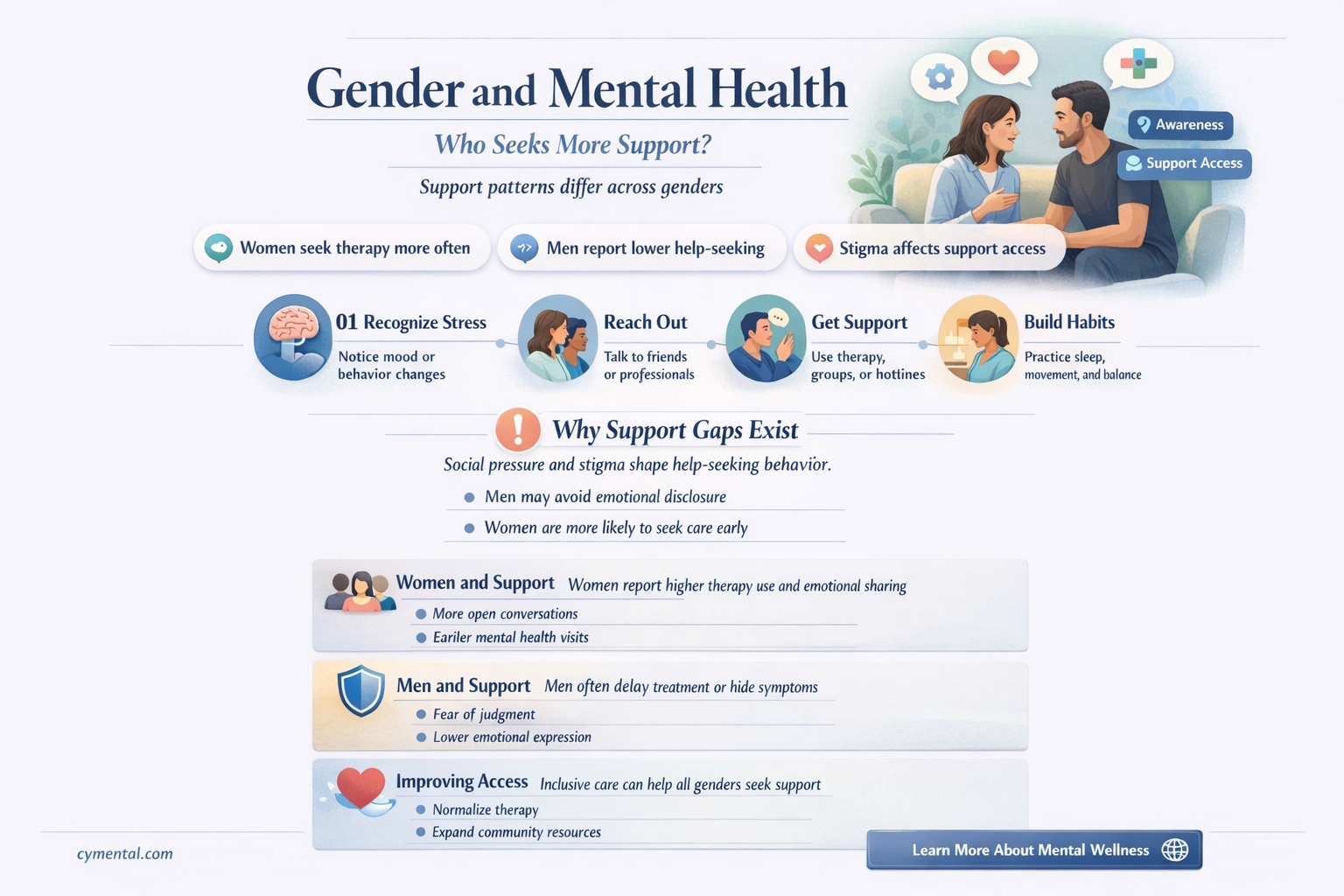
The question of whether men or women receive more mental health support is a complex and multifaceted issue, influenced by societal norms, cultural expectations, and systemic barriers. Historically, women have been more likely to seek and receive mental health treatment, often due to greater openness about emotional struggles and a higher prevalence of certain conditions like anxiety and depression. However, men, while statistically less likely to seek help, face unique challenges such as stigma surrounding vulnerability and a cultural emphasis on stoicism, which can lead to underreporting and untreated mental health issues. This disparity highlights the need for gender-sensitive approaches to mental health care that address the specific barriers each group faces.
| Characteristics | Values |
|---|---|
| Gender Seeking Mental Health Treatment | Women are more likely to seek and receive mental health treatment than men. |
| Prevalence of Mental Health Issues | Women are diagnosed with common mental health disorders (e.g., depression, anxiety) at higher rates than men. Men, however, have higher rates of substance abuse and antisocial disorders. |
| Help-Seeking Behavior | Women are more likely to report psychological distress and seek help, while men often underreport symptoms and avoid treatment due to stigma or societal expectations. |
| Suicide Rates | Men die by suicide at significantly higher rates than women, despite women having higher rates of suicidal ideation. This is partly due to men using more lethal means and seeking help less often. |
| Barriers to Treatment for Men | Stigma around masculinity, fear of appearing weak, and lack of male-friendly mental health services contribute to lower treatment rates among men. |
| Therapy Utilization | Women are more likely to engage in therapy or counseling, while men may prefer self-reliance or informal support systems. |
| Medication Use | Women are more likely to be prescribed and take psychiatric medications for mental health conditions. |
| Support Systems | Women tend to have stronger social support networks, which may encourage help-seeking behavior, whereas men often face isolation or reluctance to discuss mental health. |
| Cultural and Societal Norms | Traditional gender roles often discourage men from expressing vulnerability, leading to lower rates of mental health care utilization. |
| Awareness and Education | Women are more likely to be aware of mental health resources and educated about mental health issues, partly due to societal focus on women's mental health. |
Explore related products


What You'll Learn

Gender disparities in mental health treatment access
Women are more likely to seek and receive mental health treatment than men, a disparity rooted in societal norms, behavioral differences, and systemic barriers. Studies show that women are nearly twice as likely as men to be diagnosed with anxiety or depression, and they account for approximately two-thirds of all antidepressant prescriptions globally. This higher utilization of mental health services is often attributed to women’s greater willingness to acknowledge emotional distress and seek help, whereas men are frequently socialized to suppress vulnerability and equate mental health struggles with weakness. However, this does not imply that women have better access to care; instead, it highlights a complex interplay between gendered behaviors and healthcare systems.
Consider the role of stigma in shaping access to mental health treatment. Men face intense societal pressure to conform to ideals of stoicism and self-reliance, which discourages them from seeking help. For example, a 2019 survey by the American Psychological Association found that 60% of men reported feeling uncomfortable discussing personal problems with a mental health professional, compared to 48% of women. This reluctance contributes to men being less likely to receive timely interventions, even when they experience severe mental health issues. Conversely, women may face stigma related to being labeled "overly emotional" or "hysterical," which can lead to their symptoms being dismissed or trivialized by healthcare providers.
Systemic barriers further exacerbate gender disparities in mental health treatment access. Women are more likely to be insured and have a regular healthcare provider, which facilitates entry into the mental health system. Men, particularly those in lower socioeconomic brackets, often lack consistent access to healthcare services, making it harder for them to initiate treatment. Additionally, mental health services are frequently designed with a one-size-fits-all approach that fails to address gender-specific needs. For instance, trauma-informed care for women often focuses on interpersonal violence, while men’s experiences with trauma, such as workplace accidents or military service, may go unaddressed.
Practical steps can be taken to bridge the gender gap in mental health treatment access. Healthcare providers should adopt gender-sensitive approaches, such as offering men confidential and non-judgmental spaces to discuss their mental health. Employers can play a role by implementing workplace policies that encourage mental health days and provide resources tailored to both male and female employees. Public health campaigns should challenge harmful gender stereotypes, normalizing emotional expression for men and validating women’s experiences without reinforcing negative biases. For individuals, recognizing the signs of mental health struggles—such as persistent sadness, irritability, or changes in sleep patterns—and taking proactive steps to seek help can make a significant difference.
Ultimately, addressing gender disparities in mental health treatment access requires a multifaceted approach that tackles societal norms, systemic barriers, and individual behaviors. While women currently outpace men in seeking treatment, this does not signify equitable access or outcomes. By fostering a culture that encourages help-seeking for all genders and designing inclusive mental health services, we can move toward a system that truly serves everyone.
Furry Fandom and Mental Health: Exploring Emotional Benefits and Support
You may want to see also
Explore related products


Societal stigma affecting men seeking mental health support
Men are less likely to seek mental health support than women, and societal stigma plays a significant role in this disparity. Traditional gender norms often equate masculinity with stoicism, emotional restraint, and self-reliance, leaving little room for vulnerability or seeking help. This cultural expectation creates a barrier for men who may be struggling with mental health issues, as admitting to such struggles can be perceived as a sign of weakness. For instance, phrases like "man up" or "boys don't cry" reinforce the idea that emotional expression is unmasculine, deterring men from reaching out for support.
Consider the workplace, a domain where these gendered expectations are particularly pronounced. Men are often encouraged to prioritize productivity and competitiveness, leaving little space for discussions about mental well-being. A 2019 study published in the *Journal of Occupational Health Psychology* found that men were less likely than women to disclose mental health concerns to their employers, fearing negative consequences such as being perceived as less competent or reliable. This reluctance to seek help can exacerbate mental health issues, leading to higher rates of burnout, substance abuse, and even suicide among men.
The stigma also manifests in the language and attitudes surrounding mental health. Men who do seek help may face ridicule or skepticism, with their struggles dismissed as "not a big deal" or something they should "just get over." This invalidation can discourage further attempts to seek support. For example, a man experiencing anxiety might be told to "toughen up," while a woman with similar symptoms is more likely to receive empathy and encouragement to seek professional help. This double standard perpetuates the cycle of silence and suffering among men.
Practical steps can be taken to address this stigma. First, public awareness campaigns should challenge traditional notions of masculinity by highlighting strong male role models who openly discuss their mental health struggles. Organizations like HeadsUp and Movember have made strides in this area, but more widespread efforts are needed. Second, workplaces should implement policies that normalize mental health discussions, such as offering confidential counseling services and providing mental health days. Finally, healthcare providers can play a role by creating safe, non-judgmental spaces for men to express their concerns, using gender-sensitive language and approaches.
Breaking down societal stigma requires collective effort, but the benefits are clear: when men feel empowered to seek mental health support, it not only improves their individual well-being but also fosters healthier relationships and communities. By redefining masculinity to include emotional openness and vulnerability, society can create an environment where seeking help is seen as a sign of strength, not weakness.
Amy Bouzaglo's Mental Health Journey: Did She Seek Professional Help?
You may want to see also
Explore related products


Women’s higher rates of mental health diagnoses
Women are diagnosed with mental health conditions at significantly higher rates than men, a trend that persists across various disorders, including depression, anxiety, and post-traumatic stress disorder (PTSD). For instance, women are twice as likely as men to be diagnosed with depression, with 10.4% of women experiencing at least one major depressive episode in the past year compared to 5.5% of men, according to the National Institute of Mental Health. This disparity raises questions about the underlying factors contributing to these higher rates, such as biological differences, societal pressures, or variations in help-seeking behavior.
One critical factor is the biological and hormonal differences between genders. Women’s hormonal fluctuations, particularly during menstruation, pregnancy, and menopause, can increase vulnerability to mood disorders. For example, postpartum depression affects approximately 1 in 8 women, a condition directly linked to hormonal shifts after childbirth. Additionally, women’s brains may process stress differently due to variations in serotonin and cortisol levels, which play a role in mood regulation. These physiological differences provide a partial explanation for why women are more frequently diagnosed with certain mental health conditions.
However, societal and cultural factors also play a significant role. Women often face greater societal pressures, such as balancing work and family responsibilities, which can lead to chronic stress and burnout. Gender-based violence, including domestic abuse and sexual assault, disproportionately affects women and is a known risk factor for PTSD and depression. For instance, 1 in 3 women worldwide experience physical or sexual violence in their lifetime, according to the World Health Organization. These traumatic experiences contribute to higher rates of mental health diagnoses among women.
Despite higher diagnosis rates, women are not necessarily receiving better mental health care. In fact, women are more likely to internalize symptoms, such as feeling excessive guilt or worthlessness, while men tend to externalize them through anger or substance abuse. This difference in symptom expression can lead to women being more readily identified and diagnosed, but it does not guarantee they receive adequate treatment. Stigma, lack of access to care, and financial barriers often prevent women from getting the support they need, highlighting a gap between diagnosis and effective treatment.
To address this issue, targeted interventions are essential. Mental health programs should incorporate gender-sensitive approaches, such as trauma-informed care for women who have experienced violence. Employers can implement policies that reduce work-life imbalance, such as flexible scheduling and paid parental leave, to alleviate stressors unique to women. Additionally, increasing access to affordable mental health services, particularly in underserved communities, can ensure that women receive timely and effective treatment. By addressing both biological and societal factors, we can work toward reducing the disparity in mental health diagnoses and improving outcomes for women.
Supporting Mental Health: Practical Ways to Help Loved Ones Heal
You may want to see also
Explore related products


Men’s underreporting of mental health issues
Men are significantly less likely to report mental health issues compared to women, a disparity rooted in societal norms, stigma, and systemic barriers. Research indicates that while women are more likely to seek help for conditions like anxiety and depression, men often internalize their struggles, leading to underreporting. For instance, a 2021 study published in *JAMA Psychiatry* found that men are 50% less likely than women to seek treatment for mental health concerns. This gap is not merely a personal choice but a reflection of deeper cultural expectations that equate masculinity with stoicism and emotional restraint.
The consequences of underreporting are dire. Men account for approximately 75% of suicides globally, a statistic that underscores the lethal impact of unaddressed mental health issues. Unlike women, who are more likely to attempt suicide through less lethal means, men often choose violent methods, increasing the likelihood of fatality. This disparity highlights the urgent need to address the barriers preventing men from seeking help. For example, campaigns like Movember have begun to challenge traditional notions of masculinity, encouraging men to open up about their mental health struggles.
One practical step to combat underreporting is to create male-friendly mental health services. These could include peer-led support groups, online counseling platforms, or therapy sessions integrated into workplaces. For instance, some organizations offer "lunch-and-learn" sessions on mental health, providing men with a low-stakes environment to engage with the topic. Additionally, healthcare providers can use gender-sensitive language and avoid stigmatizing terms that might deter men from seeking help. For men aged 18–35, who are particularly vulnerable to underreporting, targeted interventions like social media campaigns or gaming community outreach could be effective.
Despite these efforts, caution must be exercised to avoid reinforcing stereotypes. While it’s important to acknowledge the unique challenges men face, solutions should not imply that mental health is a gender-specific issue. Instead, they should focus on creating inclusive spaces where everyone feels safe to seek help. For example, a 2020 study in *Psychology of Men & Masculinities* found that men were more likely to engage with mental health resources when they were framed as tools for self-improvement rather than vulnerability. This reframing can help dismantle the stigma surrounding mental health while addressing the specific barriers men face.
In conclusion, men’s underreporting of mental health issues is a complex problem requiring multifaceted solutions. By understanding the cultural and systemic factors at play, we can design interventions that encourage men to seek help without perpetuating harmful stereotypes. Practical steps, such as gender-sensitive services and targeted outreach, can make a significant difference. Ultimately, the goal is to create a society where mental health is prioritized for everyone, regardless of gender.
Bilingual Brains: Can Language Learning Aid Mental Health Disorders?
You may want to see also
Explore related products


Impact of gender roles on help-seeking behavior
Gender roles significantly influence how individuals perceive and seek mental health support, creating disparities between men and women in both access and utilization of resources. Traditionally, societal expectations have encouraged women to express emotions openly, fostering an environment where seeking help is more socially acceptable. For instance, women are twice as likely as men to seek therapy, according to the National Institute of Mental Health. This disparity is not solely due to higher rates of mental health issues among women but also because cultural norms permit—even expect—women to address emotional struggles. Conversely, men are often conditioned to suppress emotions, equating vulnerability with weakness. This stigma discourages them from seeking help, even when facing severe mental health challenges.
Consider the language used in everyday conversations: phrases like "man up" or "boys don’t cry" reinforce the idea that emotional resilience is a masculine trait. Such messaging can lead men to internalize their struggles, fearing judgment or rejection if they admit to needing help. For example, a 2019 study published in *JAMA Psychiatry* found that men are less likely to disclose symptoms of depression, often masking them with anger or substance abuse. This behavior not only delays treatment but also exacerbates underlying issues, contributing to higher suicide rates among men, who account for approximately 75% of suicides globally.
To address this imbalance, mental health initiatives must challenge rigid gender norms and redefine what it means to seek help. One practical approach is to create male-focused support programs that emphasize strength in vulnerability. For instance, campaigns like Movember have successfully engaged men by framing mental health conversations within the context of physical health and masculinity. Similarly, peer-led groups can provide safe spaces for men to share experiences without fear of judgment. Employers can also play a role by offering mental health resources tailored to male employees, such as anonymous counseling services or workshops on emotional intelligence.
However, it’s crucial to avoid reinforcing stereotypes while attempting to bridge the gap. Women, despite being more likely to seek help, often face barriers such as dismissal of symptoms or inadequate treatment. For example, women are frequently misdiagnosed or undertreated for conditions like ADHD or autism, which are often perceived as "male disorders." Mental health professionals must remain vigilant to biases and ensure that all patients receive equitable care. Additionally, both men and women benefit from education on recognizing mental health symptoms and understanding the importance of early intervention.
In conclusion, dismantling the impact of gender roles on help-seeking behavior requires a multifaceted approach. By normalizing vulnerability for men, addressing biases in treatment for women, and fostering inclusive support systems, society can create an environment where everyone feels empowered to prioritize their mental well-being. Practical steps, such as integrating mental health education into schools and workplaces, can further break down barriers. Ultimately, the goal is not to conform to outdated norms but to redefine strength as the courage to seek help when needed.
Exercise and Mental Health: Unlocking the Mind-Body Connection for Wellness
You may want to see also
Frequently asked questions
Women are generally more likely to seek mental health help than men, often due to societal norms encouraging emotional expression in women and stigmatizing it in men.
Men often avoid seeking help due to societal expectations of masculinity, fear of appearing weak, and a tendency to internalize emotions rather than express them.
While both genders experience similar mental health issues, women are more likely to report anxiety and depression, while men are more prone to substance abuse and behavioral disorders.
Reducing stigma, promoting mental health awareness, and creating safe, non-judgmental spaces tailored to men’s needs can encourage them to seek help.