Lucas Bennett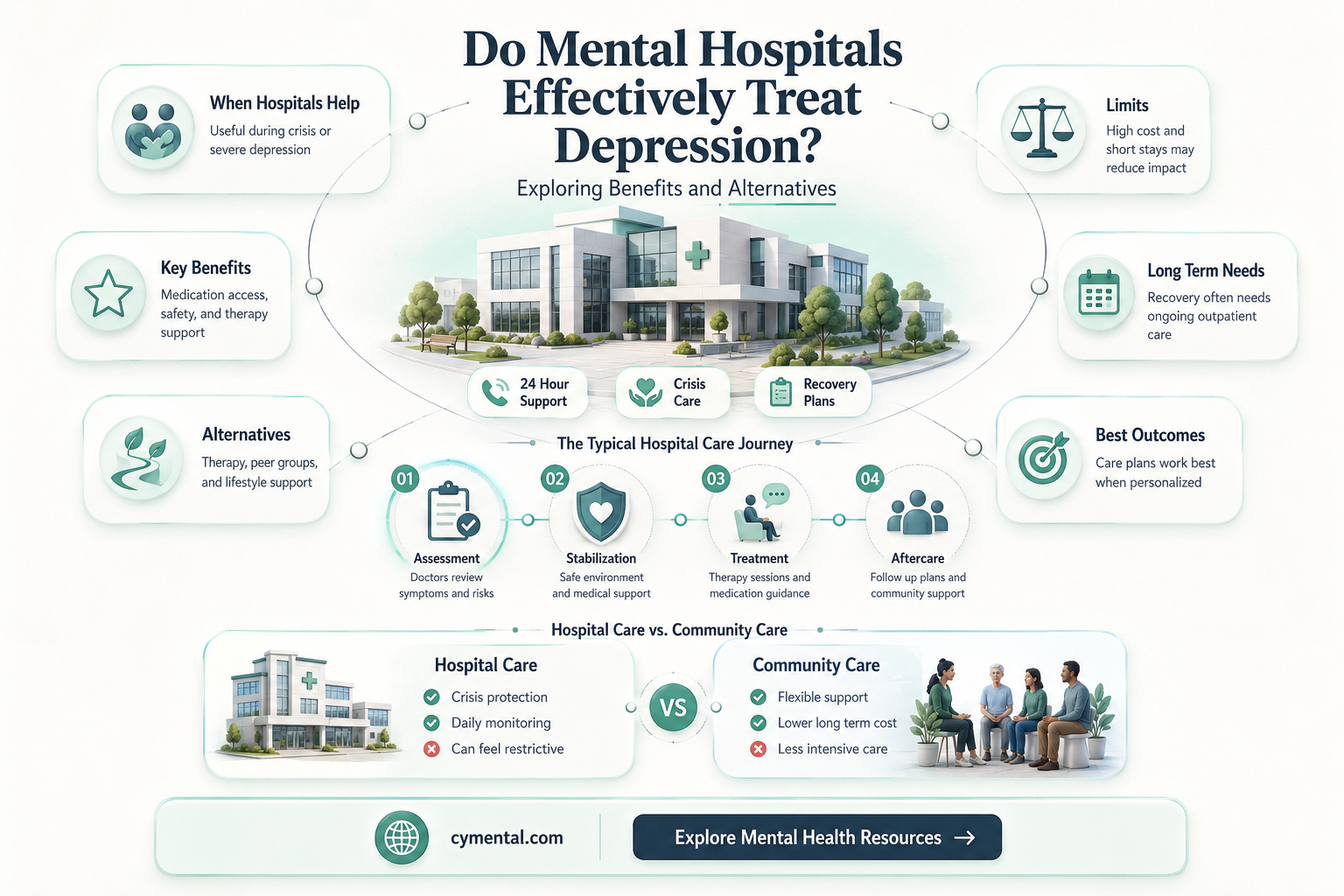
Mental hospitals, also known as psychiatric hospitals, play a crucial role in the treatment of severe depression, particularly when individuals are at risk of self-harm, suicidal ideation, or are unable to function in daily life. These facilities offer intensive, round-the-clock care, including medication management, psychotherapy, and structured therapeutic activities, which can be highly effective for stabilizing acute symptoms. While mental hospitals are not typically the first line of treatment for depression—which often begins with outpatient therapy and medication—they provide a vital safety net for those in crisis. However, their long-term effectiveness depends on follow-up care and integration with community-based support systems, as hospitalization alone may not address the underlying causes of depression. Thus, while mental hospitals can be life-saving in emergencies, they are most beneficial when part of a comprehensive treatment plan.
| Characteristics | Values |
|---|---|
| Effectiveness of Treatment | Mental hospitals can provide intensive, structured treatment for severe depression, including medication management, therapy, and crisis intervention. |
| Types of Therapy Offered | Cognitive Behavioral Therapy (CBT), Dialectical Behavior Therapy (DBT), group therapy, and individual counseling. |
| Duration of Stay | Typically short-term (days to weeks) for stabilization, though long-term care is available for chronic cases. |
| Medication Management | Psychiatrists monitor and adjust medications to address depressive symptoms effectively. |
| 24/7 Supervision | Patients receive round-the-clock care, ensuring safety and immediate support during crises. |
| Success Rates | Studies show significant improvement in symptoms for 60-70% of patients after hospitalization. |
| Cost | Expensive, often requiring insurance coverage; out-of-pocket costs vary widely. |
| Stigma | Hospitalization may carry social stigma, though awareness is increasing. |
| Aftercare Support | Most hospitals provide discharge plans, including outpatient therapy and support groups, to prevent relapse. |
| Suitability | Best for severe, treatment-resistant depression or suicidal ideation; not typically first-line treatment. |
| Patient Experience | Varies; some report positive outcomes, while others find the environment restrictive or traumatic. |
| Alternatives | Outpatient therapy, partial hospitalization programs (PHPs), and intensive outpatient programs (IOPs). |
Explore related products


$14.97 $14.95


What You'll Learn

Effectiveness of Therapy Programs
Therapy programs in mental hospitals often serve as a cornerstone for treating depression, but their effectiveness hinges on several factors, including the type of therapy, its duration, and the individual’s engagement. Cognitive Behavioral Therapy (CBT), for instance, is widely recognized as one of the most effective modalities. Studies show that 50–75% of patients experience significant improvement after 12–20 sessions, typically conducted over 3–4 months. This structured approach helps patients identify and reframe negative thought patterns, offering practical tools to manage symptoms. However, success varies; some individuals may require additional interventions, such as interpersonal therapy or mindfulness-based cognitive therapy, which have shown efficacy in specific cases, particularly for chronic or treatment-resistant depression.
The setting of a mental hospital can amplify the impact of therapy programs by providing a controlled, immersive environment. Inpatient programs often combine individual therapy with group sessions, psychoeducation, and medication management, creating a holistic treatment plan. For example, dialectical behavior therapy (DBT) has proven effective in hospital settings for patients with severe depression and suicidal ideation, reducing self-harm behaviors by up to 50% in some studies. The intensity of inpatient therapy—often 20–30 hours of structured activities per week—allows for rapid progress, though it may not be suitable for everyone due to its demanding nature. Outpatient programs, while less intensive, offer flexibility and can be equally effective when patients adhere to the recommended frequency of sessions.
A critical factor in the effectiveness of therapy programs is the therapeutic alliance—the relationship between the patient and therapist. Research indicates that a strong alliance accounts for up to 30% of treatment outcomes, regardless of the therapy type. Mental hospitals often prioritize this by assigning dedicated therapists and ensuring continuity of care. However, patients must actively participate, complete homework assignments, and apply learned skills outside of sessions. For adolescents and young adults, family involvement can significantly enhance outcomes, as evidenced by programs like Family-Based Treatment, which has shown a 90% recovery rate for depression when combined with individual therapy.
Despite their potential, therapy programs in mental hospitals are not without limitations. Dropout rates can be as high as 40%, often due to stigma, financial constraints, or perceived lack of progress. Additionally, not all patients respond to traditional therapies, necessitating alternative approaches like art therapy, equine therapy, or transcranial magnetic stimulation (TMS) for those who do not improve with standard treatments. Hospitals must tailor programs to individual needs, incorporating cultural sensitivity and addressing comorbid conditions like anxiety or substance abuse, which can complicate recovery. When executed thoughtfully, therapy programs in mental hospitals can be transformative, offering a pathway to sustained mental health for those struggling with depression.
Dance Therapy: Unlocking Mental Wellness Through Movement and Expression
You may want to see also
Explore related products


Role of Medication Management
Medication management is a cornerstone of depression treatment in mental hospitals, offering a structured approach to stabilize symptoms and restore functioning. Unlike outpatient settings, inpatient care allows for close monitoring of medication efficacy and side effects, ensuring adjustments are made swiftly. For instance, selective serotonin reuptake inhibitors (SSRIs) like fluoxetine or sertraline are commonly initiated at lower doses (e.g., 10–20 mg/day) and titrated upward under supervision to reach therapeutic levels (typically 20–60 mg/day). This precision is critical for patients with severe or treatment-resistant depression, where delays in response can exacerbate risk.
The role of medication management extends beyond dosage optimization. Inpatient teams often employ polypharmacy strategies, combining antidepressants with mood stabilizers (e.g., lithium or lamotrigine) or atypical antipsychotics (e.g., aripiprazole 2–5 mg/day) for augmented effects. However, this approach requires vigilance for drug interactions and adverse effects, such as metabolic changes or extrapyramidal symptoms. Mental hospitals provide the necessary infrastructure for lab monitoring (e.g., liver function tests, lipid panels) and physical exams, ensuring safety while maximizing therapeutic benefit.
A critical yet underemphasized aspect is patient education. Inpatient settings offer opportunities to demystify medications, addressing misconceptions that often lead to nonadherence. For example, explaining that SSRIs take 4–6 weeks to achieve full effect can reduce frustration and encourage compliance. Nurses and pharmacists play a pivotal role here, providing clear instructions on timing (e.g., taking escitalopram in the morning to minimize insomnia) and potential side effects (e.g., managing nausea with food).
Comparatively, outpatient medication management often lacks the intensity and immediacy of inpatient care. While outpatient providers can prescribe and adjust medications, they rely on self-reported symptoms and sporadic follow-ups, which can delay progress. In contrast, mental hospitals offer daily assessments, allowing clinicians to observe subtle changes in mood, energy, or cognition that might indicate a need for intervention. This real-time feedback loop is particularly valuable for patients with suicidal ideation or psychotic features, where rapid stabilization is paramount.
Ultimately, medication management in mental hospitals serves as both a therapeutic intervention and a diagnostic tool. By observing how patients respond to medications in a controlled environment, clinicians can refine diagnoses (e.g., differentiating bipolar depression from unipolar depression) and tailor long-term treatment plans. For example, a lack of response to multiple antidepressants might prompt consideration of transcranial magnetic stimulation (TMS) or electroconvulsive therapy (ECT). While not a standalone solution, medication management in inpatient settings provides a foundation for comprehensive depression care, bridging the gap between crisis intervention and sustained recovery.
Empowering Self-Care: Practical Strategies to Help Yourself Thrive Daily
You may want to see also
Explore related products


$12.23 $14.39


Impact of Inpatient Care
Inpatient care for depression offers a structured environment where individuals receive intensive, round-the-clock treatment, often including medication management, psychotherapy, and group therapy. This level of care is particularly beneficial for those experiencing severe symptoms, such as suicidal ideation or an inability to function daily. For example, a study published in the *Journal of Clinical Psychiatry* found that patients admitted for inpatient treatment showed significant reductions in depressive symptoms within the first two weeks, with many reporting improved coping mechanisms upon discharge. The controlled setting allows for close monitoring of medication efficacy, such as adjusting dosages of selective serotonin reuptake inhibitors (SSRIs) like fluoxetine (20–60 mg/day) or sertraline (50–200 mg/day), to achieve optimal therapeutic effects.
However, the impact of inpatient care extends beyond symptom reduction; it also addresses the behavioral and social aspects of depression. Patients participate in structured daily activities, such as art therapy, mindfulness exercises, and physical fitness programs, which help rebuild routines and foster a sense of purpose. For instance, a 35-year-old patient with treatment-resistant depression reported that the combination of cognitive-behavioral therapy (CBT) sessions and group discussions during inpatient care helped her challenge negative thought patterns and develop healthier interpersonal skills. This holistic approach often leads to more sustained recovery compared to outpatient treatment alone.
One caution is that inpatient care can be disruptive to a person’s life, requiring them to step away from work, family, and social obligations. This temporary isolation, while necessary for some, may exacerbate feelings of disconnection or guilt. Additionally, the cost of inpatient treatment, which averages $1,000–$3,000 per day in the U.S., can be a significant barrier for many individuals. To mitigate these challenges, some hospitals offer partial hospitalization programs (PHPs) or intensive outpatient programs (IOPs) as transitional steps, providing similar therapeutic interventions without full-time residency.
Despite these considerations, the long-term benefits of inpatient care are evident in relapse prevention and improved quality of life. A follow-up study in the *American Journal of Psychiatry* revealed that patients who completed inpatient treatment were 40% less likely to experience a depressive relapse within the first year compared to those who received outpatient care alone. Practical tips for maximizing the impact of inpatient care include actively engaging in therapy sessions, maintaining a journal to track progress, and involving family members in discharge planning to ensure a supportive home environment.
In conclusion, while inpatient care is not a one-size-fits-all solution, its structured, intensive nature makes it a powerful tool for individuals with severe or treatment-resistant depression. By addressing biological, psychological, and social factors, it provides a foundation for lasting recovery, though careful consideration of its limitations and costs is essential. For those in crisis, it can be a lifeline, offering hope and tangible strategies to reclaim their lives.
Ice Baths and Mental Health: Uncovering the Mind-Body Connection
You may want to see also
Explore related products




Supportive Environment Benefits
Mental hospitals, often referred to as psychiatric hospitals, are designed to provide intensive, structured care for individuals with severe mental health conditions, including depression. One of the most significant advantages of these facilities is the creation of a supportive environment, which plays a pivotal role in the recovery process. Unlike outpatient settings, mental hospitals offer a 24/7 immersive experience where every aspect of the environment is tailored to foster healing. This includes safe physical spaces, consistent routines, and a community of professionals and peers who understand the complexities of depression.
Consider the structured daily schedules in mental hospitals, which are a cornerstone of their supportive environment. Patients typically follow a routine that includes therapy sessions, group activities, meals, and downtime. This predictability reduces anxiety and provides a sense of stability, which is often lacking in the lives of individuals battling depression. For example, a typical day might start with a morning mindfulness session, followed by individual therapy, a group discussion on coping strategies, and end with a creative art therapy session. Such routines not only keep patients engaged but also help them develop healthy habits that can be maintained post-discharge.
Another critical component of the supportive environment is the access to multidisciplinary care teams. In mental hospitals, patients are not just treated by psychiatrists but also by psychologists, social workers, nurses, and occupational therapists. This collaborative approach ensures that all facets of depression—biological, psychological, and social—are addressed. For instance, a patient might receive medication management from a psychiatrist, cognitive-behavioral therapy from a psychologist, and family counseling from a social worker. This holistic care model is often more effective than the fragmented care available in outpatient settings.
The peer support found in mental hospitals is equally transformative. Being surrounded by individuals who share similar struggles fosters a sense of belonging and reduces feelings of isolation, which are common in depression. Group therapy sessions, communal meals, and shared activities create opportunities for patients to connect, share experiences, and learn from one another. Research shows that peer support can significantly improve treatment outcomes, as it provides emotional validation and practical advice from those who truly understand the challenges of living with depression.
However, it’s essential to acknowledge that the benefits of a supportive environment in mental hospitals are not one-size-fits-all. Individual preferences and needs must be considered. For some, the intensity of inpatient care may feel overwhelming, while others may thrive in such a structured setting. Additionally, the duration of stay plays a role; short-term hospitalization (e.g., 7–14 days) may provide immediate crisis stabilization, while longer stays (e.g., 30+ days) allow for deeper therapeutic work. Tailoring the environment to the patient’s specific needs—whether through personalized therapy plans or flexible routines—maximizes the potential for recovery.
In conclusion, the supportive environment of mental hospitals offers a unique and powerful tool in the fight against depression. By combining structured routines, multidisciplinary care, and peer support, these facilities create a space where healing can flourish. While not every individual may benefit equally, the potential for transformative change is undeniable. For those struggling with severe or treatment-resistant depression, a mental hospital’s supportive environment may be the key to reclaiming their mental health.
Melodies of Healing: Music's Powerful Impact on Mental Well-Being
You may want to see also
Explore related products


Long-Term Recovery Outcomes
Mental hospitals, often referred to as psychiatric hospitals, play a pivotal role in the treatment of severe depression, particularly when outpatient care falls short. While short-term stabilization is a primary goal, the true measure of their effectiveness lies in long-term recovery outcomes. Research indicates that inpatient treatment can significantly reduce suicidal ideation and improve symptom management, but the transition back to community-based care is critical. Studies show that patients who receive structured aftercare, such as outpatient therapy and medication management, are 40% more likely to maintain remission over five years compared to those without follow-up support.
One key factor in long-term recovery is the integration of evidence-based therapies during hospitalization. Cognitive Behavioral Therapy (CBT) and Dialectical Behavior Therapy (DBT) are frequently employed to address maladaptive thought patterns and emotional regulation. A 2020 meta-analysis revealed that patients who completed at least 12 sessions of CBT during or immediately after hospitalization had a 30% lower relapse rate within two years. Additionally, pharmacotherapy remains essential; adherence to antidepressant medication regimens, such as SSRIs (e.g., sertraline 50–200 mg/day), is associated with sustained symptom improvement, particularly when combined with psychotherapy.
However, long-term success is not solely dependent on clinical interventions. Socioeconomic factors, such as access to housing and employment, significantly influence recovery trajectories. Mental hospitals often serve as a bridge to community resources, but gaps in post-discharge support can undermine progress. For instance, patients without stable housing are twice as likely to experience depressive relapse within six months. Hospitals that provide case management services, connecting patients to vocational training or housing assistance, report better long-term outcomes. This highlights the need for a holistic approach that addresses both mental health and social determinants of well-being.
A comparative analysis of inpatient programs reveals that those emphasizing patient empowerment and self-management skills yield superior long-term results. Hospitals that involve patients in treatment planning and teach coping strategies for stress and triggers report higher rates of sustained recovery. For example, a program in Sweden that incorporated peer support groups and mindfulness training saw 60% of participants maintain remission after three years, compared to 40% in traditional programs. This underscores the importance of equipping patients with tools to navigate challenges independently.
In conclusion, while mental hospitals provide crucial stabilization for severe depression, their impact on long-term recovery hinges on comprehensive, multi-faceted care. Structured aftercare, evidence-based therapies, medication adherence, and socioeconomic support are all indispensable components. Hospitals that adopt a patient-centered, holistic approach not only address immediate crises but also lay the foundation for enduring mental health. For individuals and families navigating depression, understanding these factors can guide expectations and advocate for the most effective treatment pathways.
Encouraging Mental Health Support for Your Husband: Options and Limits
You may want to see also
Frequently asked questions
Yes, mental hospitals can provide intensive treatment for severe depression, including therapy, medication management, and 24/7 support from mental health professionals.
The length of stay varies depending on the severity of depression and individual needs, but it typically ranges from a few days to several weeks.
While mental hospitals often treat severe or treatment-resistant depression, they can also help individuals experiencing acute crises or those who need a structured environment to stabilize.
Mental hospitals offer a combination of treatments, including individual and group therapy, medication adjustments, psychoeducation, and holistic approaches like mindfulness or art therapy.