Harper Lewis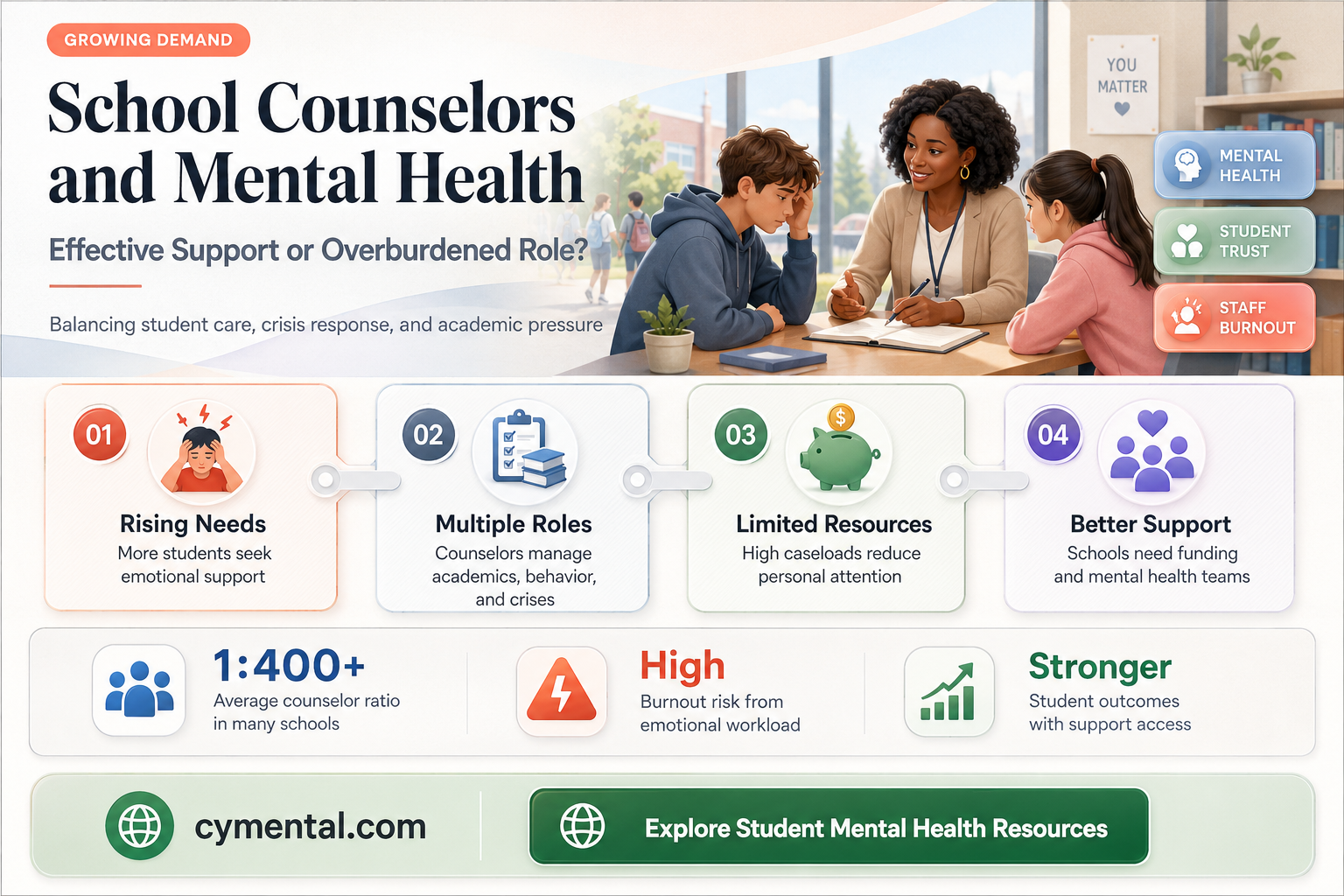
School counselors play a crucial role in supporting students' mental health, but their effectiveness often depends on various factors, including their training, resources, and the school environment. While they are trained to provide guidance, emotional support, and crisis intervention, their ability to address complex mental health issues can be limited by heavy caseloads, lack of specialized training, and inadequate funding. Despite these challenges, many counselors successfully connect students with appropriate resources, foster a supportive school culture, and help students develop coping strategies. However, the question of whether they *actually* help with mental health highlights the need for better integration of mental health services within schools, increased professional development for counselors, and greater collaboration with external mental health professionals to ensure students receive comprehensive care.
| Characteristics | Values |
|---|---|
| Effectiveness in Early Intervention | School counselors can identify mental health issues early, providing timely support and referrals. |
| Accessibility | They offer on-site, easily accessible mental health resources for students who might not seek help elsewhere. |
| Confidentiality | Students often feel safer discussing issues with school counselors due to perceived confidentiality. |
| Holistic Support | Counselors address academic, social, and emotional needs, which are interconnected with mental health. |
| Referral to Specialists | They connect students with external mental health professionals when needed. |
| Crisis Management | Counselors are often first responders in mental health crises, providing immediate support. |
| Prevention Programs | Many implement programs to reduce stigma and promote mental health awareness. |
| Limited Training | Some counselors may lack specialized mental health training, impacting effectiveness. |
| High Caseloads | Large student-to-counselor ratios can limit the depth and frequency of support. |
| Policy Constraints | School policies or lack of resources may restrict counselors' ability to address mental health comprehensively. |
| Student Trust | Effectiveness depends on the rapport and trust built between counselors and students. |
| Cultural Competence | Counselors with cultural competence can better support diverse student populations. |
| Collaboration | Working with teachers, parents, and external agencies enhances mental health support. |
| Evidence-Based Practices | Use of proven strategies improves outcomes, though implementation varies by school. |
| Long-Term Impact | Early support from counselors can have lasting positive effects on students' mental health. |
Explore related products


What You'll Learn
- Counselor Training: Are school counselors adequately trained to address mental health issues effectively
- Accessibility: Do students feel comfortable accessing school counselors for mental health support
- Scope of Practice: Can counselors provide long-term therapy or only short-term interventions
- Resource Limitations: How do limited resources impact counselors' ability to help students
- Referral Systems: Do counselors effectively connect students to external mental health professionals when needed

Counselor Training: Are school counselors adequately trained to address mental health issues effectively?
School counselors are often the first line of defense in identifying and addressing mental health issues among students. However, the effectiveness of their interventions hinges critically on the depth and breadth of their training. While many counselors hold master’s degrees in counseling or related fields, the curriculum often emphasizes generalist skills rather than specialized mental health competencies. For instance, programs may focus on career guidance, academic planning, and behavioral interventions, leaving limited time for in-depth training in evidence-based practices like cognitive-behavioral therapy (CBT) or trauma-informed care. This gap raises questions about whether counselors are equipped to handle the escalating complexity of student mental health needs.
Consider the disparity between training and practice. A typical school counseling program may require only 1-2 courses in mental health, often lacking clinical hours in high-acuity settings like psychiatric hospitals or crisis centers. In contrast, licensed clinical mental health counselors complete 600+ hours of supervised clinical practice, including specialized training in diagnosing and treating severe conditions such as depression, anxiety, and PTSD. School counselors, despite their good intentions, may lack the diagnostic skills to differentiate between typical adolescent stress and clinical disorders, potentially leading to under- or over-referral to external services. For example, a student exhibiting persistent sadness might be misidentified as merely "going through a phase" without a proper assessment framework.
To bridge this gap, targeted professional development is essential. Districts should prioritize training in crisis intervention, suicide prevention (e.g., QPR or ASIST certifications), and culturally responsive practices. For instance, a 2020 study in *School Psychology Review* found that counselors trained in multicultural counseling were 30% more effective in engaging students of color in mental health conversations. Additionally, partnerships with local mental health agencies could provide ongoing supervision or co-facilitation opportunities, allowing counselors to refine their clinical skills in real-world scenarios.
However, reliance on external training alone is insufficient. Advocacy for policy changes is equally critical. States should mandate that school counseling programs include a minimum of 100 clinical hours in mental health settings and require counselors to pursue specialized certifications (e.g., National Certified Counselor, Certified Clinical Mental Health Counselor) post-graduation. For example, California’s recent legislation (SB 224) now requires schools to provide mental health education, implicitly raising the bar for counselor preparedness. Without such structural shifts, the burden of addressing student mental health will continue to outpace counselors’ capacity.
Ultimately, the question of adequacy in counselor training is not just academic—it’s a matter of student safety and well-being. While school counselors play a vital role in supporting students, their impact is constrained by systemic limitations in their preparation. By reimagining training programs, investing in ongoing education, and advocating for policy reforms, we can ensure counselors are not just present, but proficient, in addressing the mental health crisis in schools.
Do Mental Hospitals Help: Exploring Effectiveness and Patient Outcomes
You may want to see also
Explore related products


Accessibility: Do students feel comfortable accessing school counselors for mental health support?
Students often hesitate to seek help from school counselors due to concerns about confidentiality, stigma, and the perceived competence of the counselor. A 2020 study published in the *Journal of School Counseling* found that 43% of high school students feared their conversations with counselors might be shared with parents or teachers without consent. This mistrust creates a barrier, especially for adolescents aged 14–18, who are more likely to prioritize privacy when discussing mental health issues like anxiety or depression. To address this, schools should implement clear policies emphasizing confidentiality limits and exceptions, ensuring students understand their rights while also acknowledging legal obligations to report self-harm or harm to others.
Consider the role of peer influence in shaping comfort levels. A qualitative study from *Psychology in Schools* revealed that students are 60% more likely to visit a counselor if a friend has had a positive experience. Schools can leverage this by training peer mentors to share their stories during assemblies or through anonymous testimonials posted in common areas. For example, a campaign at a Texas high school featured student-created videos about counselor interactions, increasing appointment requests by 35% within three months. Such initiatives normalize seeking help and reduce stigma by framing counseling as a proactive step rather than a sign of weakness.
Cultural and linguistic barriers further complicate accessibility, particularly for minority students. A 2019 report by the American School Counselor Association highlighted that only 19% of counselors are bilingual, despite 25% of students speaking a language other than English at home. Schools in diverse communities should prioritize hiring counselors who reflect the student body’s demographics and provide translation services for non-English-speaking families. For instance, a California school district introduced weekly "Family Support Hours" with Spanish-speaking counselors, resulting in a 50% increase in parent-initiated mental health consultations for Latino students.
Finally, the physical and logistical accessibility of counseling services cannot be overlooked. Many schools offer counseling only during class hours, forcing students to choose between academic commitments and mental health support. A pilot program in Minnesota allowed students to schedule 15-minute "drop-in" sessions during lunch or after school, increasing utilization by 40%. Additionally, creating inviting spaces—like a cozy corner with bean bags and soft lighting instead of a sterile office—can make students feel more at ease. Pairing these changes with regular, casual counselor visits to classrooms can demystify the process and signal that mental health is a priority, not an afterthought.
Swimming to Serenity: How Fish Can Boost Your Mental Health
You may want to see also
Explore related products





Scope of Practice: Can counselors provide long-term therapy or only short-term interventions?
School counselors often serve as the first line of defense for students grappling with mental health issues, but their role is frequently misunderstood. While they are trained to address a range of concerns—from academic stress to peer conflicts—their scope of practice is inherently limited. Unlike licensed therapists, who undergo extensive training in clinical mental health counseling, school counselors typically hold degrees in school counseling, which emphasizes educational and developmental support over long-term therapeutic interventions. This distinction raises a critical question: Are school counselors equipped to provide long-term therapy, or are they better suited for short-term crisis management and referrals?
Consider the typical caseload of a school counselor, who may serve hundreds of students across multiple grade levels. With such a broad responsibility, their ability to engage in prolonged, individualized therapy is constrained by time and resources. Short-term interventions—such as brief counseling sessions, group workshops, or immediate crisis response—are more feasible within this framework. For instance, a student struggling with test anxiety might benefit from a few sessions focused on coping strategies, but a student with chronic depression or trauma would likely require more sustained, specialized care. School counselors can play a vital role in identifying these needs, but they are not positioned to provide the depth of treatment such cases demand.
The American School Counselor Association (ASCA) emphasizes that school counselors should focus on prevention and early intervention, aligning their practice with the educational mission of the school. This includes fostering academic achievement, career readiness, and social-emotional development. While these goals often intersect with mental health, they do not replace the need for clinical therapy when serious issues arise. For example, a counselor might implement a school-wide program on stress management, but they would refer a student with severe anxiety to an external therapist for ongoing treatment. This referral process is a cornerstone of their role, ensuring students receive appropriate care beyond the counselor’s scope.
Critics argue that relying solely on short-term interventions risks leaving students underserved, particularly in underfunded schools with limited access to external mental health resources. However, advocating for school counselors to take on long-term therapy roles overlooks the systemic challenges they face. Expanding their scope without addressing staffing shortages, training gaps, and inadequate funding would only dilute the effectiveness of their existing responsibilities. Instead, a more practical approach involves strengthening partnerships between schools and community mental health providers, creating a seamless continuum of care.
In practice, school counselors can maximize their impact by focusing on what they do best: creating supportive environments, teaching resilience skills, and acting as advocates for students’ holistic well-being. For instance, a counselor might collaborate with teachers to integrate social-emotional learning into the curriculum or organize peer support groups to address common stressors. These initiatives complement, rather than replace, long-term therapy, ensuring students receive layered support tailored to their needs. By understanding and respecting the boundaries of their scope, school counselors can effectively contribute to mental health outcomes while acknowledging the limits of their role.
Equine Therapy: How Horses Heal and Improve Mental Health
You may want to see also
Explore related products


Resource Limitations: How do limited resources impact counselors' ability to help students?
School counselors often find themselves at the intersection of academic guidance and mental health support, yet their ability to effectively address student well-being is frequently constrained by resource limitations. Consider this: the American School Counselor Association recommends a student-to-counselor ratio of 250:1, but the national average hovers around 424:1. This disparity alone highlights the systemic strain on counselors, leaving them with insufficient time and bandwidth to provide individualized mental health interventions. When a counselor is responsible for hundreds of students, even identifying those in need becomes a Herculean task, let alone offering consistent, meaningful support.
To illustrate, imagine a high school counselor tasked with managing college applications, scheduling conflicts, and disciplinary issues while also addressing mental health crises. With limited time, they might rely on group sessions or brief check-ins rather than in-depth counseling. For instance, a student exhibiting signs of anxiety might receive a 15-minute meeting instead of the 45–60 minutes recommended for therapeutic efficacy. This fragmented approach can leave students feeling unheard and their needs unmet, undermining the counselor’s ability to foster trust and implement effective strategies.
Resource limitations extend beyond time to include funding and training. Many schools lack budgets for mental health tools, such as screening assessments or evidence-based curricula. Without access to these resources, counselors may resort to generic interventions that fail to address the root causes of students’ struggles. For example, a counselor without training in cognitive-behavioral therapy (CBT) might struggle to help a student with depression, relying instead on superficial coping mechanisms like deep breathing exercises. While these techniques have value, they often fall short of providing transformative care.
The impact of these constraints is particularly pronounced in underserved communities, where students may face compounded challenges like poverty, trauma, or lack of access to external mental health services. In such settings, school counselors often serve as the sole point of contact for mental health support. However, without adequate resources—such as partnerships with local therapists, funding for telehealth services, or even basic supplies like workbooks—their efforts are severely limited. This disparity exacerbates existing inequities, leaving vulnerable students further marginalized.
Addressing these limitations requires systemic change. Schools must prioritize funding for counseling programs, reduce student-to-counselor ratios, and provide ongoing professional development in mental health interventions. For instance, integrating counselors into multidisciplinary teams that include social workers and psychologists could enhance their capacity to address complex cases. Additionally, leveraging technology—such as digital screening tools or virtual counseling platforms—can help stretch limited resources further. By investing in counselors and equipping them with the tools they need, schools can transform them from overburdened administrators into effective mental health advocates.
Legal Boundaries: Can You Mandate Mental Health Treatment for Your Spouse?
You may want to see also
Explore related products


Referral Systems: Do counselors effectively connect students to external mental health professionals when needed?
School counselors often serve as the first line of defense in identifying students struggling with mental health issues. However, their role extends beyond initial support—they must also connect students to external professionals when in-school resources fall short. The effectiveness of these referral systems hinges on several factors, including the counselor’s training, the availability of local mental health services, and the clarity of communication between all parties involved. Without a streamlined process, students risk falling through the cracks, delaying critical care.
Consider the steps involved in a successful referral: first, the counselor assesses the student’s needs, often using standardized tools like the Behavioral and Emotional Screening System (BESS) or Strengths and Difficulties Questionnaire (SDQ). Next, they identify an appropriate external provider, which requires up-to-date knowledge of local resources. Finally, they coordinate with parents or guardians, ensuring informed consent and follow-up. Each step demands precision, yet time constraints and heavy caseloads—school counselors often serve 400+ students—can compromise thoroughness. For instance, a 2021 study in *Psychology in the Schools* found that only 60% of referred students completed their first external appointment, often due to logistical barriers like transportation or parental availability.
A persuasive argument for improving referral systems lies in their potential to address disparities. Students from low-income families or underserved communities face greater barriers to accessing mental health care. School counselors can act as advocates, providing resources like sliding-scale clinics or telehealth options. For example, partnerships with organizations like Mental Health America or NAMI can offer discounted services or educational workshops for families. However, counselors must be proactive in cultivating these relationships, which requires administrative support and professional development opportunities.
Comparatively, schools with robust referral systems often integrate technology to enhance efficiency. Platforms like CareSolace or Kognito help counselors match students to providers based on insurance, location, and specialty. These tools reduce the time spent on administrative tasks, allowing counselors to focus on student support. Yet, reliance on technology alone is insufficient. A descriptive example: a rural high school in Montana implemented a referral system that included monthly check-ins between counselors and external providers, ensuring continuity of care. This collaborative approach resulted in a 30% increase in students receiving consistent treatment within six months.
In conclusion, while school counselors play a vital role in connecting students to external mental health professionals, the effectiveness of referral systems varies widely. Success depends on a combination of counselor training, resource availability, and systemic support. Schools must invest in both human and technological infrastructure to ensure no student is left behind. Practical tips include maintaining a local provider directory, offering parent workshops on navigating mental health systems, and advocating for policy changes that prioritize funding for school-based mental health services. Without these measures, even the most well-intentioned counselors may struggle to bridge the gap between identification and intervention.
Neurologists and Mental Health: Unlocking Treatment Options for Illness
You may want to see also
Frequently asked questions
Yes, school counselors typically hold a master’s degree in counseling or a related field and are trained to address a range of mental health concerns, including anxiety, depression, and stress. Many are also licensed mental health professionals.
School counselors can provide short-term counseling and support, but they are not equipped to offer long-term therapy for severe or complex mental health issues. They often refer students to external mental health professionals for specialized care.
School counselors play a crucial role in early intervention, providing support, and connecting students to resources. Their effectiveness depends on factors like caseload size, school support, and collaboration with families and external providers. They are often a vital first step in addressing mental health concerns.