Madison Cole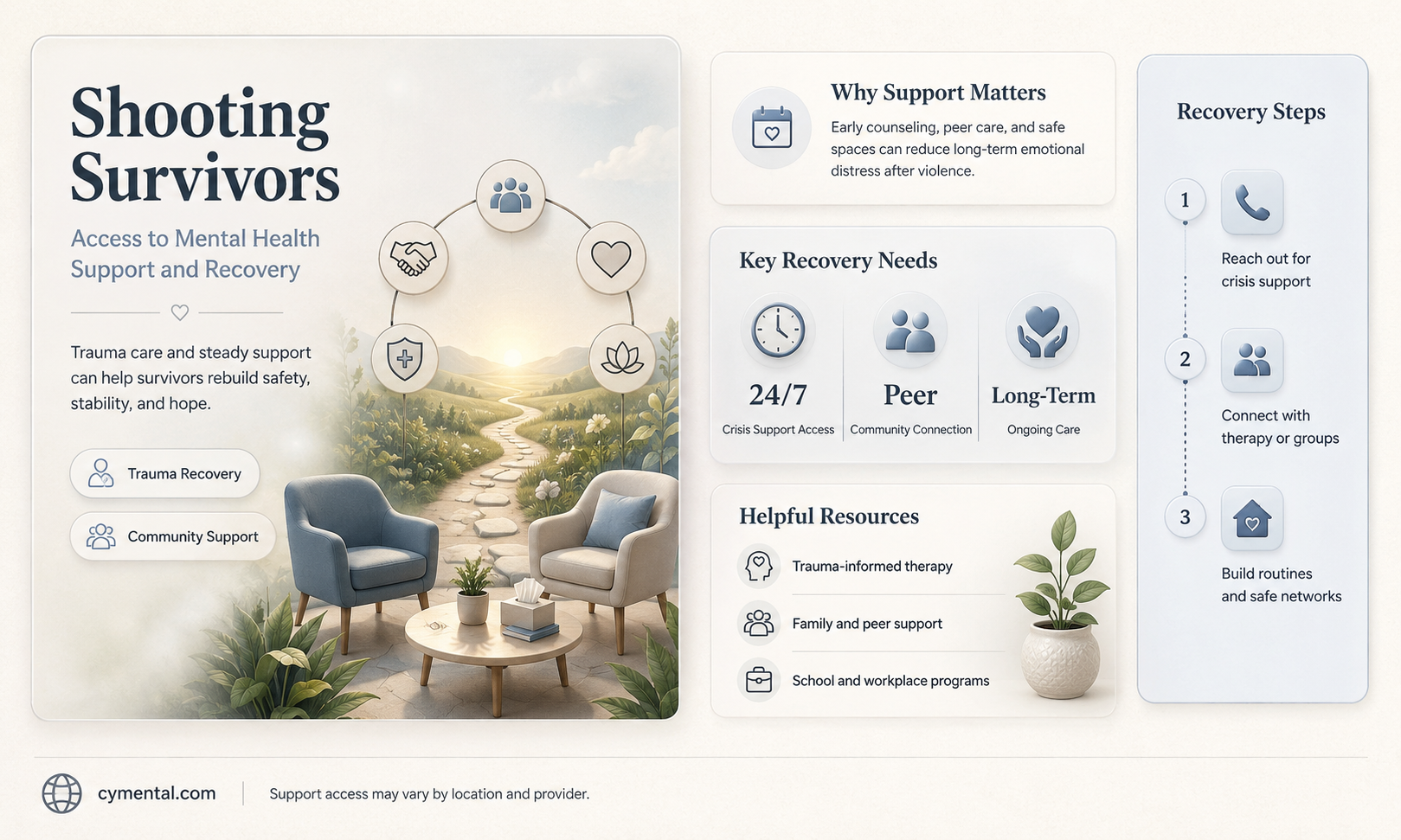
The aftermath of shootings often leaves survivors and victims' families grappling with profound psychological trauma, yet the question of whether they receive adequate mental health support remains a critical concern. While some individuals may access counseling or therapy through community resources, insurance, or victim assistance programs, many face barriers such as stigma, lack of awareness, or insufficient funding for long-term care. The immediate focus on physical recovery and legal proceedings can overshadow the urgent need for mental health interventions, leaving victims to navigate grief, PTSD, anxiety, and depression with limited support. Addressing this gap requires systemic changes, including increased funding for mental health services, improved access to trauma-informed care, and public awareness campaigns to destigmatize seeking help, ensuring that survivors receive the comprehensive support they need to heal.
| Characteristics | Values |
|---|---|
| Availability of Mental Health Services | Varies widely by location and resources. Many areas lack sufficient mental health providers, especially in rural or underserved communities. |
| Immediate Crisis Support | Often provided through crisis hotlines, emergency rooms, or trauma teams at the scene. |
| Long-Term Mental Health Care | Access is inconsistent. Some victims receive ongoing therapy, while others face barriers like cost, stigma, or lack of awareness. |
| Insurance Coverage | Depends on the victim's insurance plan. Some plans cover mental health services, but copays, deductibles, or limited provider networks can be barriers. |
| Government and Nonprofit Support | Programs like victim compensation funds or nonprofit organizations may offer financial assistance for mental health care. |
| Stigma and Barriers to Seeking Help | Stigma surrounding mental health issues can prevent victims from seeking help. Cultural or personal beliefs may also play a role. |
| Trauma-Informed Care | Specialized care that addresses trauma is not universally available, though it is increasingly recognized as essential. |
| Community and Peer Support | Support groups and community resources can provide additional help, but availability varies. |
| Legal and Advocacy Support | Some victims receive assistance from legal advocates or victim rights organizations, which may include referrals to mental health services. |
| Research and Data | Limited long-term studies on the mental health outcomes of shooting victims, though acute PTSD, anxiety, and depression are commonly reported. |
| School and Workplace Support | Victims who are students or employees may receive support through school counselors or employee assistance programs, but this is not guaranteed. |
| Cultural and Language Barriers | Victims from diverse cultural or linguistic backgrounds may face additional challenges in accessing appropriate mental health care. |
| Follow-Up Care | Inconsistent. Some victims receive follow-up care, while others are left to navigate the system on their own. |
| Public Awareness and Advocacy | Growing awareness of the need for mental health support for shooting victims, but gaps in implementation persist. |
Explore related products


What You'll Learn

Availability of Mental Health Services
The availability of mental health services for shooting victims varies widely, often depending on geographic location, socioeconomic status, and the immediacy of the response. In urban areas with robust healthcare infrastructure, survivors may have access to crisis intervention teams, trauma-focused therapists, and support groups within days of the incident. Rural communities, however, frequently face shortages of mental health professionals, leaving victims to rely on telehealth services or delayed care. For instance, a study in *JAMA Psychiatry* found that only 30% of rural shooting survivors received specialized mental health care within three months, compared to 60% in urban settings. This disparity underscores the urgent need for equitable resource distribution.
Consider the steps involved in accessing mental health services post-shooting. First, immediate psychological first aid is typically provided by emergency responders or hospital staff, focusing on stabilization and basic coping strategies. Second, victims are often referred to trauma-informed therapists or psychiatrists, though wait times can range from days to months, depending on availability. Third, long-term care may include cognitive-behavioral therapy (CBT), eye movement desensitization and reprocessing (EMDR), or medication management. Practical tips for survivors include asking hospitals for mental health referrals, contacting local victim advocacy groups, and utilizing hotlines like the National Alliance on Mental Illness (NAMI) for immediate support.
A comparative analysis reveals that countries with universal healthcare systems, such as Canada and the UK, generally provide more consistent mental health support for shooting victims than the U.S., where insurance coverage and out-of-pocket costs often dictate access. For example, Canadian survivors are automatically connected to trauma networks, while U.S. victims may face denials from insurance providers for specialized therapies like EMDR. Additionally, school-based shootings highlight the need for age-specific services: adolescents often require peer-led support groups, while adults may benefit from family therapy. Despite these differences, all systems struggle with ensuring timely, culturally competent care for diverse populations.
Persuasively, policymakers must prioritize funding for mental health infrastructure in underserved areas, particularly following mass shootings. Grants for training trauma specialists, expanding telehealth platforms, and integrating mental health services into primary care could bridge existing gaps. Employers can also play a role by offering Employee Assistance Programs (EAPs) that include trauma counseling. For survivors, advocating for oneself is crucial: keep a log of symptoms, request detailed treatment plans, and don’t hesitate to seek second opinions. The takeaway is clear—while progress has been made, systemic changes are necessary to ensure every shooting victim receives the mental health care they deserve.
Positive Relationships: A Powerful Tool for Mental Health and Well-Being
You may want to see also
Explore related products


Barriers to Accessing Care
Stigma remains a formidable barrier to mental health care for shooting victims, often silencing those in need. Despite growing awareness, societal misconceptions about trauma and resilience persist, leading survivors to fear judgment or being labeled as "weak." This internalized stigma can delay or prevent individuals from seeking therapy, support groups, or medication. For instance, a 2021 study found that 40% of mass shooting survivors avoided mental health services due to concerns about being perceived as a burden or incapable of coping independently. Addressing this requires public campaigns that normalize trauma responses and emphasize strength in seeking help, particularly in communities where mental health discussions are taboo.
Financial constraints further exacerbate access to care, as many shooting victims lack adequate insurance coverage for long-term mental health treatment. Even in countries with universal healthcare, specialized services like trauma-focused cognitive behavioral therapy (TF-CBT) or eye movement desensitization and reprocessing (EMDR) may not be fully covered. Out-of-pocket costs for these therapies can range from $100 to $250 per session, placing them out of reach for low-income survivors. Additionally, the economic fallout from injuries or job loss post-shooting compounds this issue, leaving victims to choose between basic needs and mental health care. Policymakers must prioritize expanding insurance coverage for trauma-specific treatments and subsidizing care for uninsured individuals to bridge this gap.
Geographic barriers also limit access, particularly in rural areas where mental health resources are scarce. Shooting victims in these regions may face hour-long drives to the nearest trauma-informed therapist or clinic, a burden that discourages consistent attendance. Telehealth has emerged as a partial solution, but unreliable internet access and technological literacy remain hurdles for older adults or those in underserved communities. For example, a 2020 report revealed that only 30% of rural shooting survivors utilized telehealth services due to connectivity issues. Investing in rural mental health infrastructure and training local providers in trauma care could significantly improve accessibility for these populations.
Finally, systemic failures within healthcare systems often leave shooting victims navigating a fragmented and unresponsive care network. Long wait times for appointments, lack of culturally competent providers, and inadequate follow-up mechanisms deter survivors from pursuing treatment. A 2019 survey highlighted that 60% of urban shooting victims waited over three months to see a trauma specialist, during which many experienced worsening symptoms. Streamlining referral processes, integrating mental health services into primary care settings, and mandating cultural competency training for providers could help address these systemic shortcomings. Without such reforms, even the most motivated survivors will struggle to access the care they desperately need.
Hydration and Mind: How Drinking Water Boosts Mental Health
You may want to see also
Explore related products


Types of Therapies Offered
Victims of shootings often face profound psychological trauma, and addressing their mental health needs requires a multifaceted therapeutic approach. Among the most commonly offered therapies is Cognitive Behavioral Therapy (CBT), which helps individuals reframe negative thought patterns and develop coping strategies. For instance, a survivor experiencing flashbacks or hypervigilance might work with a therapist to identify triggers and practice grounding techniques, such as deep breathing or progressive muscle relaxation. CBT is typically delivered in 12 to 20 sessions, with homework assignments to reinforce skills learned during therapy.
Another critical intervention is Eye Movement Desensitization and Reprocessing (EMDR), specifically designed to treat trauma. This therapy involves recalling distressing memories while engaging in bilateral stimulation, such as following the therapist’s hand movements with the eyes. EMDR helps reprocess traumatic memories, reducing their emotional impact. For example, a shooting survivor might use EMDR to address the sound of gunfire, gradually decreasing its ability to provoke panic. Sessions usually last 60 to 90 minutes, and the number of sessions varies based on the individual’s needs.
Group therapy also plays a vital role in recovery, offering survivors a sense of community and shared understanding. In these settings, participants discuss their experiences, learn from others, and practice social skills in a safe environment. For instance, a group might focus on rebuilding trust or managing anger. Group therapy is often open-ended, allowing individuals to attend as long as they find it beneficial, typically meeting weekly for 90-minute sessions.
For those with severe symptoms, medication-assisted therapy may be recommended in conjunction with psychological interventions. Antidepressants like SSRIs or anti-anxiety medications such as benzodiazepines can help manage symptoms like depression, anxiety, or insomnia. However, these medications must be prescribed carefully, considering potential side effects and the risk of dependency. For example, benzodiazepines are generally recommended for short-term use, while SSRIs may take 4 to 6 weeks to show full effects.
Finally, mindfulness-based therapies, such as Mindfulness-Based Stress Reduction (MBSR), teach survivors to stay present and reduce reactivity to traumatic memories. Techniques include meditation, body scans, and mindful movement. A practical tip for incorporating mindfulness into daily life is starting with just 5 minutes of focused breathing each morning. MBSR programs typically span 8 weeks, with weekly 2.5-hour sessions and a full-day retreat. These therapies empower survivors to regain control over their mental health, fostering resilience and recovery.
Moving Out: A Mental Health Boost or Added Stress?
You may want to see also
Explore related products

$14.99 $29.99


Long-Term Psychological Impact
The psychological scars left by shootings extend far beyond the initial trauma, often manifesting in complex and enduring ways. Survivors and witnesses frequently grapple with post-traumatic stress disorder (PTSD), characterized by flashbacks, nightmares, and severe anxiety. Studies show that up to 30% of shooting survivors develop PTSD, with symptoms persisting for years or even decades. Unlike physical wounds, these mental injuries are invisible, making them harder to diagnose and treat, yet their impact on daily functioning can be equally debilitating.
Consider the case of school shooting survivors, a particularly vulnerable group. Adolescents exposed to such violence often experience disrupted brain development, affecting their ability to regulate emotions and form healthy relationships. For instance, research on survivors of the Columbine shooting revealed that many struggled with depression, substance abuse, and suicidal ideation well into adulthood. These long-term effects underscore the need for sustained mental health support tailored to the developmental needs of younger victims, including age-appropriate therapy and peer support programs.
A critical yet overlooked aspect of long-term psychological impact is the phenomenon of "anniversary reactions." Survivors often experience heightened distress on the anniversary of the shooting, triggered by memories, media coverage, or symbolic reminders. This cyclical recurrence of trauma can exacerbate existing mental health conditions, making it essential for treatment plans to include anticipatory strategies. Therapists may recommend grounding techniques, such as mindfulness exercises or journaling, to help individuals manage these predictable spikes in anxiety.
Comparatively, the psychological aftermath for first responders and bystanders differs significantly from direct victims. While they may not have experienced the immediate threat to their lives, they often suffer from survivor’s guilt and secondary trauma. For example, a study of law enforcement officers involved in mass shootings found that 20% reported symptoms of PTSD, with many avoiding situations that reminded them of the event. This highlights the need for inclusive mental health initiatives that address the unique challenges faced by different stakeholder groups.
To mitigate long-term psychological impact, a multi-faceted approach is essential. Evidence-based therapies like cognitive-behavioral therapy (CBT) and eye movement desensitization and reprocessing (EMDR) have proven effective in reducing PTSD symptoms. However, access to these treatments remains a barrier for many, particularly in underserved communities. Practical steps include advocating for policy changes that mandate insurance coverage for trauma-informed care and establishing community-based support networks. For individuals, maintaining a routine, seeking social support, and avoiding self-isolation are critical steps in the healing process. The goal is not just recovery but resilience—empowering survivors to reclaim their lives in the face of unimaginable adversity.
Mental Health Apps: Effective Tools or Just Digital Placebos?
You may want to see also
Explore related products






Community Support Systems
In the aftermath of shootings, survivors and their families often face a labyrinth of emotional and psychological challenges. While professional mental health services are crucial, community support systems play a pivotal role in fostering resilience and recovery. These networks, comprising neighbors, local organizations, and grassroots initiatives, provide immediate and ongoing assistance that complements clinical interventions. For instance, community-led support groups offer safe spaces for victims to share their experiences, reducing feelings of isolation and stigma. Such groups often emerge organically, driven by the collective need to heal and rebuild trust.
One effective model is the peer-support program, where individuals who have experienced similar traumas guide others through their recovery journey. These programs, often facilitated by local nonprofits or faith-based organizations, emphasize empathy and shared understanding. For example, in Parkland, Florida, following the 2018 school shooting, community volunteers organized weekly gatherings where survivors could connect with peers and trained mentors. These sessions incorporated structured activities like art therapy and mindfulness exercises, tailored to different age groups, including children as young as 8 and adults over 60. The key to their success lies in consistency—regular meetings over several months allowed participants to build trust and develop coping strategies.
However, establishing community support systems is not without challenges. One major hurdle is ensuring inclusivity, as marginalized groups may face barriers to accessing these resources. Language, cultural differences, and socioeconomic status can exclude certain individuals from participating fully. To address this, communities must adopt a proactive approach, such as providing bilingual facilitators, offering childcare during meetings, and partnering with local leaders who understand the unique needs of diverse populations. For instance, in urban areas with large immigrant communities, translating materials into multiple languages and hosting events in culturally familiar settings can significantly improve engagement.
Another critical aspect is sustainability. Community support systems often rely on volunteers and limited funding, making long-term viability a concern. To overcome this, organizations can seek partnerships with local businesses, schools, and government agencies to secure resources and infrastructure. For example, a community center in Chicago collaborated with a nearby university to train psychology students as facilitators for trauma support groups. This not only provided free services to residents but also gave students practical experience. Additionally, crowdfunding campaigns and grant applications can help secure financial support for materials, training, and outreach efforts.
Ultimately, community support systems are a vital component of the healing process for shooting victims. By fostering connection, providing practical assistance, and addressing systemic barriers, these networks empower individuals to reclaim their lives. While they are not a substitute for professional mental health care, they serve as a bridge, ensuring that no one faces their struggles alone. Communities that invest in these systems not only aid recovery but also strengthen their own resilience, creating a foundation for collective healing and growth.
Recognizing the Signs: When to Seek Help for Your Well-Being
You may want to see also
Frequently asked questions
Yes, many victims of shootings receive immediate mental health support through crisis intervention teams, trauma counselors, or emergency responders trained in psychological first aid.
Yes, long-term mental health services, including therapy, counseling, and support groups, are often available through hospitals, community organizations, or government programs.
Yes, family members of shooting victims are often eligible for mental health assistance, as they too can experience trauma and emotional distress.
In many cases, mental health support for shooting victims is covered by insurance, though coverage may vary depending on the policy and provider.
Yes, there are specialized programs and therapists trained to work with children who have experienced shootings, focusing on age-appropriate trauma-informed care.