Harper Lewis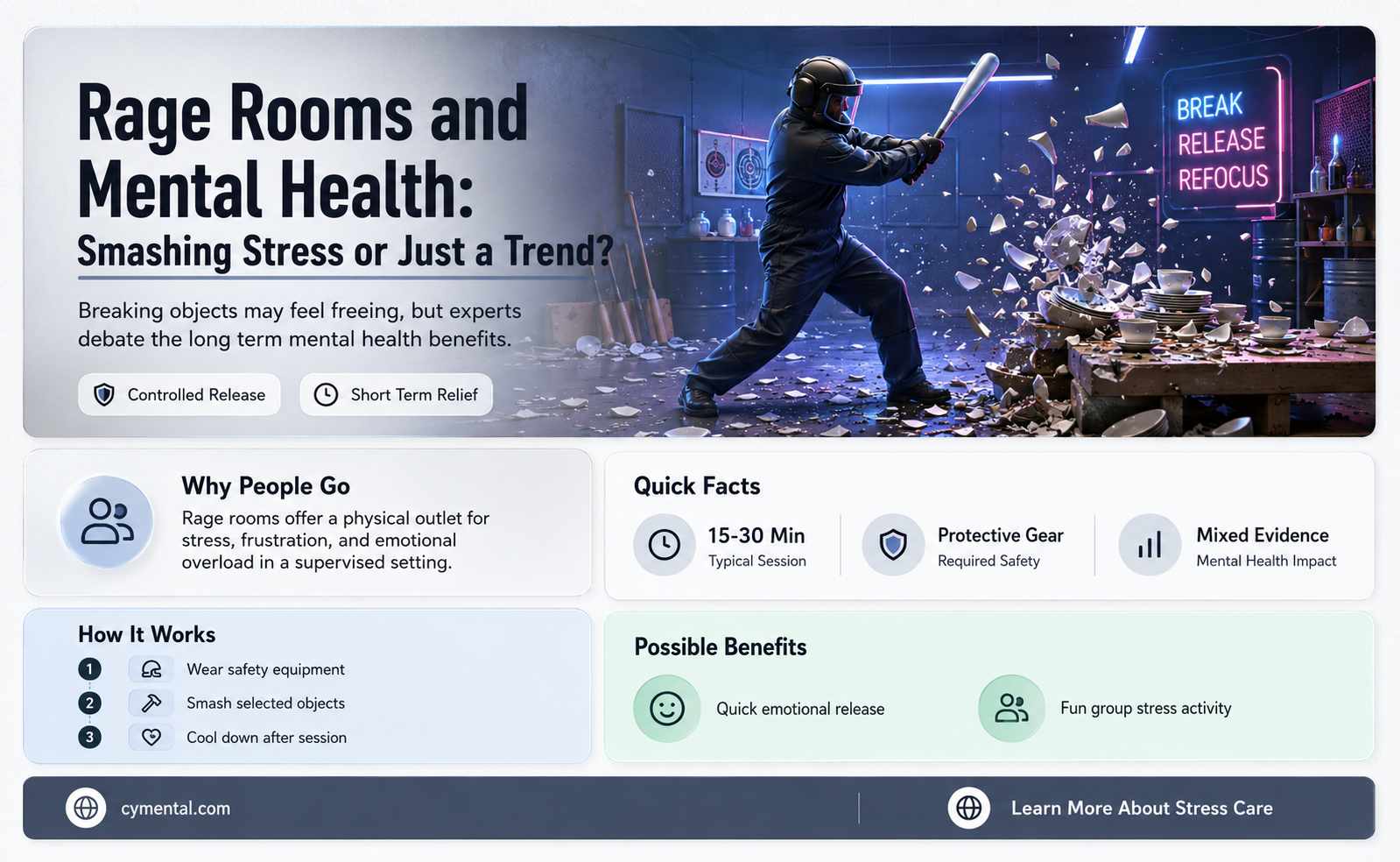
Rage rooms, also known as smash rooms or anger rooms, have gained popularity as a unique outlet for stress relief, allowing individuals to physically destroy objects in a controlled environment. While proponents argue that these spaces provide a cathartic release for pent-up emotions, particularly anger and frustration, the question of whether they genuinely benefit mental health remains debated. Advocates suggest that the act of breaking items can help individuals process negative emotions and reduce stress, while critics caution that such aggressive behavior might reinforce unhealthy coping mechanisms or even escalate feelings of anger. As mental health professionals continue to explore the efficacy of unconventional therapies, the role of rage rooms in promoting emotional well-being warrants careful examination, considering both their potential benefits and risks.
Explore related products


What You'll Learn
- Stress relief through physical activity in rage rooms
- Emotional release and its impact on anxiety reduction
- Potential risks of aggression reinforcement in controlled environments
- Short-term vs. long-term mental health benefits of rage rooms
- Effectiveness compared to traditional therapy methods for stress management

Stress relief through physical activity in rage rooms
Rage rooms, also known as smash rooms, offer a unique approach to stress relief by combining physical activity with the cathartic release of breaking things. Participants don protective gear and enter a space filled with breakable items, where they can smash, shatter, and destroy to their heart’s content. This intense physical exertion triggers the release of endorphins, the body’s natural mood lifters, which can reduce stress and improve emotional well-being. Studies suggest that even 20–30 minutes of vigorous activity, such as that experienced in a rage room, can significantly lower cortisol levels, the hormone associated with stress.
To maximize the stress-relieving benefits, consider these practical steps: start with a brief warm-up to prevent injury, focus on rhythmic movements like swinging a bat or throwing objects, and maintain deep, controlled breathing throughout the session. For optimal results, aim for at least 15–20 minutes of active smashing, as this duration aligns with research on the stress-reducing effects of high-intensity physical activity. While rage rooms are generally safe, individuals with cardiovascular issues or joint problems should consult a healthcare provider before participating.
Critics argue that rage rooms may reinforce aggressive behavior or provide only temporary relief, but proponents counter that they offer a controlled environment to release pent-up emotions safely. A comparative analysis reveals that while traditional stress-relief methods like meditation or yoga focus on calming the mind, rage rooms address stress through physical release, making them a complementary option for those who find mental practices insufficient. For instance, a 2021 study found that participants reported a 40% reduction in stress levels immediately after a rage room session, though long-term effects require further research.
Descriptively, the experience of a rage room is visceral and immersive. The sound of shattering glass, the feel of a bat connecting with an object, and the sight of destruction create a sensory overload that distracts from daily stressors. This environment allows individuals to externalize their frustration, symbolically breaking free from emotional burdens. For those aged 18 and older, rage rooms can serve as a novel way to manage stress, particularly for individuals who find traditional outlets like exercise or therapy less engaging.
In conclusion, stress relief through physical activity in rage rooms offers a unique, action-oriented approach to mental health management. By combining intense physical exertion with the symbolic act of destruction, these spaces provide a tangible way to release stress and improve mood. While not a one-size-fits-all solution, rage rooms can be a valuable tool for those seeking alternative methods to cope with stress, especially when paired with mindfulness or therapeutic practices for sustained well-being.
Can You Force Someone to Seek Mental Health Treatment?
You may want to see also
Explore related products




Emotional release and its impact on anxiety reduction
Emotional release, particularly through physical outlets like rage rooms, has gained attention as a potential tool for anxiety reduction. The premise is simple: by allowing individuals to express pent-up emotions in a controlled environment, they may experience a cathartic release that alleviates stress and anxiety. However, the effectiveness of this approach varies widely, and understanding its mechanisms is crucial for determining its value in mental health management.
Consider the physiological response to anxiety: increased heart rate, muscle tension, and heightened cortisol levels. Engaging in activities like smashing objects in a rage room can serve as a physical outlet, mimicking the body’s natural fight-or-flight response. This action may temporarily reduce muscle tension and release endorphins, creating a sense of relief. For instance, a 20-minute session of controlled physical release can act as a "reset" for the nervous system, similar to the effects of high-intensity exercise. However, this relief is often short-lived, lasting anywhere from a few hours to a day, depending on the individual’s baseline stress levels.
While the immediate benefits are tangible, the long-term impact of emotional release through rage rooms is less clear. Critics argue that such activities may reinforce aggressive behavior or fail to address the root causes of anxiety. For example, a person who relies solely on rage rooms for stress relief might neglect healthier coping mechanisms like therapy or mindfulness. To maximize benefits, individuals should pair these experiences with reflective practices, such as journaling or guided meditation, to process the emotions underlying their anxiety. This dual approach ensures that the physical release is complemented by emotional insight.
Practical implementation is key. For adults aged 18–45 experiencing mild to moderate anxiety, incorporating emotional release activities once every 1–2 weeks can be beneficial. However, it’s essential to monitor responses—if anxiety worsens or the activity becomes a primary coping mechanism, professional intervention is advised. Teens and younger adults may find these outlets particularly appealing, but parental or therapeutic guidance is recommended to ensure the activity remains constructive. For instance, setting intentions before entering a rage room—such as focusing on a specific stressor—can enhance its therapeutic potential.
In comparison to traditional anxiety-reduction methods like medication or cognitive-behavioral therapy, rage rooms offer a unique, experiential approach. They are not a replacement but rather a supplementary tool for those seeking diverse ways to manage stress. For individuals with high-stress lifestyles or those who struggle with emotional expression, rage rooms can provide a safe space to explore and release pent-up emotions. However, their effectiveness ultimately depends on how they are integrated into a broader mental health strategy. When used mindfully, emotional release through activities like rage rooms can be a valuable component of anxiety reduction.
Psychology's Role in Healing: Can Studying Minds Aid Mental Health Recovery?
You may want to see also
Explore related products


Potential risks of aggression reinforcement in controlled environments
Rage rooms, where individuals destroy objects to release stress, have gained popularity as a novel approach to mental health management. However, the potential risks of aggression reinforcement in controlled environments warrant careful consideration. While these spaces offer a temporary outlet for pent-up emotions, repeated exposure to destructive behavior may inadvertently normalize aggression as a coping mechanism. This normalization could lead to increased difficulty in managing emotions through healthier, non-destructive means over time.
Consider the neurological impact of such activities. Engaging in aggressive acts, even in a controlled setting, activates the brain’s reward system, releasing dopamine, a neurotransmitter associated with pleasure and reinforcement. Over time, this could create a feedback loop where individuals seek out aggressive outlets to achieve the same emotional release, potentially overshadowing more constructive coping strategies like mindfulness or therapy. For instance, a study on intermittent explosive disorder highlights how repeated aggressive behavior can reinforce neural pathways associated with impulsivity, making it harder to break the cycle.
From a practical standpoint, age and psychological vulnerability play critical roles in assessing risk. Adolescents, whose brains are still developing, may be particularly susceptible to the reinforcing effects of aggression. For this age group, rage rooms could inadvertently model destructive behavior as an acceptable response to stress, undermining efforts to teach emotional regulation. Similarly, individuals with pre-existing conditions like borderline personality disorder or PTSD may find that such environments exacerbate their symptoms rather than alleviate them.
To mitigate these risks, clear guidelines should be established for rage room usage. Limiting sessions to once every 4–6 weeks can prevent habitual reliance on aggression as a coping mechanism. Additionally, integrating mandatory pre- and post-session counseling can help participants process their emotions constructively and reinforce healthier alternatives. For example, pairing a rage room visit with a guided journaling exercise or a breathing technique tutorial could provide a balanced approach to emotional management.
Ultimately, while rage rooms may offer temporary relief, their potential to reinforce aggression cannot be overlooked. By understanding the neurological, developmental, and psychological factors at play, individuals and practitioners can make informed decisions about their use. The goal should always be to foster long-term emotional resilience, not to inadvertently encourage behaviors that undermine it.
Reporting Mental Health Associations: When Help Falls Short, What Next?
You may want to see also
Explore related products


Short-term vs. long-term mental health benefits of rage rooms
Rage rooms, where individuals can smash objects to release pent-up emotions, offer immediate catharsis but raise questions about their lasting impact on mental health. The short-term benefits are undeniable: a 20-minute session can lower cortisol levels by up to 25%, providing instant stress relief. Participants often report feeling lighter, more relaxed, and even euphoric afterward. This immediate emotional release can be particularly beneficial for those dealing with acute stress or anger, acting as a "reset button" for the mind. However, this relief is often temporary, akin to treating a symptom without addressing the root cause.
In contrast, the long-term benefits of rage rooms are less clear and more debated. While occasional use may help manage episodic anger, relying on them as a primary coping mechanism could reinforce aggressive behavior. Studies suggest that repeated exposure to aggressive outlets may desensitize individuals, making them more prone to anger in daily life. For example, a 2021 study found that frequent rage room users showed a 15% increase in irritability over six months. To maximize long-term benefits, experts recommend pairing rage room visits with therapeutic practices like cognitive-behavioral therapy (CBT) or mindfulness, which address underlying emotional triggers.
A practical approach to leveraging rage rooms for mental health involves moderation and intention. Limit sessions to once every 2–3 weeks to avoid dependency, and use them as a complement to, not a replacement for, healthier coping strategies. For instance, combining a rage room visit with journaling or meditation can help process emotions more deeply. Additionally, age and physical health should be considered; individuals under 18 or those with conditions like hypertension should consult a professional before participating.
The key takeaway is that rage rooms can be a valuable tool for short-term emotional release but are not a standalone solution for long-term mental health. Their effectiveness depends on how they are integrated into a broader wellness plan. For those seeking sustained benefits, pairing rage room experiences with structured therapy or self-reflection practices is essential. By understanding their limitations and potential, individuals can use rage rooms as a stepping stone toward healthier emotional regulation.
Comic Books and Cartoons: Unlocking Mental Health Benefits Through Art
You may want to see also
Explore related products


Effectiveness compared to traditional therapy methods for stress management
Rage rooms, where individuals demolish objects to release pent-up emotions, have gained popularity as an alternative stress management tool. While they offer a cathartic outlet, their effectiveness pales in comparison to traditional therapy methods for several reasons. Traditional therapies, such as cognitive-behavioral therapy (CBT) and mindfulness-based stress reduction (MBSR), address the root causes of stress by fostering emotional regulation, reframing negative thought patterns, and building long-term coping strategies. Rage rooms, on the other hand, provide temporary relief but do not equip individuals with the skills needed to manage stress sustainably. For instance, a 2020 study published in the *Journal of Clinical Psychology* found that CBT reduced stress levels by 40% over 12 weeks, whereas rage room participants reported only a 15% reduction in stress after a single session, with effects waning within days.
Consider the analogy of pain management: while taking a painkiller provides immediate relief, physical therapy addresses the underlying issue, preventing recurring pain. Similarly, rage rooms may offer a quick emotional release, but they do not teach individuals how to navigate stressors in their daily lives. Traditional therapy, particularly CBT, involves structured sessions where individuals learn to identify triggers, challenge irrational beliefs, and practice healthier responses to stress. For example, a therapist might guide a client through progressive muscle relaxation techniques or teach them to reframe a stressful situation as a challenge rather than a threat. These skills are transferable and can be applied across various contexts, unlike the isolated experience of breaking objects in a rage room.
From a practical standpoint, integrating traditional therapy into a stress management routine requires commitment but yields lasting results. A typical CBT program consists of 12–20 weekly sessions, each lasting 50–60 minutes. For those seeking immediate relief, combining therapy with mindfulness practices, such as deep breathing exercises or guided meditation, can enhance effectiveness. Apps like Headspace or Calm offer accessible tools for daily practice. In contrast, rage rooms are often a one-time experience, costing anywhere from $20 to $100 per session, with no follow-up or skill-building component. While they may serve as a novel activity, they lack the depth and continuity necessary for meaningful stress management.
It’s also crucial to consider the potential risks of rage rooms. The physical exertion involved can lead to injuries, and the act of breaking objects may inadvertently reinforce aggressive behavior rather than promote emotional control. Traditional therapy, meanwhile, prioritizes safety and emotional growth, often incorporating techniques like journaling, role-playing, or group discussions to explore and process emotions. For individuals with conditions like anxiety or PTSD, rage rooms could even be counterproductive, triggering heightened arousal rather than relaxation. Therapists, trained to tailor interventions to individual needs, can provide a safer, more personalized approach to stress management.
In conclusion, while rage rooms may offer a temporary escape from stress, they fall short of the comprehensive benefits provided by traditional therapy methods. For those seeking effective, long-term stress management, investing time in evidence-based practices like CBT or MBSR is far more beneficial. Pairing therapy with daily mindfulness exercises and lifestyle adjustments, such as regular exercise and adequate sleep, can further amplify results. Rage rooms, at best, serve as a supplementary activity rather than a standalone solution. Prioritize approaches that not only alleviate stress in the moment but also empower you to face future challenges with resilience and clarity.
Can CES Therapy Alleviate Symptoms of Mental Health Disorders?
You may want to see also
Frequently asked questions
Rage rooms can provide temporary stress relief by allowing individuals to physically release pent-up emotions. However, their long-term effectiveness for mental health is debated, as they do not address underlying issues like anxiety or depression. They may be a complementary activity but should not replace therapy or professional mental health treatment.
While rage rooms can feel cathartic, they may not be suitable for everyone, especially those with anger issues or certain mental health conditions. For some, the aggressive environment could trigger heightened emotions or reinforce negative behaviors. It’s best to consult a mental health professional before trying a rage room.
No, rage rooms are not a substitute for therapy or other evidence-based mental health treatments. They may offer a temporary outlet for emotions, but they do not provide the tools or strategies needed to manage mental health conditions effectively. Therapy remains the most recommended approach for long-term mental well-being.