Lucas Bennett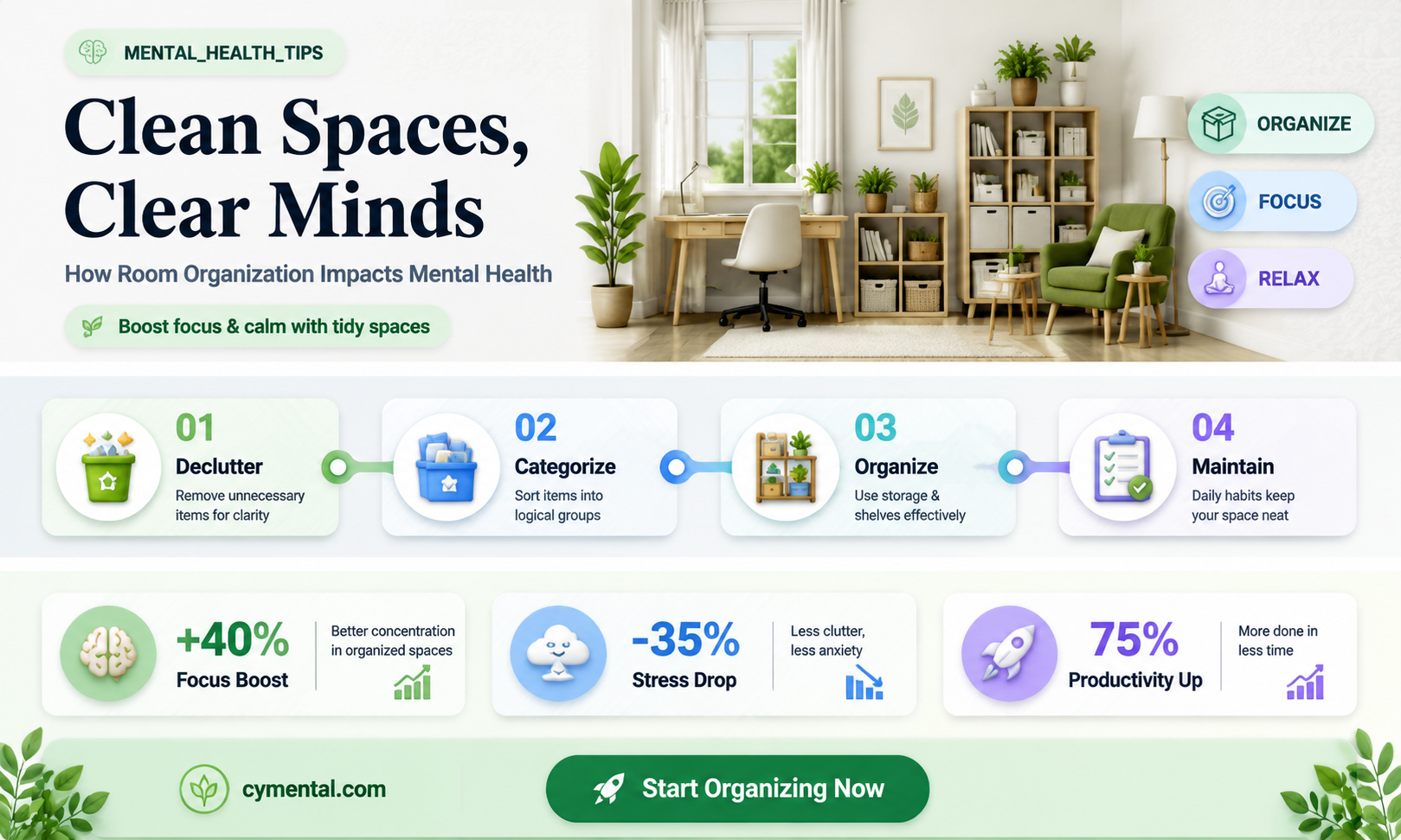
A clean and organized living space has long been associated with positive effects on mental well-being. The concept of a clean room helping mental health is rooted in the idea that our external environment can significantly influence our internal state. A clutter-free and tidy room can reduce stress, anxiety, and feelings of overwhelm by providing a sense of control and order. It allows for easier focus, promotes relaxation, and can even enhance productivity. Additionally, maintaining a clean space often involves routines and habits that can be therapeutic, fostering a sense of accomplishment and self-care. Research suggests that a clean environment may also improve sleep quality and reduce symptoms of depression, highlighting the profound connection between physical spaces and mental health.
| Characteristics | Values |
|---|---|
| Reduces Stress | A clean room can lower cortisol levels, promoting relaxation and reducing anxiety. |
| Enhances Focus | Organized spaces minimize distractions, improving concentration and productivity. |
| Boosts Mood | Clean environments are linked to increased serotonin levels, enhancing overall mood. |
| Improves Sleep | A tidy room fosters a calming atmosphere, aiding in better sleep quality. |
| Encourages Mindfulness | Cleaning can be a meditative activity, promoting present-moment awareness. |
| Reduces Overwhelm | Clutter-free spaces decrease feelings of being overwhelmed, improving mental clarity. |
| Supports Routine | Maintaining a clean room reinforces daily habits, providing structure and stability. |
| Increases Self-Esteem | Accomplishing tasks like cleaning can boost confidence and self-worth. |
| Minimizes Allergens | Reduced dust and allergens in a clean room can improve physical and mental well-being. |
| Promotes Creativity | Organized spaces allow for clearer thinking and enhanced creative processes. |
Explore related products




What You'll Learn

Reduced stress through organization and minimal clutter
A cluttered environment can overwhelm the senses, leading to increased cortisol levels and heightened stress. Studies show that visual chaos competes for your attention, fragmenting focus and depleting mental energy. In contrast, a tidy space minimizes stimuli, allowing the brain to allocate resources more efficiently. For instance, a 2010 study in *Personality and Social Psychology Bulletin* found that women with cluttered homes exhibited higher levels of the stress hormone cortisol throughout the day. Reducing clutter isn’t just about aesthetics—it’s a physiological intervention.
To harness this benefit, start with a 10-minute daily decluttering routine. Focus on high-impact areas like countertops, desks, and floors. Use the "one-touch rule": deal with an item immediately rather than setting it down to handle later. For example, hang keys on a hook instead of dropping them on a table. Pair this with the "20-20 rule": if a task takes less than 20 seconds (easing a blanket, filing a document), do it now to prevent accumulation. Consistency is key—small, daily efforts compound into a calmer environment over time.
Compare the mental load of searching for misplaced items in a cluttered room versus the efficiency of a labeled, organized system. The latter saves time and reduces frustration, a common stress trigger. For instance, a 2011 study in the *Journal of Neuroscience* revealed that multiple visual stimuli activate the brain’s prefrontal cortex, impairing decision-making. By minimizing clutter, you free this region to focus on priorities, enhancing productivity and reducing anxiety. Think of organization as a tool for cognitive clarity.
Persuasively, consider the long-term impact of chronic stress from disorganization. Prolonged cortisol elevation weakens the immune system, disrupts sleep, and increases the risk of mental health issues like depression. Conversely, maintaining a clean space acts as preventive care. For families, involve all members in age-appropriate tasks: children can sort toys into bins, teens can manage their study areas, and adults can model habits like nightly resets. Make it collaborative, not punitive, to foster a shared sense of calm.
Descriptively, imagine a room where every item has a place, surfaces gleam, and pathways are clear. The absence of clutter creates a visual and mental breathing space. Incorporate calming elements like soft lighting or plants to amplify the effect. For those with ADHD or anxiety, minimalism can be transformative, reducing sensory overload. Start with one zone—a drawer, a shelf—and expand gradually. The goal isn’t perfection but progress toward a space that supports, not sabotages, your mental well-being.
Movies and Mental Health: How Films Can Heal and Inspire
You may want to see also
Explore related products


Improved focus and productivity in tidy spaces
A cluttered environment can overwhelm the senses, making it difficult to concentrate on tasks. Studies show that visual distractions in a room compete for your brain’s attention, fragmenting focus and increasing mental fatigue. For instance, a Princeton University Neuroscience Institute study found that physical clutter in a workspace reduces the brain’s ability to process information effectively. By contrast, a tidy space minimizes visual stimuli, allowing the brain to allocate more cognitive resources to the task at hand. This principle applies universally, whether you’re a student preparing for exams, a professional tackling deadlines, or an artist seeking creative clarity.
To harness the productivity benefits of a clean space, start with a systematic decluttering process. Dedicate 10–15 minutes daily to organizing high-traffic areas like desks, countertops, or floors. Use the “one-touch rule”—deal with an item immediately (file, discard, or store) instead of setting it down to handle later. For larger tasks, break them into manageable chunks, focusing on one zone at a time. For example, clear your desk by sorting papers into “action,” “file,” and “trash” piles, then assign each category a designated space. Consistency is key; maintaining order prevents the accumulation of distractions that hinder focus.
The psychological impact of a tidy space extends beyond immediate task performance. A clean environment reduces decision fatigue by eliminating unnecessary choices. For instance, a clutter-free wardrobe simplifies morning routines, freeing mental energy for more complex decisions later in the day. Similarly, organizing digital spaces—like desktops and email inboxes—yields comparable benefits. Use folders, labels, and scheduling tools to streamline workflows. Research from the National Association of Professional Organizers highlights that structured systems not only improve efficiency but also foster a sense of control, which is critical for sustained productivity.
Critics might argue that some individuals thrive in chaotic environments, citing examples of creative geniuses with notoriously messy workspaces. However, this overlooks the distinction between controlled disorder and overwhelming clutter. For most people, a tidy space acts as a blank canvas, reducing cognitive load and enabling deeper immersion in tasks. Experiment with different levels of organization to find your optimal balance. If minimalism feels restrictive, incorporate functional decor or designated “creative mess” zones. The goal is not perfection but a deliberate arrangement that supports your focus and workflow.
Practical tips for maximizing productivity in tidy spaces include leveraging the power of cues. Assign specific areas for work, relaxation, and storage to train your brain to associate each space with its intended purpose. For example, keep work materials confined to a desk and leisure items in a separate area. Incorporate natural elements like plants or sunlight, which studies show can enhance concentration and mood. Finally, schedule regular “reset” times to maintain order without feeling overwhelmed. By aligning your physical environment with your mental goals, you create a sustainable framework for improved focus and productivity.
Creatine's Surprising Role in Boosting Mental Health and Well-Being
You may want to see also
Explore related products


Enhanced mood with clean, calming environments
A cluttered room can feel like a cluttered mind, amplifying stress and anxiety. Conversely, a clean, organized space promotes a sense of control and tranquility, directly influencing our emotional state. This isn't just anecdotal; studies show that individuals living in tidy environments report lower levels of cortisol, the stress hormone, and higher levels of serotonin, the mood-boosting neurotransmitter.
Imagine walking into a room where every item has its place, surfaces gleam, and soft, natural light filters through. This isn’t about achieving perfection—it’s about creating a space that feels intentionally calm. Start by decluttering one area at a time. Dedicate 10–15 minutes daily to tidying, focusing on high-impact zones like your desk or bedside table. Incorporate calming elements like plants, which not only purify the air but also evoke a connection to nature, proven to reduce stress.
The psychology behind this is rooted in cognitive load theory. A clean environment reduces visual distractions, allowing your brain to allocate more energy to tasks and relaxation rather than processing chaos. For instance, a study published in *Personality and Social Psychology Bulletin* found that women who described their homes as cluttered or unfinished had higher levels of cortisol throughout the day. Practical tip: Use storage solutions like baskets or bins to hide essentials, maintaining a minimalist aesthetic without sacrificing functionality.
For those struggling with mental health, a clean room can be a form of self-care. It’s a tangible way to exert control over your surroundings when internal emotions feel overwhelming. Pair cleaning with mindfulness techniques—focus on the texture of a cloth, the scent of a cleaner, or the sound of a vacuum. This sensory engagement grounds you in the present, enhancing the calming effect. Even small changes, like making your bed daily, can create a ripple effect of accomplishment and positivity.
Finally, consider the long-term benefits. A clean, calming environment isn’t just about immediate mood enhancement; it fosters habits that support mental well-being. For example, a tidy kitchen encourages healthier eating, while an organized workspace improves productivity and reduces procrastination-induced stress. Start today—spend 10 minutes decluttering, add a houseplant, or simply open a window to let in fresh air. Your mood will thank you.
Exploring 5-MeO-DMT's Potential for Mentally Ill Homeless Populations
You may want to see also
Explore related products





Decreased anxiety by eliminating visual chaos
Cluttered spaces breed cluttered minds. A 2011 study published in the *Personality and Social Psychology Bulletin* found a direct link between high levels of cortisol (the stress hormone) and a messy home environment. When our visual field is overwhelmed by disorder, our brains struggle to filter stimuli, leading to heightened anxiety. Think of it as cognitive overload: every item left out competes for your attention, creating a constant, low-grade mental strain.
Imagine walking into a room where every surface is clear, colors are muted, and objects have designated places. This isn’t about achieving minimalist perfection—it’s about reducing visual noise. Start by tackling one zone at a time: clear countertops, organize shelves, and limit decorative items to 3–5 per surface. Use storage solutions like baskets or drawers to hide essentials, keeping only the most-used items visible. For example, in a bedroom, store seasonal clothing elsewhere and keep only current-use items in the closet. This deliberate curation minimizes distractions, allowing your brain to relax.
Contrast a chaotic desk piled with papers, cables, and half-finished projects with one that holds only a laptop, a notebook, and a pen holder. The latter doesn’t just look better—it *functions* better. A 2010 study from Princeton University Neuroscience Institute found that physical clutter makes it harder to focus on a task, increasing stress and decreasing productivity. By eliminating visual chaos, you create a mental buffer zone, reducing the subconscious pressure to address every visible item.
Here’s a practical tip: adopt the “one-touch rule.” Deal with items immediately—file papers, wash dishes, or put clothes away—instead of letting them pile up. For those with anxiety disorders, this method can be particularly transformative. A 2019 study in *Environment and Behavior* noted that structured environments helped individuals with anxiety feel more in control. Pair this with a 10-minute daily reset (tidying high-traffic areas) to maintain order without feeling overwhelmed.
The takeaway? A clean room isn’t just about aesthetics—it’s a tool for mental clarity. By systematically reducing visual chaos, you lower anxiety levels, improve focus, and create a sanctuary that supports, rather than sabotages, your mental health. Start small, stay consistent, and watch how the external order translates to internal calm.
Rage Rooms and Mental Health: Smashing Stress or Just a Trend?
You may want to see also
Explore related products





Better sleep quality in a clean, serene room
A cluttered room can lead to a cluttered mind, especially when it comes to sleep. Research shows that a messy environment stimulates the brain, making it harder to "wind down" and prepare for rest. This is because visual chaos triggers the release of cortisol, a stress hormone that disrupts sleep onset. Conversely, a clean, serene room promotes a sense of calm, signaling to your brain that it’s time to relax. For adults aged 18–64, the National Sleep Foundation recommends 7–9 hours of sleep per night, but achieving this in a disorganized space can be challenging. A tidy room, free of distractions, helps regulate your body’s internal clock, improving both sleep quality and duration.
To optimize your sleep environment, start with decluttering. Remove items that don’t belong in the bedroom, such as work materials or exercise equipment. Invest in storage solutions like under-bed bins or closet organizers to keep essentials out of sight. Soft, neutral colors like beige, light blue, or gray on walls and bedding can enhance tranquility. Avoid bright, stimulating hues like red or orange, which can increase alertness. Keep the room cool (60–67°F or 15–19°C) and dark by using blackout curtains or an eye mask. A clean, minimalist space not only looks inviting but also reduces allergens like dust mites, which can interfere with breathing and sleep, particularly for those with allergies or asthma.
Comparing a clean room to a cluttered one highlights the stark difference in sleep outcomes. In a study published in the *Journal of Environmental Psychology*, participants reported falling asleep faster and experiencing deeper sleep in organized bedrooms. The absence of visual distractions allows the brain to focus on relaxation rather than processing unnecessary stimuli. Additionally, a clean room encourages a consistent bedtime routine, a key factor in improving sleep hygiene. For instance, making your bed daily not only keeps the room tidy but also reinforces a habit of prioritizing rest. This simple act can serve as a mental cue that the bedroom is a sanctuary for sleep, not a catch-all for clutter.
Practical tips can make maintaining a serene sleep space manageable. Dedicate 10 minutes each evening to tidying up—put away clothes, clear surfaces, and dim harsh lighting. Incorporate soothing elements like a white noise machine, essential oil diffuser (lavender is proven to promote relaxation), or a comfortable mattress and pillows. For those who struggle with nighttime anxiety, keep a journal by the bed to jot down thoughts before sleep, preventing them from lingering in your mind. Remember, the goal isn’t perfection but consistency. Even small changes, like washing bedding weekly to eliminate odors and allergens, can significantly impact sleep quality. A clean, serene room isn’t just about aesthetics—it’s a foundational step toward better mental and physical health through improved rest.
Recognizing Mental Health Struggles: When to Seek Support and Guidance
You may want to see also
Frequently asked questions
Yes, a clean room can positively impact mental health by reducing stress, anxiety, and feelings of overwhelm. A tidy space promotes a sense of control and calm, which can improve mood and focus.
A clean room minimizes distractions, making it easier to concentrate and think clearly. Clutter can overstimulate the mind, while an organized space fosters productivity and mental clarity.
While it’s not a cure, a clean room can alleviate some symptoms of depression and anxiety by creating a peaceful environment. It encourages relaxation and reduces the mental burden of chaos.
Yes, a clean and organized room can improve sleep quality by creating a calming atmosphere. A clutter-free space helps signal to the brain that it’s time to rest, promoting better sleep.
Regular maintenance is key. Aim to tidy up daily and deep clean weekly to keep the space organized. Consistency helps sustain the mental health benefits of a clean room.