Noah Parker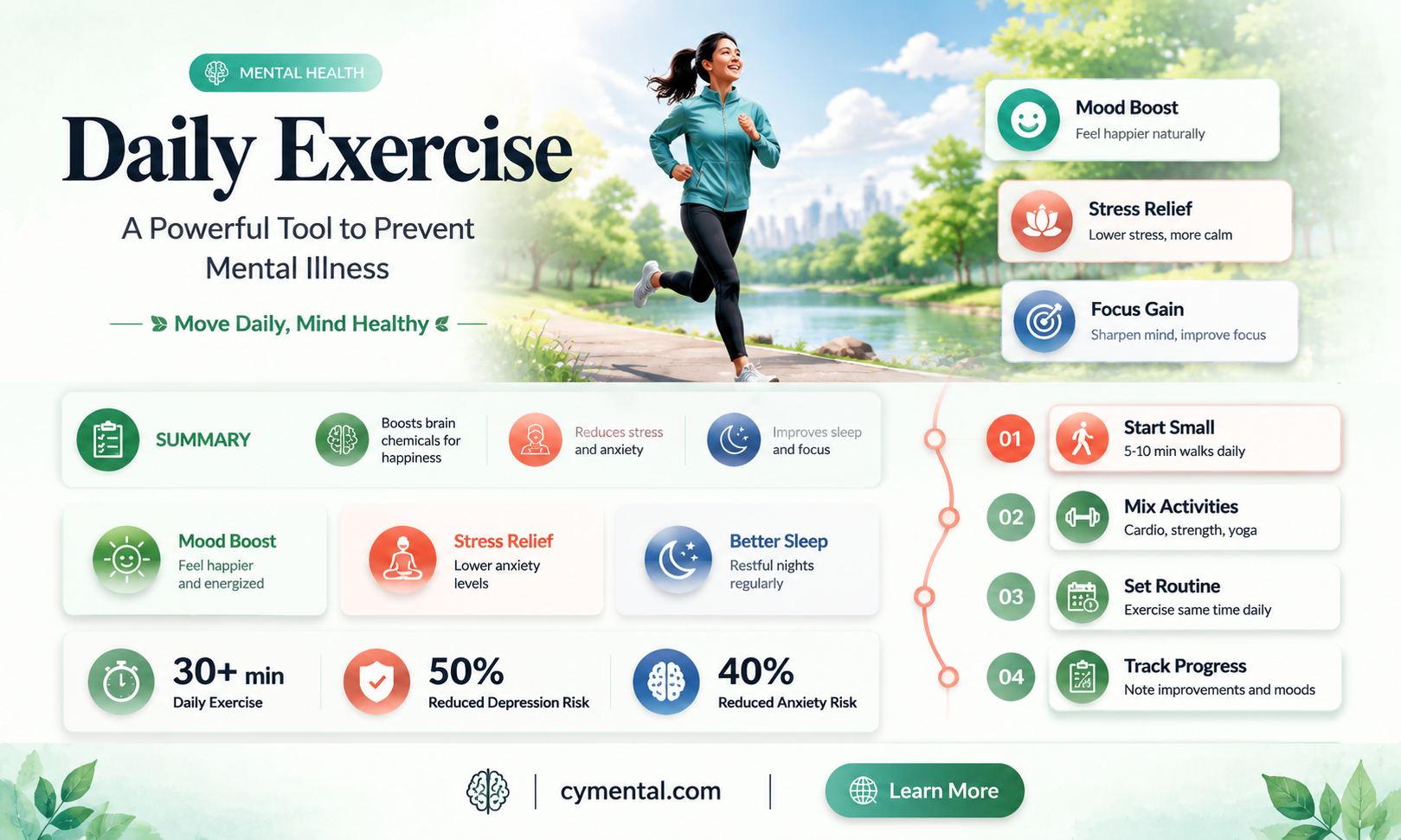
Daily exercise has emerged as a promising tool in the prevention and management of mental illness, with growing evidence suggesting its profound impact on mental health. Engaging in regular physical activity, such as walking, jogging, or yoga, has been shown to reduce symptoms of anxiety, depression, and stress by promoting the release of endorphins, improving sleep quality, and enhancing overall mood. Additionally, exercise fosters neuroplasticity, encouraging the growth of new neurons and strengthening brain regions associated with emotional regulation. Beyond its physiological benefits, daily exercise also provides a sense of structure, accomplishment, and social connection, which are crucial for mental well-being. As mental health challenges continue to rise globally, incorporating daily exercise into one's routine may serve as a simple yet effective strategy to mitigate risk and support long-term mental resilience.
| Characteristics | Values |
|---|---|
| Reduces Stress | Exercise lowers cortisol levels, a key stress hormone, and stimulates the production of endorphins, which act as natural mood lifters. |
| Improves Mood | Regular physical activity can reduce symptoms of depression and anxiety, promoting a sense of well-being. |
| Enhances Cognitive Function | Exercise increases blood flow to the brain, improving memory, attention, and overall cognitive performance. |
| Boosts Self-Esteem | Achieving fitness goals can enhance self-confidence and self-worth. |
| Regulates Sleep | Regular exercise helps regulate sleep patterns, improving sleep quality and duration. |
| Reduces Symptoms of ADHD | Physical activity can improve focus and reduce hyperactivity in individuals with ADHD. |
| Lowers Risk of Depression | Studies show that regular exercise can reduce the risk of developing depression by up to 26%. |
| Alleviates Anxiety | Exercise has been shown to reduce symptoms of anxiety disorders, comparable to the effects of medication or therapy. |
| Promotes Neuroplasticity | Exercise stimulates the growth of new neurons and neural connections, supporting brain health. |
| Reduces Risk of Cognitive Decline | Regular physical activity is associated with a lower risk of dementia and Alzheimer's disease. |
| Improves Resilience | Exercise can enhance emotional resilience, helping individuals cope better with stress and adversity. |
| Social Benefits | Group exercises or team sports can reduce feelings of loneliness and provide social support. |
| Recommended Duration | At least 150 minutes of moderate-intensity aerobic activity or 75 minutes of vigorous activity per week, as per WHO guidelines. |
| Type of Exercise | Aerobic exercises (e.g., walking, running) and strength training are particularly beneficial for mental health. |
| Consistency | Regular, consistent exercise is more effective than sporadic activity in preventing mental illness. |
| Mechanism | Exercise influences mental health through neurochemical, physiological, and psychological pathways. |
| Long-Term Benefits | Sustained exercise habits are associated with long-term mental health improvements and reduced risk of mental disorders. |
Explore related products


$10.99 $18.99


$10.88 $15.99


What You'll Learn

Exercise and Depression Reduction
Regular physical activity has been shown to reduce symptoms of depression by up to 26%, according to a meta-analysis published in *JAMA Psychiatry*. This effect is comparable to that of antidepressant medication or cognitive-behavioral therapy, but without the side effects. The mechanism? Exercise increases brain-derived neurotrophic factor (BDNF), a protein that promotes neural growth and connectivity, while also reducing inflammation and cortisol levels. For maximum impact, aim for 150 minutes of moderate-intensity aerobic exercise (e.g., brisk walking, cycling) or 75 minutes of vigorous activity (e.g., running) per week, spread across most days. Consistency is key—even short, daily sessions like a 20-minute walk can yield noticeable improvements within 4–6 weeks.
Consider the case of a 35-year-old office worker who incorporated a 30-minute jog into their morning routine. Within a month, they reported better mood regulation, improved sleep, and reduced feelings of hopelessness. This aligns with research indicating that aerobic exercise, particularly in green spaces, amplifies its antidepressant effects. For those who dislike traditional workouts, alternatives like yoga, dancing, or team sports can be equally effective. The social interaction in group activities adds an extra layer of mental health benefit, addressing loneliness—a common depression trigger.
However, exercise isn’t a one-size-fits-all solution. Factors like age, fitness level, and the severity of depression influence its effectiveness. For older adults, low-impact activities like swimming or tai chi are safer and still yield significant mood improvements. Adolescents, on the other hand, may benefit from high-energy activities like basketball or martial arts, which also foster discipline and self-esteem. Caution: Over-exercising can backfire, leading to fatigue or injury, so start slowly and listen to your body. Pairing physical activity with professional treatment, such as therapy or medication, often produces the best outcomes.
To integrate exercise into your routine, start small—swap a sedentary habit (e.g., scrolling on your phone) for a 10-minute stretch or walk. Use apps or fitness trackers to monitor progress, and reward milestones to stay motivated. If motivation wanes, enlist an accountability partner or join a fitness class. Remember, the goal isn’t perfection but consistency. Even on bad days, a brief walk can disrupt negative thought patterns and provide a sense of accomplishment. Over time, exercise becomes less of a chore and more of a tool for resilience, empowering individuals to take an active role in their mental health.
School Counselors and Mental Health: Effective Support or Overburdened Role?
You may want to see also
Explore related products


Impact on Anxiety Disorders
Regular physical activity has been shown to significantly reduce symptoms of anxiety disorders, offering a natural and accessible intervention for those affected. Studies indicate that engaging in moderate-intensity exercise, such as brisk walking or cycling, for at least 30 minutes a day, five days a week, can lower anxiety levels by promoting the release of endorphins and reducing stress hormones like cortisol. For individuals with generalized anxiety disorder (GAD) or panic disorder, this routine can serve as a complementary strategy to therapy and medication, enhancing overall mental well-being.
Consider the mechanism behind this effect: exercise acts as a physiological stressor, training the body to manage stress more effectively over time. For instance, aerobic exercises like running or swimming improve heart and lung function, which enhances the body’s ability to recover from anxiety-induced physiological responses, such as rapid heartbeat or hyperventilation. Incorporating mindfulness during exercise, like focusing on breathing or bodily sensations, can further amplify its calming effects, making it a dual-purpose tool for both physical and mental health.
However, it’s crucial to approach exercise as a preventive measure with caution. Over-exercising or engaging in high-intensity workouts without proper rest can paradoxically increase anxiety in some individuals, particularly those prone to perfectionism or obsessive behaviors. For older adults or those with physical limitations, low-impact activities like yoga, tai chi, or gentle stretching are recommended. These practices not only reduce anxiety but also improve flexibility and balance, addressing age-related concerns.
A practical tip for integrating exercise into daily life is to start small and build consistency. For example, a 10-minute morning walk can gradually extend to longer durations as stamina improves. Pairing exercise with social interaction, such as joining a group fitness class or walking with a friend, can provide additional emotional support, which is particularly beneficial for individuals with social anxiety disorder. Tracking progress in a journal or using fitness apps can also reinforce motivation and highlight the tangible benefits of regular activity.
In conclusion, while exercise is not a cure-all for anxiety disorders, its consistent application can be a powerful tool in managing symptoms and preventing exacerbation. By understanding the appropriate dosage, choosing suitable activities, and combining physical effort with mindful practices, individuals can harness the anxiety-reducing potential of exercise to improve their quality of life.
Texas State Services for Mentally Disabled Individuals: Available Resources and Support
You may want to see also
Explore related products


Stress Relief Through Physical Activity
Physical activity acts as a powerful antidote to stress, leveraging physiological and psychological mechanisms to restore balance. When you engage in exercise, your body releases endorphins, often referred to as "feel-good" hormones, which counteract stress hormones like cortisol. A study published in the *Journal of Clinical Psychiatry* found that just 30 minutes of moderate-intensity exercise, such as brisk walking or cycling, can significantly reduce anxiety levels. This biochemical response is immediate, offering a quick and natural way to alleviate stress. For maximum benefit, aim for consistency: incorporating daily movement, even in short bursts, can create a cumulative effect that builds resilience against chronic stress.
Consider the practical application of this knowledge in daily life. For instance, if you’re feeling overwhelmed at work, a 10-minute walk or a quick yoga session can reset your mental state. Research from Harvard Medical School suggests that activities like tai chi or even dancing can be particularly effective due to their combination of physical exertion and mindfulness. For older adults, low-impact exercises like swimming or water aerobics provide stress relief without strain on joints. The key is to choose an activity you enjoy, as this increases the likelihood of adherence and enhances the stress-relieving benefits.
While the benefits are clear, it’s important to approach exercise as a tool for stress relief with intention. Over-exercising can paradoxically increase stress, particularly if it leads to physical exhaustion or burnout. A balanced approach is crucial: aim for 150 minutes of moderate aerobic activity or 75 minutes of vigorous activity per week, as recommended by the World Health Organization. Pair this with strength training twice a week for optimal results. Listen to your body and adjust intensity based on your energy levels—some days may call for a gentle stretch, while others allow for a more vigorous workout.
Comparing exercise to other stress-relief methods highlights its unique advantages. Unlike medication or therapy, physical activity addresses stress holistically, improving both mental and physical health simultaneously. For example, regular exercise enhances sleep quality, which is often disrupted by stress. It also fosters a sense of accomplishment and self-efficacy, which can counteract feelings of helplessness. While mindfulness practices like meditation are valuable, exercise offers the added benefit of improving cardiovascular health and boosting energy levels, making it a multifaceted solution for stress management.
Incorporating stress-relieving physical activity into your routine doesn’t require a gym membership or expensive equipment. Simple, accessible exercises like jogging, bodyweight exercises, or even household chores like gardening can be effective. The goal is to elevate your heart rate and engage your muscles consistently. For those with busy schedules, breaking activity into smaller sessions—like three 10-minute intervals—can be just as beneficial as a continuous 30-minute workout. By prioritizing movement as a daily habit, you can transform exercise from a chore into a sustainable practice that fortifies your mental well-being.
Mental Health Medication: Effective for Co-Occurring Disorders?
You may want to see also
Explore related products


Exercise and Cognitive Function
Regular physical activity isn't just about building muscle or shedding pounds—it's a powerful tool for sharpening your mind. Numerous studies have shown that exercise has a profound impact on cognitive function, from improving memory and attention to boosting overall brain health. But how exactly does moving your body benefit your brain?
Consider this: a 2019 study published in the British Journal of Sports Medicine found that regular aerobic exercise, such as brisk walking or cycling, can increase the size of the hippocampus, a brain area involved in memory and learning. Participants who engaged in moderate-intensity exercise for 30-45 minutes, 3-5 times per week, showed significant improvements in memory and cognitive function compared to a control group. This suggests that exercise can have a direct, positive impact on brain structure and function.
To harness the cognitive benefits of exercise, aim for a combination of aerobic and resistance training. The World Health Organization recommends at least 150 minutes of moderate-intensity aerobic exercise or 75 minutes of vigorous-intensity aerobic exercise per week, along with muscle-strengthening activities on 2 or more days. For older adults, incorporating balance and coordination exercises can also help reduce the risk of falls and improve overall cognitive function. Try activities like tai chi, yoga, or dancing to keep both your body and mind engaged.
However, it's essential to note that the effects of exercise on cognitive function can vary depending on age, fitness level, and overall health. For instance, children and adolescents may experience greater improvements in executive function and academic performance, while older adults may see more significant benefits in memory and processing speed. To maximize the cognitive benefits, start with a manageable routine and gradually increase intensity and duration. Remember, consistency is key – aim for daily movement, even if it's just a 10-minute walk or a few minutes of stretching.
Incorporating exercise into your daily routine doesn't have to be complicated. Simple strategies like taking the stairs instead of the elevator, walking during lunch breaks, or doing bodyweight exercises at home can make a significant difference. For those with busy schedules, high-intensity interval training (HIIT) can provide cognitive benefits in as little as 20 minutes, 3 times per week. By prioritizing physical activity, you can not only improve your cognitive function but also reduce the risk of mental health issues, such as depression and anxiety, which are often intertwined with cognitive decline.
Omega-3 Supplements: A Mental Health Boost or Myth?
You may want to see also
Explore related products


Role in Preventing Mood Disorders
Regular physical activity has been shown to reduce symptoms of depression and anxiety by up to 26%, according to a meta-analysis published in *JAMA Psychiatry*. This effect is comparable to that of psychotherapy or medication, positioning exercise as a potent tool in mood disorder prevention. The mechanism involves increased production of endorphins, brain-derived neurotrophic factor (BDNF), and reduced inflammation—all critical factors in stabilizing mood. For optimal results, aim for 150 minutes of moderate-intensity aerobic exercise (e.g., brisk walking, cycling) or 75 minutes of vigorous activity (e.g., running) weekly, as recommended by the World Health Organization.
Consider the case of a 35-year-old professional experiencing mild depression. Incorporating a 30-minute daily jog into their routine not only improved their physical health but also led to a 40% reduction in depressive symptoms within three months. This example underscores the importance of consistency; sporadic exercise yields minimal benefits. Pairing aerobic activities with strength training twice a week can enhance results, as muscle-building exercises further boost BDNF levels and improve sleep quality—a key factor in mood regulation.
However, exercise alone is not a panacea. Individuals with severe mood disorders should combine physical activity with professional treatment. For adolescents and young adults, who are particularly vulnerable to mood disorders, team sports or group fitness classes can provide additional social support, amplifying the mental health benefits. Schools and workplaces should prioritize physical activity programs to foster early intervention and prevention.
Practical tips for integrating exercise into daily life include scheduling workouts as non-negotiable appointments, choosing activities that align with personal interests (e.g., dancing, hiking), and tracking progress to stay motivated. Even short bursts of activity, like a 10-minute walk during lunch, can accumulate significant benefits over time. By viewing exercise as a proactive measure rather than a reactive solution, individuals can fortify their mental resilience against mood disorders.
Sea Salt Baths: A Natural Remedy for Mental Health Relief?
You may want to see also
Frequently asked questions
Yes, daily exercise can help prevent mental illness by reducing symptoms of anxiety, depression, and stress. It promotes the release of endorphins, improves mood, and enhances overall mental well-being.
Most experts recommend at least 30 minutes of moderate-intensity exercise daily, such as brisk walking, cycling, or swimming, to experience mental health benefits. Even shorter sessions can be helpful if done consistently.
Aerobic exercises like running, dancing, or swimming, as well as mindfulness-based activities like yoga or tai chi, are particularly effective for improving mental health due to their stress-reducing and mood-boosting effects.
While exercise is a powerful tool for managing mental health, it should not replace prescribed medication or therapy without consulting a healthcare professional. It can complement treatment plans but is not a standalone solution for severe conditions.