Noah Parker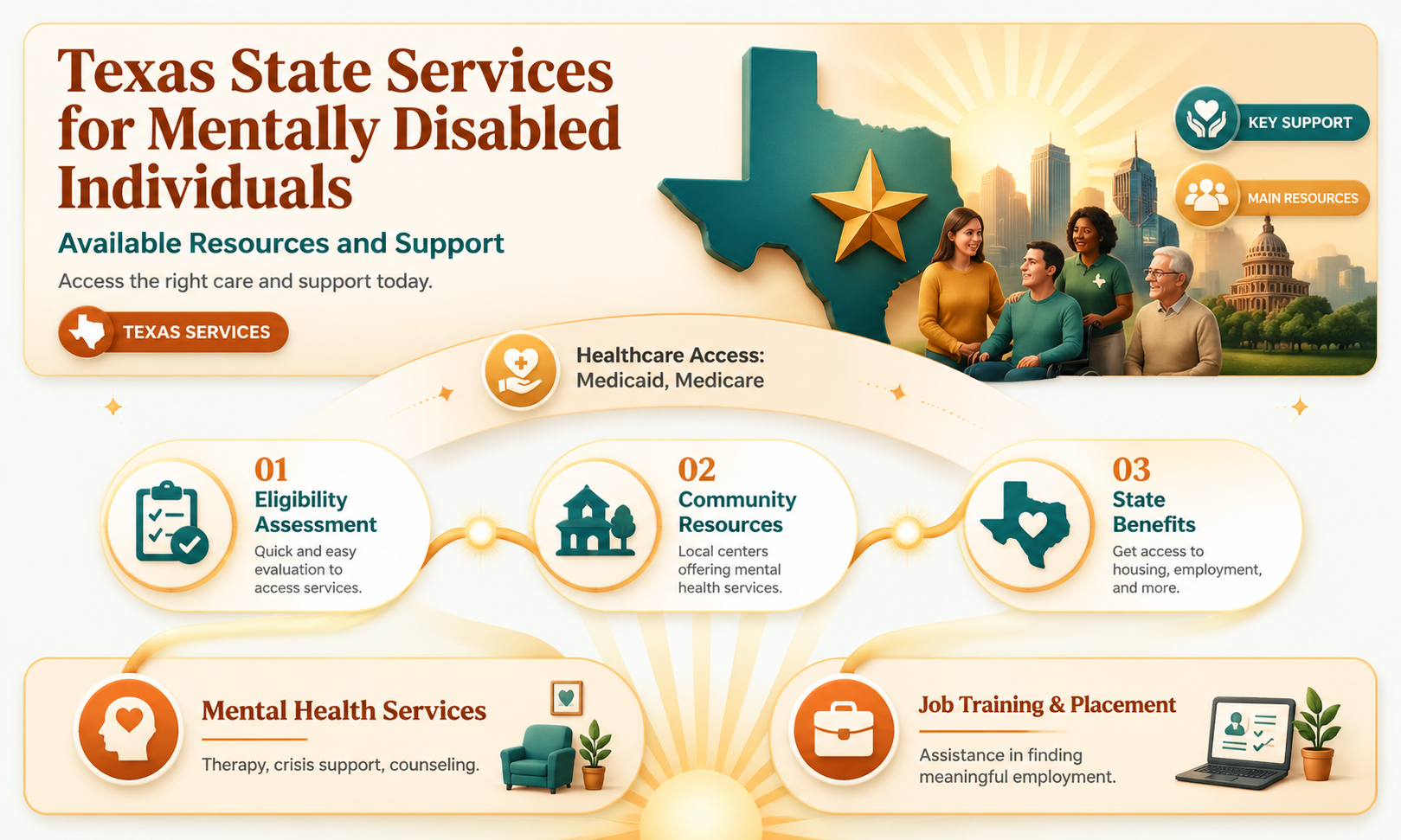
Texas offers a range of state services to support individuals with mental disabilities, aiming to enhance their quality of life and promote independence. These services are primarily administered through the Texas Health and Human Services Commission (HHSC), which oversees programs such as Medicaid waivers, community-based support, vocational training, and residential care. For instance, the Home and Community-Based Services (HCS) and Texas Home Living (TxHmL) programs provide personalized assistance for daily living, while the Department of Aging and Disability Services (DADS) offers resources for long-term care and disability determination. Additionally, the Texas Department of Assistive and Rehabilitative Services (DARS) focuses on employment opportunities and independent living skills for individuals with disabilities. These programs, along with local mental health authorities and non-profit organizations, work collaboratively to ensure comprehensive support for Texans with mental disabilities.
Explore related products


What You'll Learn
- Texas Health and Human Services Commission (HHSC) programs for mental disabilities
- Community-based mental health services and support in Texas
- Medicaid waivers for Texans with intellectual and developmental disabilities
- Vocational rehabilitation services for mentally disabled individuals in Texas
- Texas Department of Aging and Disability Services (DADS) resources

Texas Health and Human Services Commission (HHSC) programs for mental disabilities
The Texas Health and Human Services Commission (HHSC) offers a robust array of programs tailored to support individuals with mental disabilities, ensuring they receive the care and resources necessary for improved quality of life. These programs are designed to address diverse needs, from medical assistance to community integration, and are accessible across the state. Understanding these services can empower individuals and families to navigate the system effectively and secure the support they need.
One cornerstone of HHSC’s offerings is the Medicaid Waiver Programs, specifically the Home and Community-Based Services (HCS) and Texas Home Living (TxHmL) programs. These waivers provide personalized care plans for individuals with intellectual and developmental disabilities, allowing them to live independently in their communities rather than in institutional settings. For instance, HCS covers services like day habilitation, respite care, and adaptive aids, while TxHmL focuses on less intensive support, such as assistance with daily living skills. Eligibility is determined by factors like age, disability severity, and income, with priority often given to those transitioning from state-supported living centers.
Another critical program is the Local Intellectual and Developmental Disability Authorities (LIDDAs), which act as regional hubs for coordinating services. LIDDAs assess individual needs, develop service plans, and connect clients to resources like vocational training, residential support, and crisis intervention. For example, a person with a mental disability seeking employment might receive job coaching through a LIDDA-affiliated provider. These authorities also offer Early Childhood Intervention (ECI) services for children under 3, addressing developmental delays through therapies and family training to foster long-term independence.
HHSC also administers the Mental Health State-Funded Programs, which include outpatient treatment, crisis stabilization, and peer support for individuals with severe mental illness. Notably, the Community Mental Health Services provide therapy, medication management, and case management for all ages, with specialized programs for youth and seniors. For instance, the Texas Child Mental Health Care Consortium expands access to psychiatric care for children and adolescents, addressing gaps in underserved areas through telemedicine and provider training.
Practical tips for accessing these services include verifying eligibility through the HHSC website or contacting a local LIDDA office. Families should gather necessary documentation, such as medical records and proof of income, to streamline the application process. Additionally, attending HHSC-sponsored workshops or webinars can provide insights into maximizing benefits and navigating program complexities. By leveraging these resources, individuals with mental disabilities in Texas can achieve greater autonomy and community engagement.
Pets and Mental Health: How Furry Friends Boost Well-Being
You may want to see also
Explore related products


Community-based mental health services and support in Texas
Texas offers a robust network of community-based mental health services designed to support individuals with intellectual and developmental disabilities (IDD) and mental health challenges. These services aim to provide personalized care, foster independence, and integrate individuals into their communities. One cornerstone of this system is the Local Mental Health Authorities (LMHAs), which operate in each of Texas’s 254 counties. LMHAs serve as the primary access point for state-funded mental health and IDD services, offering assessments, crisis intervention, and case management tailored to individual needs. For instance, the Harris Center for Mental Health and IDD in Harris County provides a range of programs, including day habilitation, supported employment, and residential services, ensuring individuals receive holistic support within their communities.
A key component of community-based care in Texas is the Medicaid waiver program, specifically the Home and Community-Based Services (HCS) and Texas Home Living (TxHmL) waivers. These waivers allow eligible individuals to receive services in their homes or community settings rather than institutional care. For example, the HCS waiver covers services like adaptive aids, behavioral support, and respite care, while TxHmL focuses on habilitation and supportive home living. To qualify, individuals must meet specific financial and functional criteria, and services are tailored to their unique needs through a person-centered planning process. This approach empowers individuals to live more independently while receiving the necessary support.
Another critical aspect of Texas’s community-based system is the emphasis on early intervention and prevention. Programs like the Children’s Mental Health Care Consortium provide specialized services for youth with severe mental health needs, including therapy, case management, and family support. For adults, Peer Support Services offer a unique avenue for recovery, connecting individuals with peers who have lived experience in managing mental health challenges. These peers provide mentorship, encouragement, and practical strategies for navigating daily life, fostering a sense of community and shared understanding.
Despite these resources, accessing community-based services in Texas can be challenging due to factors like long waitlists, funding limitations, and geographic disparities. Rural areas, in particular, often face shortages of providers and specialized services, leaving individuals with limited options. To address these gaps, Texas has invested in telehealth initiatives, expanding access to mental health professionals via virtual platforms. Additionally, advocacy organizations like The Arc of Texas and the Texas Council for Developmental Disabilities work tirelessly to improve service availability and quality, ensuring the voices of individuals with disabilities are heard in policy discussions.
In conclusion, Texas’s community-based mental health services provide a vital lifeline for individuals with IDD and mental health challenges, offering personalized support and opportunities for independence. While barriers remain, ongoing efforts to expand access and improve service delivery demonstrate a commitment to inclusive, community-centered care. For those seeking assistance, contacting their local LMHA or exploring Medicaid waiver options is a practical first step toward accessing these life-changing resources.
Boost Your Mental Health: Hobbies That Heal and Inspire
You may want to see also
Explore related products


Medicaid waivers for Texans with intellectual and developmental disabilities
Texas offers a lifeline to individuals with intellectual and developmental disabilities (IDD) through its Medicaid waiver programs, providing access to crucial services that might otherwise be financially out of reach. These waivers, approved by the federal government, allow Texas to use Medicaid funds flexibly to offer home and community-based services (HCBS) as an alternative to institutional care. This approach not only promotes independence but also ensures that individuals receive personalized support tailored to their unique needs.
One of the most prominent Medicaid waivers in Texas is the Intellectual and Developmental Disabilities (IDD) Waiver, designed for individuals with conditions such as Down syndrome, autism, cerebral palsy, and other developmental disabilities. This waiver covers a range of services, including day habilitation, respite care, supported employment, and assistive technology. For instance, day habilitation programs focus on skill-building activities to enhance daily living, while supported employment helps individuals secure and maintain jobs in their communities. Eligibility for this waiver is determined by the Texas Health and Human Services Commission (HHSC), with priority often given to those at risk of institutionalization.
Another critical waiver is the Community Living Assistance and Support Services (CLASS) program, which serves individuals with related conditions who may not qualify for the IDD Waiver. CLASS provides personal assistance services, such as help with bathing, dressing, and meal preparation, enabling individuals to live independently in their homes. Notably, CLASS has a more streamlined application process compared to the IDD Waiver, though it may offer a narrower scope of services. Both waivers require individuals to meet financial and medical eligibility criteria, emphasizing the need for thorough documentation and professional assessments.
Despite their benefits, Medicaid waivers in Texas face challenges, including long waitlists that can stretch for years. As of recent data, thousands of Texans with IDD remain on the Interest List, awaiting services. Advocacy groups and families often emphasize the urgency of addressing this backlog, as delays can exacerbate the difficulties faced by individuals and their caregivers. To navigate this system effectively, families are encouraged to apply for multiple waivers simultaneously, stay in regular contact with caseworkers, and explore interim support options like local nonprofits or school-based services.
In conclusion, Medicaid waivers in Texas represent a vital resource for individuals with intellectual and developmental disabilities, offering pathways to independence and community integration. While the system is not without its hurdles, understanding the specifics of each waiver—from eligibility requirements to available services—can empower families to advocate effectively and secure the support their loved ones need. For those in Texas, these waivers are more than just programs; they are lifelines to a more fulfilling, independent life.
Finding Mental Health Support: A Guide to Accessible Resources and Services
You may want to see also
Explore related products



Vocational rehabilitation services for mentally disabled individuals in Texas
Texas offers a robust framework of vocational rehabilitation services tailored to empower mentally disabled individuals, fostering independence and meaningful employment. At the heart of this system lies the Texas Department of Assistive and Rehabilitative Services (DARS), specifically its Division for Rehabilitation Services (DRS). This division operates as a lifeline, providing a spectrum of services designed to bridge the gap between disability and workforce integration.
From career counseling and job training to assistive technology and on-the-job support, DRS programs are meticulously crafted to address the unique challenges faced by individuals with mental disabilities.
Consider the case of Sarah, a young woman diagnosed with schizophrenia. Through DRS, she accessed individualized employment planning, learning coping mechanisms to manage her symptoms in a work environment. She received training in data entry, a field suited to her strengths and interests. DRS even facilitated a partnership with a local business willing to provide on-the-job training and accommodations. Today, Sarah thrives in her role, proving that with the right support, mental disability need not be a barrier to employment.
This example illustrates the transformative power of vocational rehabilitation, highlighting the importance of personalized approaches and community partnerships.
The success of vocational rehabilitation hinges on a multi-faceted approach. Firstly, early intervention is crucial. Connecting individuals with services during their transition from school to adulthood significantly improves long-term employment outcomes. Secondly, collaboration is key. DRS works closely with mental health providers, educators, and employers to create a supportive ecosystem. Finally, ongoing support is essential. Regular check-ins, job coaching, and access to mental health resources ensure sustained success in the workplace.
While Texas boasts a comprehensive system, challenges remain. Long waitlists for services and limited funding can create barriers to access. Addressing these issues requires continued advocacy and investment. Expanding telehealth options for counseling and training, for instance, could increase accessibility for individuals in rural areas. By continually refining and expanding these services, Texas can further empower mentally disabled individuals to achieve their full potential in the workforce.
Supporting Loved Ones: A Guide to Accessing Mental Health Care for Family
You may want to see also
Explore related products


Texas Department of Aging and Disability Services (DADS) resources
The Texas Department of Aging and Disability Services (DADS) offers a robust framework of support for individuals with mental disabilities, ensuring they receive the care and resources necessary to thrive. One of its cornerstone programs is the Medicaid Waiver for Intellectual and Developmental Disabilities (IDD), which provides personalized services tailored to the unique needs of each participant. This waiver covers a range of supports, including day habilitation, respite care, and supported employment, enabling individuals to live more independently and engage meaningfully in their communities. Eligibility is determined by factors such as age, income, and the severity of the disability, with priority often given to those with the most critical needs.
For families navigating the complexities of mental disability care, DADS provides case management services that act as a lifeline. These services connect individuals and their caregivers to essential resources, such as behavioral health counseling, transportation assistance, and adaptive equipment. Case managers work collaboratively with clients to develop individualized service plans, ensuring that every aspect of their care is addressed. This proactive approach not only alleviates the burden on families but also fosters a sense of empowerment and self-determination for the individuals receiving support.
Another critical resource offered by DADS is the State Supported Living Centers (SSLCs), which provide 24-hour residential care for individuals with severe intellectual and developmental disabilities. These centers are designed to offer a safe, structured environment where residents can receive medical, therapeutic, and daily living support. While SSLCs are typically a last resort for those who cannot be adequately cared for at home or in community settings, they play a vital role in ensuring that even the most vulnerable individuals have access to high-quality care.
DADS also emphasizes community integration through programs like the Home and Community-Based Services (HCS), which aim to help individuals with mental disabilities live as independently as possible. These services include assistance with daily activities, such as meal preparation and personal care, as well as opportunities for social engagement and skill development. By prioritizing community-based care, DADS aligns with the broader shift away from institutionalization, promoting dignity and inclusion for all participants.
To maximize the benefits of DADS resources, individuals and families should familiarize themselves with the application process and eligibility criteria. The department’s website offers detailed guides and contact information for regional offices, making it easier to access the right services. Additionally, advocacy groups and local disability organizations can provide valuable support and guidance, ensuring that no one navigates this journey alone. With its comprehensive array of services, DADS stands as a testament to Texas’s commitment to supporting individuals with mental disabilities, offering hope and practical solutions for a better quality of life.
Exercise Boosts Elderly Mental Health: Benefits and Strategies for Wellbeing
You may want to see also
Frequently asked questions
Yes, Texas offers a range of state services through the Department of Aging and Disability Services (DADS) and the Health and Human Services Commission (HHSC) to support mentally disabled individuals.
Services include case management, residential programs, vocational training, day habilitation, behavioral health support, and Medicaid waivers for long-term care needs.
Individuals can apply through the Local Intellectual and Developmental Disability Authority (LIDDA) in their area or by contacting the HHSC directly. Applications often require medical documentation and proof of eligibility.
Yes, Texas offers financial assistance through Medicaid waivers, such as the Home and Community-Based Services (HCS) waiver, which helps cover the cost of care and support services.
Yes, Texas provides vocational rehabilitation services through the Department of Assistive and Rehabilitative Services (DARS) to help mentally disabled individuals find and maintain employment.