Lucas Bennett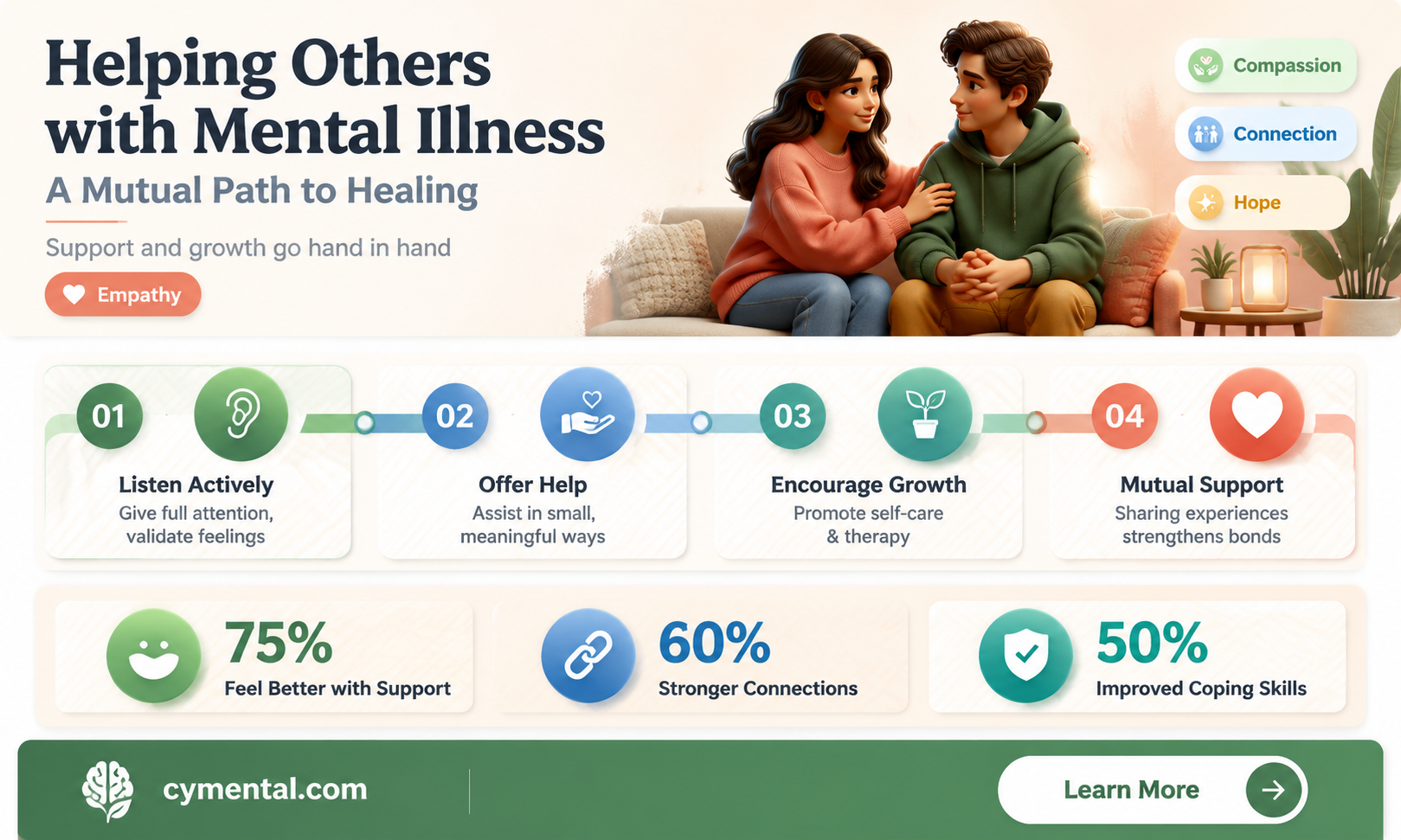
Helping someone with a mental illness can indeed have profound benefits not only for the individual receiving support but also for the helper themselves. Engaging in acts of compassion and empathy fosters a sense of purpose and connection, which can enhance one’s own mental well-being. Research suggests that providing assistance to others stimulates the release of neurotransmitters like oxytocin and serotonin, often referred to as the helper’s high, which can reduce stress and improve mood. Additionally, supporting someone through their struggles encourages personal growth, resilience, and a deeper understanding of mental health challenges, ultimately enriching the helper’s perspective and emotional intelligence. However, it’s crucial to approach such support with self-awareness and boundaries to ensure it remains mutually beneficial and sustainable.
Explore related products


What You'll Learn
- Mutual Emotional Growth: Supporting others fosters empathy, resilience, and emotional intelligence in both parties involved
- Personal Fulfillment: Helping others boosts self-worth, purpose, and a sense of meaningful contribution
- Skill Development: Caregiving enhances communication, problem-solving, and active listening abilities
- Social Connection: Strengthens relationships, builds trust, and creates deeper, more supportive bonds
- Perspective Shift: Challenges assumptions, reduces stigma, and promotes understanding of mental health struggles

Mutual Emotional Growth: Supporting others fosters empathy, resilience, and emotional intelligence in both parties involved
Helping someone with a mental illness often triggers a reciprocal exchange of emotional growth, challenging the notion that support is a one-way street. When you actively listen to someone’s struggles, validate their feelings, or offer practical assistance, you engage neural pathways associated with empathy and emotional regulation. Research in *Psychological Science* highlights that acts of compassion activate the brain’s caregiving system, releasing oxytocin, which fosters connection and reduces stress in both the giver and receiver. This biological response underscores how supporting others isn’t just about their healing—it’s a shared process of emotional strengthening.
Consider the act of holding space for someone during a panic attack. By remaining calm, you model emotional regulation, which benefits both parties. For the person in distress, your presence provides a grounding anchor. For you, maintaining composure in high-stress situations builds resilience, a skill transferable to your own challenges. Over time, this practice enhances your ability to manage anxiety, not just theirs. A study in *The Journal of Positive Psychology* found that individuals who regularly support others report higher emotional intelligence scores, demonstrating that empathy is a muscle strengthened through use.
However, mutual growth isn’t automatic—it requires intentionality. To maximize this benefit, set boundaries that protect your mental health while offering support. For instance, allocate specific times for deep conversations rather than being available 24/7. Use reflective listening techniques, such as paraphrasing their feelings, to deepen understanding and avoid burnout. For example, instead of saying, “You’ll get through this,” try, “It sounds like you’re feeling overwhelmed right now.” This approach not only validates their experience but also sharpens your ability to decode nonverbal cues, a key aspect of emotional intelligence.
A cautionary note: avoid the savior complex, where your identity becomes tied to fixing others. This dynamic stifles mutual growth and can lead to resentment. Instead, frame your role as a collaborator in their journey. For instance, if you’re helping someone with depression, celebrate small victories together—like completing a task or expressing a difficult emotion. This shared progress reinforces resilience in both parties, reminding you that growth is incremental and collective.
In practice, integrate these principles into daily interactions. Start by asking open-ended questions like, “How can I best support you today?” rather than assuming their needs. Keep a journal to reflect on how these interactions challenge or expand your emotional capacity. Over time, you’ll notice patterns—perhaps you’ve become more patient, or you handle conflict with greater ease. This self-awareness is a byproduct of mutual emotional growth, proving that helping others isn’t just an act of generosity—it’s an investment in your own emotional development.
Recognizing Mental Health Struggles: When to Seek Support and Guidance
You may want to see also
Explore related products


Personal Fulfillment: Helping others boosts self-worth, purpose, and a sense of meaningful contribution
Helping someone with a mental illness can profoundly enhance your own sense of self-worth, as it directly challenges the internal narrative of inadequacy or insignificance. When you offer support—whether through active listening, sharing resources, or simply being present—you validate your ability to make a positive impact. This act of service acts as a mirror, reflecting your competence and empathy back to you. Research in psychology shows that such actions stimulate the release of oxytocin, often called the "helper’s high," which reinforces feelings of connection and self-value. For instance, a caregiver who assists a friend through depression often reports increased confidence in their emotional intelligence and problem-solving skills. This isn’t about ego; it’s about recognizing your capacity to contribute meaningfully, even in small ways.
To cultivate this sense of self-worth, start by setting realistic boundaries. Helping doesn’t mean sacrificing your own well-being. Allocate specific times for support—say, 30 minutes daily for check-ins—and stick to them. Pair this with self-reflection: after each interaction, jot down one skill or strength you demonstrated (e.g., patience, creativity in finding solutions). Over time, this practice builds a tangible record of your contributions, countering self-doubt with evidence of your effectiveness. Remember, the goal isn’t to "fix" the other person but to show up consistently, which in itself is a powerful affirmation of your worth.
Purpose often feels elusive, but helping someone with mental health challenges can anchor you in a clear, actionable mission. When you align your efforts with another’s healing, you step into a role that transcends personal ambiguity. For example, a volunteer at a mental health hotline might initially feel overwhelmed but soon discovers that their purpose isn’t just to answer calls—it’s to be a lifeline in moments of despair. This clarity of purpose spills over into other areas of life, fostering a sense of direction and intentionality. Studies suggest that individuals who engage in such purposeful activities report higher life satisfaction, even if the outcomes aren’t always positive. The act of trying, of showing up, is what imbues life with meaning.
To harness this, reframe your involvement as a collaborative journey rather than a one-sided rescue mission. Ask the person you’re helping what they need most—whether it’s companionship, practical assistance, or advocacy—and tailor your efforts accordingly. This shared purpose not only deepens your connection but also ensures your actions are aligned with their goals, making your contribution feel more significant. For instance, if they struggle with anxiety, helping them create a daily routine or accompanying them to therapy appointments can provide structure for both of you.
Meaningful contribution is often measured not by grand gestures but by the cumulative effect of small, consistent actions. When you help someone with mental illness, you become part of their support network, a role that, while sometimes invisible, is deeply impactful. Consider the story of a peer mentor who simply texts a friend with schizophrenia every morning to remind them to take medication. Over months, this routine not only aids the friend’s stability but also gives the mentor a profound sense of being indispensable. This sense of mattering—of being a vital thread in someone’s safety net—is a powerful antidote to feelings of insignificance.
To maximize this sense of contribution, focus on sustainability. Avoid burnout by integrating your support into your lifestyle rather than letting it dominate it. For example, if you’re an artist, create a piece that reflects their struggles and triumphs, offering it as a symbol of solidarity. Or, if you’re a planner, help organize their appointments and resources into a manageable system. These tailored contributions not only meet their needs but also leverage your strengths, making your involvement feel authentic and fulfilling. In the end, it’s not about doing everything but about doing what you can, with intention and heart.
Seeking Mental Health Support: Navigating Relationship Challenges with Your Girlfriend
You may want to see also
Explore related products




Skill Development: Caregiving enhances communication, problem-solving, and active listening abilities
Caregiving for someone with a mental illness often demands a level of communication far beyond everyday interactions. It’s not just about exchanging words; it’s about navigating emotional complexities, deciphering nonverbal cues, and adapting to shifting moods. For instance, a caregiver might need to explain medication schedules clearly to someone experiencing cognitive fog or de-escalate a situation where anxiety has triggered irritability. Over time, this high-stakes practice refines communication skills, teaching caregivers to be concise, empathetic, and patient. A study published in the *Journal of Family Psychology* found that caregivers of individuals with mental health conditions reported significant improvements in their ability to articulate needs and boundaries, skills transferable to professional and personal relationships.
Problem-solving in caregiving is rarely linear. Mental health challenges often present unpredictable scenarios that require creative, on-the-spot solutions. For example, a caregiver might need to devise a calming routine for a loved one experiencing panic attacks or strategize ways to encourage adherence to therapy sessions. This constant engagement with complex, real-world problems sharpens analytical thinking and resourcefulness. Caregivers often report becoming more adept at breaking down overwhelming issues into manageable steps, a skill that extends beyond caregiving into areas like project management or conflict resolution. A survey by the National Alliance for Caregiving highlighted that 72% of caregivers felt their problem-solving abilities had improved significantly due to their role.
Active listening is perhaps the most transformative skill developed through caregiving. It’s not merely hearing words but understanding the emotions, fears, and unspoken struggles behind them. For instance, a caregiver might notice subtle changes in tone or body language that signal an impending depressive episode, allowing for early intervention. This heightened attentiveness fosters deeper connections and builds trust. Practical tips for honing this skill include maintaining eye contact, paraphrasing to confirm understanding, and avoiding interruptions. Research from the *American Journal of Nursing* suggests that active listening reduces caregiver burnout by fostering a sense of mutual respect and understanding.
While these skills are invaluable, their development is not without challenges. Caregivers must balance assertiveness with empathy, often walking a fine line between support and over-involvement. For example, encouraging independence in a loved one with schizophrenia requires clear communication and problem-solving but also the ability to step back when necessary. Over time, caregivers learn to calibrate their approach, becoming more intuitive and responsive. This nuanced skill set not only benefits the care recipient but also equips caregivers with tools to navigate their own emotional and interpersonal challenges.
Incorporating these skills into daily caregiving routines can be facilitated through structured practices. For communication, caregivers can set aside 10–15 minutes daily for uninterrupted conversations, focusing on open-ended questions. Problem-solving can be enhanced by keeping a journal to track patterns and solutions, while active listening can be practiced by summarizing the other person’s feelings after each interaction. These intentional efforts not only improve caregiving outcomes but also contribute to personal growth, proving that helping someone with a mental illness can indeed be a reciprocal process of skill development and self-enhancement.
Reading for Resilience: How Books Boost Mental Health and Well-Being
You may want to see also
Explore related products


Social Connection: Strengthens relationships, builds trust, and creates deeper, more supportive bonds
Helping someone with a mental illness often begins with a simple act of connection—a conversation, a check-in, or a shared moment of vulnerability. These interactions, though seemingly small, lay the foundation for stronger relationships. Research shows that consistent social support not only aids the person struggling but also fosters mutual trust and understanding. For instance, a study published in *Psychological Science* found that individuals who provided emotional support to others reported increased feelings of competence and self-worth, which in turn strengthened their bonds with the recipient. This reciprocal benefit highlights how helping someone with mental health challenges can deepen connections by creating a shared sense of purpose and empathy.
To build trust effectively, start with active listening—a skill often overlooked but critical in these situations. When someone shares their struggles, avoid interrupting or offering quick fixes. Instead, reflect their emotions by saying, “It sounds like you’re feeling overwhelmed,” which validates their experience. Over time, this practice demonstrates reliability and care, two pillars of trust. For example, a 2020 survey by the American Psychological Association revealed that individuals who felt heard by their support system were 40% more likely to trust them during crises. Pair this with small, consistent actions like weekly check-ins or offering to accompany them to therapy, and you’ll create a bond that feels safe and enduring.
Deeper, more supportive bonds emerge when both parties engage in reciprocal vulnerability. Sharing your own challenges, when appropriate, can normalize the conversation around mental health and encourage openness. However, tread carefully—ensure your disclosures don’t overshadow their needs. A practical tip is to use the “2:1 rule”: for every two times you ask about their well-being, share one personal experience. This balance prevents the dynamic from becoming one-sided while fostering a sense of equality. For instance, a study in *Journal of Social and Clinical Psychology* found that relationships where both individuals shared vulnerabilities were 60% more likely to last long-term.
Finally, creating a supportive bond requires intentionality and boundaries. While it’s tempting to immerse yourself in their struggles, burnout can erode the relationship. Set clear limits, such as designated times for discussions or self-care rituals that recharge you. For caregivers aged 18–30, research suggests taking at least 30 minutes daily for personal activities to maintain emotional resilience. Similarly, for older adults, integrating support into existing routines—like discussing mental health during a weekly coffee date—can make the process sustainable. By prioritizing both their needs and your well-being, you cultivate a relationship that thrives on mutual respect and enduring support.
Do I Need Professional Mental Health Support? Signs to Consider
You may want to see also
Explore related products


Perspective Shift: Challenges assumptions, reduces stigma, and promotes understanding of mental health struggles
Helping someone with a mental illness often begins with a personal assumption: that the burden of support outweighs the benefit. Yet, research and lived experiences reveal a counterintuitive truth. Engaging in this act of care challenges the assumption that mental health struggles are isolating or one-sided. Instead, it fosters a reciprocal exchange where both parties gain—the helper through empathy, resilience, and a broader worldview, and the supported individual through validation and connection. This dynamic dismantles the stigma that mental illness is a personal failing or an untouchable topic, replacing it with a narrative of shared humanity.
Consider the process of perspective shifting as a three-step practice. First, listen actively without inserting solutions or judgments. This step alone can transform a helper’s understanding of mental health, revealing its complexity and individuality. Second, educate yourself on specific conditions, but avoid tokenism—seek credible sources like the National Alliance on Mental Illness (NAMI) or peer-reviewed studies. Third, normalize conversations by integrating mental health discussions into everyday dialogue, whether at work, home, or social settings. For instance, asking, “How’s your mental health today?” alongside the usual “How are you?” can reduce stigma incrementally but significantly.
A comparative lens highlights the contrast between traditional views and this shifted perspective. Historically, mental illness was often met with avoidance or fear, rooted in misconceptions of danger or weakness. Today, evidence shows that supportive relationships improve outcomes for individuals with mental health conditions, while helpers report increased emotional intelligence and reduced burnout. For example, a study in the *Journal of Community Psychology* found that peer support workers—individuals with lived experience of mental illness—experienced enhanced self-esteem and purpose through their roles. This duality underscores the transformative power of perspective shifting.
Practical tips can accelerate this shift. Start small: share a personal struggle to model vulnerability, or volunteer with mental health organizations to witness the impact of collective effort. Caution against savior complexes—support should be mutual, not martyr-like. Finally, measure progress not by outcomes but by effort: Did you listen more than you spoke? Did you avoid minimizing their experience? These incremental changes build a foundation for understanding that transcends individual interactions, contributing to a broader cultural shift in how mental health is perceived and addressed.
Gypsy Rose's Mental Health Journey: Therapy and Recovery Explored
You may want to see also
Frequently asked questions
Yes, helping others with mental illness can foster empathy, reduce feelings of isolation, and provide a sense of purpose, which can positively impact the helper’s emotional well-being.
It can, as acts of kindness and support release endorphins and promote a sense of fulfillment, but it’s important to set boundaries to avoid burnout.
Yes, offering support can deepen trust and connection, but it requires open communication and mutual understanding to avoid strain.
Absolutely, it often enhances problem-solving skills, resilience, and self-awareness, provided the helper prioritizes self-care and seeks support when needed.