Harper Lewis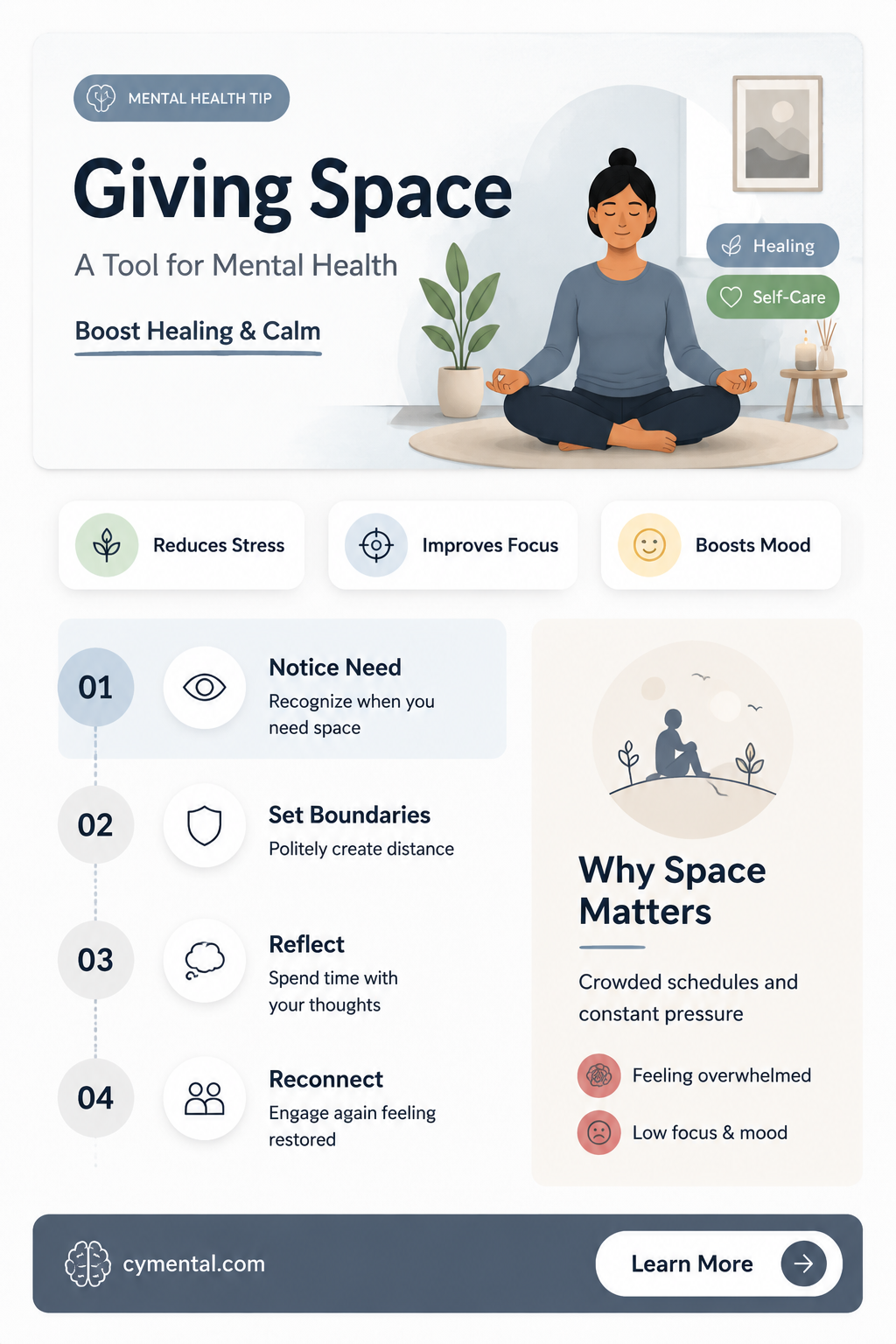
Giving people space is often seen as a way to respect boundaries and foster independence, but its impact on mental health is a nuanced topic. While some individuals may benefit from solitude to process emotions, recharge, or avoid overwhelming situations, others might interpret excessive space as emotional distance or neglect, leading to feelings of isolation or abandonment. Striking the right balance is crucial, as it depends on individual needs, personality, and the context of the relationship. For those struggling with anxiety or depression, space can sometimes exacerbate feelings of loneliness, while for others, it may provide the necessary breathing room to manage stress. Ultimately, open communication about personal boundaries and emotional needs is essential to ensure that giving space supports rather than hinders mental well-being.
Explore related products

$16.98 $30


What You'll Learn
- Balancing Connection and Solitude: How much space is needed for mental well-being
- Reducing Overwhelm: Does space alleviate stress and anxiety in relationships
- Self-Reflection Benefits: How solitude fosters self-awareness and emotional healing
- Preventing Burnout: Can space from demands improve mental resilience
- Respecting Boundaries: How honoring personal space supports mental health in interactions

Balancing Connection and Solitude: How much space is needed for mental well-being?
Human beings are inherently social creatures, yet we also crave solitude. This duality presents a delicate balance: too much connection can feel suffocating, while excessive isolation breeds loneliness. Striking the right equilibrium between social interaction and personal space is crucial for maintaining mental well-being.
Research suggests that both connection and solitude play vital roles in our psychological health. Social connections provide a sense of belonging, support, and validation, buffering against stress and depression. Conversely, solitude allows for introspection, creativity, and emotional processing, fostering self-awareness and personal growth.
Imagine a spectrum: on one end, complete isolation, on the other, constant social engagement. Optimal mental well-being lies somewhere in the middle, a personalized sweet spot unique to each individual. Factors like personality, cultural background, and life circumstances influence this ideal balance. Introverts, for instance, may require more solitude than extroverts, who thrive on frequent social interaction.
A study published in the *Journal of Personality and Social Psychology* found that spending 25-40% of our waking hours alone is associated with higher levels of happiness and life satisfaction. This translates to roughly 2-4 hours of solitude per day for most adults. However, this is a general guideline, not a rigid rule.
Finding your personal balance requires self-awareness and experimentation. Pay attention to how you feel after social interactions and periods of solitude. Do you feel energized or drained? Refreshed or restless? Keep a journal to track your moods and energy levels in relation to your social activities and alone time. Gradually adjust your schedule, carving out dedicated time for both connection and solitude.
Consider incorporating "micro-solitude" practices throughout your day: a 10-minute walk alone, mindful breathing exercises, or simply enjoying a cup of tea in silence. These small moments of solitude can provide valuable mental resets, even within a busy schedule. Remember, balancing connection and solitude is an ongoing process, not a destination. Be patient with yourself, listen to your inner needs, and adjust your approach as necessary.
Supporting Mentally Disabled Adults: Accessing Essential Resources and Assistance
You may want to see also
Explore related products




Reducing Overwhelm: Does space alleviate stress and anxiety in relationships?
In relationships, the constant interplay of emotions, expectations, and responsibilities can create a pressure cooker of stress and anxiety. Giving space—whether physical, emotional, or temporal—emerges as a counterintuitive yet effective strategy to alleviate this overwhelm. Research suggests that boundaries, even temporary ones, allow individuals to recharge, process emotions, and regain perspective. For instance, a 2019 study published in the *Journal of Social and Personal Relationships* found that partners who respected each other’s need for solitude reported lower levels of relationship-induced stress. This isn’t about detachment but about creating a healthy distance to foster reconnection.
Consider the practical application: a couple experiencing tension might agree on a "space hour" daily, where each person engages in a solo activity—reading, walking, or meditating. This structured break reduces the immediate pressure of conflict resolution and allows both parties to approach issues with clarity. For younger adults (ages 18–30), who often navigate the complexities of early relationships, this practice can be particularly beneficial. A survey by the American Psychological Association highlights that 62% of millennials report feeling overwhelmed by relationship demands, making space a vital tool for emotional regulation.
However, the dosage of space matters. Too little, and the overwhelm persists; too much, and it risks emotional disconnection. Psychologists recommend starting with small, consistent intervals—like 30 minutes daily—and adjusting based on individual needs. For instance, someone with anxiety might require more frequent but shorter breaks, while someone processing deep emotions may benefit from longer periods of solitude. The key is communication: both parties must agree on the purpose and duration of the space to avoid misunderstandings.
Critics argue that space can be misinterpreted as avoidance or lack of commitment. Yet, when framed as a proactive measure for mental health, it becomes a collaborative act of care. For example, a couple might use a "space day" once a month to reflect on their relationship dynamics independently, then reconvene to share insights. This approach not only reduces anxiety but also strengthens trust and mutual respect. It’s about reframing space not as a retreat but as a reinvestment in the relationship’s long-term health.
Incorporating space into relationships requires intentionality and self-awareness. Start by identifying triggers for overwhelm—is it constant communication, unmet expectations, or lack of personal time? Then, establish clear boundaries, such as "no-phone evenings" or dedicated solo weekends. For older couples (ages 40+), who may have entrenched patterns, introducing space can be challenging but transformative. A study in *Psychology Today* notes that couples who adopt such practices report improved emotional intimacy and reduced conflict within three months. Ultimately, space isn’t about distancing; it’s about creating room to breathe, reflect, and reconnect with renewed energy.
Psychotropic Drugs: Effective Treatment for Mental Illness or Overhyped Solution?
You may want to see also
Explore related products

$10.21 $18.95


Self-Reflection Benefits: How solitude fosters self-awareness and emotional healing
Solitude, often misunderstood as loneliness, is a powerful catalyst for self-awareness and emotional healing. When individuals step away from the noise of daily interactions, they create a mental space to observe their thoughts, emotions, and behaviors without external influence. This intentional distancing allows for a clearer understanding of one’s inner workings, fostering a deeper connection with oneself. For instance, research shows that spending 15–30 minutes daily in solitude can significantly enhance self-reflection, particularly for adults aged 25–45 who often juggle multiple responsibilities. By carving out this time, individuals can identify patterns, confront unresolved emotions, and cultivate a more authentic sense of self.
To harness the benefits of solitude, start by creating a structured practice. Designate a quiet, distraction-free environment—whether a corner of your home or a serene outdoor spot. Begin with short sessions, such as 10 minutes, gradually increasing to 30 minutes as you become more comfortable. During this time, engage in activities that encourage introspection, such as journaling, meditation, or simply sitting in silence. For example, journaling prompts like *“What emotions did I suppress today?”* or *“What am I grateful for?”* can guide your thoughts. Avoid the temptation to fill the silence with technology or other distractions; the goal is to confront, not escape, your inner world.
A comparative analysis reveals that solitude differs from isolation in its intentionality and purpose. While isolation often stems from avoidance or fear, solitude is a deliberate choice to engage with oneself. This distinction is crucial for mental health, as isolation can exacerbate feelings of loneliness and depression, whereas solitude promotes emotional resilience. Studies indicate that individuals who practice regular solitude report higher levels of emotional regulation and reduced anxiety. For teenagers and young adults, who often struggle with identity formation, solitude can provide a safe space to explore their values and aspirations without external judgment.
However, it’s essential to balance solitude with social connection. Overdoing it can lead to detachment or disengagement from relationships. A practical tip is to integrate solitude into a broader self-care routine that includes social activities, exercise, and hobbies. For instance, after a solo reflection session, engage in a meaningful conversation with a friend or family member to ground yourself in the external world. This balance ensures that solitude remains a tool for growth, not a retreat from life.
In conclusion, solitude is a transformative practice that nurtures self-awareness and emotional healing. By setting aside dedicated time, creating a structured practice, and balancing it with social engagement, individuals can unlock its full potential. Whether you’re a busy professional, a student, or a parent, incorporating solitude into your routine can lead to profound personal insights and a more resilient mental state. Remember, the goal is not to escape the world but to better understand your place within it.
Moderate Alcohol Consumption: Boosting Mental Function or Myth?
You may want to see also
Explore related products


$7.84 $14.99


Preventing Burnout: Can space from demands improve mental resilience?
Burnout, characterized by emotional exhaustion, cynicism, and reduced professional efficacy, is a growing concern in high-pressure environments. One emerging strategy to combat this is the deliberate creation of space from demands—whether personal, professional, or social. Research suggests that stepping back from constant obligations allows the brain to recover from chronic stress, a key driver of burnout. For instance, a study published in the *Journal of Occupational Health Psychology* found that employees who took regular breaks reported lower levels of burnout and higher job satisfaction. This isn’t about laziness or avoidance; it’s about strategic disengagement to preserve mental energy.
Consider the concept of "micro-sabbaticals"—short, intentional periods of detachment from responsibilities. These could be as brief as 15 minutes of silent reflection during a workday or a weekend free from digital communication. For example, a software engineer might block off Friday afternoons for non-work activities, while a parent could designate one evening per week as "me time." The key is consistency. Just as physical resilience requires regular rest, mental resilience thrives on predictable intervals of space. Without this, the brain remains in a hyper-aroused state, depleting resources and increasing vulnerability to burnout.
However, creating space isn’t always intuitive, especially in cultures that glorify busyness. Start by auditing your daily demands: What tasks or relationships drain you disproportionately? Use tools like time-blocking or the Eisenhower Matrix to prioritize essentials and eliminate non-essentials. For instance, a teacher overwhelmed by grading might allocate specific hours for this task, refusing to engage outside those boundaries. Caution: Avoid replacing one demand with another. Binge-watching TV or mindless scrolling doesn’t count as restorative space—opt for activities that actively reduce stress, like walking, journaling, or creative hobbies.
The benefits of this approach extend beyond immediate relief. A 2021 study in *Frontiers in Psychology* highlighted that individuals who practiced regular detachment from work showed improved emotional regulation and problem-solving skills. This suggests that space doesn’t just prevent burnout—it enhances mental resilience by fostering cognitive flexibility and emotional recovery. For maximum impact, tailor the duration and nature of your space to your needs. Younger adults might benefit from short, frequent breaks, while older individuals may prefer longer, less frequent disconnections.
Incorporating space into your routine requires intentionality and boundaries. Communicate your needs clearly to colleagues, family, or friends, emphasizing that this isn’t a retreat from responsibility but a strategy for sustainability. For example, a manager might inform their team they’re unavailable after 6 p.m., modeling healthy behavior while protecting their own mental health. Remember, space isn’t a luxury—it’s a necessity for anyone navigating the relentless demands of modern life. By prioritizing it, you’re not just avoiding burnout; you’re building a foundation for enduring resilience.
Brain Scans and Mental Health: Unlocking Diagnostic Potential for Illnesses
You may want to see also
Explore related products


$6.79 $14.99


Respecting Boundaries: How honoring personal space supports mental health in interactions
Honoring personal space isn’t just a social nicety—it’s a cornerstone of mental health. When boundaries are respected, individuals feel safer, more autonomous, and less overwhelmed. Research shows that even small invasions of personal space can trigger stress responses, elevating cortisol levels and diminishing emotional well-being. For example, a study published in *Environmental Psychology* found that participants reported higher levels of anxiety when their personal space was encroached upon, even in non-threatening situations. This physiological reaction underscores why giving someone space isn’t just polite; it’s essential for their mental equilibrium.
Consider the practical steps to respect boundaries in daily interactions. Start by observing nonverbal cues—does the person lean away, stiffen, or avoid eye contact? These are signals that they need more space. In conversations, maintain a distance of 1.5 to 4 feet, the socially accepted zone for comfort. For digital interactions, avoid bombarding someone with messages or demands for immediate responses. A simple rule: if they take hours to reply, match their pace. This mirrors the principle of "dosage" in mental health—just as medication is tailored to the individual, the amount of space given should align with their needs.
Respecting boundaries also fosters trust and deeper connections. When individuals feel their limits are honored, they’re more likely to open up authentically. For instance, a therapist who pauses to ask, “Is it okay if I share this observation?” creates a safe environment for vulnerability. This approach isn’t limited to professionals—friends, family, and colleagues can adopt it too. A study in *Communication Research* revealed that relationships where boundaries are respected report higher levels of satisfaction and lower conflict rates. The takeaway? Honoring space isn’t about detachment; it’s about creating a foundation for meaningful interaction.
However, respecting boundaries requires awareness of cultural and individual differences. In some cultures, physical proximity is a sign of warmth, while in others, it’s intrusive. Age plays a role too—teenagers often need more emotional space to navigate identity formation, while older adults might crave closer connections to combat loneliness. The key is to ask and observe. For example, instead of assuming a friend wants company during a crisis, ask, “Would you like me to sit with you, or do you need time alone?” This tailored approach ensures space is given in a way that supports, rather than isolates.
Finally, honoring personal space is a skill that benefits both parties. It reduces the giver’s anxiety about overstepping and the receiver’s stress from feeling smothered. A practical tip: set boundaries for yourself first. If you’re someone who tends to over-involve, practice pausing before reaching out. Ask, “Is this interaction necessary right now, or am I intruding?” By modeling respect for your own space, you encourage others to do the same. In the end, giving space isn’t about withdrawal—it’s about creating a rhythm in relationships that allows both parties to breathe, reflect, and reconnect on their own terms.
Faith and Healing: Exploring Religion's Role in Mental Health Support
You may want to see also
Frequently asked questions
Yes, giving people space can significantly help with mental health by allowing them to process emotions, reduce stress, and regain a sense of autonomy.
The amount of space needed varies by individual, but it’s important to balance alone time with maintaining supportive connections. Communicate openly to understand their needs.
It can, if not handled thoughtfully. Ensure the person knows the space is about supporting their well-being, not withdrawing from them, and maintain occasional check-ins.
Benefits include reduced anxiety, improved emotional regulation, and the opportunity for self-reflection, which can lead to better coping strategies and personal growth.