Ava Ramirez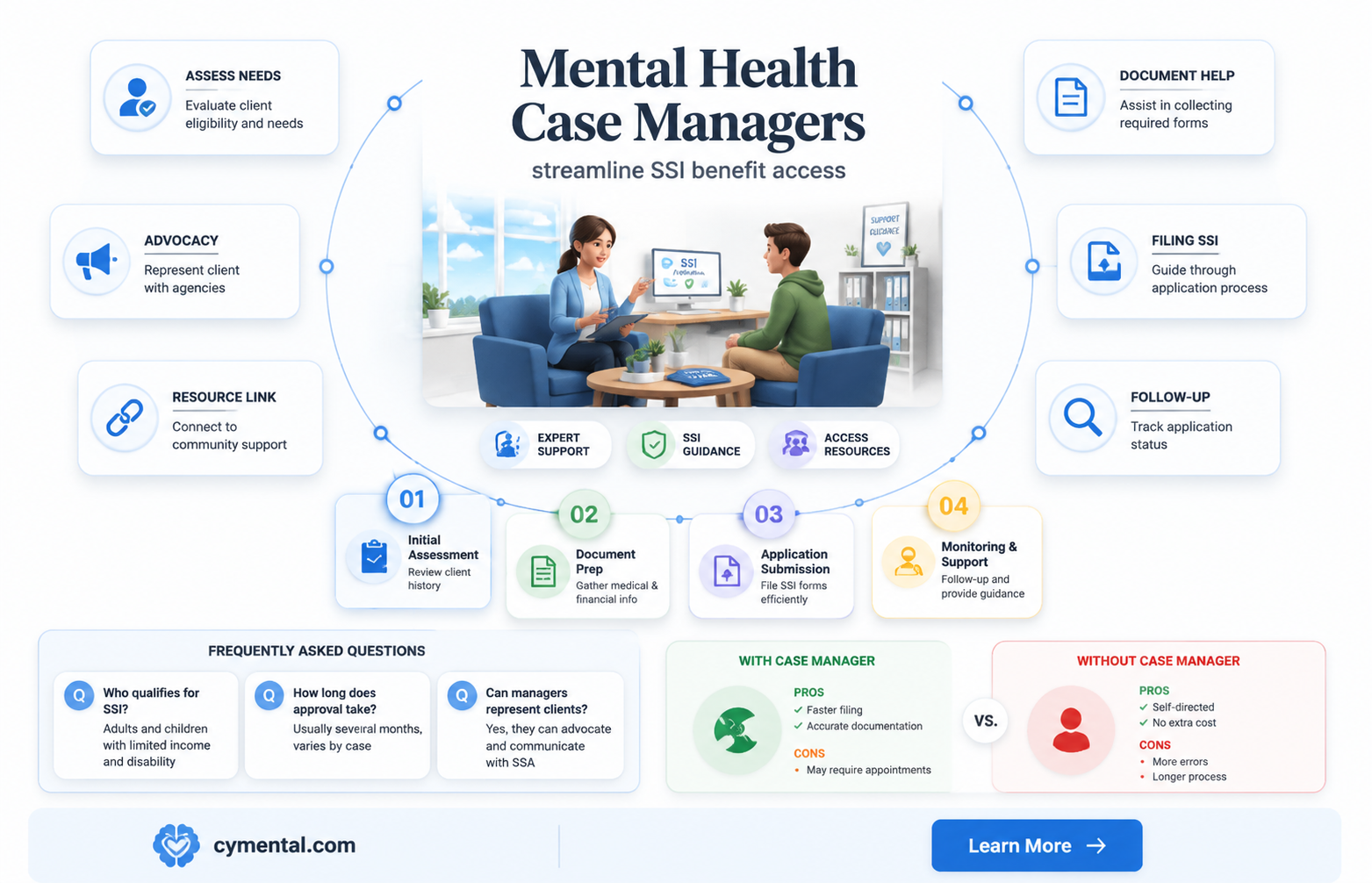
Case managers specializing in mental health play a crucial role in assisting individuals with disabilities, including those with mental health conditions, in navigating the complex process of applying for Supplemental Security Income (SSI). SSI is a federal program that provides financial assistance to individuals with limited income and resources who are disabled, blind, or aged 65 and older. Mental health case managers can help clients gather necessary medical documentation, complete application forms, and prepare for interviews or appeals, increasing the likelihood of a successful SSI application. By offering guidance, advocacy, and emotional support, these professionals can significantly improve access to essential benefits for individuals struggling with mental health challenges.
| Characteristics | Values |
|---|---|
| Role of Mental Health Case Manager | Assist individuals with mental health conditions in navigating the SSI application process, gathering medical evidence, and communicating with SSA. |
| Impact on SSI Approval | Can significantly improve chances of approval by ensuring complete and accurate documentation, advocating for the applicant, and addressing SSA requests promptly. |
| Services Provided | - Assistance with completing SSI application forms - Gathering and organizing medical records - Coordinating with healthcare providers - Representing the applicant during appeals - Providing emotional support and guidance |
| Eligibility for SSI with Mental Health Conditions | Must meet SSA's Blue Book criteria for mental disorders (e.g., depression, anxiety, schizophrenia) and demonstrate inability to engage in substantial gainful activity (SGA). |
| Evidence Required | Medical records, treatment history, functional limitations, and statements from healthcare providers or case managers. |
| Average SSI Benefit Amount (2023) | $914 per month for individuals; may vary based on state supplements. |
| Application Process Duration | 3-5 months on average; case managers can expedite by ensuring timely submission of required documents. |
| Appeals Process | Case managers assist in filing appeals (Reconsideration, ALJ Hearing, Appeals Council) if initial application is denied. |
| Cost of Case Manager Services | Often covered by Medicaid, state programs, or non-profit organizations; some may charge fees based on income. |
| Success Rate with Case Manager Assistance | Higher approval rates due to improved application quality and advocacy; exact statistics vary by region and case complexity. |
| Additional Resources | Case managers connect applicants with vocational rehab, housing assistance, and other support services to improve overall well-being. |
Explore related products


What You'll Learn

SSI eligibility criteria for mental health conditions
Securing Supplemental Security Income (SSI) for mental health conditions requires a clear understanding of the eligibility criteria set by the Social Security Administration (SSA). Unlike physical disabilities, mental health impairments are evaluated based on their functional impact rather than a specific diagnosis. The SSA’s Blue Book lists 11 mental disorders, including depression, anxiety, schizophrenia, and PTSD, but meeting the criteria involves more than a clinical label. Applicants must demonstrate that their condition severely limits their ability to perform daily activities, maintain employment, or interact socially.
To qualify, individuals must provide comprehensive medical evidence, such as treatment records, therapy notes, and medication histories. For example, a person with severe depression might need to show consistent treatment with antidepressants (e.g., SSRIs at maximum tolerated doses) and therapy sessions, yet still experience debilitating symptoms like persistent fatigue or suicidal ideation. Case managers play a critical role here by helping gather and organize this documentation, ensuring it aligns with SSA requirements. They can also assist in obtaining statements from healthcare providers that detail how the condition affects daily functioning.
The SSA uses a five-step process to evaluate SSI claims for mental health conditions. First, they assess whether the applicant is working above the substantial gainful activity (SGA) threshold ($1,550/month in 2023). Next, they determine if the condition is severe enough to interfere with basic work-related tasks. Step three involves comparing the condition to Blue Book listings; if it doesn’t meet or equal a listing, the SSA assesses the applicant’s residual functional capacity (RFC) in step four. Finally, they evaluate whether the applicant can perform past or other work. Case managers can guide applicants through this process, ensuring each step is addressed thoroughly.
One common challenge is proving the severity and longevity of the condition. The SSA requires that mental health impairments last or be expected to last at least 12 months. For instance, a person with bipolar disorder must show a history of manic or depressive episodes that significantly disrupt their life despite treatment. Case managers can help by documenting symptom patterns, treatment failures, and their impact on work or social functioning. They can also prepare applicants for consultative exams, which the SSA may require to assess the condition’s severity.
In conclusion, SSI eligibility for mental health conditions hinges on demonstrating both the medical and functional severity of the impairment. While the process is complex, case managers provide invaluable support by streamlining documentation, navigating SSA procedures, and advocating for the applicant’s needs. Their expertise can make the difference between a denied claim and a successful outcome, ensuring individuals with mental health conditions receive the financial support they deserve.
Supporting Loved Ones: A Guide to Accessing Mental Health Assistance
You may want to see also
Explore related products

$22.99 $7.95


Role of case managers in SSI application process
Case managers specializing in mental health play a pivotal role in navigating the complexities of the Supplemental Security Income (SSI) application process. Their expertise bridges the gap between the applicant’s mental health challenges and the stringent documentation requirements of the Social Security Administration (SSA). For individuals with severe mental health conditions, such as schizophrenia, bipolar disorder, or major depressive disorder, the application process can be overwhelming. Case managers step in to simplify this journey, ensuring that medical evidence, treatment histories, and functional limitations are accurately represented to meet SSI eligibility criteria.
One of the primary functions of a mental health case manager is to gather and organize medical documentation. SSI applications require detailed records of diagnoses, treatment plans, and the impact of mental health conditions on daily functioning. Case managers collaborate with healthcare providers to obtain comprehensive reports, including therapy notes, medication histories, and assessments of activities of daily living (ADLs). For example, a case manager might work with a psychiatrist to highlight how a client’s anxiety disorder prevents them from maintaining employment or engaging in social interactions, key factors in SSI evaluations.
Beyond documentation, case managers provide critical advocacy and emotional support throughout the application process. They help clients understand the often-confusing SSI guidelines, prepare for interviews, and respond to requests for additional information. In cases of denial, which are common, case managers assist with appeals, ensuring that all necessary evidence is resubmitted and that the client’s rights are protected. This advocacy is particularly vital for individuals whose mental health symptoms may impair their ability to advocate for themselves effectively.
A lesser-known but equally important role of case managers is their ability to connect clients with additional resources that strengthen their SSI applications. For instance, they may refer clients to vocational rehabilitation programs to document unsuccessful work attempts or to community mental health services that provide ongoing support. By demonstrating a consistent effort to improve functioning despite limitations, these resources can bolster an SSI application. Case managers also educate clients on the importance of adhering to treatment plans, as gaps in care can raise red flags during the review process.
In conclusion, mental health case managers are indispensable allies in the SSI application process. Their ability to streamline documentation, provide advocacy, and connect clients with supportive resources significantly enhances the likelihood of a successful outcome. For individuals grappling with mental health challenges, their guidance transforms a daunting bureaucratic process into a manageable, even hopeful, endeavor. Without their intervention, many applicants might face unnecessary delays or denials, underscoring the critical value of their role.
Medications for Mental Illness: A Helpful Treatment or Not?
You may want to see also
Explore related products


![The Art of Advocacy: Briefs, Motions, and Writing Strategies of America's Best Lawyers [Connected eBook] (Aspen Coursebook)](https://m.media-amazon.com/images/I/71nFTPUXCiL._AC_UL320_.jpg)


Gathering medical evidence for SSI approval
Securing Supplemental Security Income (SSI) for mental health conditions hinges on robust medical evidence. This isn’t about anecdotal accounts or self-reported symptoms; it’s about documented, verifiable proof that your condition impairs your ability to function. Think of it as building a legal case—every piece of evidence must be clear, consistent, and aligned with SSI’s strict criteria. Without this foundation, even the most deserving claims can falter.
Start by ensuring your treatment records are comprehensive. This includes diagnoses, therapy notes, medication histories, and hospitalization records. For instance, if you’re prescribed sertraline 50mg daily for depression, the records should reflect not just the prescription but also its efficacy and side effects. Case managers play a critical role here, coordinating with providers to gather these documents and ensuring they highlight functional limitations, such as difficulty concentrating or interacting with others. A single missing record can create gaps in your narrative, weakening your claim.
Next, consider the frequency and consistency of your treatment. SSI evaluators scrutinize whether you’ve pursued treatment “as prescribed.” If you’ve missed therapy sessions or discontinued medication without medical advice, it could be interpreted as non-compliance, even if financial barriers were the cause. Case managers can help document these barriers, such as lack of insurance or transportation, to provide context. For example, a client who attends monthly psychiatric appointments despite relying on public transit demonstrates effort, which strengthens their case.
Functional assessments are another critical component. These evaluations, often conducted by mental health professionals, detail how your condition affects daily activities. For a 35-year-old with schizophrenia, this might include difficulty managing finances, following instructions, or maintaining a routine. Case managers can facilitate these assessments, ensuring they align with SSI’s criteria for “marked” or “extreme” limitations. Without such specificity, evaluators may underestimate the severity of your impairment.
Finally, be proactive in addressing inconsistencies or gaps in your evidence. If your symptoms have worsened recently, ensure your provider documents this promptly. Case managers can assist in scheduling follow-up appointments or requesting updated statements. For a client with PTSD, for instance, a letter from a therapist detailing panic attacks that prevent them from leaving home would be invaluable. Remember, SSI approval isn’t about proving you’re unwell—it’s about proving your inability to work due to your condition. Every piece of evidence must reinforce this point.
Are Mental Health Diagnoses Helpful? Exploring Benefits and Limitations
You may want to see also
Explore related products


![A Practical Guide to Appellate Advocacy: [Connected eBook] (Aspen Coursebook Series)](https://m.media-amazon.com/images/I/811nfMmBU6L._AC_UL320_.jpg)


Case manager support during SSI appeals
Navigating the Supplemental Security Income (SSI) appeals process can be overwhelming, especially for individuals with mental health conditions. This is where a mental health case manager becomes an invaluable ally. Their role extends beyond initial SSI applications, offering critical support during the appeals stage, which often demands persistence, organization, and a deep understanding of both the system and the client's needs.
Here’s a breakdown of how case managers provide essential assistance:
Advocacy and Documentation: Case managers act as advocates, ensuring their clients' voices are heard throughout the appeals process. They help gather and organize medical records, treatment histories, and other evidence crucial for demonstrating the severity and impact of the mental health condition. This includes obtaining detailed reports from psychiatrists, therapists, and other healthcare providers, highlighting how the condition limits daily functioning and ability to work. For instance, a case manager might work with a client's therapist to document specific symptoms like severe anxiety attacks, persistent depression, or cognitive impairments that interfere with concentration and task completion.
Case managers also assist in drafting appeal letters, ensuring they clearly articulate the reasons for disagreement with the initial denial and provide compelling evidence to support the claim.
- Navigating the Complexities: The SSI appeals process involves multiple stages, from reconsideration to hearings before an Administrative Law Judge (ALJ). Each stage has specific requirements and deadlines. Case managers guide clients through this labyrinth, explaining procedures, preparing them for hearings, and ensuring all necessary paperwork is submitted on time. They can also help clients understand the ALJ's role, the type of questions asked during hearings, and how to present their case effectively. For someone struggling with mental health issues, having a case manager to provide clarity and structure can be the difference between a successful appeal and further denial.
- Emotional Support and Motivation: The appeals process can be emotionally draining, often involving setbacks and delays. Case managers provide crucial emotional support, helping clients manage stress, anxiety, and feelings of hopelessness. They encourage persistence, celebrate small victories, and remind clients of their rights and the strength of their case. This emotional backing is particularly important for individuals with mental health conditions who may be more vulnerable to discouragement and self-doubt.
- Connecting to Resources: During the appeals process, individuals may face financial hardships and other challenges. Case managers can connect clients to additional resources, such as food assistance programs, housing support, or temporary financial aid. They can also help clients access mental health services, including therapy and medication management, to ensure their well-being throughout the often lengthy appeals process.
By providing comprehensive support, case managers significantly increase the chances of a successful SSI appeal for individuals with mental health conditions. Their expertise, advocacy, and compassion make them indispensable partners in navigating this complex system.
Find Free Depression Support: Resources and Helpful Services Available Now
You may want to see also
Explore related products





Benefits of case management for SSI recipients
Case management plays a pivotal role in helping individuals with mental health challenges navigate the complexities of securing Supplemental Security Income (SSI). For SSI recipients, case managers act as advocates, coordinators, and educators, ensuring they receive the full spectrum of benefits and support they are entitled to. By addressing barriers such as paperwork, medical documentation, and communication with agencies, case managers streamline the application and maintenance process, reducing stress and increasing the likelihood of approval or continued eligibility.
One of the most tangible benefits of case management is the personalized assistance in gathering and organizing medical evidence. SSI applications require detailed documentation of mental health conditions, including treatment histories, diagnoses, and functional limitations. Case managers collaborate with healthcare providers to compile this information, ensuring it meets SSA standards. For example, a case manager might help a client obtain a detailed report from their psychiatrist outlining how their condition affects daily activities, such as managing finances or maintaining employment. This level of specificity can be the difference between approval and denial.
Beyond the application process, case managers provide ongoing support to help SSI recipients maintain their benefits. Mental health conditions often fluctuate, and SSI eligibility requires periodic reviews. Case managers assist in preparing for these reviews by updating medical records, scheduling assessments, and coaching clients on how to communicate their needs effectively. For instance, a case manager might remind a client to document recent hospitalizations or changes in medication, which are critical for demonstrating continued eligibility. This proactive approach minimizes the risk of benefit interruptions.
Another significant advantage is the holistic support case managers offer in addressing non-medical barriers. Many SSI recipients face challenges such as housing instability, food insecurity, or lack of access to mental health treatment. Case managers connect clients with community resources, such as affordable housing programs, food assistance, or therapy services, which indirectly strengthen their SSI case. For example, a client who secures stable housing through a case manager’s intervention is more likely to attend medical appointments and maintain treatment compliance, both of which bolster their SSI eligibility.
Finally, case managers empower SSI recipients by educating them about their rights and responsibilities. Many individuals with mental health conditions struggle to understand the SSI system, leading to missed deadlines or non-compliance with reporting requirements. Case managers demystify these processes, explaining how income, assets, and living arrangements impact benefits. They also teach clients how to report changes promptly, such as new employment or marriage, to avoid overpayments or benefit termination. This knowledge fosters independence and reduces reliance on external assistance over time.
In summary, case management for SSI recipients with mental health conditions is a multifaceted intervention that enhances access to benefits, ensures compliance, and addresses broader social determinants of health. By combining technical expertise with compassionate advocacy, case managers not only help secure SSI but also improve overall well-being, making them an indispensable resource for this vulnerable population.
Seeking Support: Effective Ways to Get Help When You Need It Most
You may want to see also
Frequently asked questions
Yes, a case manager can help gather necessary documentation, coordinate with healthcare providers, and guide you through the SSI application process.
A case manager can help document your mental health condition, its impact on daily functioning, and provide evidence to support your SSI claim.
While a case manager cannot legally represent you, they can assist in preparing documentation, connecting you with legal resources, and supporting your case.
A case manager can help ensure your application is complete and accurate, which may reduce delays, but they cannot directly expedite the SSI approval process.


![Modern Trial Advocacy: Analysis and Practice [Connected eBook with Study Center] (NITA)](https://m.media-amazon.com/images/I/51lrGhZdjAL._AC_UL320_.jpg)