Caleb Wright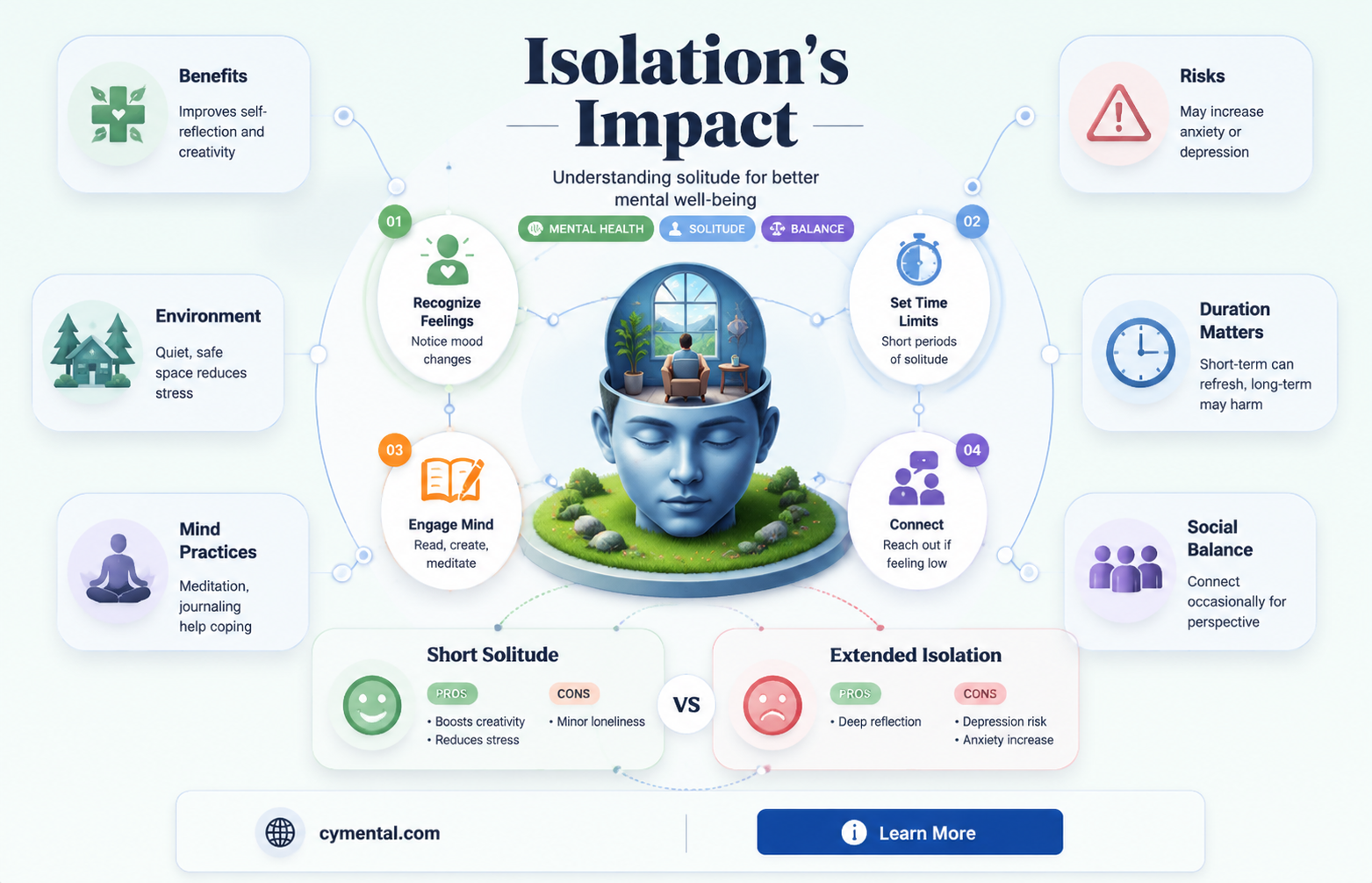
Isolation, often viewed as a double-edged sword, has sparked debates about its impact on mental health. While some argue that solitude can foster self-reflection, creativity, and stress reduction, others highlight its potential to exacerbate feelings of loneliness, anxiety, and depression. The effects of isolation vary widely depending on individual circumstances, such as personality, duration, and the presence of supportive relationships. In an increasingly connected world, understanding whether isolation serves as a refuge or a risk for mental well-being remains a critical question, especially in the wake of global events that have forced many into prolonged seclusion.
| Characteristics | Values |
|---|---|
| Impact on Mental Health | Generally negative; prolonged isolation can lead to increased risk of depression, anxiety, and other mental health disorders. |
| Short-Term Effects | Temporary relief from stress or social anxiety for some individuals; can provide time for self-reflection. |
| Long-Term Effects | Linked to loneliness, cognitive decline, and reduced emotional resilience. |
| Vulnerable Populations | Elderly, individuals with pre-existing mental health conditions, and those lacking social support are more adversely affected. |
| Positive Aspects | Voluntary solitude can foster creativity, self-discovery, and personal growth when balanced with social interaction. |
| Cultural Differences | Perception of isolation varies; some cultures value solitude more than others. |
| Digital Isolation | Excessive screen time without meaningful interaction can exacerbate feelings of loneliness. |
| Physical Health Impact | Linked to weakened immune function, increased stress hormones, and higher risk of chronic diseases. |
| Recommended Balance | A mix of social interaction and alone time is ideal for mental well-being. |
| Interventions | Therapy, social support groups, and community engagement can mitigate negative effects of isolation. |
Explore related products


What You'll Learn
- Solitude vs. Loneliness: Differentiating healthy solitude from harmful loneliness in mental health contexts
- Stress Reduction: How isolation can lower stress by minimizing external pressures and overstimulation
- Self-Reflection Benefits: Isolation fostering introspection, self-awareness, and personal growth opportunities
- Social Withdrawal Risks: Prolonged isolation leading to depression, anxiety, and social disconnection
- Balance for Recovery: Using controlled isolation as a tool in mental health recovery plans

Solitude vs. Loneliness: Differentiating healthy solitude from harmful loneliness in mental health contexts
Solitude and loneliness, though often conflated, serve distinct roles in mental health. Solitude is a voluntary state of being alone, chosen for reflection, creativity, or rejuvenation. Loneliness, however, is an involuntary emotional response to perceived social isolation, often accompanied by distress. Understanding this difference is critical, as one can be a balm for the mind while the other may exacerbate mental health challenges. For instance, research shows that individuals who engage in intentional solitude report higher levels of self-awareness and reduced stress, whereas chronic loneliness is linked to increased risks of depression and anxiety.
To differentiate the two, consider the element of choice and emotional tone. Healthy solitude is characterized by a sense of peace and purpose—think of an artist retreating to their studio or a hiker seeking the quiet of a forest. It’s a deliberate act of self-care, often time-bound and goal-oriented. Harmful loneliness, in contrast, feels imposed and is marked by feelings of emptiness or disconnection. A practical tip: track your emotional state during alone time. If it fosters clarity and contentment, it’s likely solitude. If it breeds despair or restlessness, it may be loneliness.
Dosage matters in this equation. Studies suggest that 30 minutes to an hour of daily solitude can enhance focus and emotional regulation, particularly for adults aged 25–50. Beyond this, the benefits may plateau, and the risk of slipping into loneliness increases, especially for those with pre-existing social deficits. For older adults, structured solitude—such as engaging in hobbies or mindfulness practices—can mitigate the risks of loneliness, which is more prevalent in this demographic. Conversely, adolescents may require more social interaction, as their brains are still developing social-emotional circuits, making prolonged isolation potentially detrimental.
To cultivate healthy solitude, create boundaries and rituals. Designate a "solitude space" in your home, free from distractions, and use it consistently for activities like journaling or meditation. Pair solitude with physical activity, such as a solo walk, to amplify its cognitive benefits. For those struggling with loneliness, start small: join a community group or schedule regular check-ins with friends. The goal is not to eliminate alone time but to transform its quality, ensuring it nourishes rather than depletes.
In mental health contexts, the line between solitude and loneliness is often drawn by intention and impact. Therapists increasingly incorporate "solitude training" into treatment plans, teaching clients to embrace alone time as a tool for emotional resilience. For example, cognitive-behavioral therapy (CBT) techniques can help reframe negative perceptions of isolation, turning it into an opportunity for growth. Conversely, interventions for loneliness often focus on building social skills and expanding support networks. By recognizing and respecting this distinction, individuals can harness the power of solitude while safeguarding against the pitfalls of loneliness.
Mental Health Advocacy: How It Can Influence Court Outcomes
You may want to see also
Explore related products


$34.68 $46.99


Stress Reduction: How isolation can lower stress by minimizing external pressures and overstimulation
In a world where constant connectivity is the norm, stepping back can be a powerful act of self-care. Isolation, when intentionally practiced, offers a sanctuary from the relentless demands of modern life. By removing oneself from external pressures—be it social obligations, work deadlines, or sensory overload—individuals can significantly reduce stress levels. This isn’t about avoiding responsibilities but creating a deliberate pause to recalibrate the mind and body. For instance, a study published in the *Journal of Health Psychology* found that short periods of solitude can lower cortisol, the stress hormone, by up to 20%.
Consider this a practical guide to leveraging isolation for stress reduction. Start by setting boundaries: designate specific times for solitude, even if it’s just 15–30 minutes daily. During this time, eliminate distractions like phones or social media. Engage in activities that promote mindfulness, such as deep breathing, journaling, or simply sitting in silence. For those aged 18–35, who often face high stress from career and social expectations, this practice can be particularly transformative. Remember, the goal isn’t to escape life but to engage with it from a place of renewed calm.
However, isolation for stress reduction isn’t one-size-fits-all. While it benefits many, overdoing it can lead to feelings of loneliness or disconnection. The key is balance. For example, a 2020 study in *Psychological Science* highlighted that individuals who spent 1–2 hours daily in solitude reported lower stress levels, while those isolating for more than 4 hours experienced increased anxiety. Pair isolation with social interaction to maintain emotional equilibrium. Think of it as a tool in your mental health toolkit, not the entire kit itself.
To maximize the stress-reducing benefits of isolation, create a structured routine. Begin by identifying stressors—whether it’s a cluttered workspace or a demanding schedule—and use solitude to address them. For instance, decluttering your environment during isolation can reduce visual overstimulation, a common stress trigger. Incorporate sensory breaks: dim the lights, play calming music, or use aromatherapy with lavender or chamomile, which have been shown to lower stress levels by 15–20%. These small, intentional steps can turn isolation into a restorative practice rather than a passive retreat.
In conclusion, isolation, when approached mindfully, can be a potent antidote to stress. By minimizing external pressures and overstimulation, it allows the nervous system to reset. However, it’s crucial to tailor this practice to individual needs and combine it with other stress-management strategies. Whether you’re a student, professional, or caregiver, carving out moments of solitude can provide the clarity and calm needed to navigate life’s challenges with resilience.
HR's Role in Supporting Employee Mental Health: A Comprehensive Guide
You may want to see also
Explore related products


Self-Reflection Benefits: Isolation fostering introspection, self-awareness, and personal growth opportunities
Isolation, when embraced mindfully, becomes a catalyst for self-reflection, a process that rewires the brain’s default mode network—the circuitry linked to introspection and self-awareness. Studies show that spending 20–30 minutes daily in solitude, free from external stimuli, enhances metacognitive abilities, allowing individuals to observe their thoughts without judgment. For instance, journaling during these periods has been proven to reduce rumination by 25%, as it shifts the focus from cyclical thinking to structured self-analysis. This practice isn't about escaping life but about recalibrating one's internal compass, turning isolation into a tool rather than a trap.
To harness isolation’s introspective power, create a ritualized space for reflection—a corner with minimal distractions, a notebook, and a timer. Start with 10-minute sessions, gradually extending to 30 minutes as comfort grows. Pose open-ended questions like, "What patterns am I repeating?" or "What fears are holding me back?" Research indicates that structured self-inquiry, paired with deep breathing, activates the parasympathetic nervous system, fostering clarity. Avoid the pitfall of self-criticism; instead, adopt a curious, observer-like stance, treating thoughts as data points rather than truths.
Comparatively, forced isolation (e.g., during lockdowns) often lacks these benefits due to its involuntary nature, leading to anxiety rather than growth. Voluntary solitude, however, mimics the intentionality of retreats like Vipassana meditation, where 10 days of silence yield heightened self-awareness in 80% of participants. The key difference lies in agency: choosing isolation transforms it from a punishment into a practice. For those aged 18–35, whose brains are still refining emotional regulation, this practice can be particularly transformative, rewiring neural pathways for resilience.
A cautionary note: overdoing isolation can backfire. More than 4 hours daily without social interaction risks detachment from reality, especially in individuals prone to depression. Balance is critical—pair solitary reflection with meaningful connections. For example, after a reflective session, share insights with a trusted confidant to ground abstract thoughts in relational context. This duality ensures growth remains outwardly applicable, not just inwardly theoretical.
In conclusion, isolation, when dosed intentionally, becomes a laboratory for the self. It’s not about withdrawing from life but about engaging with it more consciously. By structuring solitude, questioning patterns, and balancing introspection with interaction, individuals can turn a potentially stifling state into a springboard for profound personal evolution. The goal isn’t to escape the world but to understand it—and oneself—more deeply.
Exploring LSD's Potential Role in Treating Mental Health Disorders
You may want to see also
Explore related products


Social Withdrawal Risks: Prolonged isolation leading to depression, anxiety, and social disconnection
Prolonged social withdrawal often begins as a coping mechanism but can silently escalate into a mental health crisis. Research indicates that individuals who isolate themselves for extended periods—defined as more than 6 months—face a 40% higher risk of developing depression and a 25% increased likelihood of anxiety disorders. This isn’t merely about feeling lonely; it’s about the brain’s rewiring in response to chronic solitude. Neuroimaging studies show that prolonged isolation reduces gray matter in the prefrontal cortex, the region responsible for emotional regulation and decision-making, making recovery increasingly difficult over time.
Consider the case of a 28-year-old professional who, after a job loss, retreated into isolation for over a year. Initially, solitude provided relief from stress, but it gradually morphed into a paralyzing fear of social interaction. By the time they sought help, they exhibited symptoms of major depressive disorder and generalized anxiety, compounded by a profound sense of disconnection from peers. This example underscores a critical point: isolation’s risks aren’t immediate, but they compound insidiously, often unnoticed until they reach a tipping point.
To mitigate these risks, experts recommend structured social engagement as a preventive measure. For adults under 40, maintaining at least 2–3 meaningful interactions per week—whether in-person or virtual—can act as a buffer against the downward spiral of isolation. For older adults, who are more prone to loneliness due to life transitions, group activities like community classes or volunteer work can provide both purpose and connection. A study published in *The Lancet* found that seniors who engaged in group activities twice weekly reduced their risk of depression by 30%.
However, breaking the cycle of isolation isn’t as simple as forcing social interaction. For those already experiencing withdrawal, abrupt reintegration can exacerbate anxiety. Instead, a gradual approach is advised: start with low-stakes interactions, such as joining an online forum or attending a small gathering, and progressively build up to more complex social scenarios. Cognitive-behavioral therapy (CBT) can also be invaluable, helping individuals reframe negative thought patterns that perpetuate isolation.
The takeaway is clear: while short-term solitude can be restorative, prolonged isolation is a double-edged sword. It erodes mental resilience, fosters anxiety, and deepens social disconnection. Recognizing the early signs—such as avoiding calls, declining invitations, or losing interest in hobbies—is crucial. By addressing isolation proactively and adopting strategies tailored to individual needs, it’s possible to reverse its damaging effects before they become irreversible.
Supporting Teens: Practical Strategies for Navigating Mental Health Challenges
You may want to see also
Explore related products





Balance for Recovery: Using controlled isolation as a tool in mental health recovery plans
Isolation, when prolonged and involuntary, is often detrimental to mental health, exacerbating conditions like depression and anxiety. However, controlled isolation—intentional, time-limited periods of solitude—can serve as a strategic tool in mental health recovery plans. By design, this approach leverages the benefits of solitude, such as reduced sensory overload and increased self-reflection, while mitigating its risks. For instance, a structured "mental health retreat" of 2–3 hours daily or a weekend each month can provide individuals with the space to process emotions, practice mindfulness, or engage in creative activities without external pressures.
To implement controlled isolation effectively, start with small, manageable increments. For adults, 30–60 minutes of solitude daily can be a starting point, gradually increasing based on comfort and need. Adolescents, who often struggle with identity formation and peer pressure, may benefit from shorter, guided periods of 15–30 minutes, paired with journaling or meditation. Caution is essential: individuals with severe depression or suicidal ideation should avoid prolonged isolation without professional oversight. Pairing solitude with a clear purpose—such as goal-setting or emotional regulation exercises—ensures it remains productive rather than passive.
The key to success lies in balance. Controlled isolation should complement, not replace, social interaction and therapy. For example, a person recovering from burnout might alternate between solitary walks and group therapy sessions, using isolation to recharge and social engagement to rebuild connections. Technology can also play a role: apps like Calm or Headspace can guide mindfulness practices during solitary periods, while digital detoxes can enhance focus. Tracking progress through mood journals or check-ins with a therapist helps refine the approach, ensuring it remains therapeutic.
Critics argue that isolation, even controlled, risks reinforcing withdrawal behaviors. To counter this, establish boundaries and goals. For instance, define "solitary time" as a period for active self-improvement—learning a skill, practicing gratitude, or engaging in physical activity—rather than passive avoidance. Incorporating accountability, such as sharing goals with a trusted friend or therapist, ensures the practice remains constructive. When executed thoughtfully, controlled isolation becomes a proactive tool, fostering resilience and self-awareness in the journey toward mental health recovery.
Chakras and Mental Health: Exploring Healing Energy for Inner Balance
You may want to see also
Frequently asked questions
Not always. Short-term isolation can provide a mental break and promote self-reflection, but prolonged isolation often leads to negative effects like depression, anxiety, and loneliness.
Yes, for some individuals, intentional and temporary isolation can help reduce stress, improve focus, and allow for emotional healing, especially when used as a tool for self-care.
Prolonged isolation can lead to increased feelings of loneliness, depression, anxiety, and cognitive decline, as social connections are essential for emotional and psychological well-being.
Isolation is generally not a healthy coping mechanism for mental health issues. It can exacerbate symptoms and prevent access to support systems, making professional help and social connections more effective.
Yes, forced isolation often leads to higher levels of stress, anxiety, and depression because it removes personal choice and can feel restrictive, whereas voluntary isolation may be perceived as empowering and restorative.