Harper Lewis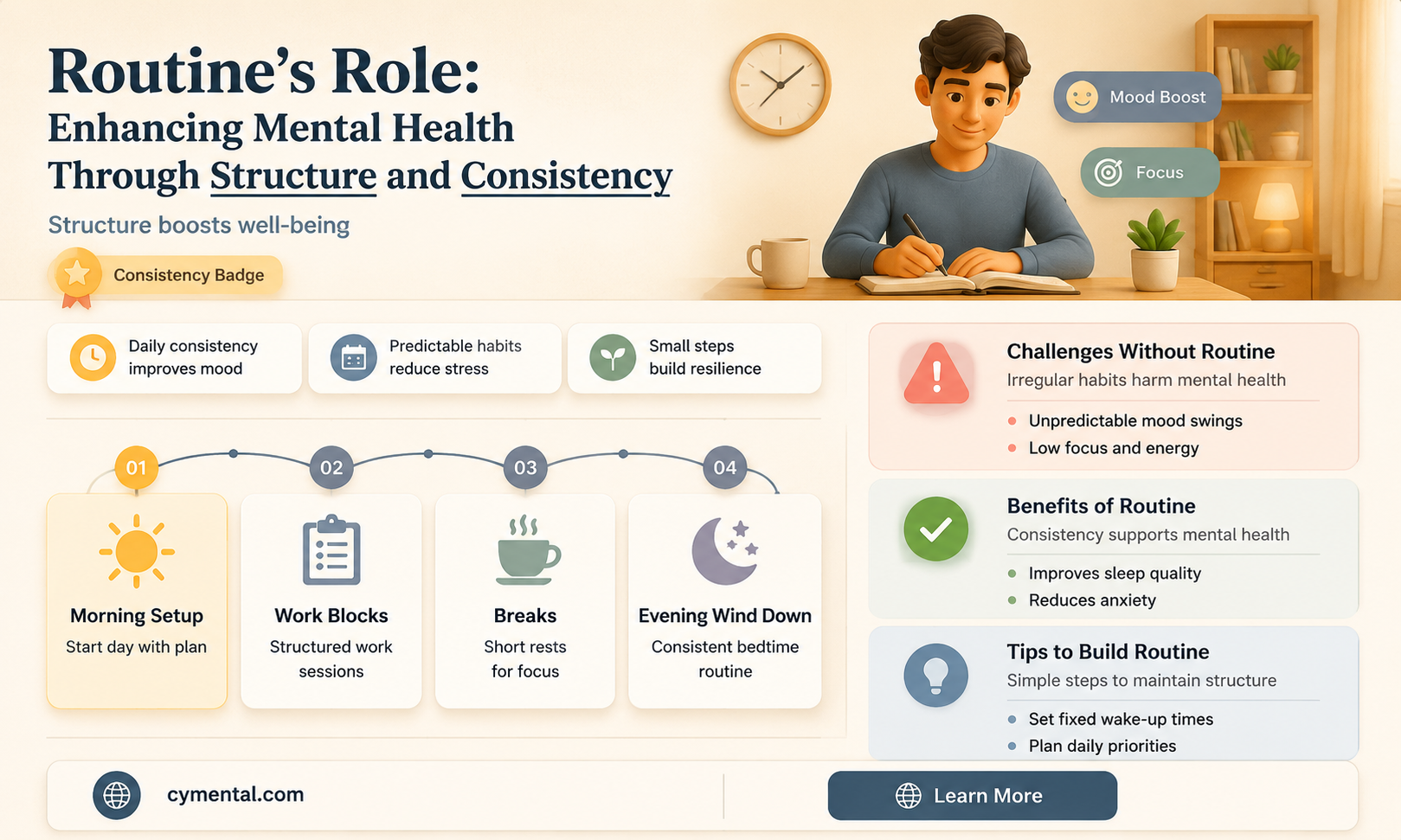
Routine plays a significant role in supporting mental health by providing structure, predictability, and a sense of control, which can reduce stress and anxiety. Establishing consistent daily habits, such as regular sleep schedules, meal times, and dedicated periods for work or relaxation, helps regulate the body’s internal clock and promotes emotional stability. Routines also foster productivity and a sense of accomplishment, boosting self-esteem and reducing feelings of overwhelm. For individuals with mental health conditions like depression or ADHD, routines can serve as a stabilizing force, making tasks more manageable and reducing the mental effort required for decision-making. However, it’s important to balance structure with flexibility to avoid rigidity, ensuring routines enhance rather than hinder overall well-being.
| Characteristics | Values |
|---|---|
| Reduces Anxiety | Routines provide predictability and structure, which can reduce feelings of uncertainty and anxiety. Studies show that consistent routines lower cortisol (stress hormone) levels. |
| Improves Sleep Quality | Regular sleep-wake schedules, part of a daily routine, enhance sleep quality and duration, positively impacting mental health. |
| Enhances Productivity | Structured routines help prioritize tasks, reduce decision fatigue, and increase focus, leading to improved productivity and reduced stress. |
| Boosts Mood | Completing routine tasks triggers dopamine release, associated with feelings of accomplishment and improved mood. |
| Supports Habit Formation | Routines make it easier to incorporate healthy habits (e.g., exercise, mindfulness) into daily life, benefiting mental well-being. |
| Provides a Sense of Control | Routines offer a sense of stability and control, particularly helpful during stressful or unpredictable times. |
| Reduces Overwhelm | Breaking tasks into manageable steps within a routine prevents feeling overwhelmed, promoting mental clarity. |
| Encourages Self-Care | Routines often include dedicated time for self-care activities, such as meditation, exercise, or hobbies, which are essential for mental health. |
| Improves Time Management | Structured routines help allocate time effectively, reducing procrastination and associated stress. |
| Promotes Consistency in Treatment | For individuals with mental health conditions, routines ensure consistent adherence to therapy, medication, or other treatments. |
| Fosters Resilience | Regular routines build discipline and resilience, making it easier to cope with challenges and setbacks. |
| Supports Social Rhythm | Routines that include social interactions (e.g., family meals, social outings) enhance social connections, vital for mental health. |
| Reduces Decision Fatigue | Automating daily decisions through routines conserves mental energy, reducing stress and improving decision-making in other areas. |
| Encourages Mindfulness | Routines can incorporate mindfulness practices, promoting present-moment awareness and reducing rumination. |
| Improves Physical Health | Routines often include healthy habits like exercise and balanced eating, which positively impact both physical and mental health. |
Explore related products


What You'll Learn
- Daily Structure Benefits: Consistent routines reduce anxiety, provide predictability, and enhance emotional stability
- Sleep Improvement: Regular schedules align circadian rhythms, improving sleep quality and mental clarity
- Stress Reduction: Routines minimize decision fatigue, lowering stress and promoting calmness
- Productivity and Purpose: Structured days boost focus, goal achievement, and a sense of purpose
- Habit Formation: Routines foster healthy habits, supporting long-term mental health and resilience

Daily Structure Benefits: Consistent routines reduce anxiety, provide predictability, and enhance emotional stability
The human brain thrives on predictability, a fact rooted in our evolutionary need for safety and survival. When faced with uncertainty, the amygdala, our brain's alarm system, triggers a stress response, releasing cortisol and adrenaline. This ancient mechanism, while crucial for avoiding predators, becomes counterproductive in modern life, where chronic stress from unpredictable schedules can lead to anxiety disorders. Consistent daily routines act as a counterbalance, signaling to the brain that the environment is stable and safe. For instance, a study published in the *Journal of Health Psychology* found that individuals with structured daily routines reported 40% lower anxiety levels compared to those with erratic schedules.
Consider the practical implementation of a structured routine. Start by anchoring your day with non-negotiable activities, such as waking up at the same time each morning and allocating fixed blocks for work, meals, and leisure. For adults, incorporating a 10-minute mindfulness practice during transitions (e.g., between work and dinner) can further reduce stress. Parents of children under 12 should prioritize consistent bedtime routines, as research shows this correlates with better emotional regulation and reduced nighttime anxiety. Even small adjustments, like setting a daily alarm for hydration reminders, can contribute to a sense of control and predictability.
A comparative analysis reveals the stark difference between structured and unstructured days. On days without a routine, decision fatigue sets in as the brain expends energy on trivial choices (e.g., "What should I eat?" or "When should I start work?"). This cognitive overload exacerbates anxiety and diminishes emotional stability. In contrast, a routine automates these decisions, freeing mental resources for more complex tasks. For example, athletes often follow rigid schedules for training, nutrition, and recovery, which not only enhances performance but also fosters mental resilience under pressure.
To maximize the benefits of daily structure, tailor your routine to your unique needs and lifestyle. Begin by identifying your most stressful or unpredictable times of day and introduce small, repeatable habits to address them. For instance, if mornings feel chaotic, prepare the night before by laying out clothes and packing lunches. Caution against over-structuring; allow for flexibility to accommodate unexpected events without derailing the entire day. Finally, track your progress over 30 days using a journal or app to measure reductions in anxiety and improvements in emotional stability. Consistency is key—the brain adapts to routines within 21–66 days, depending on the complexity of the habit.
In conclusion, daily structure is not about rigidity but about creating a framework that supports mental well-being. By reducing anxiety, providing predictability, and enhancing emotional stability, routines empower individuals to navigate life’s uncertainties with greater ease. Whether you’re a student, professional, or caregiver, the strategic implementation of consistent habits can transform your mental health landscape, one structured day at a time.
Altruism's Healing Power: Can Selfless Acts Improve Mental Health?
You may want to see also
Explore related products


Sleep Improvement: Regular schedules align circadian rhythms, improving sleep quality and mental clarity
A consistent sleep schedule acts as a metronome for your body's internal clock, known as the circadian rhythm. This 24-hour cycle regulates not just sleep, but also hormone release, body temperature, and other vital functions. When your sleep and wake times fluctuate, your circadian rhythm becomes disrupted, leading to a cascade of negative effects. Imagine trying to conduct an orchestra with a constantly changing tempo – chaos ensues. Similarly, an irregular sleep schedule throws your body's natural rhythm off balance, resulting in difficulty falling asleep, restless nights, and groggy mornings.
Research shows that maintaining a regular sleep schedule, even on weekends, can significantly improve sleep quality. Aim to go to bed and wake up at the same time every day, give or take 30 minutes. This consistency reinforces your circadian rhythm, making it easier to fall asleep at night and wake up feeling refreshed.
Think of your bedtime routine as a wind-down ritual, signaling to your body that it's time to prepare for sleep. Incorporate calming activities like reading a book, taking a warm bath, or practicing deep breathing exercises. Avoid stimulating activities like watching TV, scrolling through social media, or engaging in intense conversations close to bedtime. These activities can activate your sympathetic nervous system, making it harder to relax. Aim to start your wind-down routine at least an hour before your desired bedtime.
While a regular sleep schedule is crucial, it's equally important to prioritize sleep duration. Most adults need 7-9 hours of sleep per night. Experiment to find your individual sweet spot within this range. If you consistently wake up feeling tired, try going to bed 15-30 minutes earlier for a week and assess how you feel. Remember, sleep is not a luxury; it's a necessity for optimal mental and physical health.
By aligning your sleep schedule with your circadian rhythm and prioritizing sufficient sleep duration, you'll experience improved sleep quality, enhanced mental clarity, and a boost in overall well-being.
Cooking for Calm: How Kitchen Therapy Boosts Mental Well-Being
You may want to see also
Explore related products


Stress Reduction: Routines minimize decision fatigue, lowering stress and promoting calmness
Every day, we face a barrage of decisions, from what to wear to what to eat, and even how to prioritize tasks. This constant decision-making can lead to decision fatigue, a psychological phenomenon where the quality of our choices deteriorates after a long session of decision-making. Routines act as a safeguard against this mental exhaustion by automating certain aspects of our daily lives, thereby conserving cognitive resources for more complex or novel situations.
Consider the morning routine of a young professional: waking up at 7 AM, brewing coffee, exercising for 30 minutes, showering, and then getting dressed. This sequence, when repeated consistently, eliminates the need for daily deliberation about these activities. Research from the American Psychological Association suggests that reducing the number of decisions we make each day can significantly lower stress levels. By establishing routines, we create a structured environment that minimizes uncertainty and promotes a sense of control, which is crucial for mental well-being.
For instance, a study published in the *Journal of Consumer Psychology* found that individuals who followed a strict routine reported lower levels of stress and higher levels of productivity compared to those who lacked structure. The key lies in the predictability routines provide. When we know what to expect, our brains can allocate energy more efficiently, reducing the mental strain associated with constant decision-making. This is particularly beneficial for individuals in high-stress environments, such as students during exam periods or professionals with demanding jobs.
Implementing routines doesn’t mean rigidly scheduling every minute of the day. Instead, focus on automating repetitive tasks that don’t require much thought. For example, preparing a weekly meal plan or setting aside specific times for checking emails can drastically cut down on decision fatigue. Start small by identifying one area of your life where decisions often feel overwhelming, and establish a simple routine around it. Over time, as these habits solidify, you’ll notice a reduction in stress and an increase in mental clarity.
However, it’s essential to strike a balance. Over-reliance on routines can lead to monotony or resistance to change. Incorporate flexibility by allowing for occasional deviations or introducing new activities to keep things engaging. For parents, creating family routines can also benefit children’s mental health by providing stability and reducing anxiety. A consistent bedtime routine, for instance, has been shown to improve sleep quality in children aged 3–12, which in turn positively impacts their overall well-being.
In conclusion, routines serve as a powerful tool for stress reduction by minimizing decision fatigue and fostering a sense of calm. By automating mundane tasks and creating predictable patterns, we free up mental space for more meaningful activities. Whether you’re a student, professional, or parent, integrating thoughtful routines into your daily life can lead to significant improvements in mental health and overall quality of life. Start today by identifying one area where a routine could make a difference, and watch as the benefits unfold.
Yoga's Transformative Power: Enhancing Mental Health and Well-being Naturally
You may want to see also
Explore related products


Productivity and Purpose: Structured days boost focus, goal achievement, and a sense of purpose
Structured days are the backbone of productivity, transforming scattered efforts into focused strides toward meaningful goals. By allocating specific time blocks for tasks, individuals minimize decision fatigue and maximize efficiency. For instance, dedicating the first hour of the workday to high-priority tasks leverages peak mental clarity, while scheduling breaks prevents burnout. A study by the American Psychological Association found that 89% of participants reported increased productivity when following a daily routine. To implement this, start by identifying your most critical tasks and assign them to your most alert hours. Use tools like time-blocking apps or a simple planner to visualize your day, ensuring each task aligns with your broader objectives.
The link between routine and goal achievement lies in consistency and accountability. When tasks are woven into a daily structure, they become habits rather than burdens. For example, committing to 30 minutes of goal-related work daily—whether writing, coding, or planning—compounds into significant progress over weeks. A Harvard Business Review analysis revealed that professionals who set daily micro-goals were 33% more likely to achieve long-term objectives. To harness this, break larger goals into actionable steps and integrate them into your routine. Celebrate small wins to maintain momentum, and adjust your plan as needed to stay aligned with your vision.
Beyond productivity, structured days cultivate a profound sense of purpose by providing clarity and direction. When each day is intentionally designed, individuals feel more in control of their lives, reducing anxiety and fostering fulfillment. For instance, incorporating 15 minutes of journaling or reflection at the end of the day can highlight progress and reaffirm purpose. A survey by the University of Pennsylvania found that 72% of respondents reported higher life satisfaction when adhering to a routine. To nurture purpose, align your daily tasks with your values and long-term vision. Ask yourself: "Does this activity contribute to who I want to be?" If not, reconsider its place in your routine.
However, the power of routine in enhancing productivity and purpose is not without caution. Over-structuring can lead to rigidity, stifling creativity and adaptability. For example, a routine that leaves no room for spontaneity may feel suffocating, diminishing motivation over time. To avoid this, build flexibility into your schedule—allocate "buffer time" for unexpected tasks or moments of inspiration. Additionally, periodically reassess your routine to ensure it remains aligned with your evolving goals and circumstances. A balanced approach, combining structure with adaptability, ensures that routine serves as a tool for empowerment, not a cage for constraint.
Empowering Self-Care: Practical Strategies to Help Yourself Thrive Daily
You may want to see also
Explore related products



Habit Formation: Routines foster healthy habits, supporting long-term mental health and resilience
Routines act as scaffolding for habit formation, turning isolated actions into automatic behaviors that bolster mental health. Consider the morning ritual of meditation: 10 minutes daily, practiced consistently, rewires neural pathways to reduce stress responses. Over time, this routine becomes a habit, requiring less conscious effort and providing a reliable buffer against anxiety. The science is clear—habits formed through routine engage the basal ganglia, freeing the prefrontal cortex from decision fatigue. This neurological shift not only conserves mental energy but also fosters resilience by embedding healthy behaviors into daily life.
To harness this mechanism, start small and specific. For instance, replace vague goals like “exercise more” with a routine of 20 squats after brushing your teeth. Pairing a new habit with an existing one (a technique called “habit stacking”) increases adherence. Research shows that habits take an average of 66 days to solidify, so track progress to stay motivated. Apps like Habitica or simple journal entries can serve as accountability tools. Remember, the goal isn’t perfection but consistency—missing a day doesn’t derail progress if the routine resumes promptly.
Contrast the chaos of unstructured days with the stability of routine-driven habits. Without routines, even minor disruptions can trigger stress or unhealthy coping mechanisms. For example, a person without a bedtime routine might scroll through social media until 2 a.m., disrupting sleep and exacerbating mood disorders. Conversely, a consistent routine—like dimming lights, reading, and avoiding screens an hour before bed—regulates circadian rhythms and improves sleep quality. This comparison highlights how routines act as preventive measures, reducing the mental toll of unpredictability.
Practicality is key to sustaining habit-forming routines. For children and adolescents, routines like family dinners or designated study times improve emotional regulation and academic performance. Adults benefit from routines that incorporate self-care, such as a 5-minute gratitude practice during their morning coffee. Seniors can combat cognitive decline by integrating brain-stimulating habits like crossword puzzles or language learning into their daily schedule. Across age groups, the principle remains: routines provide structure, and structure nurtures habits that fortify mental resilience.
Incorporating flexibility into routines ensures they remain supportive rather than restrictive. Life’s unpredictability demands adaptability, so design routines with built-in alternatives. For instance, if a gym workout isn’t possible, a 15-minute home yoga session can maintain the habit of physical activity. This approach prevents the all-or-nothing mindset that often derails progress. Ultimately, routines aren’t about rigidity—they’re about creating a framework where healthy habits can thrive, even in imperfect circumstances. By doing so, they become a cornerstone of long-term mental health and resilience.
Mental Health Support: A Key to Preventing School Shootings?
You may want to see also
Frequently asked questions
Yes, a consistent routine can significantly improve mental health by reducing stress, providing structure, and fostering a sense of control and predictability. It helps regulate sleep, eating, and activity patterns, which are essential for emotional well-being.
Absolutely. Routines create stability, which can alleviate symptoms of anxiety and depression by minimizing uncertainty. Incorporating healthy habits like exercise, mindfulness, and social interaction into a routine can further support mental health recovery.
While routines are beneficial, excessive rigidity can lead to stress if plans are disrupted. Flexibility is key—balance structure with room for spontaneity to avoid feeling overwhelmed or trapped by your routine.
Start small by focusing on one or two manageable habits, like waking up at the same time or setting aside time for self-care. Gradually build on these habits, and be patient with yourself—consistency is more important than perfection.