Caleb Wright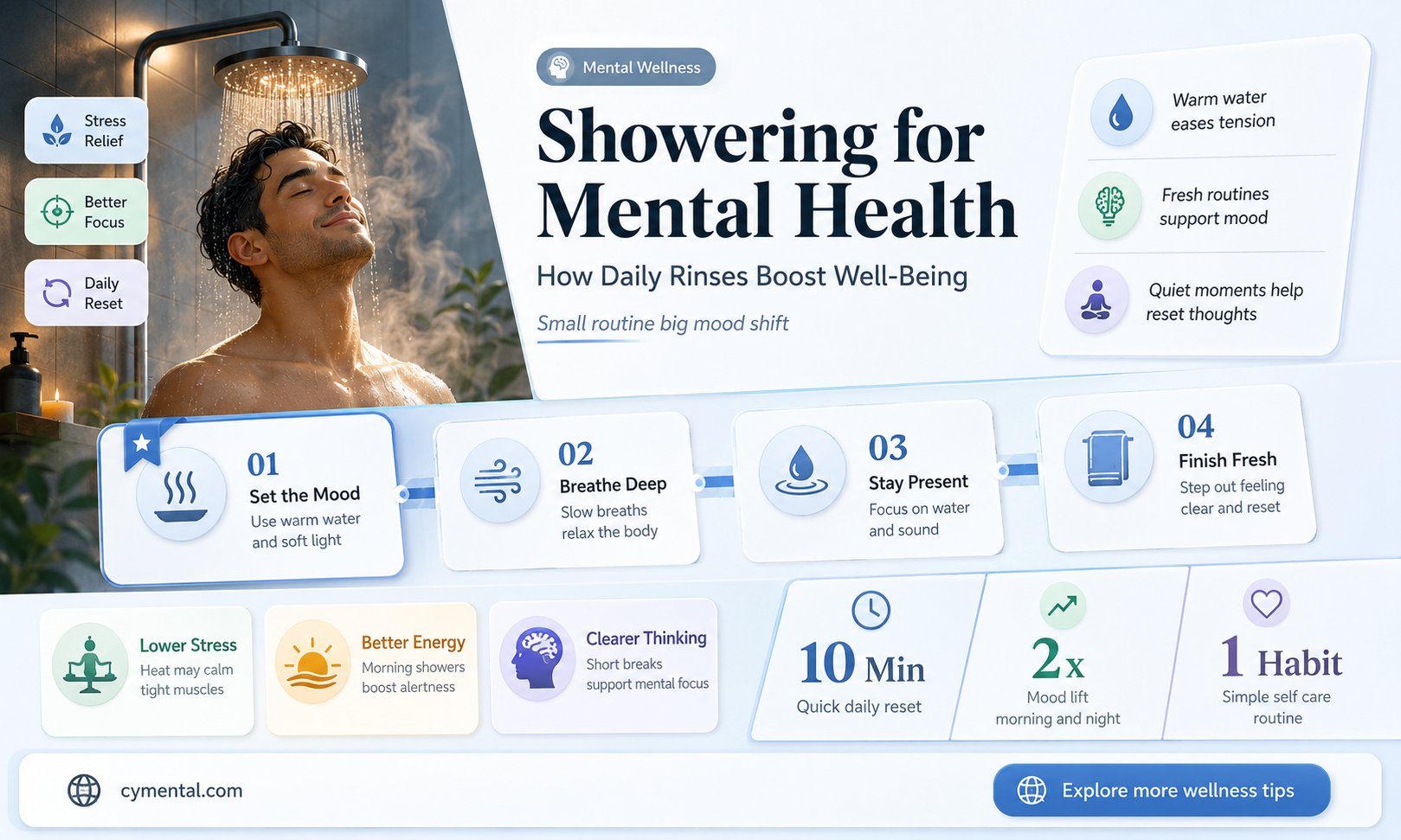
Showering is often associated with physical hygiene, but its impact on mental health is a topic of growing interest. Beyond its practical benefits, showering can serve as a therapeutic ritual, offering a moment of solitude and mindfulness in a busy day. The sensory experience of warm water, the rhythmic sound of droplets, and the act of cleansing can help reduce stress, alleviate anxiety, and promote relaxation. Additionally, the routine of showering can provide structure and a sense of control, which is particularly beneficial for individuals dealing with mental health challenges. Studies suggest that the temperature contrast in showers, such as alternating between hot and cold water, may stimulate the release of endorphins, enhancing mood and reducing symptoms of depression. Thus, showering can be more than a daily chore—it can be a simple yet effective tool for supporting mental well-being.
| Characteristics | Values |
|---|---|
| Stress Reduction | Showering, especially with warm water, activates the parasympathetic nervous system, reducing cortisol levels and promoting relaxation. |
| Mood Enhancement | The sensory experience of showering (water pressure, temperature, and scent) can release endorphins, improving mood and reducing symptoms of depression. |
| Mindfulness Practice | Showering can serve as a form of mindfulness, encouraging presence and focus, which helps reduce anxiety and improve mental clarity. |
| Sleep Improvement | A warm shower before bed can regulate body temperature and signal the body to prepare for sleep, improving sleep quality. |
| Hygiene and Self-Esteem | Maintaining personal hygiene through showering can boost self-esteem and reduce feelings of self-neglect, positively impacting mental health. |
| Routine and Structure | Incorporating showering into a daily routine provides structure, which is beneficial for individuals with mental health conditions like depression or ADHD. |
| Sensory Stimulation | The tactile and auditory sensations of showering can be grounding for individuals experiencing sensory overload or dissociation. |
| Temperature Therapy | Alternating between hot and cold water (contrast therapy) can stimulate circulation and reduce inflammation, indirectly supporting mental well-being. |
| Aromatherapy | Using scented soaps or essential oils during showers can enhance relaxation and reduce stress through olfactory stimulation. |
| Time for Reflection | Showering often provides a private, uninterrupted space for introspection, allowing individuals to process thoughts and emotions. |
Explore related products
![Affirmation Cards for Shower [Waterproof] Self Care Shower Positive Manifest For Women Meditation 14 Daily Motivational Quotes Gift Easy Stick & Remove Shower and Mirror USA Printed](https://m.media-amazon.com/images/I/61n4gRAyMBL._AC_UY218_.jpg)

![Self Care Shower Affirmation Cards For Shower Self-Love [Waterproof] By Positive Manifest For Women Meditation Cards and Daily Motivational Self-Empowering Quotes Girl Boss 14 Stress Relief Routine](https://m.media-amazon.com/images/I/61wAacyiESL._AC_UY218_.jpg)


What You'll Learn
- Stress Relief: Warm water reduces cortisol, promoting relaxation and easing tension
- Mood Boost: Showering increases serotonin, enhancing mood and reducing anxiety
- Mindfulness Practice: Focus on sensations fosters present-moment awareness, calming the mind
- Routine Structure: Consistent showering provides stability, aiding mental health management
- Sensory Therapy: Water pressure and temperature stimulate senses, reducing overwhelm

Stress Relief: Warm water reduces cortisol, promoting relaxation and easing tension
Warm water acts as a natural sedative for the nervous system. When you step into a shower and let the heat envelop your body, your blood vessels dilate, increasing circulation. This process triggers a physiological response: cortisol, the primary stress hormone, begins to decrease. Studies suggest that a 15- to 20-minute warm shower can lower cortisol levels by up to 20%, creating a measurable shift toward relaxation. This isn’t just anecdotal—it’s backed by research linking hydrotherapy to reduced anxiety and improved mood.
To maximize stress relief, focus on temperature and duration. Water between 92°F and 100°F (33°C to 38°C) is ideal for promoting relaxation without overheating. Avoid scalding temperatures, as they can have the opposite effect, increasing heart rate and stress. Pair the warmth with deep breathing exercises: inhale for four seconds, hold for four, exhale for six. This combination of heat and controlled breathing amplifies the cortisol-reducing effect, making the shower a mini-retreat for your mind.
Compare this to other stress-relief methods, and the shower’s efficiency becomes clear. While meditation or exercise require time, focus, or physical effort, a warm shower integrates seamlessly into daily routines. It’s accessible, cost-effective, and requires no special equipment. For those with busy schedules or limited mobility, this simple act can be a game-changer. Even a 10-minute shower before bed can improve sleep quality by easing tension and signaling to your body that it’s time to wind down.
However, there’s a cautionary note: over-reliance on warm showers can lead to dry skin or increased energy use. To mitigate this, limit showers to 20 minutes and use a moisturizer afterward to lock in hydration. For added benefits, incorporate aromatherapy by adding a few drops of lavender or eucalyptus oil to the shower floor—the steam will carry the scent, enhancing relaxation. This small tweak transforms a routine task into a therapeutic experience, proving that sometimes, the simplest solutions are the most effective.
Seeking Mental Health Support: A Guide to Finding the Right Help
You may want to see also
Explore related products


![Grounding Affirmation Cards for Shower [Waterproof] Brown Edition Self Care Shower Positive Manifest For Women Meditation 14 Daily Motivational Quotes Gift Easy Stick & Remove Shower and Mirror USA Printed](https://m.media-amazon.com/images/I/81+RnlwGg6L._AC_UY218_.jpg)


Mood Boost: Showering increases serotonin, enhancing mood and reducing anxiety
Showering isn’t just about physical hygiene—it’s a daily ritual that can significantly impact your mental well-being. Research suggests that the simple act of stepping into a warm shower can trigger the release of serotonin, a neurotransmitter linked to feelings of happiness and relaxation. This biochemical response helps reduce anxiety and enhances your overall mood, making showers a powerful tool for mental health.
Consider the mechanics: warm water stimulates thermoreceptors in your skin, promoting relaxation and calming the nervous system. Combine this with the sensory experience of water pressure and the rhythmic sound of droplets, and you create an environment conducive to stress relief. For maximum benefit, aim for a shower temperature between 36°C and 38°C (97°F to 100°F), as this range is optimal for soothing both body and mind. Adding aromatherapy, such as lavender or eucalyptus, can further amplify the serotonin boost by engaging your olfactory senses.
Practical application is key. Incorporate mindful showering into your routine by focusing on the sensations—the warmth, the pressure, the scent. Spend at least 5–10 minutes under the water, allowing yourself to fully immerse in the experience. For those with busy schedules, even a brief, intentional shower can provide a quick mood lift. Pair this practice with deep breathing exercises to enhance its calming effects, especially during moments of heightened anxiety.
Comparatively, while other activities like exercise or meditation also boost serotonin, showering offers a unique advantage: it’s accessible, requires no special equipment, and can be seamlessly integrated into daily life. Unlike intense workouts or structured meditation sessions, showers are a low-effort, high-reward activity. This makes them particularly beneficial for individuals who struggle with anxiety or find it challenging to carve out time for self-care.
Incorporating this practice into your routine doesn’t require drastic changes. Start small—perhaps by setting aside a few extra minutes in the morning or evening to focus on the sensory experience. Over time, this simple act can become a cornerstone of your mental health toolkit, offering a reliable way to enhance your mood and reduce anxiety. Showering, it turns out, is more than a chore—it’s a daily opportunity for self-care and emotional rejuvenation.
Can Cannabis Break Mental Ruts? Exploring Weed's Role in Mindset Shifts
You may want to see also
Explore related products



Mindfulness Practice: Focus on sensations fosters present-moment awareness, calming the mind
The warm water cascades over your skin, a steady rhythm that demands attention. This is the first step in transforming your shower into a mindfulness practice. By consciously directing your focus to the physical sensations of showering, you anchor yourself in the present moment, a cornerstone of mindfulness.
Notice the temperature – is it a gentle warmth or a invigorating heat? Feel the pressure of the water against your scalp, shoulders, and back. Is it a soft caress or a firm massage? Observe the scent of your shampoo, the lather sliding between your fingers, the sound of water echoing in the enclosed space.
This deliberate focus on sensory details interrupts the constant stream of thoughts that often plague our minds. Instead of dwelling on the past or anxiously anticipating the future, you're grounded in the here and now, experiencing the shower as a fully immersive sensory experience. This shift in attention is a powerful tool for calming the mind and reducing stress.
Studies suggest that mindfulness practices, like this sensory-focused showering, can activate the parasympathetic nervous system, responsible for our "rest and digest" response, counteracting the stress-induced "fight or flight" mode.
To deepen your mindfulness shower, incorporate intentional breathing. As you lather, inhale deeply through your nose, feeling the cool air enter your lungs. Exhale slowly through your mouth, imagining any tension leaving your body with the warm water. This simple act of mindful breathing further enhances the calming effect, promoting a sense of tranquility and inner peace.
Remember, mindfulness is a practice, not a destination. Don't be discouraged if your mind wanders. Gently bring your attention back to the sensations of the shower, without judgment. With consistent practice, even a daily shower can become a powerful tool for cultivating present-moment awareness and nurturing your mental well-being.
Viome and Mental Health: Can Gut Testing Improve Your Well-Being?
You may want to see also
Explore related products




Routine Structure: Consistent showering provides stability, aiding mental health management
The human brain thrives on predictability. When we establish routines, we create a sense of order that reduces cognitive load and anxiety. Showering, a seemingly mundane task, can be a powerful tool in this regard. By incorporating it into a consistent daily routine, we provide our minds with a reliable anchor point, a moment of structured self-care that signals the start or end of a day.
This simple act of hygiene becomes a ritual, a deliberate pause that fosters a sense of control and stability, particularly beneficial for those grappling with mental health challenges.
Consider the structure a consistent showering routine offers. Waking up and immediately stepping into a warm shower can act as a gentle nudge towards wakefulness, a physical and mental transition from sleep to activity. Conversely, an evening shower can serve as a symbolic cleansing, washing away the stresses of the day and preparing the mind for rest. This ritualistic aspect of showering, when integrated into a daily routine, provides a sense of predictability and control, counteracting the unpredictability that often accompanies mental health struggles.
For individuals experiencing depression, the mere act of getting out of bed and showering can be a significant accomplishment, a small victory that sets a positive tone for the day.
The benefits extend beyond the psychological. The physical sensations associated with showering – the warmth, the pressure of the water, the scent of soap – can be incredibly grounding. This sensory engagement can help individuals experiencing anxiety or dissociation reconnect with their bodies, bringing them back to the present moment. Incorporating mindful practices during showering, such as focusing on the sensation of water on the skin or the scent of shampoo, can further enhance this grounding effect.
To maximize the mental health benefits of showering as a routine, consider these practical tips:
- Consistency is Key: Aim for the same shower time each day, whether morning or evening. This consistency reinforces the routine's structure.
- Create a Ritual: Incorporate elements that make the showering experience more meaningful. This could be using a favorite scented soap, listening to calming music, or practicing deep breathing exercises.
- Mindful Showering: Pay attention to the sensory experience. Notice the temperature of the water, the smell of the soap, the feeling of your skin being cleansed. This mindfulness can help you stay present and grounded.
Note: While showering can be a helpful tool for managing mental health, it's not a substitute for professional help. If you're struggling with persistent mental health issues, please seek support from a qualified professional.
Red Light Therapy: A Mental Health Game-Changer or Myth?
You may want to see also
Explore related products


Sensory Therapy: Water pressure and temperature stimulate senses, reducing overwhelm
The rhythmic pulse of water against skin, the enveloping warmth or invigorating chill—showers engage the body in a way few daily rituals do. This sensory immersion isn’t merely incidental; it’s therapeutic. Water pressure and temperature act as dual conductors, orchestrating a symphony of physiological responses that can calm the nervous system and quiet mental clutter.
Consider the mechanics: moderate water pressure (around 40-60 psi) mimics deep-touch stimulation, akin to a firm massage. This triggers the release of oxytocin, a hormone linked to bonding and stress reduction, while simultaneously dampening cortisol levels. Temperature plays an equally pivotal role. Warm water dilates blood vessels, improving circulation and promoting relaxation, while cold water constricts them, delivering a jolt of alertness and endorphins. Alternating between the two—a practice known as contrast hydrotherapy—amplifies these effects, offering a reset for both body and mind.
To harness this, structure your shower as a deliberate sensory exercise. Begin with warm water (104°F or lower to avoid scalding) for 3-5 minutes, letting the heat melt tension. Gradually introduce cooler water (60-70°F) for 30-60 seconds, focusing on deep breaths to anchor yourself. Repeat this cycle 2-3 times, ending with a final minute of cold. For those sensitive to temperature extremes, start with milder contrasts and adjust over time. Pair this with mindful techniques: notice the water’s texture, the sound of droplets, the scent of soap. This grounding practice transforms a routine task into a sensory sanctuary.
While showers are accessible to all ages, caution is advised for individuals with cardiovascular conditions or temperature sensitivities. Pregnant women and the elderly should avoid extreme temperatures and prolonged exposure. For children, shorter durations (5-10 minutes) and gentle pressure ensure safety without overwhelming their developing systems.
The beauty of this therapy lies in its simplicity and immediacy. It requires no special equipment, no appointment, no expertise—just water and intention. By tuning into the sensory dialogue of pressure and temperature, showers become more than hygiene; they’re a daily ritual of recalibration, offering a momentary retreat from overwhelm.
Boost Your Mood: How Morning Cardio Enhances Mental Health
You may want to see also
Frequently asked questions
Yes, showering can help reduce stress and anxiety by promoting relaxation. The warm water stimulates the release of oxytocin, a hormone associated with calmness, and can also distract the mind from negative thoughts.
Absolutely. Showering, especially with cold water, can boost alertness and improve mood by increasing blood circulation and stimulating endorphins, often referred to as "feel-good" hormones.
Showering can provide a sense of routine and self-care, which is beneficial for individuals experiencing depression. The act of cleansing can also symbolize a fresh start, helping to clear mental fog and improve outlook.
A warm shower before bed can relax the body and mind, preparing you for sleep by lowering cortisol levels. Improved sleep quality, in turn, positively impacts overall mental health and emotional resilience.