Harper Lewis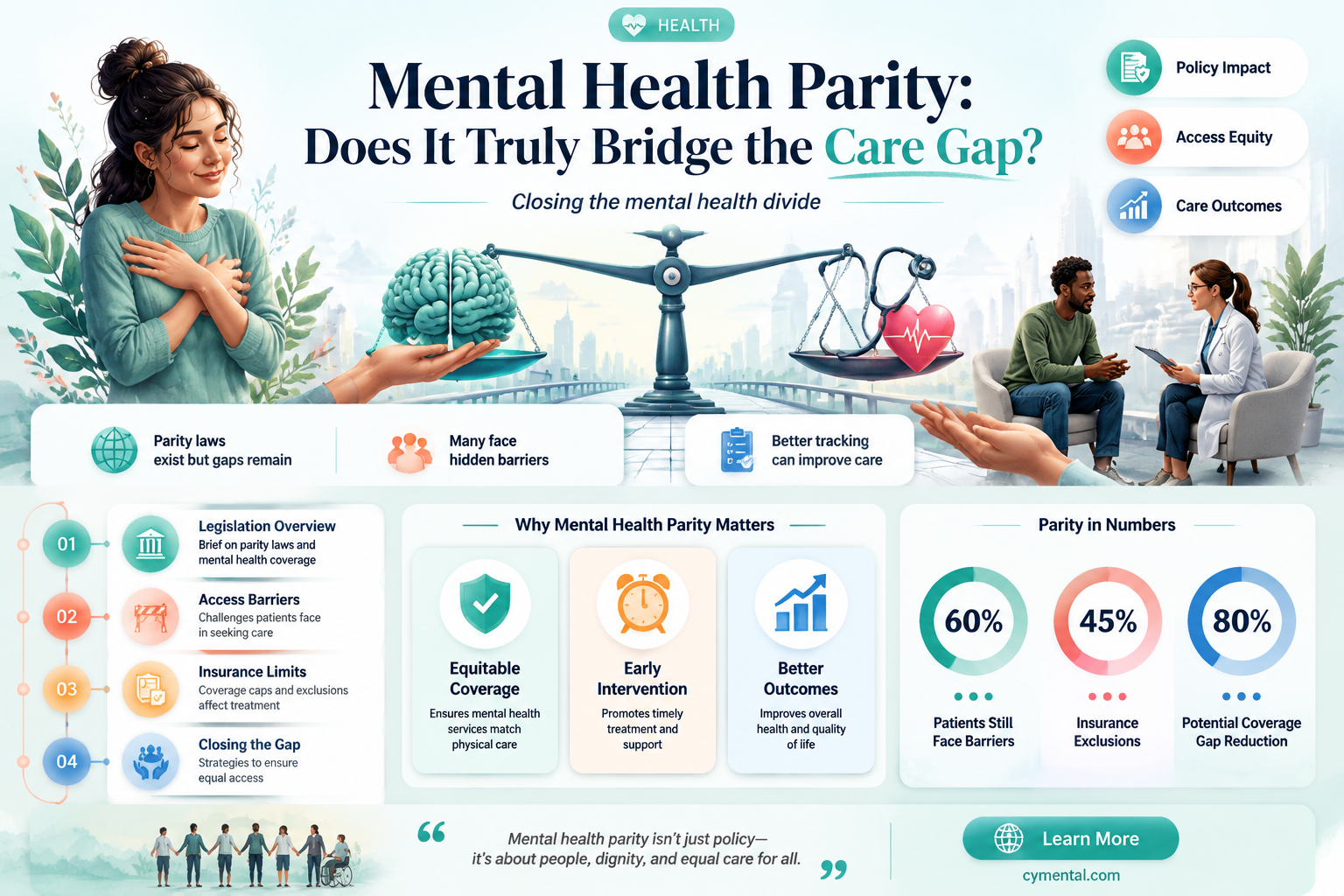
Mental health parity, a policy aimed at ensuring equal coverage for mental health and substance use disorder treatment compared to physical health care, has been a significant step toward addressing disparities in healthcare. Enacted to reduce stigma and improve access to essential services, parity laws require insurers to provide comparable benefits, copays, and treatment limits for mental and physical health conditions. While these policies have expanded access to care for many individuals, challenges remain in their implementation and enforcement. Critics argue that gaps in compliance, lack of awareness, and insufficient oversight continue to hinder the full realization of parity’s potential. As mental health needs grow, particularly in the wake of global crises, evaluating the effectiveness of parity laws and addressing their limitations is crucial to ensuring equitable and comprehensive care for all.
| Characteristics | Values |
|---|---|
| Definition | Mental Health Parity requires equal coverage for mental and physical health services. |
| Key Legislation (U.S.) | Mental Health Parity and Addiction Equity Act (MHPAEA) of 2008. |
| Impact on Access | Improved access to mental health services for millions of Americans. |
| Cost Implications | May increase insurance premiums but reduces out-of-pocket costs for mental health care. |
| Enforcement Challenges | Non-compliance remains an issue due to complexity and lack of oversight. |
| Effectiveness | Reduces disparities in treatment but does not fully eliminate them. |
| Public Awareness | Growing awareness but still limited understanding of parity rights. |
| Recent Updates (as of 2023) | Enhanced enforcement efforts and proposed rule changes to strengthen parity. |
| Global Adoption | Varies widely; some countries have adopted similar policies, while others lag. |
| Long-term Benefits | Potential reduction in societal costs through early intervention and treatment. |
| Criticisms | Accusations of loopholes and inadequate enforcement undermining effectiveness. |
Explore related products


$12.52 $20


What You'll Learn
- Effectiveness of Parity Laws: Do parity laws improve access to mental health treatment
- Insurance Coverage Gaps: Are there still disparities in mental health insurance coverage
- Provider Availability: Does parity increase the number of mental health providers
- Cost Barriers: Does parity reduce out-of-pocket costs for mental health care
- Enforcement Challenges: Are parity laws consistently enforced and monitored effectively

Effectiveness of Parity Laws: Do parity laws improve access to mental health treatment?
Mental health parity laws, designed to equalize insurance coverage for mental and physical health, have been a cornerstone of healthcare reform for decades. Yet, their effectiveness in improving access to mental health treatment remains a subject of debate. Proponents argue that parity laws eliminate discriminatory practices by insurers, ensuring that individuals can access necessary care without financial barriers. Critics, however, point to enforcement challenges and loopholes that undermine their impact. To assess their effectiveness, it’s essential to examine both the intended outcomes and the practical realities of implementation.
One measurable success of parity laws is the reduction in out-of-pocket costs for mental health services. For instance, the Mental Health Parity and Addiction Equity Act (MHPAEA) of 2008 mandated that insurers cover mental health treatment on par with physical health care. Studies show that this has led to a 10-15% decrease in cost-sharing for mental health services, making therapy and medication more affordable for millions. However, this progress is uneven. Small businesses, which are often exempt from federal parity requirements, continue to offer limited mental health coverage, leaving gaps in access for their employees.
Enforcement of parity laws is another critical factor in their effectiveness. Despite legal mandates, insurers frequently violate parity requirements by imposing stricter authorization processes for mental health care or limiting provider networks. A 2021 report by the U.S. Department of Labor found that 44% of employer-sponsored plans failed to comply with MHPAEA standards. This highlights the need for stronger oversight and penalties to ensure insurers adhere to the law. Without robust enforcement, parity laws risk becoming symbolic rather than substantive.
Practical barriers also persist, even in compliant plans. For example, while parity laws require equal coverage, they do not guarantee the availability of mental health providers. In rural or underserved areas, shortages of psychiatrists and therapists make accessing care difficult, regardless of insurance coverage. Additionally, stigma and lack of awareness about mental health benefits prevent many individuals from seeking treatment. Addressing these issues requires complementary strategies, such as workforce development and public education campaigns, to maximize the impact of parity laws.
In conclusion, while parity laws have made strides in reducing financial barriers to mental health care, their effectiveness is limited by enforcement challenges, exemptions, and systemic issues. To truly improve access, policymakers must strengthen compliance mechanisms, expand provider networks, and address broader societal barriers. Parity laws are a vital step, but they are not a panacea. Achieving equitable mental health care requires a multifaceted approach that builds on the foundation laid by these laws.
Occupational Therapy's Role in Mental Health: A Comprehensive Guide
You may want to see also
Explore related products

$54.25 $125


Insurance Coverage Gaps: Are there still disparities in mental health insurance coverage?
Despite the Mental Health Parity and Addiction Equity Act (MHPAEA) of 2008, which mandates equal coverage for mental and physical health, significant gaps persist in insurance coverage. For instance, a 2021 study by Milliman revealed that mental health services are three to six times more likely to be denied by insurers compared to medical and surgical services. This disparity often stems from stricter prior authorization requirements, higher out-of-pocket costs, and limited in-network providers for mental health care. Such barriers disproportionately affect individuals with severe mental illnesses, who may require intensive, long-term treatment that insurers frequently deem "not medically necessary."
Consider the case of a 32-year-old with major depressive disorder seeking outpatient psychotherapy. While their insurance plan covers 80% of the cost for primary care visits, it may only cover 60% for therapy sessions, leaving the patient with a higher financial burden. Additionally, many plans cap the number of therapy sessions per year, often at 20–30 visits, which is insufficient for conditions like chronic depression or PTSD. In contrast, there are typically no such limits for physical health treatments like diabetes management or physical therapy. These discrepancies highlight how parity laws, though well-intentioned, are often circumvented through loopholes in plan design.
To address these gaps, policymakers and advocates must focus on enforcement and transparency. The MHPAEA lacks robust mechanisms for monitoring compliance, allowing insurers to skirt regulations without consequence. For example, insurers may classify certain mental health treatments as "experimental" to avoid coverage, even when evidence supports their efficacy. Patients can take proactive steps by scrutinizing their insurance plans for parity violations, such as unequal copays or restrictive provider networks. Filing complaints with state insurance departments or the U.S. Department of Labor can also pressure insurers to comply with the law.
Comparatively, countries like the UK and Australia have integrated mental health care into their universal healthcare systems, reducing disparities by treating mental and physical health as equally funded priorities. In the U.S., a similar approach could involve expanding Medicaid to cover comprehensive mental health services or incentivizing insurers to broaden their provider networks. Until then, individuals must navigate the system strategically, such as by choosing plans with clear parity policies and advocating for themselves during the claims process. Without systemic change, the promise of mental health parity will remain unfulfilled for millions.
Supporting Through Crisis: Essential Steps to Aid Mental Health Emergencies
You may want to see also
Explore related products


Provider Availability: Does parity increase the number of mental health providers?
One of the most pressing questions surrounding mental health parity is whether it effectively addresses the shortage of mental health providers. Parity laws, which mandate equal coverage for mental and physical health services, aim to reduce barriers to care. However, increasing access to services doesn’t automatically translate to more providers. The existing workforce is often stretched thin, with high demand outpacing supply. For instance, in rural areas, patients may face wait times of several months to see a psychiatrist, even with insurance coverage. Parity alone cannot solve this workforce gap; it merely ensures that when providers are available, services are covered. Thus, while parity is a critical step, it must be paired with initiatives to expand the provider pipeline.
Consider the financial incentives parity creates for providers. By requiring insurers to reimburse mental health services at rates comparable to physical health, parity can make mental health practice more financially viable. This could encourage more professionals to enter the field, particularly in specialties like child psychology or addiction treatment, which have historically been underfunded. However, this effect is gradual and depends on consistent enforcement of parity laws. For example, a 2021 study found that states with stricter parity enforcement saw a 10% increase in mental health provider participation in insurance networks over five years. Still, such growth is insufficient to meet current needs, highlighting the need for additional strategies like loan forgiveness programs or expanded training slots in mental health disciplines.
A comparative analysis reveals that parity’s impact on provider availability varies by region and specialty. Urban areas with higher provider density may see little change, as parity primarily affects billing practices rather than workforce expansion. In contrast, rural or underserved communities could benefit more significantly if parity incentivizes providers to practice in these areas. Telehealth, for instance, has emerged as a parity-driven solution, allowing providers to serve patients remotely. However, telehealth alone cannot replace the need for in-person care, particularly for severe conditions like schizophrenia or bipolar disorder, which require hands-on management. Policymakers must therefore address geographic disparities by coupling parity with targeted recruitment efforts for underserved regions.
To maximize parity’s potential to increase provider availability, stakeholders should focus on three actionable steps. First, enforce parity laws rigorously to ensure insurers comply with reimbursement requirements, making mental health practice more attractive. Second, invest in workforce development by expanding residency programs and offering financial incentives for professionals to specialize in mental health. Third, leverage technology to bridge gaps, such as integrating mental health services into primary care settings or using AI-driven tools to support providers. Without these complementary measures, parity risks becoming a hollow promise—ensuring coverage for services that remain out of reach due to provider shortages. The ultimate takeaway is clear: parity is necessary but not sufficient; it must be part of a broader strategy to build a robust mental health workforce.
Can Mental Health Case Managers Assist in Securing Disability Benefits?
You may want to see also
Explore related products


Cost Barriers: Does parity reduce out-of-pocket costs for mental health care?
Mental health parity laws aim to equalize insurance coverage for mental and physical health services, but their impact on out-of-pocket costs remains a critical question. While parity mandates that insurers cannot impose stricter limits on mental health benefits, such as higher copays or fewer covered visits, the reality is more nuanced. For instance, a 2021 study published in *Health Affairs* found that individuals with private insurance still paid 40% more out-of-pocket for mental health visits compared to primary care visits. This disparity suggests that parity alone does not guarantee cost equity, as insurers may exploit loopholes, such as narrower provider networks or prior authorization requirements, to shift costs onto patients.
Consider the case of a 32-year-old patient seeking therapy for anxiety. Under parity, their insurance plan covers 20 sessions per year, but the therapist charges $150 per session, and the plan reimburses only 60%. Despite parity, the patient pays $60 out-of-pocket per session, totaling $1,200 annually. In contrast, a primary care visit might cost $30 out-of-pocket. This example highlights how parity fails to address fee structures and reimbursement rates, leaving patients vulnerable to high costs. To mitigate this, patients should verify their plan’s reimbursement rates for mental health providers and explore sliding-scale clinics or telehealth options, which often offer lower fees.
From a policy perspective, parity’s effectiveness in reducing out-of-pocket costs hinges on enforcement and transparency. The Mental Health Parity and Addiction Equity Act (MHPAEA) of 2008 requires insurers to provide comparable coverage, but enforcement has been inconsistent. State regulators often lack the resources to audit plans thoroughly, allowing insurers to skirt compliance. For example, a 2020 investigation by the U.S. Department of Labor found that 70% of audited plans violated parity rules. Strengthening enforcement mechanisms, such as increasing penalties for non-compliance and mandating public reporting of parity data, could close these gaps.
Comparatively, countries with single-payer systems, like the UK, demonstrate how integrated care models can eliminate cost barriers for mental health. In the NHS, patients access mental health services without copays or deductibles, ensuring equity across conditions. While transitioning to a single-payer system in the U.S. remains politically challenging, policymakers could adopt incremental reforms, such as capping out-of-pocket costs for mental health care or standardizing reimbursement rates across providers. Such measures would align parity’s intent with its outcomes, making mental health care truly affordable.
Ultimately, while parity is a step toward equity, it is not a panacea for cost barriers in mental health care. Patients must remain vigilant, advocating for themselves by scrutinizing their insurance plans and exploring alternative resources. Policymakers, meanwhile, must address parity’s limitations through stricter enforcement, transparent reporting, and targeted reforms. Until these steps are taken, the promise of parity will remain unfulfilled, leaving many to bear the financial burden of mental health care alone.
Early Intervention: Key to Better Outcomes for Mental Health?
You may want to see also
Explore related products


Enforcement Challenges: Are parity laws consistently enforced and monitored effectively?
Despite the existence of mental health parity laws, enforcement remains inconsistent and often ineffective. One major challenge is the complexity of these laws, which can vary significantly by state and insurer. For instance, while federal parity laws require equal coverage for mental and physical health services, they do not specify how insurers must achieve this, leaving room for interpretation and non-compliance. This ambiguity allows some insurers to impose stricter prior authorization requirements or higher copays for mental health services, effectively undermining parity. Without clear, standardized guidelines, enforcement agencies struggle to identify violations, let alone penalize them.
Another critical issue is the lack of robust monitoring mechanisms. Enforcement relies heavily on consumer complaints, but many individuals are unaware of their rights under parity laws or face barriers to filing grievances. For example, a 2020 study found that only 15% of individuals with mental health conditions knew how to report parity violations. Even when complaints are filed, investigations are often slow and resource-intensive, with limited follow-through. State insurance departments, tasked with oversight, are frequently underfunded and understaffed, further hindering their ability to conduct thorough audits or impose meaningful penalties.
Comparatively, enforcement of physical health coverage is more straightforward due to clearer benchmarks and greater public awareness. Mental health parity, however, requires scrutiny of qualitative factors like medical necessity criteria and provider network adequacy, making violations harder to detect. For instance, insurers may contract with fewer mental health providers, leading to longer wait times for care, but this disparity is not always flagged as a parity violation. This highlights the need for specialized expertise in mental health policy and practice within enforcement agencies, which is currently lacking.
To address these challenges, a multi-pronged approach is necessary. First, parity laws must be simplified and standardized to reduce ambiguity. Second, proactive monitoring should replace the current complaint-driven system. Regular audits of insurers’ compliance, coupled with mandatory transparency reports, could identify systemic issues before they harm consumers. Third, penalties for non-compliance must be strengthened to deter violations. For example, fines could be tied to the insurer’s revenue, and repeat offenders could face license revocation. Finally, public education campaigns are essential to empower individuals to recognize and report violations.
In conclusion, while mental health parity laws are a critical step forward, their effectiveness hinges on consistent and rigorous enforcement. By addressing the current gaps in monitoring, expertise, and penalties, policymakers can ensure that these laws fulfill their intended purpose: providing equitable access to mental health care for all. Without such reforms, parity will remain an unattainable goal, perpetuating disparities in a system already strained by demand.
Supporting Through Crisis: Texting Tips for Mental Breakdown Assistance
You may want to see also
Frequently asked questions
The MHPAEA is a federal law that requires health insurance plans to provide mental health and substance use disorder coverage on par with medical and surgical coverage. It helps by ensuring equal access to treatment, removing barriers to care, and reducing out-of-pocket costs for mental health services.
The MHPAEA does not guarantee coverage for all mental health treatments but ensures that if a plan covers mental health services, the benefits must be comparable to those for physical health. Specific treatments may still depend on the plan’s terms and state regulations.
The Act addresses disparities by prohibiting insurers from imposing stricter limits on mental health care, such as higher copays or fewer treatment visits, compared to physical health care. This promotes fairness and improves access to essential mental health services.