Ava Ramirez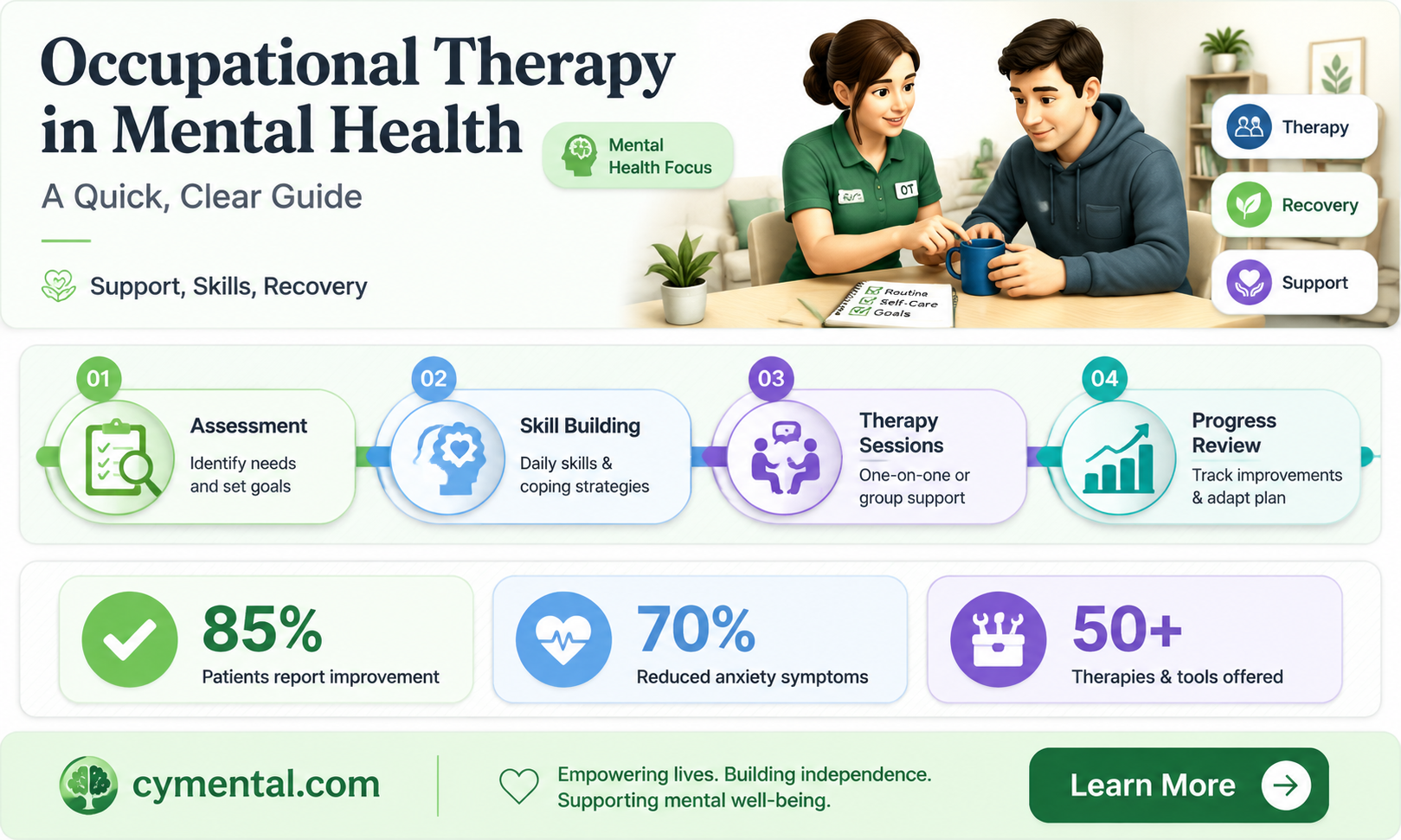
Occupational therapists play a crucial role in supporting individuals with mental health challenges by focusing on improving daily functioning and overall well-being. Through personalized interventions, they help clients engage in meaningful activities that promote recovery, reduce symptoms, and enhance quality of life. By addressing barriers to participation in work, education, and social interactions, occupational therapists empower individuals to develop coping strategies, build resilience, and regain independence. Their holistic approach, which considers physical, emotional, and environmental factors, makes them valuable contributors to mental health care teams, offering practical solutions to foster mental wellness and sustainable lifestyle changes.
| Characteristics | Values |
|---|---|
| Role in Mental Health | Occupational therapists (OTs) play a crucial role in mental health by addressing the interplay between daily activities, environment, and well-being. They focus on improving functional independence and quality of life for individuals with mental health conditions. |
| Therapeutic Approaches | OTs use evidence-based interventions such as cognitive behavioral therapy (CBT), mindfulness, sensory integration, and routine establishment to support mental health recovery. |
| Targeted Conditions | OTs assist with conditions like depression, anxiety, schizophrenia, bipolar disorder, PTSD, and personality disorders by promoting engagement in meaningful activities. |
| Skill Development | They help individuals develop coping skills, stress management techniques, time management, and problem-solving abilities to enhance mental health. |
| Environmental Modifications | OTs assess and modify home, work, or school environments to reduce stressors and improve mental health outcomes. |
| Activity-Based Interventions | OTs encourage participation in purposeful activities (e.g., hobbies, work, self-care) to boost self-esteem, reduce symptoms, and foster recovery. |
| Holistic Approach | OTs address physical, emotional, and social aspects of mental health, ensuring a comprehensive treatment plan. |
| Collaboration | They work with multidisciplinary teams, including psychiatrists, psychologists, and social workers, to provide integrated care. |
| Evidence of Effectiveness | Research shows OT interventions improve functional outcomes, reduce hospitalization rates, and enhance overall mental well-being. |
| Client-Centered Care | OTs tailor interventions to individual needs, preferences, and goals, ensuring personalized mental health support. |
| Prevention and Education | OTs provide education on mental health awareness, self-care strategies, and early intervention to prevent worsening symptoms. |
| Community Integration | They assist individuals in reintegration into community roles (e.g., work, education, social activities) to promote recovery and independence. |
Explore related products


What You'll Learn

Role in Anxiety Management
Occupational therapists (OTs) play a pivotal role in anxiety management by addressing the interplay between daily activities and mental well-being. Unlike traditional talk therapy, OTs focus on practical, actionable strategies to help individuals engage in meaningful tasks despite anxiety. For instance, a person with social anxiety might work with an OT to break down the overwhelming task of attending a party into smaller, manageable steps, such as practicing small talk with a cashier or attending a low-stakes social event. This task-oriented approach empowers individuals to build confidence and reduce avoidance behaviors, which are hallmarks of anxiety disorders.
Consider the case of a 28-year-old professional who experiences panic attacks during work presentations. An OT might employ graded exposure techniques, starting with presenting to a trusted colleague, then gradually increasing the audience size. Alongside this, the OT could introduce sensory modulation strategies, such as deep breathing exercises or the use of a fidget tool, to help regulate the individual’s physiological response to stress. These interventions are tailored to the person’s specific triggers and lifestyle, ensuring they are both practical and sustainable.
One of the strengths of OT in anxiety management is its emphasis on routine and structure. For children and adolescents, OTs often work with families to establish predictable daily schedules, which can reduce uncertainty and anxiety. For example, a 12-year-old with generalized anxiety disorder might benefit from a visual timetable that outlines their day, including dedicated time for homework, play, and relaxation. This structured approach not only helps manage anxiety but also fosters independence and self-regulation skills.
However, it’s important to note that OT is not a one-size-fits-all solution. While it excels in addressing functional limitations caused by anxiety, it may not replace the need for medication or psychotherapy in severe cases. OTs often collaborate with psychologists, psychiatrists, and other healthcare providers to ensure a holistic treatment plan. For instance, an OT might work alongside a cognitive-behavioral therapist to reinforce coping strategies learned in sessions through real-world application.
In conclusion, occupational therapists offer a unique and valuable perspective in anxiety management by focusing on the practical aspects of daily life. Through task adaptation, sensory strategies, and structured routines, OTs help individuals navigate anxiety in a way that aligns with their personal goals and environments. Whether for a child struggling with school-related anxiety or an adult facing workplace stressors, OT provides actionable tools to reclaim control and enhance quality of life.
Napping for Mental Health: Can Short Sleeps Ease Symptoms?
You may want to see also
Explore related products


Depression Treatment Support
Occupational therapists (OTs) play a pivotal role in depression treatment by addressing the functional impact of the disorder. Unlike traditional therapy, which often focuses on emotional processing, OTs target daily activities and routines that depression disrupts. For instance, a person struggling with depression might find it impossible to maintain a regular sleep schedule, prepare meals, or engage in social interactions. OTs work to rebuild these foundational habits, using structured activity scheduling and energy conservation techniques to gradually restore function. This approach doesn’t replace medication or psychotherapy but complements them by ensuring individuals can apply coping strategies in real-world contexts.
Consider the case of a 32-year-old professional who, after months of severe depression, found it impossible to leave the house for work. An OT assessed her daily routine, identified barriers (e.g., overwhelming fatigue, lack of motivation), and introduced graded task assignments. Starting with small, manageable goals like showering and dressing by 10 a.m., the OT progressively increased activity levels. Within six weeks, the client was able to return to part-time work, using time management tools and stress reduction techniques taught during sessions. This example illustrates how OTs break down complex tasks into achievable steps, fostering a sense of accomplishment and reducing depressive symptoms.
While OT interventions are highly individualized, certain strategies are widely applicable. For adults aged 18–65, OTs often employ cognitive-behavioral techniques to challenge negative thought patterns that interfere with daily functioning. For older adults, OTs may focus on maintaining independence through adaptive equipment or simplified routines. Adolescents benefit from activity analysis, where OTs help them identify enjoyable hobbies that promote social engagement and self-esteem. Regardless of age, OTs emphasize the therapeutic use of self-care activities, such as mindfulness exercises or physical exercise, tailored to the client’s energy levels and interests.
Critics might argue that OT interventions lack the depth of traditional psychotherapy, but this overlooks their unique value. OTs bridge the gap between clinical treatment and everyday life, ensuring that therapeutic gains translate into tangible improvements in quality of life. For example, a client learning to manage depression through medication and talk therapy might still struggle to cook meals or manage finances. OTs address these functional deficits directly, providing practical tools like meal planning templates or budgeting apps. This dual focus on emotional and occupational health makes OT an essential component of holistic depression care.
Incorporating OT into depression treatment requires collaboration among healthcare providers. Psychiatrists, psychologists, and primary care physicians should refer patients to OTs when functional impairments are evident, such as difficulty maintaining employment or personal relationships. Patients themselves can advocate for OT services by discussing specific challenges they face in daily life during clinical appointments. Insurance coverage for OT varies, but many plans include it under mental health or rehabilitative services. By integrating OT into treatment plans, individuals with depression gain not just emotional relief but the practical skills to reclaim their lives.
Mental Health Classes: Empowering Students for Emotional Resilience and Success
You may want to see also
Explore related products


Stress Reduction Techniques
Occupational therapists are uniquely positioned to address mental health through stress reduction techniques, leveraging their expertise in daily activities and environmental adaptations. By focusing on meaningful occupations—tasks that bring purpose and satisfaction—they help individuals build resilience against stress. For instance, a therapist might guide a client in structuring their day to include activities like gardening or cooking, which foster a sense of accomplishment and calm. This approach not only alleviates immediate stress but also equips individuals with long-term coping strategies.
One effective technique occupational therapists employ is task grading, a method of breaking down overwhelming activities into manageable steps. For example, a person struggling with work-related stress might be taught to prioritize tasks, set realistic deadlines, and incorporate short breaks for mindfulness exercises. Research shows that structured task management reduces cortisol levels, the body’s primary stress hormone. Therapists often recommend the "20-20-20 rule" for desk workers: every 20 minutes, take a 20-second break to focus on something 20 feet away, reducing eye strain and mental fatigue.
Sensory modulation is another powerful tool in the occupational therapist’s arsenal. For individuals with heightened stress responses, therapists may introduce sensory diets—planned activities tailored to regulate the nervous system. For instance, deep pressure input through weighted blankets or resistance exercises can promote relaxation. Conversely, calming sensory inputs like soft music or aromatherapy may be used for those who feel overwhelmed. A study published in the *American Journal of Occupational Therapy* found that sensory-based interventions significantly decreased anxiety levels in adults over six weeks.
Mindfulness and grounding techniques are also integrated into occupational therapy sessions. Therapists often teach clients the "5-4-3-2-1" method: identifying five things you can see, four you can touch, three you can hear, two you can smell, and one you can taste. This technique anchors individuals in the present moment, disrupting stress-induced rumination. For children, occupational therapists might use play-based mindfulness activities, such as breathing exercises paired with movement, to make stress reduction engaging and accessible.
Finally, occupational therapists emphasize the importance of environmental modifications to reduce stress. Simple changes like decluttering a workspace, adjusting lighting, or adding plants can create a more soothing atmosphere. For older adults, therapists might recommend ergonomic furniture or adaptive tools to minimize physical strain during daily tasks. By addressing both the individual and their environment, occupational therapists provide holistic stress reduction solutions that are practical, personalized, and sustainable.
Exploring Medical Cannabis as a Potential Mental Health Treatment Option
You may want to see also
Explore related products


Trauma-Informed Care
Occupational therapists (OTs) are increasingly recognized as vital contributors to mental health care, particularly through the lens of trauma-informed care (TIC). TIC is not just a set of practices but a philosophical shift that acknowledges the pervasive impact of trauma on individuals’ lives. For OTs, this means understanding how trauma affects a person’s ability to engage in meaningful occupations—activities that give life purpose, such as work, self-care, or social participation. By embedding TIC into their practice, OTs can create safe, empowering environments that foster healing and resilience.
Consider a 35-year-old client who survived a car accident and now struggles with daily tasks like cooking or commuting. A trauma-informed OT would first assess how the accident reshaped the client’s sense of safety and control. Instead of focusing solely on physical limitations, the OT might introduce grounding techniques, such as deep breathing or sensory tools, to manage anxiety during meal prep. This approach not only addresses functional goals but also rebuilds the client’s confidence in their ability to navigate triggering situations. Practical tips include incorporating trauma-sensitive language (e.g., asking, “What feels manageable for you today?”) and offering choices to restore autonomy.
One of the core principles of TIC is collaboration. OTs must partner with clients to co-create goals that align with their values and strengths. For instance, a teenager with a history of emotional abuse might avoid social interactions due to fear of judgment. An OT could design a graded exposure plan, starting with low-pressure activities like joining a small art group, while teaching emotional regulation skills like journaling or mindfulness. Dosage matters here: gradual, client-paced progress prevents retraumatization. Research shows that such collaborative, occupation-based interventions improve mental health outcomes by 30–40% in trauma-affected populations.
However, implementing TIC is not without challenges. OTs must navigate their own biases and ensure they are not inadvertently retraumatizing clients through rigid expectations or lack of empathy. Cautions include avoiding assumptions about a client’s trauma history and being mindful of cultural differences in expressing distress. For example, a client from a collectivist culture might prioritize family obligations over individual self-care, requiring the OT to adapt interventions accordingly. Continuous self-reflection and supervision are essential for OTs to maintain a trauma-informed stance.
In conclusion, trauma-informed care transforms occupational therapy into a powerful tool for mental health recovery. By addressing the intersection of trauma and occupation, OTs can help clients reclaim control over their lives. Specific strategies, such as sensory modulation, collaborative goal-setting, and culturally sensitive practice, make this approach both practical and effective. As mental health needs grow, OTs equipped with TIC principles are uniquely positioned to make a lasting impact.
Accessing Mental Health Support: Affordable Options for the Uninsured
You may want to see also
Explore related products

$10.99 $18.99


Enhancing Daily Functioning
Occupational therapists play a pivotal role in mental health by addressing the intricate relationship between daily activities and emotional well-being. For individuals grappling with conditions like depression, anxiety, or schizophrenia, even mundane tasks can feel insurmountable. Therapists employ activity analysis to break down complex routines into manageable steps, fostering a sense of accomplishment and reducing overwhelm. For instance, a person with severe anxiety might struggle with morning routines; an occupational therapist could introduce a structured, timed schedule, starting with simpler tasks like making the bed before progressing to more challenging ones like meal preparation.
Consider the case of a 35-year-old with bipolar disorder who finds it difficult to maintain employment due to erratic energy levels. An occupational therapist might recommend energy-pacing techniques, such as alternating between high-focus tasks and short breaks, to enhance productivity without triggering manic or depressive episodes. This approach not only improves job performance but also bolsters self-esteem, a critical factor in mental health recovery. Research supports this method, showing that structured activity pacing can reduce symptoms by up to 30% in individuals with mood disorders.
For children and adolescents, occupational therapists often use play-based interventions to enhance daily functioning. A teenager with ADHD, for example, might benefit from sensory integration activities like fidget tools or movement breaks during study sessions. These strategies improve focus and reduce frustration, translating to better academic performance and social interactions. Parents can reinforce these techniques at home by creating a designated study area free from distractions and incorporating 5-minute movement breaks every 30 minutes.
In older adults, occupational therapists address cognitive decline and its impact on daily life. For a 70-year-old with early-stage dementia, therapists might introduce memory aids like labeled drawers or routine charts to maintain independence in activities like dressing or cooking. These adaptations not only preserve dignity but also delay the need for full-time care. Caregivers can support this process by encouraging consistent use of these tools and celebrating small victories, such as successfully preparing a meal independently.
Ultimately, enhancing daily functioning through occupational therapy is about more than completing tasks—it’s about reclaiming autonomy and purpose. By tailoring interventions to individual needs and environments, therapists empower clients to navigate life’s challenges with confidence. Whether through structured routines, adaptive tools, or sensory strategies, this approach transforms daily activities from sources of stress into opportunities for growth and resilience.
Creatine's Surprising Role in Boosting Mental Health and Well-Being
You may want to see also
Frequently asked questions
Yes, occupational therapists (OTs) play a crucial role in mental health by helping individuals develop skills and strategies to manage daily activities, improve coping mechanisms, and enhance overall well-being.
Occupational therapists can assist with a range of mental health issues, including anxiety, depression, PTSD, bipolar disorder, schizophrenia, and ADHD, by focusing on improving functional independence and quality of life.
OTs support mental health by creating personalized plans to improve daily routines, teach stress management techniques, enhance social skills, and promote engagement in meaningful activities to foster recovery and resilience.