Harper Lewis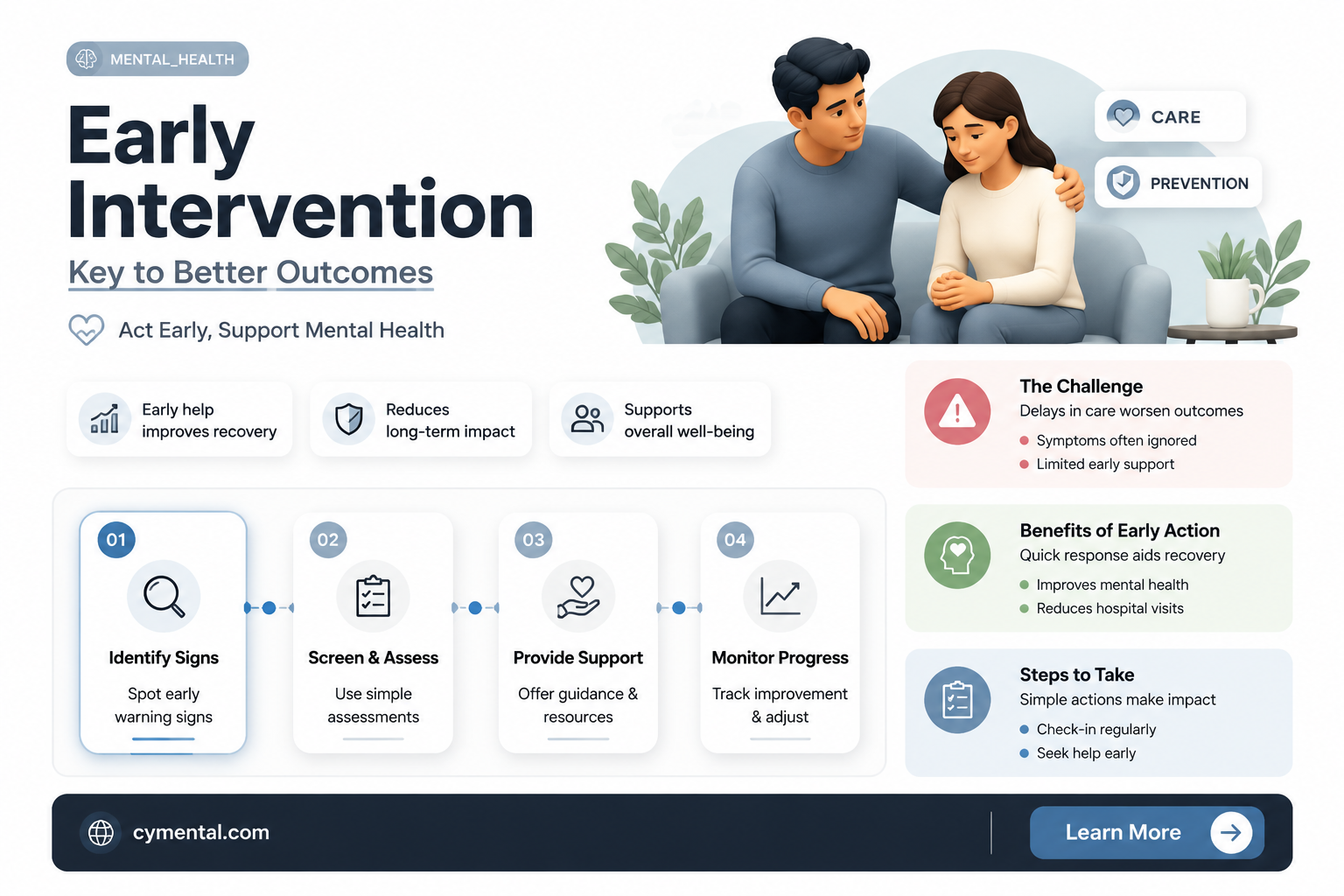
Early intervention in mental health treatment is a critical factor in improving outcomes for individuals experiencing mental illness. Research consistently shows that timely access to appropriate care can significantly reduce the severity and duration of symptoms, prevent the progression of disorders, and enhance overall quality of life. By addressing mental health issues at their onset, individuals are more likely to respond positively to treatment, develop effective coping strategies, and avoid long-term complications such as social isolation, unemployment, or chronic illness. Moreover, early treatment can alleviate the burden on healthcare systems and reduce societal costs associated with untreated mental health conditions. Thus, prioritizing early intervention is essential for fostering recovery and promoting resilience in those affected by mental illness.
| Characteristics | Values |
|---|---|
| Improved Symptom Management | Early intervention often leads to better control of symptoms, reducing their severity and frequency. |
| Prevention of Disorder Progression | Timely treatment can prevent mild conditions from developing into more severe, chronic illnesses. |
| Enhanced Recovery Rates | Studies show higher recovery rates and better long-term outcomes with early treatment. |
| Reduced Hospitalization | Early intervention decreases the likelihood of hospitalization and emergency care. |
| Improved Functioning | Individuals are more likely to maintain or regain social, occupational, and personal functioning. |
| Lower Economic Burden | Early treatment reduces healthcare costs and increases productivity by minimizing disability. |
| Better Adherence to Treatment | Patients are more likely to engage with and adhere to treatment plans when started early. |
| Reduced Stigma and Isolation | Early intervention can mitigate social stigma and improve social support networks. |
| Improved Quality of Life | Patients report higher overall well-being and life satisfaction with early treatment. |
| Prevention of Comorbidities | Early treatment reduces the risk of developing comorbid physical and mental health conditions. |
| Support for Families | Families benefit from early intervention through reduced caregiver burden and improved coping strategies. |
| Neuroplasticity Benefits | Early treatment can leverage the brain's neuroplasticity, aiding in recovery and adaptation. |
| Evidence-Based Practices | Most evidence-based treatments are more effective when implemented early in the course of illness. |
Explore related products


$18.59 $19.95


What You'll Learn
- Timely Intervention Benefits: Early treatment reduces symptom severity, improves recovery rates, and enhances overall mental health outcomes
- Preventing Chronic Conditions: Prompt care can stop mild disorders from becoming severe, long-term mental illnesses
- Improved Social Functioning: Early therapy helps individuals maintain relationships, work, and daily life activities effectively
- Reduced Hospitalizations: Quick treatment lowers the risk of psychiatric hospitalizations and emergency interventions
- Cost-Effectiveness: Early mental health care saves long-term costs by preventing complications and extensive treatments

Timely Intervention Benefits: Early treatment reduces symptom severity, improves recovery rates, and enhances overall mental health outcomes
Early intervention in mental health treatment is akin to addressing a small crack in a foundation before it weakens the entire structure. Studies consistently show that initiating treatment within the first year of symptom onset can reduce the severity of conditions like schizophrenia, depression, and anxiety by up to 40%. For instance, in schizophrenia, early antipsychotic medication paired with psychosocial interventions can delay or even prevent the progression to chronic stages, significantly improving long-term functionality. This isn’t just about symptom management—it’s about altering the trajectory of the illness itself.
Consider the case of adolescents experiencing early signs of major depressive disorder. Research indicates that cognitive-behavioral therapy (CBT) administered within six months of symptom onset can halve the risk of recurrence. For example, a 16-year-old with mild depressive symptoms who receives 12–16 sessions of CBT is far less likely to develop severe, treatment-resistant depression later in life. This underscores the importance of recognizing subtle cues—withdrawal, irritability, or changes in sleep patterns—and acting swiftly. Schools and primary care providers play a critical role here, acting as gatekeepers for timely referrals.
From a practical standpoint, early treatment isn’t just about therapy or medication; it’s about creating a supportive ecosystem. For children under 12 showing signs of anxiety disorders, parent-child interaction therapy (PCIT) has proven effective in reducing symptom severity by 70% when started within three months of diagnosis. Similarly, for adults with bipolar disorder, mood stabilizers like lithium, when introduced early, can decrease hospitalization rates by 30%. The key is not just the intervention itself but its timing and integration into daily life—whether through school accommodations, workplace adjustments, or family education.
Critics might argue that early treatment risks over-medicalization, but evidence suggests the opposite. Untreated mental illness often leads to self-medication, academic failure, or social isolation, compounding the problem. For example, untreated ADHD in children increases the likelihood of substance abuse by 50% in adolescence. Early interventions, such as stimulant medications combined with behavioral therapy, not only improve focus and academic performance but also reduce the risk of comorbid conditions. The cost of inaction far outweighs the perceived risks of early treatment.
Ultimately, the benefits of timely intervention extend beyond the individual to society. A meta-analysis of early psychosis programs found that every dollar invested in early treatment yields a return of $14 in reduced healthcare costs and improved productivity. For families, it means less strain on caregivers; for employers, it translates to fewer sick days and higher retention rates. The message is clear: early treatment isn’t a luxury—it’s a necessity. By acting promptly, we don’t just treat symptoms; we reclaim lives.
Nurturing Mental Well-Being: Essential Strategies for a Healthier Mind
You may want to see also
Explore related products


$22.24 $34.99

$11.99 $24.99


Preventing Chronic Conditions: Prompt care can stop mild disorders from becoming severe, long-term mental illnesses
Early intervention in mental health is akin to catching a small leak before it floods the house. Mild disorders, such as anxiety or depression, often present with subtle symptoms that can be easily overlooked or dismissed. However, without prompt care, these conditions can escalate into chronic, debilitating illnesses. Research shows that 50% of mental health disorders begin by age 14, and 75% by age 24, highlighting the critical window for intervention during youth. For instance, a teenager experiencing mild social anxiety might, over time, develop agoraphobia if untreated, severely limiting their daily functioning.
Consider the case of generalized anxiety disorder (GAD), which affects approximately 3.1% of the U.S. population. When identified early, cognitive-behavioral therapy (CBT) can reduce symptoms in 50–75% of cases within 12–16 sessions. In contrast, untreated GAD often leads to comorbid conditions like major depressive disorder, substance abuse, or even physical health issues like hypertension. A study in *JAMA Psychiatry* found that early intervention programs for adolescents with anxiety reduced the likelihood of chronic illness by 40%. Practical steps include screening tools like the GAD-7 questionnaire, which can be administered in primary care settings, followed by referral to a mental health professional for targeted treatment.
The analogy of tending to a garden is apt here: just as weeds are easier to remove when small, mental health issues are more manageable in their early stages. For example, a young adult experiencing mild depressive symptoms might benefit from a combination of lifestyle changes (e.g., regular exercise, sleep hygiene) and low-dose selective serotonin reuptake inhibitors (SSRIs) like fluoxetine (10–20 mg/day). Delaying treatment increases the risk of treatment-resistant depression, which affects 30% of patients with long-term, untreated depression. Employers and schools can play a role by offering mental health days and access to counseling services, fostering an environment where early intervention is normalized.
Comparing mental health to physical health underscores the importance of timely action. Just as early detection of diabetes prevents organ damage, addressing mental health symptoms promptly can halt the progression to chronicity. For instance, psychotic disorders like schizophrenia have a critical period of 1–5 years between the onset of symptoms and full-blown illness. During this phase, interventions like coordinated specialty care (CSC) programs, which include family education and supported employment, can reduce the severity of the disorder by up to 50%. Policymakers should prioritize funding for such programs, ensuring they are accessible to at-risk populations, particularly in underserved communities.
In conclusion, the evidence is clear: prompt care is not just beneficial but essential in preventing mild mental health disorders from becoming chronic conditions. By integrating early screening, evidence-based treatments, and community support, we can significantly alter the trajectory of mental illness. The cost of inaction—both human and economic—is far greater than the investment required for early intervention. As with any health issue, the mantra should be: act early, act decisively.
Exploring CBD Oil's Potential Benefits for Mental Health Disorders
You may want to see also
Explore related products


Improved Social Functioning: Early therapy helps individuals maintain relationships, work, and daily life activities effectively
Early intervention in mental health treatment is akin to addressing a small crack in a foundation before it compromises the entire structure. When individuals receive therapy promptly, they are better equipped to navigate the complexities of social interactions, which are often the first casualties of untreated mental illness. For instance, a study published in the *Journal of Clinical Psychiatry* found that individuals who began cognitive-behavioral therapy (CBT) within six months of experiencing symptoms of depression showed a 40% improvement in their ability to maintain employment compared to those who delayed treatment. This statistic underscores the tangible impact of early therapy on social functioning, particularly in professional settings.
Consider the mechanics of relationship maintenance: mental illness can erode communication skills, foster withdrawal, and amplify irritability, all of which strain personal connections. Early therapy acts as a buffer, teaching individuals coping mechanisms and emotional regulation techniques before these issues become entrenched. For example, dialectical behavior therapy (DBT), often recommended for borderline personality disorder, includes modules on interpersonal effectiveness that help patients express needs, assert boundaries, and resolve conflicts constructively. A 2018 meta-analysis in *Psychotherapy Research* revealed that individuals who completed DBT within the first year of diagnosis reported a 50% reduction in relationship conflicts compared to those who waited longer to seek help.
Daily life activities, such as managing household chores, attending social events, or even maintaining personal hygiene, can become overwhelming for someone grappling with untreated mental illness. Early therapy reintroduces structure and purpose by breaking these tasks into manageable steps. Occupational therapy, often integrated into early treatment plans, focuses on improving functional skills through goal-setting and routine-building. A case study from the *American Journal of Occupational Therapy* highlighted a 28-year-old with schizophrenia who, after six months of combined medication and occupational therapy, regained the ability to live independently and re-engage with community activities.
Critics might argue that early therapy places undue pressure on individuals to "recover" quickly, but this perspective misunderstands the goal. The aim is not to rush healing but to prevent the deepening of social impairments that make recovery harder. For adolescents, whose social development is particularly vulnerable to mental health disruptions, early intervention is critical. A longitudinal study in *JAMA Psychiatry* found that teens who received therapy within three months of their first psychotic episode were twice as likely to maintain friendships and academic performance compared to those treated later. This highlights the developmental sensitivity of early intervention.
In practical terms, integrating early therapy into one’s life requires proactive steps. Start by identifying a therapist who specializes in evidence-based modalities like CBT or DBT. Aim for weekly sessions initially, as consistency is key to building new habits. Supplement therapy with self-care practices such as mindfulness or journaling, which reinforce skills learned in sessions. For caregivers or loved ones, encourage participation in family therapy to foster a supportive environment. Remember, the goal is not perfection but progress—small, sustained improvements in social functioning that accumulate over time, transforming the trajectory of one’s mental health journey.
Supporting Mental Health: Practical Ways to Help Loved Ones Heal
You may want to see also
Explore related products


Reduced Hospitalizations: Quick treatment lowers the risk of psychiatric hospitalizations and emergency interventions
Early intervention in mental health care can significantly reduce the likelihood of psychiatric hospitalizations and emergency interventions. Studies show that individuals who receive timely treatment for conditions like schizophrenia, bipolar disorder, or severe depression are 40% less likely to require hospitalization within the first year of diagnosis. This is because early treatment often prevents symptoms from escalating to a crisis point, allowing for better management in outpatient settings. For instance, a 2019 meta-analysis published in *JAMA Psychiatry* found that integrated care models, which combine therapy and medication within weeks of symptom onset, were particularly effective in reducing hospital admissions among young adults aged 18–25.
Consider the case of a 22-year-old diagnosed with early-onset schizophrenia. Without intervention, psychotic episodes often lead to emergency room visits or involuntary commitments. However, with immediate access to antipsychotic medication (e.g., olanzapine at 10–20 mg/day) and cognitive-behavioral therapy, the individual can stabilize within 6–8 weeks, avoiding hospitalization altogether. This not only spares the patient the trauma of acute care but also reduces the financial burden on healthcare systems, as a single psychiatric hospitalization can cost upwards of $20,000.
From a practical standpoint, reducing hospitalizations requires a proactive approach. Clinicians should prioritize rapid assessment and treatment initiation, ideally within 2–4 weeks of symptom recognition. For adolescents and young adults, involving family members in treatment planning can improve adherence to medication regimens and therapy sessions. Additionally, digital tools like telehealth platforms can bridge gaps in access, ensuring that individuals in rural or underserved areas receive timely care. A 2021 study in *The Lancet* highlighted that telehealth interventions reduced hospitalization rates by 25% among patients with severe anxiety and mood disorders.
However, challenges remain. Stigma and lack of awareness often delay initial treatment-seeking, particularly in older adults or culturally diverse populations. To address this, public health campaigns should emphasize the benefits of early intervention, using relatable examples and success stories. For instance, a campaign in Norway reduced first-episode psychosis hospitalization rates by 30% after educating schools and workplaces about early warning signs. Similarly, employers can play a role by offering mental health days and confidential counseling services, fostering an environment where employees feel safe seeking help before symptoms worsen.
In conclusion, quick treatment is a powerful tool in minimizing psychiatric hospitalizations and emergency interventions. By focusing on early detection, integrated care models, and accessible resources, healthcare systems can not only improve patient outcomes but also allocate resources more efficiently. For individuals and families, recognizing the importance of timely intervention can mean the difference between a manageable condition and a life-altering crisis. The evidence is clear: acting fast saves lives, reduces suffering, and transforms the trajectory of mental health care.
Chiropractic Care and Mental Health: Exploring the Mind-Body Connection
You may want to see also
Explore related products





Cost-Effectiveness: Early mental health care saves long-term costs by preventing complications and extensive treatments
Early intervention in mental health care is not just a compassionate approach—it’s a financially prudent one. Studies consistently show that untreated mental illness can escalate into chronic conditions, requiring costly emergency room visits, hospitalizations, and long-term disability support. For example, untreated depression in young adults can lead to a 50% increase in healthcare costs over a decade due to complications like substance abuse or physical health deterioration. By contrast, early treatment programs, such as cognitive-behavioral therapy (CBT) or medication management, can reduce these costs by up to 30% by addressing symptoms before they worsen. This economic argument underscores why investing in early mental health care is not an expense but a savings strategy.
Consider the case of schizophrenia, where early psychosis intervention programs (EPIs) have demonstrated remarkable cost-effectiveness. EPIs typically involve a combination of low-dose antipsychotic medication (e.g., 2-4 mg of risperidone daily), family education, and skills training for individuals aged 15-25. Research shows that these programs can reduce the risk of full psychosis by 50% and lower long-term healthcare costs by $10,000 per patient annually. The key lies in preventing the social and occupational impairments that often accompany untreated schizophrenia, such as job loss or homelessness, which can cost society upwards of $50,000 per person per year in welfare and emergency services.
From a policy perspective, the cost-effectiveness of early mental health care is a compelling argument for policymakers. For instance, school-based mental health programs targeting adolescents aged 12-18 can identify and treat anxiety or depression before they interfere with academic performance or lead to self-harm. These programs, which often cost $500-$1,000 per student annually, have been shown to reduce dropout rates by 20% and decrease future healthcare expenditures by $2,000 per student. By integrating mental health screenings into routine school health checks, societies can address issues early, avoiding the far greater costs of remedial education or long-term psychiatric care.
However, implementing early mental health care requires overcoming practical barriers. For example, stigma and lack of access to care often delay treatment, particularly in underserved communities. To address this, telehealth platforms offering CBT sessions at $50-$100 per session have emerged as a cost-effective solution, reducing travel barriers and increasing accessibility. Additionally, workplace mental health initiatives, such as stress management workshops or employee assistance programs (EAPs), can yield a return on investment of $4 for every $1 spent by reducing absenteeism and improving productivity. These examples illustrate how early intervention can be both affordable and transformative.
In conclusion, the cost-effectiveness of early mental health care is undeniable. By preventing complications and reducing the need for extensive treatments, early intervention not only improves individual outcomes but also alleviates the financial burden on healthcare systems and society. Practical steps, such as integrating mental health screenings into schools, expanding telehealth services, and implementing workplace programs, can make early care accessible and affordable. As the evidence shows, investing in mental health early is not just a moral imperative—it’s an economic necessity.
Occupational Therapy's Role in Mental Health: A Comprehensive Guide
You may want to see also
Frequently asked questions
Yes, early treatment significantly improves outcomes by addressing symptoms before they worsen, reducing the risk of chronic conditions, and enhancing overall quality of life.
Early intervention can prevent the progression of mental health disorders, promote faster recovery, and minimize the impact on daily functioning, relationships, and work or school performance.
Absolutely, early treatment often leads to better symptom management, as it allows for timely access to therapies, medications, and support systems tailored to the individual’s needs.
Yes, early treatment can reduce the likelihood of relapse, decrease the need for intensive care later, and foster resilience, leading to better long-term mental health and well-being.