Ava Ramirez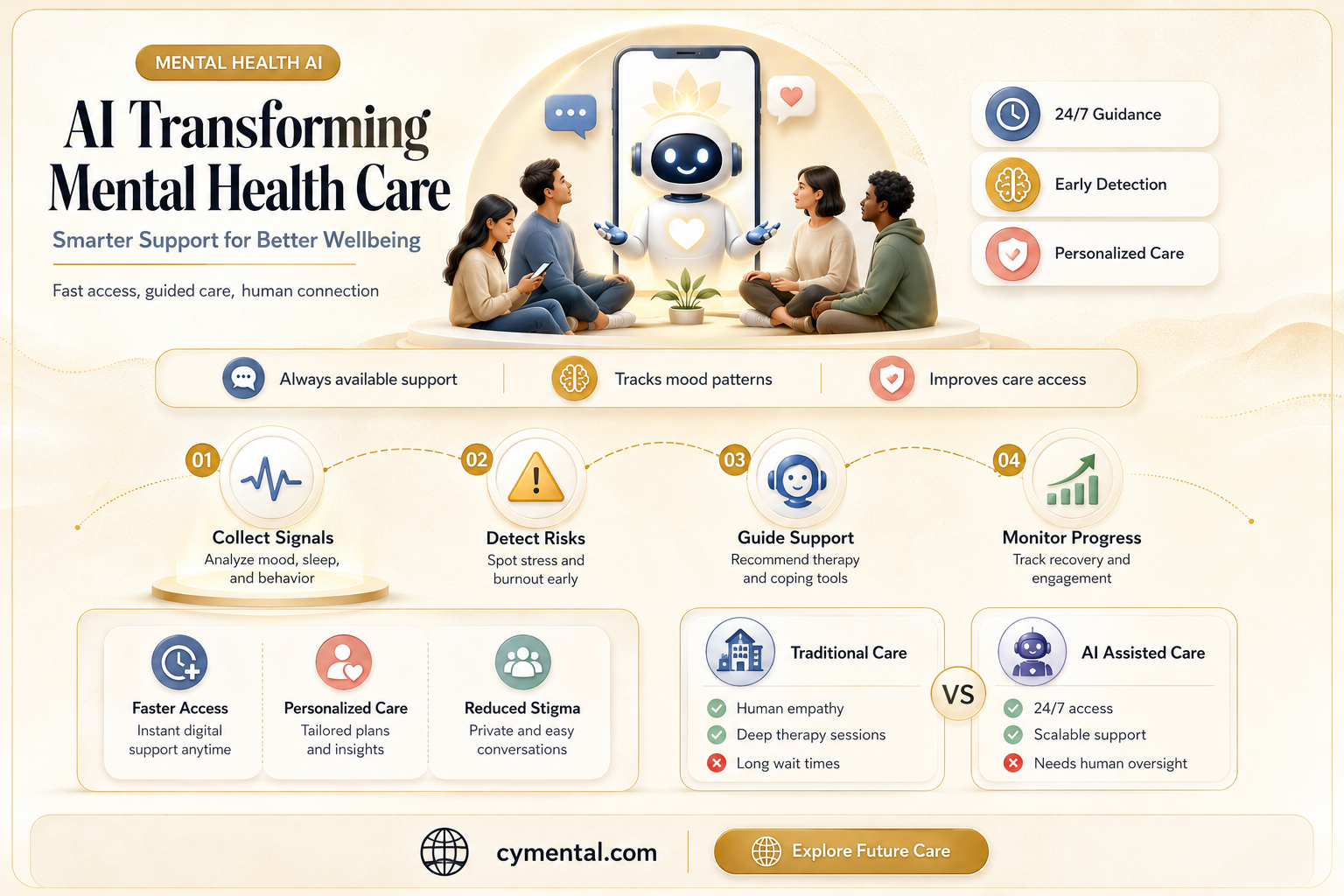
Artificial Intelligence (AI) is revolutionizing the field of mental health by offering innovative tools and solutions to address the growing global demand for accessible and effective care. From chatbots providing immediate emotional support to advanced algorithms analyzing speech and text patterns to detect early signs of depression or anxiety, AI is bridging gaps in traditional mental health services. Machine learning models can personalize treatment plans, predict relapse risks, and even assist therapists in identifying subtle cues during sessions. Additionally, AI-powered apps and platforms are making mental health resources more affordable and available to underserved populations, reducing stigma, and encouraging proactive self-care. While ethical considerations and the need for human oversight remain critical, AI’s potential to enhance mental health care is undeniable, offering hope for a future where support is more timely, tailored, and inclusive.
Explore related products


What You'll Learn
- AI-Powered Therapy Tools: Chatbots and virtual therapists offer 24/7 support for mental health issues
- Early Mental Health Detection: AI analyzes data to identify signs of depression, anxiety, or stress early
- Personalized Treatment Plans: Machine learning tailors mental health interventions based on individual needs and responses
- Mental Health Monitoring Apps: AI tracks mood patterns and provides insights to manage mental well-being
- Reducing Therapist Workload: Automates administrative tasks, allowing therapists to focus more on patient care

AI-Powered Therapy Tools: Chatbots and virtual therapists offer 24/7 support for mental health issues
Mental health crises don’t adhere to office hours, yet traditional therapy often does. AI-powered therapy tools like chatbots and virtual therapists bridge this gap by offering immediate, round-the-clock support. For instance, Woebot, a chatbot designed by psychologists, uses cognitive-behavioral therapy (CBT) techniques to help users manage anxiety and depression. Available via smartphone, it provides real-time interventions, such as mood tracking and guided exercises, without the wait times associated with human therapists. This accessibility is particularly crucial for individuals in remote areas or those who hesitate to seek in-person help due to stigma.
Consider the mechanics of these tools: they leverage natural language processing (NLP) to simulate empathetic conversations, analyzing user responses to tailor feedback. For example, if a user expresses feelings of overwhelm, the chatbot might suggest a 5-minute breathing exercise or prompt them to reframe negative thoughts. While not a replacement for human therapists, these tools serve as a supplementary resource, especially for mild to moderate symptoms. A study published in *JAMA Psychiatry* found that users engaging with AI therapy tools reported a 20% reduction in anxiety symptoms over six weeks, highlighting their potential as a first line of support.
However, deploying AI in mental health isn’t without challenges. Privacy concerns loom large, as sensitive data shared with chatbots must be safeguarded against breaches. Additionally, AI lacks the nuanced understanding of human emotions, risking misinterpretation of complex feelings. For instance, a chatbot might fail to detect sarcasm or subtle cues of suicidal ideation, underscoring the need for human oversight. Developers must prioritize ethical guidelines, such as anonymizing data and integrating escalation protocols to connect users with human professionals when necessary.
To maximize the benefits of AI therapy tools, users should approach them as part of a broader mental health strategy. Start by setting clear goals, such as reducing stress or improving sleep, and track progress over time. Combine chatbot interactions with other self-care practices, like journaling or mindfulness apps, for a holistic approach. For parents or caregivers, tools like Wysa offer kid-friendly interfaces tailored for ages 13 and up, making mental health support accessible to younger demographics. While AI can’t replace the depth of human connection, its 24/7 availability makes it a valuable ally in the fight against mental health challenges.
Physicians Seeking Mental Health Support: Breaking Stigma, Prioritizing Well-being
You may want to see also
Explore related products


Early Mental Health Detection: AI analyzes data to identify signs of depression, anxiety, or stress early
Mental health conditions often manifest subtly, with early symptoms like changes in sleep patterns, social withdrawal, or altered speech tone going unnoticed by both individuals and their support networks. AI, however, excels at detecting these nuanced patterns by analyzing vast datasets—from smartphone usage and wearable device metrics to social media activity and voice inflections. For instance, a study published in *Nature* demonstrated that AI algorithms could identify signs of depression through vocal cues with 70-80% accuracy, often before clinical diagnosis. This capability positions AI as a powerful tool for early intervention, potentially reducing the progression of mental health issues.
Consider the practical application: wearable devices like smartwatches already track heart rate variability, sleep quality, and activity levels—data points strongly correlated with stress and anxiety. AI can integrate these metrics with behavioral patterns, such as decreased social interactions or increased screen time, to flag potential risks. For example, a sudden drop in physical activity combined with irregular sleep could trigger a notification to the user or their healthcare provider, suggesting a mental health check-in. This proactive approach contrasts sharply with traditional methods, which often rely on self-reporting or periodic clinical assessments.
However, implementing AI-driven early detection systems requires careful consideration of ethical and practical challenges. Privacy concerns arise when analyzing personal data, particularly from sources like social media or voice recordings. Users must be fully informed about data collection practices and retain control over their information. Additionally, AI models must be trained on diverse datasets to avoid biases that could disproportionately affect certain demographics, such as misinterpreting cultural communication styles as signs of distress. Transparency in algorithm design and ongoing audits are essential to build trust and ensure fairness.
Despite these challenges, the potential benefits are transformative. Early detection enables timely interventions, such as cognitive-behavioral therapy, mindfulness apps, or lifestyle adjustments, which can mitigate symptoms before they escalate. For adolescents, a high-risk group for mental health issues, AI tools integrated into school platforms could monitor academic performance, attendance, and social engagement to identify at-risk students. Similarly, workplace AI systems could analyze email communication or productivity trends to suggest mental health resources to employees showing signs of burnout. By embedding AI into everyday environments, we can normalize mental health monitoring and reduce the stigma associated with seeking help.
In conclusion, AI’s ability to analyze diverse data streams for early signs of mental health issues represents a paradigm shift in preventive care. While technical and ethical hurdles remain, the potential to intervene before conditions worsen is too significant to ignore. As AI tools evolve, collaboration between technologists, healthcare providers, and policymakers will be crucial to ensure these systems are accessible, equitable, and respectful of individual privacy. Early detection powered by AI isn’t just a technological advancement—it’s a lifeline for those who might otherwise slip through the cracks.
Sleep's Healing Power: Repairing Emotional and Mental Health Naturally
You may want to see also
Explore related products


Personalized Treatment Plans: Machine learning tailors mental health interventions based on individual needs and responses
Mental health interventions often rely on a one-size-fits-all approach, but individuals respond differently to treatments like therapy, medication, or lifestyle changes. Machine learning (ML) is revolutionizing this by analyzing vast datasets—genetic profiles, behavioral patterns, treatment histories, and real-time biometric data—to craft personalized treatment plans. For instance, ML algorithms can predict which patients are likely to respond better to cognitive-behavioral therapy versus dialectical behavior therapy, reducing trial-and-error periods that can exacerbate distress. This precision ensures that interventions align with an individual’s unique biology, psychology, and environment, maximizing efficacy from the outset.
Consider a 28-year-old with treatment-resistant depression. Traditional methods might involve cycling through antidepressants, a process that can take months or years. An ML model, however, could integrate data from genetic tests (e.g., identifying CYP450 variants that affect drug metabolism), wearable devices tracking sleep and activity, and self-reported mood logs to recommend a specific SSRI dosage (e.g., 20mg of escitalopram) paired with light therapy for seasonal affective disorder. The model could also flag potential side effects early, such as increased anxiety, and suggest adjustments before they become problematic. This proactive, data-driven approach not only accelerates recovery but also minimizes the emotional toll of ineffective treatments.
While the potential is immense, implementing ML-driven personalized plans requires careful navigation of ethical and practical challenges. Data privacy is paramount; sensitive mental health information must be anonymized and stored securely to comply with regulations like HIPAA or GDPR. Clinicians must also remain in the loop, interpreting ML insights alongside their expertise to avoid over-reliance on algorithms. For example, a model might recommend reducing a medication dosage based on heart rate variability data, but a psychiatrist might delay this change if the patient recently experienced a stressful life event. Balancing algorithmic precision with human judgment ensures that care remains holistic and empathetic.
The future of personalized mental health treatment lies in iterative refinement. ML models improve as they process more data, meaning a treatment plan isn’t static but evolves with the individual. For a teenager with anxiety, an initial plan might include mindfulness apps and group therapy. Over time, the model could detect that their anxiety spikes during exams and suggest adding time-management workshops or beta-blockers (e.g., 10mg of propranolol 30 minutes before tests). This dynamic approach mirrors the complexity of mental health itself, offering not just a solution but a partnership in ongoing wellness.
To integrate ML into practice, mental health providers can start by adopting tools that collect and analyze patient data ethically. Apps like Woebot or platforms like Quartet Health already use ML to monitor symptoms and suggest interventions. Clinicians should also invest in training to interpret ML outputs critically, ensuring they complement rather than replace clinical expertise. Patients, meanwhile, can advocate for data-driven care by requesting access to tools that track their progress objectively. Together, these steps pave the way for a future where mental health treatment is as unique as the individuals receiving it.
Empowering Self-Care Strategies: A Guide to Helping Yourself Thrive
You may want to see also
Explore related products



Mental Health Monitoring Apps: AI tracks mood patterns and provides insights to manage mental well-being
AI-powered mental health monitoring apps are revolutionizing the way individuals track and manage their emotional well-being. By leveraging machine learning algorithms, these apps analyze user-inputted data, such as daily mood ratings, sleep patterns, and activity levels, to identify trends and predict potential mental health challenges. For instance, apps like *Moodpath* and *Sanvello* use AI to provide personalized insights, helping users recognize early signs of anxiety or depression. This proactive approach empowers individuals to take control of their mental health before issues escalate.
Consider this: a 28-year-old professional logs their mood daily for two weeks, noting increased stress and decreased sleep. The app’s AI detects a downward trend and suggests mindfulness exercises, while also recommending a consultation with a therapist. This example illustrates how AI can act as a digital companion, offering tailored interventions based on real-time data. However, it’s crucial to integrate these tools with professional care, as they are not a substitute for therapy or medication but rather a supplementary resource.
One of the standout features of these apps is their ability to provide actionable insights. For example, *Wysa*, an AI-driven mental health chatbot, uses conversational AI to guide users through evidence-based techniques like cognitive-behavioral therapy (CBT). Users can engage in 10-minute sessions daily, focusing on stress reduction or emotional regulation. Studies show that consistent use of such apps can lead to a 20-30% improvement in symptoms of mild to moderate anxiety and depression over 6-8 weeks. This makes them particularly valuable for individuals who may not have immediate access to mental health services.
Despite their benefits, there are limitations to consider. AI-driven apps rely heavily on user input, which can be inconsistent or biased. For instance, a teenager might underreport symptoms due to stigma or fear of judgment. Additionally, privacy concerns arise when sensitive mental health data is stored and analyzed. Users should ensure apps comply with regulations like GDPR or HIPAA and offer encryption for data protection. It’s also essential to choose apps backed by clinical research, as not all are created equal.
In conclusion, mental health monitoring apps powered by AI offer a promising tool for self-awareness and early intervention. By tracking mood patterns and providing personalized insights, they bridge gaps in mental health care accessibility. However, users should approach these tools as part of a broader strategy, combining them with professional support and self-care practices. With mindful use, AI can be a transformative ally in the journey toward mental well-being.
Supporting Mental Health: Practical Ways to Help Loved Ones Heal
You may want to see also
Explore related products



Reducing Therapist Workload: Automates administrative tasks, allowing therapists to focus more on patient care
Therapists often spend a significant portion of their day on administrative tasks—scheduling appointments, managing patient records, and handling billing—time that could be better spent providing direct care. AI-powered tools can streamline these processes, reducing the burden on mental health professionals and allowing them to focus on what matters most: their patients. For instance, AI-driven scheduling systems can automatically match patient availability with therapist calendars, send reminders, and even reschedule appointments without human intervention. This not only saves time but also minimizes no-shows, a common challenge in mental health practices.
Consider the case of a small therapy practice with five therapists, each spending an average of two hours per week on administrative tasks. By implementing AI tools, they could reclaim up to 10 therapist-hours weekly—equivalent to adding an extra therapist to their team without the associated costs. AI can also handle repetitive tasks like transcribing session notes or organizing patient data, ensuring accuracy and compliance with privacy regulations like HIPAA. For example, natural language processing (NLP) algorithms can convert spoken session notes into structured text, reducing the time therapists spend on documentation by up to 50%.
However, integrating AI into mental health practices isn’t without challenges. Therapists must ensure that the tools they adopt are secure, ethical, and aligned with their practice’s needs. For instance, AI systems handling patient data must comply with data protection laws, and therapists should be trained to use these tools effectively. Additionally, while AI can automate tasks, it cannot replace the human element of therapy. Practitioners should view AI as a complement to their work, not a substitute for empathy and clinical judgment.
To implement AI effectively, therapists can start by identifying the most time-consuming administrative tasks in their practice. For example, if billing is a bottleneck, AI-powered invoicing systems can automate payment processing and track insurance claims. Practices can also pilot AI tools on a small scale before full integration, gathering feedback from both therapists and patients. Practical tips include choosing AI platforms with user-friendly interfaces and robust customer support, as well as regularly reviewing the system’s performance to ensure it meets the practice’s evolving needs.
Ultimately, by automating administrative tasks, AI enables therapists to dedicate more time and energy to patient care, improving both the quality and accessibility of mental health services. For instance, a therapist who spends less time on paperwork can take on additional clients or offer extended session times, enhancing patient outcomes. As AI technology continues to evolve, its role in reducing therapist workload will become increasingly vital, paving the way for a more efficient and compassionate mental health care system.
Helping Others, Hurting Yourself: The Mental Health Toll of Caregiving
You may want to see also
Frequently asked questions
AI can analyze patterns in behavior, speech, and text to identify early signs of mental health conditions like depression or anxiety, often before individuals seek help.
Yes, AI can use data from a person’s history, preferences, and real-time feedback to tailor treatment recommendations, such as therapy approaches or coping strategies.
AI-powered chatbots and virtual therapists offer 24/7 emotional support, guided conversations, and coping exercises, making mental health resources more accessible and immediate.
AI tools provide anonymous and non-judgmental platforms for individuals to discuss their feelings, encouraging more people to seek help without fear of stigma.
AI can track mood changes, sleep patterns, and other indicators through wearable devices or apps, providing insights into treatment effectiveness and early warnings of relapse.